The clean and jerk is a full-body Olympic weightlifting exercise where you lift a barbell from the floor to the shoulders, then drive it from the shoulders to overhead. The Clean and Jerk builds strength, power, coordination, and athletic control when it is practiced with sound technique and appropriate loading.
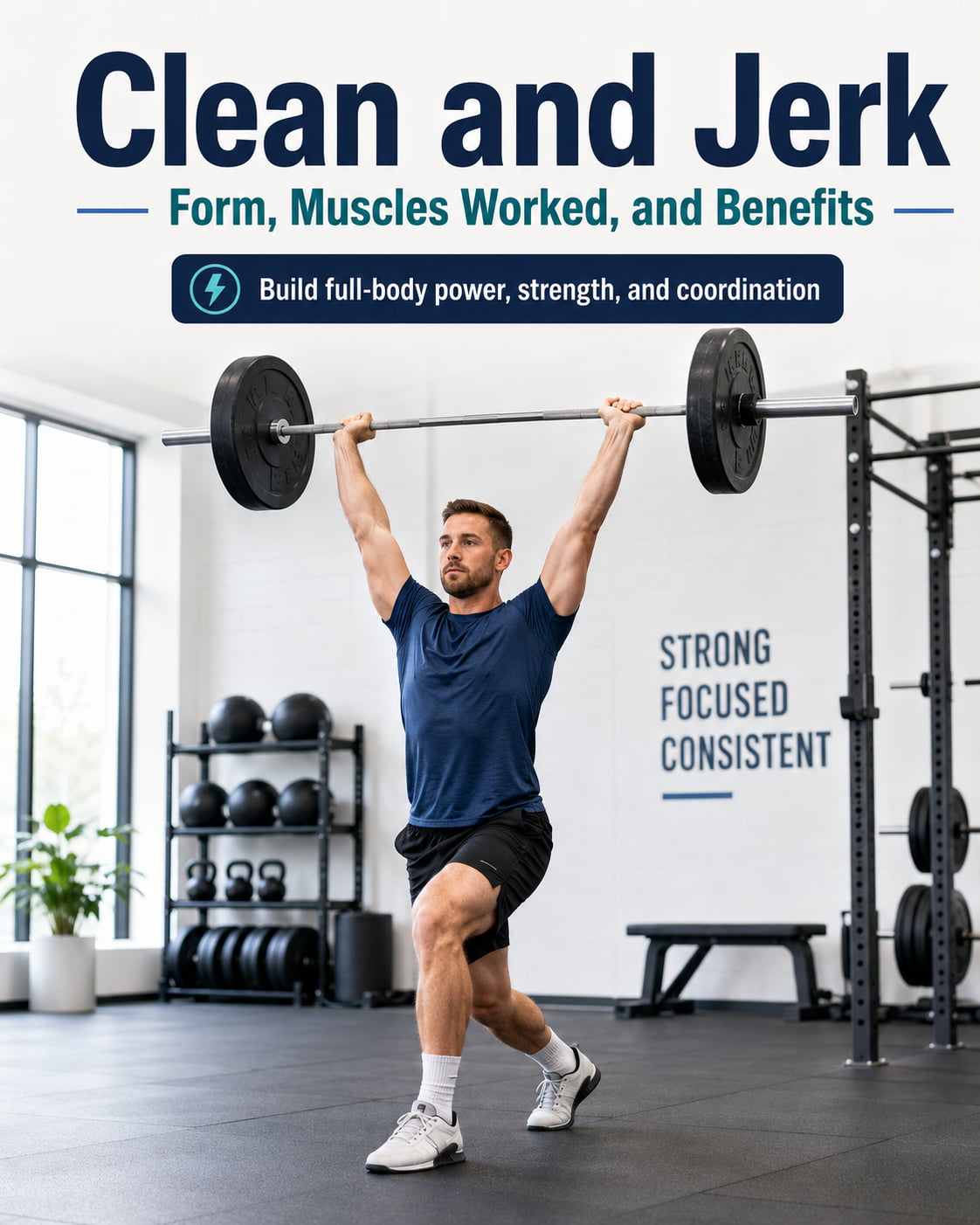
It is not just a “barbell-to-overhead” movement. It combines a pull from the floor, a front squat catch, a powerful leg drive, and an overhead lockout. In this guide, you will learn proper form, muscles worked, benefits, common mistakes, beginner regressions, progressions, and how to use the lift in a workout.
What Is the Clean and Jerk?
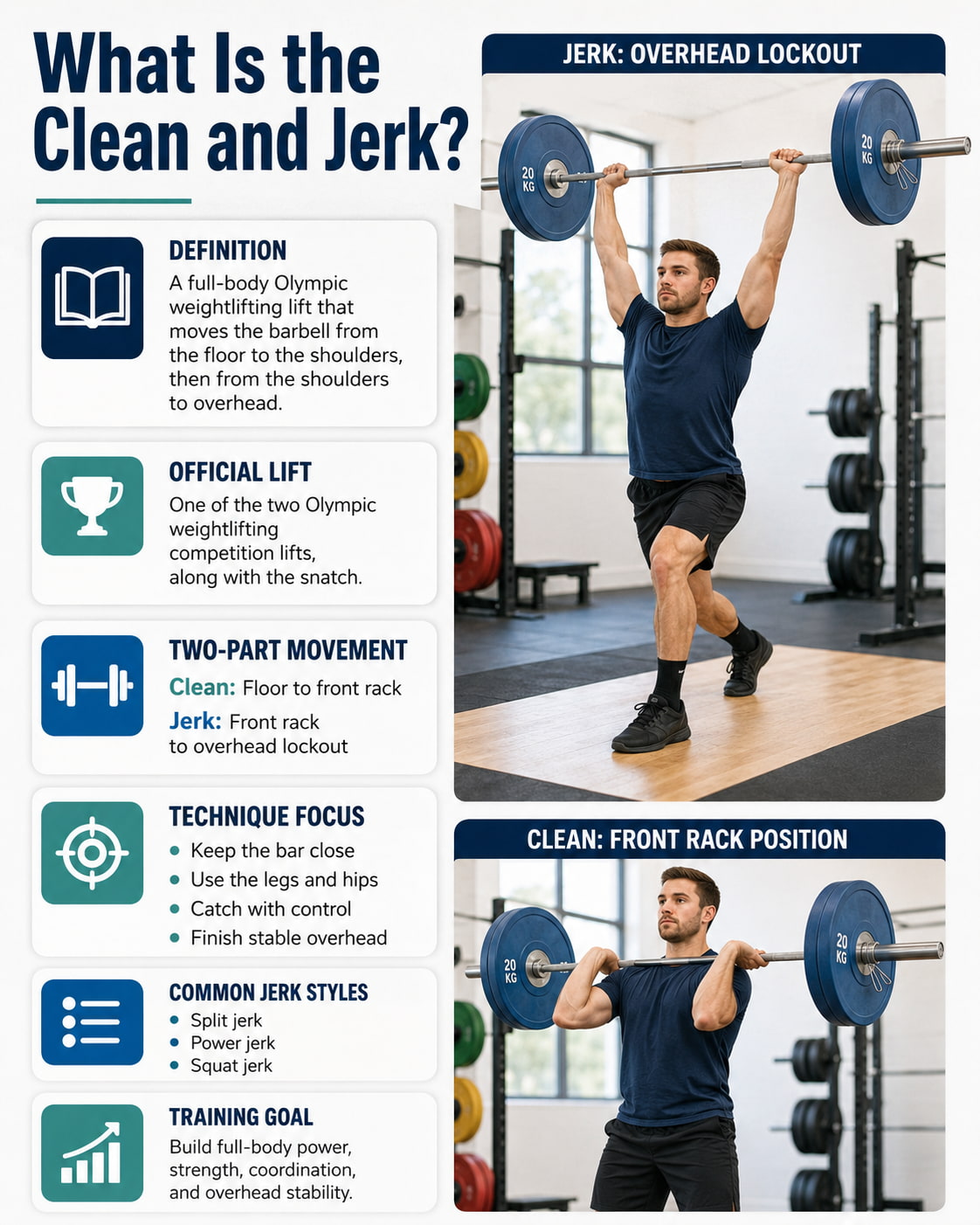
The clean and jerk is one of the two competition lifts in Olympic weightlifting, along with the snatch. According to the International Weightlifting Federation, the clean brings the barbell from the platform to the shoulders, and the jerk moves it from the shoulders to an overhead locked-out position.
The lift has two main parts. The clean moves the bar from the floor to the front rack. The jerk moves the bar from the front rack to overhead. Most lifters use a split jerk, but the jerk can also be performed as a power jerk or squat jerk depending on skill, mobility, and training goal.
For general fitness, the goal is not to copy an elite weightlifter’s exact positions. The goal is to learn clean mechanics, keep the bar close, use the legs and hips correctly, catch the bar with control, and finish overhead in a stable position.
Clean and Jerk Exercise Overview
Best for: The clean and jerk is best for building full-body power, explosive leg drive, athletic coordination, upper-back strength, overhead stability, and Olympic lifting skill.
Muscles worked: The main muscles worked are the quadriceps, glutes, hamstrings, calves, spinal erectors, traps, lats, deltoids, triceps, forearms, and core. The lower body produces most of the force, while the trunk, upper back, shoulders, and arms help guide, catch, stabilize, and finish the lift.
Equipment needed: Barbell, bumper plates, collars, and a lifting platform or safe lifting area. A PVC pipe, dowel, or empty barbell is useful for learning technique before adding load.
Why it stands out: The clean and jerk trains strength and speed in one movement. Unlike slower strength lifts, it requires you to produce force quickly, change direction under the bar, stand with the load, and stabilize overhead. That makes it valuable for athletes, Olympic weightlifters, and trained lifters who want more power and coordination.
Suggested sets and reps: For technique practice, use 3–6 sets of 1–3 reps with light to moderate weight. For strength and power, use 3–5 sets of 1–2 reps with a load you can move fast and control well. Avoid grinding reps because the lift depends on speed and precision.
Beginners: Start with a PVC pipe, training bar, or empty barbell. Learn the front squat, clean pull, hang power clean, push press, and split jerk separately before combining the full clean and jerk.
Intermediate: Use low reps, controlled loading, and longer rest periods. Focus on consistent setup, bar path, front-rack position, split stance, and overhead lockout before chasing heavier weights.
Advanced: Use singles, doubles, clean-and-jerk complexes, paused cleans, jerk recoveries, block work, and percentage-based training. Advanced lifters can train the lift heavier, but technique quality should still guide loading.
Rest: Rest 2–4 minutes between working sets. Use longer rest for heavier singles and shorter rest only when the load is light and technique stays sharp.
How to do it:
- Stand with your feet about hip-width apart and the bar over your midfoot.
- Grip the bar just outside your legs, brace your core, and keep your back tight.
- Push through the floor and lift the bar while keeping it close to your body.
- As the bar passes the knees, extend the hips and legs powerfully.
- Pull yourself under the bar and rotate your elbows forward into the front rack.
- Catch the bar on the shoulders with the elbows high, then stand tall.
- Reset your breath, brace your core, and adjust your feet if needed.
- Dip straight down by bending the knees while keeping your torso vertical.
- Drive hard through the legs and punch the bar overhead.
- Land in a stable split or power stance with the arms locked out.
- Recover to standing with the bar controlled overhead.
Common mistakes: Common mistakes include pulling with the arms too early, letting the bar drift away, catching with low elbows, rushing the transition, dipping forward in the jerk, landing too narrow, and pressing the bar out instead of driving under it.
Expert tip: Think “legs first, arms later” during the clean. Your arms guide the bar, but your legs and hips create the power. In the jerk, think “dip straight, drive straight, punch under.”
Exercise variations: Useful variations include the hang power clean, hang clean, power clean and push jerk, clean pull, front squat, push press, push jerk, split jerk, clean from blocks, and clean plus jerk complex.
Easier variation: The dumbbell clean and jerk or hang power clean to push press is easier for many beginners because it reduces the mobility demand of the front rack and deep catch.
Harder variation: A full clean and split jerk from the floor with heavier singles is harder because it requires precise timing, strong front-squat recovery, and stable overhead receiving position.
Clean and Jerk Muscles Worked
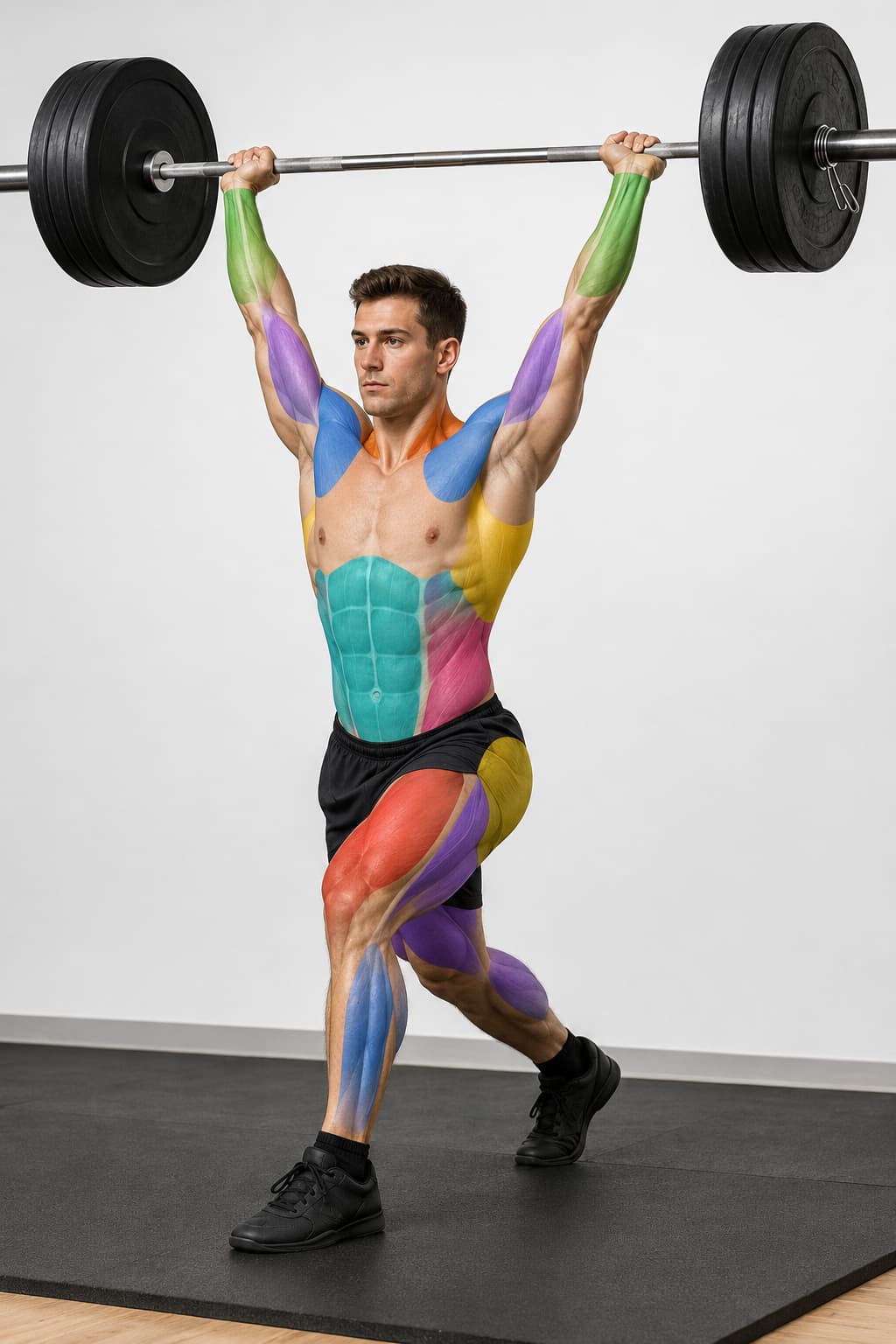
The clean and jerk is a true full-body lift. The exact muscle emphasis changes during each phase, but the whole body has to work as one system.
Lower Body
The quadriceps help extend the knees during the pull, front-squat recovery, dip, and drive. The glutes and hamstrings help extend the hips during the pull and support powerful leg drive. The calves assist with the final extension and help stabilize the receiving positions.
The clean and jerk is not an arm exercise. The legs create most of the upward force, especially during the pull from the floor and the jerk drive.
Back and Traps
The spinal erectors help maintain a strong back position from the floor. The lats help keep the bar close. The traps contribute during the upward extension and help support the bar path.
A strong upper back also matters in the catch. If your upper back collapses, the elbows drop, the bar rolls forward, and the clean becomes much harder to recover.
Shoulders, Triceps, and Forearms
The shoulders and triceps are most active during the jerk and overhead lockout. The shoulders help stabilize the bar overhead, while the triceps support a strong locked-out arm position.
The forearms and grip help control the bar during the pull and transition. The grip should be secure, but the arms should not turn the clean into a curl.
Core and Stabilizers
The core helps transfer force from the legs to the bar. It also helps you maintain position during the pull, front rack, dip, drive, and overhead catch.
Good bracing is especially important because the lift changes direction quickly. You need enough trunk stiffness to stay organized without holding your breath for too long or losing control.
Benefits of the Clean and Jerk
Builds Full-Body Power
The clean and jerk trains you to apply force quickly. The clean requires explosive hip and leg extension, and the jerk requires a fast dip and drive. A systematic review in Sports Medicine found that weightlifting training can be useful for improving strength, power, and speed when used as part of a training program.
Trains Strength and Coordination Together
Many strength exercises move slowly and follow a simple path. The clean and jerk requires timing, balance, posture, mobility, speed, and strength. You have to pull, catch, stand, dip, drive, and stabilize in the correct order.
That makes it useful for athletes and lifters who want more than muscle isolation. It teaches the body to coordinate force from the ground up.
Strengthens the Legs, Hips, Back, and Shoulders
The clean challenges the posterior chain, quads, back, and front rack. The jerk challenges the legs, shoulders, triceps, and core. Together, they train many major muscle groups in one lift.
This does not mean the clean and jerk should replace squats, pulls, presses, or accessory work. It works best when supported by strength exercises that build the positions needed for the lift.
Improves Overhead Stability
The jerk teaches you to receive weight overhead with a braced trunk, active shoulders, and stable foot position. This can carry over to other overhead lifts, but only if you train the lockout with control.
If your overhead position feels unstable, use lighter jerk drills, push presses, overhead holds, or split-jerk footwork before loading the full lift.
Makes Training More Athletic
The clean and jerk develops speed, rhythm, and body control. It rewards efficient movement, not just effort. When performed well, it can make training feel more athletic and skill-based.
How to Do the Clean and Jerk With Proper Form
Start With a Strong Setup
Set your feet about hip-width apart with the bar close to your shins and over the midfoot. Brace your core, keep your chest lifted, and keep your arms straight. Your shoulders should be slightly over or in front of the bar.
Catalyst Athletics describes the clean and jerk as a lift from the floor to the shoulders, then from the shoulders to overhead, with the split jerk being the most common competitive jerk style. Their clean and jerk exercise library is a useful technical reference for the main lift.
Keep the First Pull Controlled
The first pull moves the bar from the floor to around the knees. Do not yank the bar off the ground. Push the floor away, keep the back tight, and let the hips and shoulders rise together.
If your hips shoot up too early, the lift turns into a stiff-legged pull. If your chest rises too fast, the bar may drift forward.
Extend Hard in the Second Pull
Once the bar passes the knees, keep it close and extend through the hips and legs. This is where the lift becomes explosive.
Do not bend your arms too early. Early arm pull usually shortens your power and makes the bar swing away. Keep the arms long until the lower body has finished driving.
Pull Under and Catch the Clean
After extension, pull yourself under the bar and turn the elbows through fast. Catch the bar on the shoulders, not in the hands. The elbows should point forward and stay high enough to keep the bar secure.
Depending on the variation, you may catch in a power position or a full front squat. Either way, the catch should be stable and balanced over the whole foot.
Stand and Reset Before the Jerk
After standing up from the clean, take a controlled breath and prepare for the jerk. This transition matters. If you rush it, you may dip poorly, lose your brace, or drive the bar forward.
Your front rack for the jerk may look slightly different from your clean catch. Many lifters bring the elbows a little lower and wider so they can drive the bar straight overhead.
Dip and Drive Straight
The jerk starts with a vertical dip. Bend the knees, keep the torso upright, and stay balanced through the foot. Then drive hard through the legs and send the bar upward.
The dip should not become a forward lean or mini squat. A forward dip usually pushes the bar away and makes the catch harder.
Catch With a Stable Lockout
In a split jerk, the front foot steps forward and the back foot moves behind you. Catch the bar with the arms locked, shoulders active, and trunk braced. The bar should finish over the shoulders, hips, and base of support.
The Catalyst Athletics split jerk guide explains the jerk as the second part of the clean and jerk and notes that the split jerk is the most common jerk style in competition.
Common Clean and Jerk Mistakes
Pulling With the Arms Too Early
This is one of the most common beginner mistakes. The arms should stay long while the legs and hips create power. If you bend your elbows early, you lose force and usually pull the bar away from your body.
Fix it by practicing clean pulls, hang clean pulls, and tall cleans with light weight.
Letting the Bar Drift Forward
A forward bar path makes the clean harder to catch and the jerk harder to control. The bar should stay close during the pull and finish close to the body.
Fix it by strengthening your lats, improving setup balance, and thinking about keeping the bar close to your shirt.
Catching With Low Elbows
Low elbows can cause the bar to roll forward in the clean. This often happens when the lifter has poor front-rack mobility, slow turnover, or weak upper-back position.
Fix it with front-rack mobility, front squats, clean turnover drills, and lighter cleans where you can catch with better posture.
Rushing the Jerk
The transition between the clean and jerk should be controlled. If you rush, you may dip with a loose brace or drive the bar forward.
Fix it by pausing after the clean, taking one steady breath, setting your feet, and then starting the jerk.
Dipping Forward
A forward dip changes the bar path and makes the jerk feel heavier than it should. The dip should be straight down and straight up.
Fix it by practicing jerk dips, jerk drives, and push presses with a vertical torso.
Landing Too Narrow in the Split
A narrow split makes the overhead position unstable. Your front and back feet need enough width to create balance.
Fix it with split-stance holds, footwork drills, and light split jerks where you focus on landing position before load.
Clean and Jerk Regressions for Beginners
The full barbell clean and jerk is advanced for a true beginner. You can still train the pattern safely by breaking it into smaller pieces.
A PVC clean teaches timing without load. An empty-bar front squat teaches the catch position. A clean pull teaches leg drive and bar path. A hang power clean shortens the range of motion. A push press teaches the dip and drive. A split jerk footwork drill teaches the receiving position without the stress of a heavy bar.
The American Council on Exercise recommends teaching the movement in components and using an unloaded bar or wooden dowel before adding meaningful weight.
If the front rack is uncomfortable, use a dumbbell clean and jerk, kettlebell clean and press, or landmine clean and press as a temporary substitute. If the floor pull is difficult, start from blocks or the hang.
Clean and Jerk Progressions and Variations
A smart progression starts with positions, then speed, then load. Do not rush to the full lift if the setup, rack, dip, or overhead position is not ready.
A useful order is front squat, Romanian deadlift, clean pull, hang power clean, hang clean, push press, push jerk, split jerk, power clean plus push jerk, and then full clean and jerk.
For intermediate lifters, clean and jerk complexes can build skill without needing maximal load. A good example is clean pull plus clean plus front squat plus jerk. Another option is power clean plus front squat plus split jerk.
For advanced lifters, blocks, pauses, heavy pulls, jerk recoveries, and percentage-based singles can help refine weak points. These should be used with a coach or a clear plan because small technical errors matter more as the load increases.
How to Program the Clean and Jerk
The clean and jerk works best near the beginning of a workout after your warm-up. It is a high-skill power lift, so practice it when you are fresh.
For technique, use lighter loads and low reps. For power, use moderate to heavy loads that still move fast. For strength, use heavy singles or doubles only if your technique is consistent.
Catalyst Athletics notes that the clean and jerk is commonly programmed in low-rep ranges for Olympic weightlifting, often with 1–3 reps depending on the athlete and training focus. General fitness lifters should treat that as a reminder to prioritize quality over fatigue.
| Level | Sets and Reps | Effort | Rest | Frequency |
|---|---|---|---|---|
| Beginner technique | 4–6 sets of 1–3 reps | Easy to moderate | 2–3 minutes | 1–2 days per week |
| Intermediate power | 3–5 sets of 1–2 reps | Moderate to hard, fast reps | 3–4 minutes | 1–2 days per week |
| Advanced strength | 4–8 singles | Heavy but technically sharp | 3–5 minutes | Based on program |
Avoid using heavy clean and jerks as a conditioning exercise if your technique is not reliable. Fatigue can make the bar drift, the catch collapse, or the overhead position become unstable.
Sample Clean and Jerk Workout
Use this workout after a general warm-up and several light technique sets.
| Exercise | Sets | Reps | Rest |
|---|---|---|---|
| Clean pull | 3 | 3 | 2 minutes |
| Front squat | 3 | 3 | 2–3 minutes |
| Push press | 3 | 3 | 2 minutes |
| Clean and jerk | 5 | 1 | 3 minutes |
| Split-stance overhead hold | 3 | 10–20 seconds per side | 60–90 seconds |
Use a load that lets you move fast and keep every rep clean. When all singles feel consistent for two workouts in a row, add a small amount of weight next time. If your catch, dip, or lockout gets worse, reduce the load and focus on technique.
Warm-Up Tips Before Clean and Jerk Training
Start with 5–10 minutes of easy movement such as cycling, rowing, brisk walking, or jump rope. Then prepare the ankles, hips, upper back, shoulders, wrists, and front rack.
A good clean and jerk warm-up should include front squats, clean pulls, high pulls, muscle cleans, press variations, jerk dips, and light split-jerk footwork. Keep the warm-up specific but not exhausting.
Mayo Clinic’s weight training guidance emphasizes learning proper technique and using correct form when lifting weights. That matters even more with Olympic lifts because the movement is fast and technical.
Safety Tips for the Clean and Jerk
Use bumper plates and a safe lifting area. Use collars so plates stay secure. Do not practice heavy clean and jerks in a crowded space or on a surface where dropping a bar is unsafe.
Start light, especially if you are new to Olympic lifting. The clean and jerk is not a lift you should max out on the first day. Build the front squat, pulling strength, overhead stability, and jerk footwork first.
Stop the exercise and seek professional help if you feel sharp pain, numbness, dizziness, chest pain, unusual shortness of breath, or any unusual symptoms. Mayo Clinic notes that if a strength training exercise causes pain, you should stop and consider using a lower weight. Cleveland Clinic Abu Dhabi also advises stopping exercise and resting if symptoms such as chest discomfort, dizziness, extreme shortness of breath, palpitations, or joint or bone pain occur during or after exercise.
FAQs About the Clean and Jerk
Is the clean and jerk good for beginners?
The full barbell clean and jerk is usually too technical for a complete beginner, but beginners can train the building blocks. Start with a PVC pipe, empty barbell, front squat, clean pull, hang power clean, push press, and split-jerk footwork before combining the full lift.
What is the difference between a clean and jerk and a clean and press?
In the clean and jerk, the bar is driven overhead with leg power and caught with the arms locked out. In the clean and press, the lifter presses the bar overhead more directly with the upper body. The jerk usually allows more weight because the legs create most of the upward drive.
Does the clean and jerk build muscle?
The clean and jerk can support muscle and strength development, especially in the legs, hips, back, shoulders, and triceps. However, it is mainly a power and skill lift. For muscle growth, combine it with squats, pulls, presses, rows, and accessory work.
How many reps should I do for clean and jerk?
Most lifters should use low reps, usually 1–3 reps per set. Higher reps can work with light loads, but they increase fatigue and can cause technique to break down. Quality matters more than quantity.
Should I use a split jerk or push jerk?
The split jerk is common in Olympic weightlifting because it gives many lifters a stable receiving position. The push jerk is simpler for some general fitness workouts but may limit how much weight you can handle. Choose the variation that matches your skill, mobility, and coaching environment.
How often should I train the clean and jerk?
Most general lifters can practice it 1–2 times per week. Olympic weightlifters may train clean or jerk variations more often, but that depends on recovery, coaching, and total program volume.
Conclusion
The Clean and Jerk is one of the best barbell exercises for building full-body power, strength, timing, and athletic coordination. Start with the basics, learn the clean and jerk in phases, keep the bar close, use your legs, catch with control, and progress only when your technique stays consistent.
For most lifters, the smartest path is simple: master the positions first, add speed second, and add load last.
1 thought on “Clean and Jerk Guide: Proper Form, Muscles Worked, Benefits, and Tips”