Warm-up exercises before walking should gradually move your ankles, hips, legs, and upper body while increasing your pace without causing fatigue. This five-minute routine combines simple dynamic movements with easy walking, requires no special equipment, and works before outdoor, treadmill, brisk, or fitness walking.
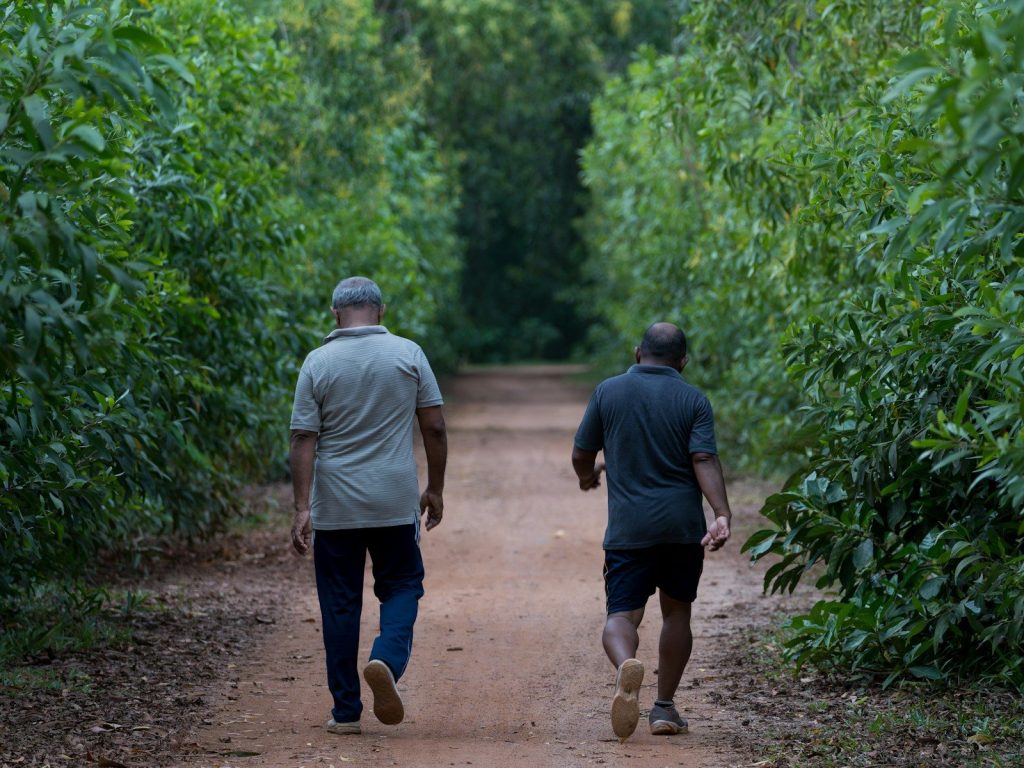
Do You Need to Warm Up Before Walking?
A separate warm-up may not be necessary before a short, relaxed stroll. Starting with several minutes of slow walking can be enough.
A more structured warm-up is useful when you plan to:
- Walk briskly
- Use a treadmill incline
- Walk uphill
- Perform walking intervals
- Cover a longer distance
- Exercise after sitting for several hours
- Walk when your ankles or hips initially feel stiff
The Mayo Clinic recommends walking slowly for 5–10 minutes before a brisk walk. This activity-specific approach gradually raises your effort while rehearsing the same movement you are about to perform.
A good warm-up should leave you feeling warmer, looser, and ready to walk—not tired.
Five-Minute Warm-Up Exercises Before Walking
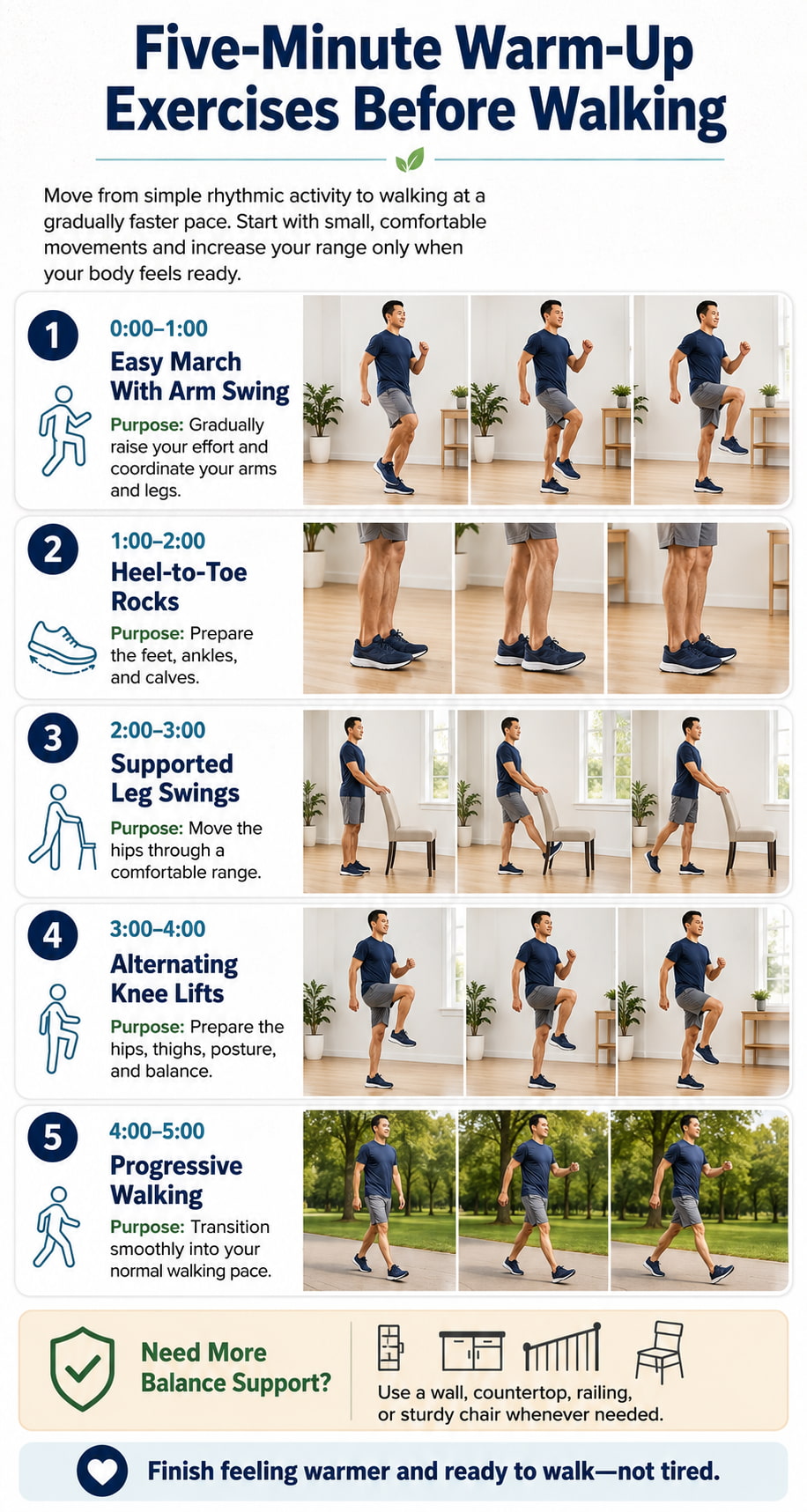
This routine moves from simple rhythmic activity to walking at a gradually faster pace. Use small, comfortable movements at first and increase your range only when your body feels ready.
| Time | Exercise | Main purpose |
|---|---|---|
| 0:00–1:00 | Easy march with arm swing | Gradually raise your effort and coordinate your arms and legs |
| 1:00–2:00 | Heel-to-toe rocks | Prepare the feet, ankles, and calves |
| 2:00–3:00 | Supported leg swings | Move the hips through a comfortable range |
| 3:00–4:00 | Alternating knee lifts | Prepare the hips, thighs, posture, and balance |
| 4:00–5:00 | Progressive walking | Transition smoothly into your normal walking pace |
Use a wall, countertop, railing, or sturdy chair whenever you need additional balance support.
1. Easy March With Arm Swing
Best for: Beginning the warm-up and transitioning from rest to movement.
Muscles worked: Hip flexors, quadriceps, calves, glutes, shoulders, and postural muscles.
Suggested sets and reps: March continuously for 60 seconds.
How to do it:
- Stand tall with your feet approximately hip-width apart.
- Look forward and relax your shoulders.
- Lift one foot a few inches from the floor.
- Lower it softly as you lift the opposite foot.
- Swing the opposite arm forward naturally.
- Continue at an easy, controlled rhythm for one minute.
Common mistakes: Leaning backward, lifting the knees forcefully, holding your breath, stomping the feet, or tensing the shoulders.
Expert tip: Start more slowly than you think you need to. The goal is to build your rhythm gradually.
2. Heel-to-Toe Rocks
Best for: Preparing the ankles, feet, and calves for the rolling action of each walking step.
Muscles worked: Calves, muscles along the front of the shins, and small stabilizing muscles around the feet and ankles.
Equipment needed: A wall, counter, or chair may be used for support.
Suggested sets and reps: Continue for 45–60 seconds or complete approximately 10–20 controlled rocks.
How to do it:
- Stand tall with your feet hip-width apart.
- Shift your weight forward and lift both heels.
- Balance briefly on the balls of your feet.
- Lower your heels under control.
- Rock gently backward and lift your toes.
- Continue moving smoothly between the two positions.
Common mistakes: Bouncing, rolling the ankles outward, rushing the movement, locking the knees, or forcing the toes excessively high.
Expert tip: Think about moving through the whole foot rather than simply lifting the heels as high as possible.
A recent walking warm-up from Harvard Health Publishing similarly uses continuous foot rolls to prepare the feet and calves before walking or running.
3. Supported Leg Swings
Best for: Preparing the hips for a comfortable walking stride.
Muscles worked: Hip flexors, glutes, hamstrings, quadriceps, and hip stabilizers.
Equipment needed: A stable chair, wall, railing, or countertop.
Suggested sets and reps: Perform 30 seconds per leg or approximately 8–12 controlled swings per side.
How to do it:
- Stand beside a stable support and hold it lightly.
- Shift your weight onto the leg nearest the support.
- Keep a soft bend in the supporting knee.
- Swing the opposite leg forward a short distance.
- Move the same leg backward without arching your lower back.
- Continue for 30 seconds, then change sides.
Common mistakes: Kicking aggressively, twisting the torso, arching the lower back, locking the supporting knee, or attempting a large range immediately.
Expert tip: Let the range increase naturally over several repetitions. A higher swing is not automatically a better warm-up.
4. Alternating Knee Lifts
Best for: Preparing the hips and thighs while reinforcing upright walking posture.
Muscles worked: Hip flexors, quadriceps, glutes, calves, and core stabilizers.
Suggested sets and reps: Continue for 60 seconds at a comfortable pace.
How to do it:
- Stand tall with your feet hip-width apart.
- Gently brace your abdominal area.
- Lift one knee to a comfortable height.
- Keep a slight bend in the supporting leg.
- Lower the foot softly.
- Repeat with the opposite leg.
- Continue alternating for one minute.
Common mistakes: Pulling the knee forcefully, leaning backward, rounding the shoulders, locking the standing knee, or rushing each repetition.
Expert tip: The knee does not need to reach hip height. Choose a height that allows you to stay upright and balanced.
The NHS warm-up routine includes marching, heel digs, and alternating knee lifts, emphasizing upright posture and a slight bend in the supporting leg.
5. Progressive Walking
Best for: Completing the transition from warm-up exercises to the main walk.
Muscles worked: Glutes, quadriceps, hamstrings, calves, hip flexors, feet, postural muscles, shoulders, and arms.
Suggested sets and reps: Walk continuously for at least one minute. Extend this section to three to five minutes before harder walks.
How to do it:
- Start walking at an easy, relaxed pace.
- Keep your steps short and comfortable.
- Allow your arms to swing naturally.
- Increase your pace slightly after 15–20 seconds.
- Continue making small increases until you approach your planned walking speed.
- Avoid suddenly accelerating into a very fast pace.
Common mistakes: Starting too quickly, taking excessively long strides, clenching the hands, shrugging the shoulders, or treating the warm-up as a fitness test.
Expert tip: You should be able to speak comfortably throughout the warm-up.
What Muscles Does a Walking Warm-Up Prepare?
Warm-up exercises before walking mainly prepare the lower-body muscles that control each step:
- The glutes help extend and stabilize the hips.
- The quadriceps help support the knees and straighten the legs.
- The hamstrings assist hip movement and knee control.
- The hip flexors bring the leg forward.
- The calves help control the ankle and push the body forward.
- The shin and foot muscles help control foot placement.
- The core and upper-back muscles help maintain upright posture.
- The shoulders and arms contribute to a natural arm swing.
These muscles are being prepared for activity, not trained heavily. The routine should not cause burning, shaking, or significant fatigue.
Benefits of Warming Up Before Walking
A controlled pre-walk warm-up may help you:
- Transition gradually from rest to exercise
- Increase muscle temperature and blood flow
- Move the ankles, knees, and hips before faster steps
- Practice upright posture and arm swing
- Identify unusual stiffness before increasing the pace
- Make the beginning of a brisk walk feel less abrupt
The American Heart Association explains that slow walking before aerobic activity allows heart rate and breathing to increase gradually.
A warm-up cannot guarantee that you will avoid soreness or injury. Its practical purpose is to improve readiness and make the transition into exercise more controlled.
Dynamic Versus Static Stretching Before Walking
Dynamic movements take a joint repeatedly through a comfortable range. Marching, leg swings, heel-to-toe rocks, and knee lifts are examples.
Static stretching involves moving into one position and holding it, commonly for 10–30 seconds.
For most healthy walkers, dynamic movement and slow walking are more practical immediately before a brisk walk. The American Heart Association’s flexibility guidance recommends performing longer flexibility work when the muscles are already warm and generally placing it after endurance exercise.
That does not mean every brief stretch before walking is harmful. A gentle held stretch may be appropriate when a specific area feels tight, but warm up with several minutes of easy movement first. Never force a stretch or bounce at the end of the range.
Common Pre-Walk Warm-Up Mistakes
Starting at Your Fastest Pace
Moving directly from sitting to fast or uphill walking creates an unnecessarily abrupt increase in effort. Begin slowly and build speed in stages.
Turning the Warm-Up Into a Workout
Deep squats, jumping drills, very high knees, or exhausting calf raises are usually unnecessary before regular walking. Save your energy for the main session.
Forcing Your Range of Motion
Leg swings and knee lifts should become slightly larger only as you feel more comfortable. Do not chase maximum height or flexibility.
Ignoring Balance
Use a stable surface whenever single-leg movements feel uncertain. Balance support allows you to focus on controlled movement.
Holding Your Breath
Breathe normally throughout the routine. Relax your jaw, hands, neck, and shoulders.
Using Long Static Stretches as the Entire Warm-Up
A held stretch does not gradually prepare your breathing or rehearse your walking pattern. Include easy rhythmic movement and progressive walking.
How to Modify the Routine
Use these adjustments when the standard routine feels too difficult:
- Perform marching and ankle movements while seated.
- Hold a wall or countertop during standing exercises.
- Replace leg swings with forward and backward toe taps.
- Replace knee lifts with alternating heel digs.
- Use a smaller range of motion.
- Extend the easy-walking portion before increasing speed.
- Complete the routine on a dry, level surface without loose rugs or clutter.
People recovering from surgery or injury, or those with conditions affecting walking or balance, should follow the exercise advice provided by their health care professional or physical therapist.
How to Structure Your Walking Workout
Beginner Walking Session
Warm-up: Complete the five-minute routine at an effort of approximately 2–3 out of 10.
Main walk: Walk for 10–20 minutes at a pace that feels sustainable.
Effort: Approximately 4–5 out of 10. You should be able to talk comfortably.
Cool-down: Walk slowly for five minutes.
Frequency: Start with three or four walking days per week.
Progression: Add two to five minutes to the main walk when you can complete the current duration with good posture and without unusual discomfort.
Brisk Walking Session
Warm-up: Complete the routine, extending progressive walking to three to five minutes.
Main walk: Walk briskly for 20–30 minutes.
Effort: Approximately 5–6 out of 10.
Cool-down: Reduce your speed gradually for five minutes.
Frequency: Three to five days per week, depending on your current fitness and other training.
The CDC’s intensity scale classifies moderate activity as approximately 5–6 out of 10 relative to personal capacity.
Incline or Interval Walking Session
Use a longer seven- to ten-minute warm-up. Complete the mobility exercises, then walk progressively before adding incline or faster intervals. Do not begin the first hard interval immediately after standing still.
When Should You Stop?
Stop the warm-up or walk if you experience:
- Sharp or increasing pain
- Numbness or unusual weakness
- Dizziness or faintness
- Chest pain or pressure
- An irregular or unusually racing heartbeat
- Unusual shortness of breath
- A sudden loss of balance
Seek appropriate professional or emergency medical help when symptoms are severe, sudden, or concerning.
Frequently Asked Questions
Is five minutes long enough to warm up before walking?
Five minutes is a practical starting point before a regular brisk walk. Extend the warm-up to 7–10 minutes before fast intervals, steep hills, treadmill inclines, or demanding power walking. Both Mayo Clinic and the American Heart Association commonly recommend 5–10 minutes of slower activity.
Is slow walking enough for a warm-up?
Yes. Slow walking is the most activity-specific option and may be enough before an ordinary walk. The additional ankle and hip movements are useful when you feel stiff, have been sitting for a long time, or plan a more demanding session.
Should I stretch before or after walking?
Use dynamic movements and slow walking before the session. Longer static stretches generally fit better after you have cooled down and your muscles are warm. A brief gentle stretch can be used after several minutes of movement when needed.
Can I use this routine before treadmill walking?
Yes. Complete the first four exercises beside the treadmill, then begin at a slow speed. Increase the speed or incline gradually rather than changing both at once.
What is the best warm-up for walking with stiff knees?
Begin with easy marching or heel digs, use a small range, and walk slowly before increasing your pace. Warm-up movements should feel comfortable. Persistent, worsening, swollen, or sharp knee pain should be assessed by a qualified health professional.
How should older adults modify the routine?
Use a stable chair, wall, or countertop for support. Choose low knee lifts, small leg swings, and slower transitions. Seated marching and ankle pumps can replace standing movements when needed.
Do I need to warm up before every walk?
Use at least a few minutes of easy walking before brisk, long, incline, or interval sessions. A relaxed everyday stroll may not require a separate exercise sequence, but it is still sensible to begin at an easy pace.
Conclusion
The best warm-up exercises before walking are simple, controlled, and specific to the activity. March easily, move your ankles and hips, practice controlled knee lifts, and finish by gradually increasing your walking pace.
Keep the routine comfortable and repeat it before brisk, incline, interval, or longer walking sessions. You should finish feeling ready to walk—not tired.
References
- American Heart Association: Develop a Physical Activity Plan
- American Heart Association: Flexibility Exercise and Stretching
- Mayo Clinic: Aerobic Exercise—How to Warm Up and Cool Down
- CDC: How to Measure Physical Activity Intensity
- NHS: How to Warm Up Before Exercising
- Harvard Health Publishing: Warm-Up for Walking and Running
- AAOS OrthoInfo: Exercise Walking
This content is for informational purposes only and is not a substitute for professional medical advice.