Leg mobility exercises can help you move better, warm up more effectively, and feel less stiff through your hips, knees, and ankles.
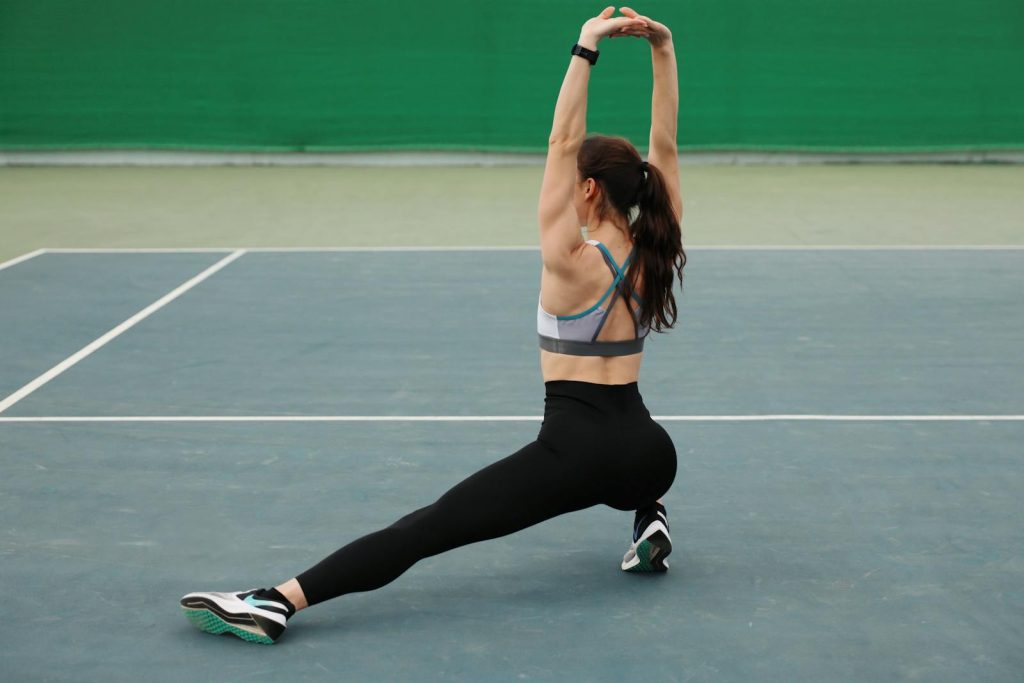
The best plan is not just “stretch your legs.” It is using dynamic mobility drills before training and static stretches after training or in separate recovery sessions so you improve lower-body range of motion without forcing it, which aligns well with guidance from Mayo Clinic.
What leg mobility exercises actually improve
Good lower-body mobility depends mostly on how well your hips, hamstrings, quads, calves, adductors, and ankles move during real movements like squats, lunges, step-ups, walking, and running.
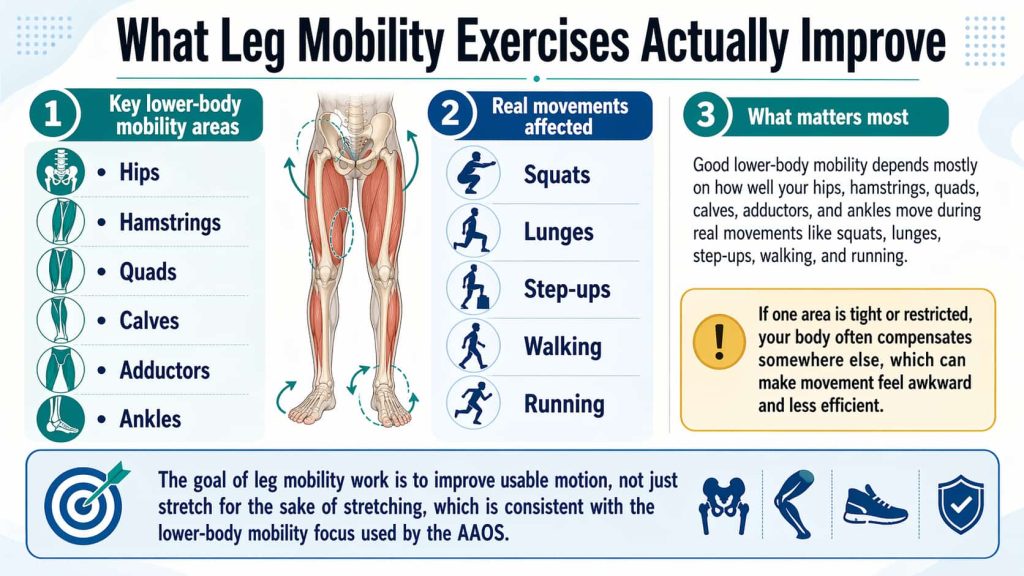
If one area is tight or restricted, your body often compensates somewhere else, which can make movement feel awkward and less efficient. The goal of leg mobility work is to improve usable motion, not just stretch for the sake of stretching, which is consistent with the lower-body mobility focus used by the AAOS.
How to use leg mobility exercises
A simple way to program leg mobility is this:
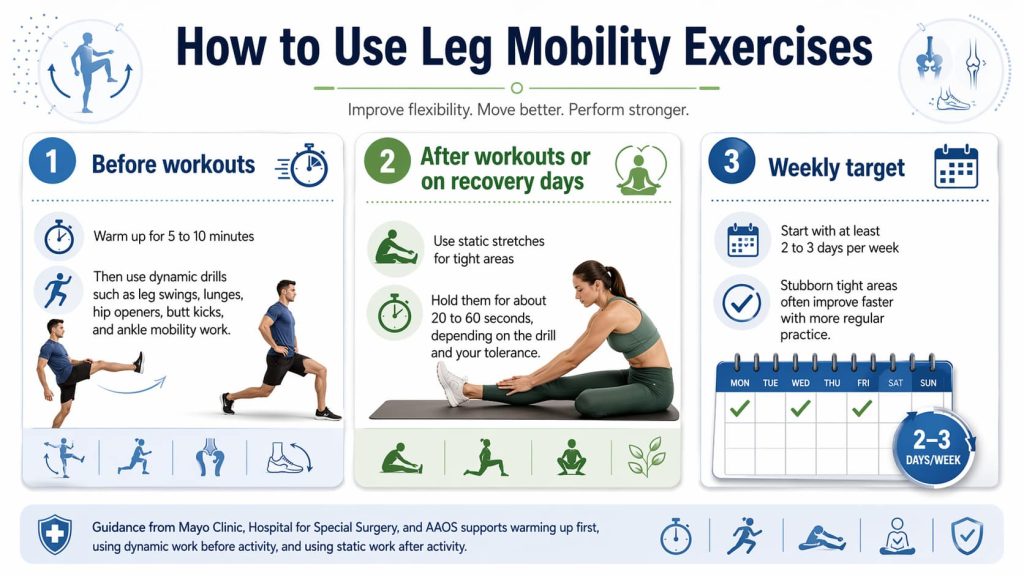
- Before workouts: warm up for 5 to 10 minutes, then use dynamic drills such as leg swings, lunges, hip openers, butt kicks, and ankle mobility work.
- After workouts or on recovery days: use static stretches for tight areas and hold them for about 20 to 60 seconds, depending on the drill and your tolerance.
- Weekly target: at least 2 to 3 days per week is a good starting point, and stubborn tight areas often improve faster with more regular practice.
Guidance from Mayo Clinic, Hospital for Special Surgery, and AAOS supports warming up first, using dynamic work before activity, and using static work after activity.
12 Best leg mobility exercises for flexibility and movement
Improve lower-body flexibility, joint control, and overall movement quality with these effective leg mobility exercises. This list helps you loosen tight hips, hamstrings, quads, calves, and ankles so you can warm up better, move more freely, and train with better form.
1. Leg Swings
Best for: Pre-workout hip mobility and general lower-body warm-up.
Muscles worked: Hip flexors, glutes, hamstrings, adductors, core.
Equipment needed: None.
Why it stands out
Leg swings are one of the simplest ways to prepare the hips for training without long holds. They work well before squats, lunges, running, sports, and lower-body strength sessions.
Suggested sets and reps
1 to 2 sets of 10 to 15 swings per leg in each direction.
How to do it
- Stand tall beside a wall or rack for balance.
- Swing one leg forward and backward in a controlled arc.
- Keep your torso tall and your standing foot planted.
- Repeat, then switch sides.
- You can also do side-to-side swings across the body.
Common mistakes: Kicking too hard, twisting the torso, arching the low back, chasing a bigger range of motion too soon.
Coaching cue: Let the hip move, not your lower back.
Exercise variations: Smaller swings for beginners; add side-to-side swings for more hip coverage.
How to use in a workout: Put this near the start of your dynamic warm-up before lifting, running, or sport practice. Hospital for Special Surgery specifically recommends dynamic stretching before activity and gives leg swings as a useful example.
2. Walking Lunge
Best for: Dynamic hip mobility that also rehearses single-leg control.
Muscles worked: Glutes, quads, hamstrings, hip flexors, calves, core.
Equipment needed: None.
Why it stands out
Walking lunges open the front of the hip while teaching balance and control through a long stride. They fit almost any lower-body warm-up.
Suggested sets and reps
1 to 2 rounds of 6 to 10 reps per leg.
How to do it
- Stand tall with your feet hip-width apart.
- Step forward into a long lunge.
- Lower under control until both knees bend comfortably.
- Push through the front foot and bring the back leg through into the next rep.
- Keep alternating sides.
Common mistakes: Taking tiny steps, collapsing the chest, letting the front knee cave inward, bouncing at the bottom.
Coaching cue: Long step, tall chest, smooth control.
Exercise variations: Split squat for an easier option; walking lunge with a slight overhead reach for a harder option.
How to use in a workout: Use this after lighter mobility drills and before heavier lower-body work. Hospital for Special Surgery lists walking lunges among solid dynamic stretches for warming up before activity.
3. Side Lunge
Best for: Inner-thigh mobility and frontal-plane movement.
Muscles worked: Adductors, glutes, quads, hamstrings.
Equipment needed: None.
Why it stands out
Many people have enough forward-and-back movement but feel stiff when they need to move sideways. Side lunges help open the inner thigh and improve hip control in a range many gym routines ignore.
Suggested sets and reps
1 to 2 sets of 6 to 8 reps per side.
How to do it
- Stand with your feet together.
- Step out to one side.
- Sit the hips back into the stepping leg while the other leg stays straighter.
- Keep your chest up and the planted heel down.
- Push back to the start and switch sides.
Common mistakes: Letting the heel lift, turning it into a squat, collapsing inward at the knee, rounding the back.
Coaching cue: Sit into one hip, keep the other leg long.
Exercise variations: Reduce the depth if you are stiff; hold the bottom position briefly for more mobility demand.
How to use in a workout: Great before leg day, running drills, field sports, and any session that needs hip adductor mobility. Hospital for Special Surgery includes side lunges as part of a dynamic pre-activity warm-up.
4. Hip Openers
Best for: Dynamic hip rotation and general movement prep.
Muscles worked: Hip flexors, glutes, deep hip rotators, adductors, core.
Equipment needed: None.
Why it stands out
Hip openers help with the rotational part of mobility that basic hamstring and quad stretches do not cover well. They are useful if your hips feel stiff when you squat, lunge, or change direction.
Suggested sets and reps
1 to 2 sets of 8 to 10 reps per side.
How to do it
- Stand tall.
- Lift one knee in front of you.
- Open the hip outward as if stepping over a low hurdle.
- Return to the start with control.
- Repeat on the other side.
Common mistakes: Leaning sideways, rushing, forcing the knee too high, turning the foot instead of the hip.
Coaching cue: Move slowly enough to feel the hip rotate.
Exercise variations: Use a wall for balance if needed; progress to continuous marching hip openers.
How to use in a workout: Slot these into your warm-up before squats, lunges, step-ups, or sport sessions. Hospital for Special Surgery names hip openers as effective dynamic stretching for warm-ups.
5. Butt Kicks
Best for: Dynamic quad mobility and warm-up flow.
Muscles worked: Quads, hamstrings, calves, hip flexors.
Equipment needed: None.
Why it stands out
Butt kicks are easy to add, raise body temperature quickly, and loosen the front of the thighs while keeping the warm-up athletic.
Suggested sets and reps
1 to 2 rounds of 15 to 30 seconds.
How to do it
- Stand tall.
- Jog lightly in place or forward.
- Bring each heel up toward the glutes in an alternating rhythm.
- Stay light on your feet.
- Keep the movement relaxed and controlled.
Common mistakes: Sprinting too early, leaning too far forward, flailing the arms, slamming the heels up aggressively.
Coaching cue: Quick feet, relaxed upper body.
Exercise variations: Marching butt kicks for beginners; traveling butt kicks for a larger warm-up area.
How to use in a workout: Use this in the middle of a dynamic warm-up when you want more rhythm and heat before training. Hospital for Special Surgery includes butt kicks as a useful dynamic stretch before activity.
6. Ankle Alphabet
Best for: Ankle mobility and lower-leg movement prep.
Muscles worked: Anterior tibialis, calf complex, small ankle stabilizers.
Equipment needed: None.
Why it stands out
Stiff ankles can limit squat depth, make lunges feel awkward, and reduce stride quality. The ankle alphabet is simple, low impact, and useful when your ankles feel restricted.
Suggested sets and reps
1 to 2 rounds per ankle.
How to do it
- Sit so your foot is off the floor.
- Lift one foot slightly.
- Use your big toe to “write” the alphabet in the air.
- Keep the motion small and controlled.
- Repeat on the other side.
Common mistakes: Making huge sloppy motions, moving the whole leg, rushing through the letters.
Coaching cue: Lead with the foot, not the hip.
Exercise variations: Start with smaller letters; progress to slower, fuller tracing.
How to use in a workout: Useful before lower-body training, running, or as part of a desk-break mobility routine. AAOS includes ankle range-of-motion work using the alphabet and recommends warming up first.
7. Kneeling Hip Flexor Stretch
Best for: Tight front hips from sitting, cycling, or heavy lower-body training.
Muscles worked: Hip flexors, quads, deep front-hip tissues.
Equipment needed: Optional pad or cushion for the knee.
Why it stands out
This is one of the best static stretches for people who feel stiff in the front of the hips, especially after long periods of sitting.
Suggested sets and reps
2 to 4 rounds of 20 to 30 seconds per side.
How to do it
- Start in a half-kneeling position with one knee down and the other foot forward.
- Keep your torso upright.
- Gently tuck your pelvis under.
- Shift your hips forward until you feel a stretch in the front of the back-leg hip.
- Hold, breathe, and switch sides.
Common mistakes: Arching the low back, leaning too far forward, turning the hips, forcing the stretch.
Coaching cue: Tuck slightly, then glide forward.
Exercise variations: Use a wall or chair for support if needed; raise the same-side arm overhead for a slightly bigger stretch.
How to use in a workout: Best after training or on recovery days, though a brief version can also work after your warm-up if your hips are very stiff. Kent Community Health NHS Foundation Trust describes this half-kneeling setup for hip flexor stretching.
8. Supine Hamstring Stretch
Best for: Hamstring flexibility without rounding the spine.
Muscles worked: Hamstrings, calves.
Equipment needed: None, though a towel can help.
Why it stands out
This stretch is easier to control than a standing toe-touch and makes it simpler to keep the stretch where you want it: the back of the thigh.
Suggested sets and reps
2 to 3 rounds of 30 to 60 seconds per side.
How to do it
- Lie on your back with both knees bent.
- Bring one knee toward your chest.
- Hold behind the thigh.
- Straighten the leg until you feel a stretch in the back of the thigh.
- Hold, then switch sides.
Common mistakes: Pulling at the knee joint, forcing the leg straight, lifting the head and shoulders, chasing pain.
Coaching cue: Straighten only to the point of a clean stretch.
Exercise variations: Use a towel behind the thigh if your hands do not reach comfortably; keep a small bend in the knee if needed.
How to use in a workout: Best after training, after cardio, or in a dedicated mobility session. AAOS includes the supine hamstring stretch in both hip and knee conditioning guidance.
9. Standing Quadriceps Stretch
Best for: Front-thigh flexibility and post-workout mobility.
Muscles worked: Quadriceps, hip flexors.
Equipment needed: Optional wall or chair for support.
Why it stands out
The standing quad stretch is classic for a reason. It is simple, accessible, and useful after running, cycling, leg training, and long periods of sitting.
Suggested sets and reps
2 to 3 rounds of 20 to 60 seconds per side.
How to do it
- Stand tall and hold on to a wall or chair if needed.
- Bend one knee and bring your heel toward your glutes.
- Grab the ankle.
- Keep your knees close together and your torso upright.
- Hold, then repeat on the other side.
Common mistakes: Pulling the knee far out to the side, arching the low back, yanking the foot aggressively.
Coaching cue: Knees together, ribs down, gentle pull.
Exercise variations: Side-lying quad stretch if balance is limited; add a small pelvic tuck for more front-hip emphasis.
How to use in a workout: Use after lower-body training, after running, or in an evening mobility session. AAOS and the NHS both support this movement for the front of the thigh.
10. Butterfly Stretch
Best for: Inner-thigh and groin mobility.
Muscles worked: Adductors, inner-thigh tissues, hip rotators.
Equipment needed: None.
Why it stands out
If you feel tight when you squat deep, change direction, or sit with your knees wide, the butterfly stretch can help target that inner-thigh restriction.
Suggested sets and reps
2 to 4 rounds of 15 to 30 seconds.
How to do it
- Sit tall on the floor.
- Bring the soles of your feet together.
- Let your knees fall out to the sides.
- Hold your feet or ankles.
- Gently lower the knees toward the floor until you feel a stretch.
Common mistakes: Rounding the low back, forcing the knees down hard, shrugging the shoulders.
Coaching cue: Sit tall before you sink deeper.
Exercise variations: Sit on a folded towel or yoga block if your hips are tight; move the feet slightly farther away for a gentler version.
How to use in a workout: Better after training or on recovery days than at the start of explosive sessions. The NHS includes this inner-thigh stretch in its post-exercise stretching guidance.
11. Figure 4 Stretch
Best for: Glutes, piriformis area, and outer-hip stiffness.
Muscles worked: Glutes, deep hip rotators, piriformis region.
Equipment needed: None.
Why it stands out
The figure 4 stretch is a strong choice if your hips feel tight after sitting, squatting, or running, or if the outside of the hip feels stiff.
Suggested sets and reps
2 to 4 rounds of 20 to 45 seconds per side.
How to do it
- Lie on your back with both knees bent.
- Cross one ankle over the opposite thigh just below the knee.
- Thread your hands through and hold the back of the lower thigh.
- Gently pull the thigh toward you.
- Hold, then switch sides.
Common mistakes: Pulling too aggressively, tensing the neck, letting the crossed knee collapse inward.
Coaching cue: Pull the thigh in, gently press the knee away.
Exercise variations: A seated figure 4 works well if getting on the floor is inconvenient.
How to use in a workout: Best after training or in recovery sessions when your hips and glutes feel tight. Hospital for Special Surgery includes figure 4-style glute and hip stretches in guidance for snapping hip and IT band-related tightness.
12. Calf Stretch and Bent-Knee Calf Stretch
Best for: Ankle mobility, calf flexibility, and better lower-body mechanics.
Muscles worked: Gastrocnemius for the straight-knee version, soleus for the bent-knee version.
Equipment needed: Wall.
Why it stands out
Limited calf and ankle mobility can affect squat depth, lunges, walking, running, and how comfortable your knees feel during lower-body training. Using both versions covers more of the lower leg.
Suggested sets and reps
2 to 3 rounds of 20 to 30 seconds per side for each version.
How to do it
- Face a wall with one foot forward and one foot back.
- For the straight-knee stretch, keep the back leg straight and heel down as you press the hips forward.
- For the bent-knee version, keep the back heel down but bend the back knee slightly.
- Hold the position where you feel a stretch.
- Repeat both versions on each side.
Common mistakes: Letting the heel lift, turning the back foot out too much, arching the low back, bouncing.
Coaching cue: Heel heavy, hips forward.
Exercise variations: Use a towel calf stretch if standing is uncomfortable.
How to use in a workout: Use after training, after runs, or after ankle mobility work if your calves are chronically tight. AAOS specifically separates the straight-knee heel cord stretch from the bent-knee version to target different tissues.
Common mistakes that make leg mobility exercises less effective
A lot of people do mobility work but never really improve because they make a few repeat mistakes:
- Doing static stretching cold without any warm-up
- Turning dynamic drills into fast, sloppy swings
- Chasing the biggest range of motion instead of a controlled one
- Letting the low back compensate for tight hips
- Forgetting ankle mobility and focusing only on hamstrings
- Stretching into pain instead of a manageable pull
A better approach is to warm up first, move slowly enough to stay in control, and stop short of pain. Mayo Clinic and AAOS both recommend gentle stretching, no bouncing, and backing off if it hurts.
Sample leg mobility routine
Beginner option
Use this after a 5-minute walk:
- Leg swings — 10 per side
- Hip openers — 8 per side
- Ankle alphabet — 1 round per side
- Kneeling hip flexor stretch — 20 to 30 seconds per side
- Supine hamstring stretch — 20 to 30 seconds per side
- Straight-knee calf stretch — 20 to 30 seconds per side
This is a simple full-lower-body routine that covers the hips, hamstrings, and ankles without being overwhelming, which fits well with the basic flexibility guidance from Mayo Clinic.
Intermediate option
Use this before lower-body training:
- 5 to 10 minutes of easy bike or brisk walking
- Leg swings — 12 per side
- Walking lunges — 8 per side
- Side lunges — 6 per side
- Butt kicks — 20 seconds
- Hip openers — 8 per side
- Ankle alphabet — 1 round per side
This version keeps the focus on dynamic mobility before training, which matches the general guidance from Hospital for Special Surgery and Mayo Clinic Press.
Accessory finisher option
Use this after leg day, running, or a long day of sitting:
- Kneeling hip flexor stretch — 30 seconds per side
- Standing quadriceps stretch — 30 seconds per side
- Figure 4 stretch — 30 seconds per side
- Butterfly stretch — 20 to 30 seconds
- Bent-knee calf stretch — 30 seconds per side
This is a good cooldown sequence when your legs feel tight and you want more static mobility work, which lines up with the pre- versus post-workout stretching guidance from Hospital for Special Surgery.
When to progress or regress
If you are very stiff, start with smaller ranges of motion, slower reps, and support from a wall or chair. If you already move fairly well, progress by adding a second round, slightly longer holds, or pairing mobility work with movements like squats, split squats, and step-ups so you learn to use the range you gain. The goal is not just to stretch more, but to move better inside that new range, which matches the consistency-first approach described by Hospital for Special Surgery.
FAQs
How often should I do leg mobility exercises?
A practical target is 2 to 3 times per week at minimum, with tighter areas often benefiting from shorter, more frequent sessions. Mayo Clinic also recommends stretching major muscle groups at least 2 to 3 days per week.
Should I do leg mobility exercises before or after lifting?
Do dynamic mobility before lifting and keep longer static stretching for after lifting or separate recovery work. That is the cleanest, most useful setup for most people, and it matches the guidance from Hospital for Special Surgery.
How long does it take to notice better flexibility and movement?
Many people notice they feel less stiff within a few sessions, but lasting improvement usually comes from consistent work over several weeks. The exact timeline depends on how tight you are, how often you practice, and whether you strengthen through the range you gain. This is a coaching inference based on the consistency-first guidance from Mayo Clinic, Hospital for Special Surgery, and AAOS.
Can mobility work improve my squat and lunge form?
It often can, especially if limited hip or ankle motion is the thing holding you back. Better ankle and hip mobility may make it easier to sit deeper, keep your chest up, and move more smoothly, which fits the lower-body movement focus in the conditioning guidance from AAOS.
Can I do these exercises every day?
Yes, many low-intensity mobility drills and stretches can be done daily as long as they are comfortable and not irritating anything. Short daily practice often works well for very stiff hips, calves, and ankles, which is consistent with the regular movement approach described by AAOS.
Should leg mobility exercises hurt?
No. You should feel a stretch, light tension, or controlled effort, not sharp pain. Stop and get checked by a qualified professional if you feel sharp pain, numbness, dizziness, or symptoms that seem unusual or keep getting worse, which matches the basic safety advice from Mayo Clinic.
Conclusion
The best leg mobility exercises are the ones that match how you train and where you are tight. Use dynamic drills like leg swings, lunges, hip openers, butt kicks, and ankle work before training. Use static stretches for the hip flexors, hamstrings, quads, glutes, adductors, and calves after training or on recovery days. Start with 3 to 5 movements, stay consistent, and build a short routine you will actually use, which reflects the practical stretching guidance from Hospital for Special Surgery.
References
- Mayo Clinic: A Guide to Basic Stretches
- Hospital for Special Surgery: Static and Dynamic Stretching: Tips for Athletes
- Hospital for Special Surgery: 6 Simple Ways to Increase Your Flexibility
- AAOS: Hip Conditioning Program
- AAOS: Knee Conditioning Program
- AAOS: Foot and Ankle Conditioning Program
- NHS: How to Stretch After Exercising
- Kent Community Health NHS Foundation Trust: Stretching Exercises
1 thought on “12 Best Leg Mobility Exercises to Improve Flexibility & Movement”