Piriformis exercises are targeted movements that focus on improving flexibility, strength, and control of the piriformis muscle to help reduce hip tightness and sciatic-style discomfort. These exercises are commonly recommended by physical therapy and sports medicine sources as part of a conservative, movement-based approach.
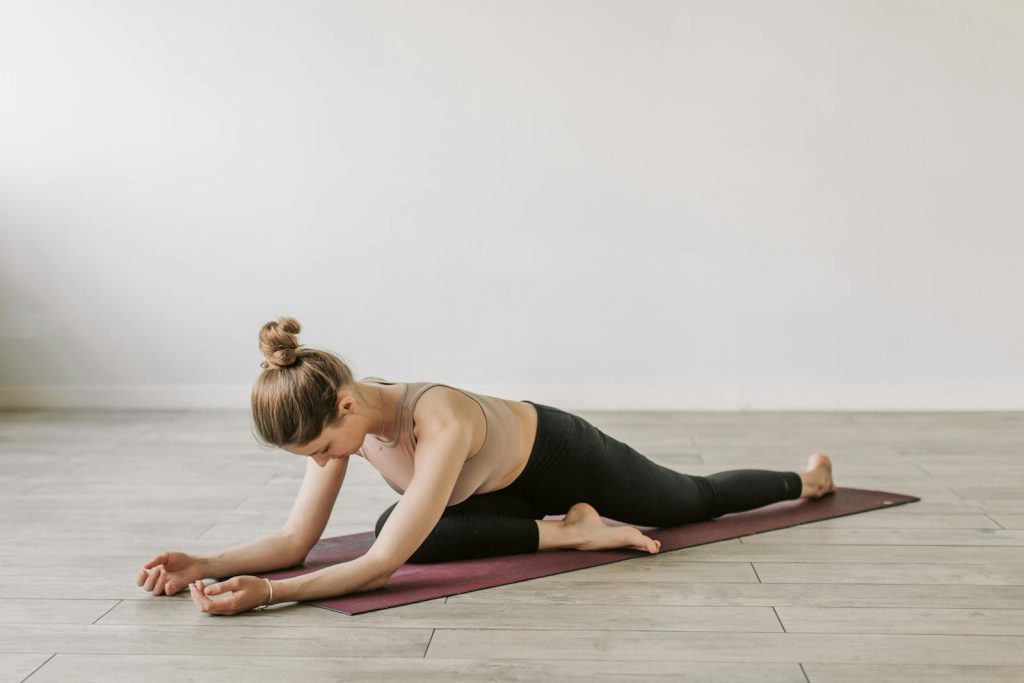
Understanding piriformis exercises matters because tightness or poor control around the hip can affect walking, sitting, lifting, and athletic movement. A well-structured routine typically includes gentle stretching, controlled strengthening, and gradual progression to support healthy hip mechanics.
What Are Piriformis Exercises?
Piriformis exercises are movements designed to improve how the piriformis muscle functions during daily and athletic activity. The piriformis is a small, deep muscle located in the buttock that helps rotate and stabilize the hip.
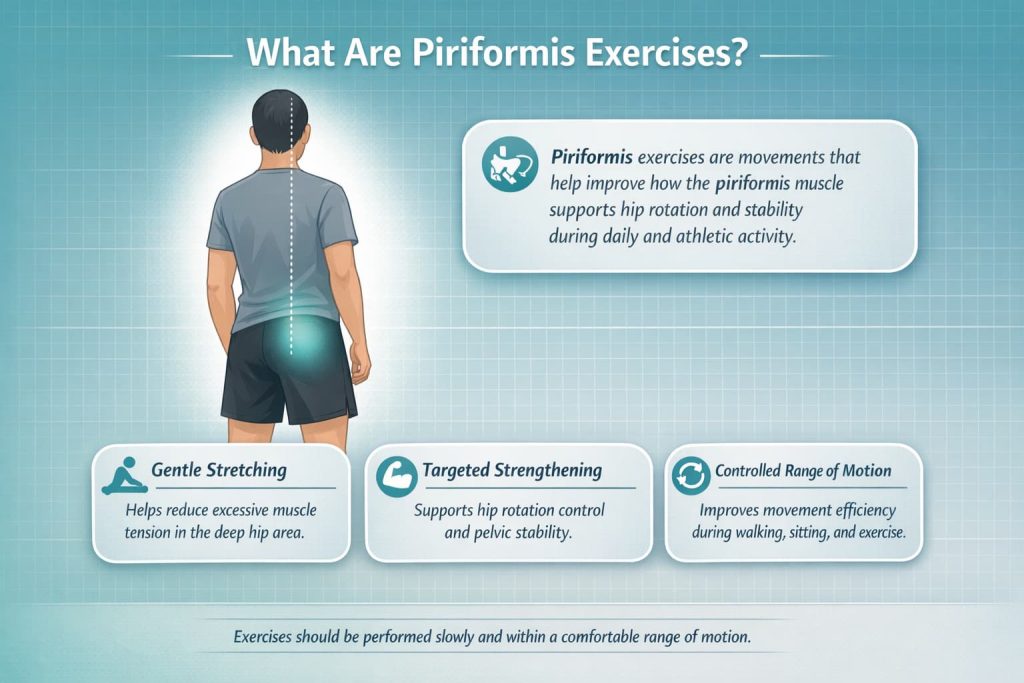
These exercises generally include:
- Gentle stretches to reduce excessive muscle tension
- Strengthening movements to support hip rotation and stability
- Controlled range-of-motion work to improve movement efficiency
10 Best Piriformis Exercises
Below are commonly recommended piriformis exercises used in rehabilitation and general fitness programs. Perform movements slowly and within a comfortable range.
1. Seated Piriformis Stretch
Why it works:
This stretch gently places the hip into external rotation, which lengthens the piriformis in a controlled, upright position. Because the spine stays vertical, it minimizes strain on the lower back and allows you to regulate stretch intensity easily.
Muscles worked:
Piriformis (primary), gluteus maximus and medius (secondary), deep hip rotators.
How to do it:
- Sit tall on a chair with both feet flat on the floor
- Cross one ankle over the opposite knee
- Keep your chest lifted and spine neutral
- Gently hinge forward at the hips until a stretch is felt in the buttock
- Hold, then switch sides
Trainer Tip:
If knee pressure feels uncomfortable, cross the ankle lower on the shin or perform the stretch without leaning forward.
2. Figure-4 Stretch (Supine or Seated)
Why it works:
The figure-4 position externally rotates the hip, directly targeting the piriformis while allowing you to adjust intensity based on position (lying down vs. seated).
Muscles worked:
Piriformis, gluteus maximus, posterior hip capsule.
How to do it:
- Lie on your back or sit upright
- Cross one ankle over the opposite thigh, forming a “4” shape
- If supine, gently pull the uncrossed leg toward your chest
- Keep hips relaxed and shoulders down
- Hold, then switch sides
Trainer Tip:
Supine variations are often more comfortable if you have low-back sensitivity or limited hip mobility.
3. Lying Knee-to-Chest Stretch
Why it works:
Bringing the knee toward the chest places the hip into flexion, which can reduce deep buttock tension and gently decompress the hip joint.
Muscles worked:
Piriformis, gluteus maximus, lower back stabilizers (indirect).
How to do it:
- Lie on your back with both legs extended
- Bend one knee and draw it toward your chest
- Keep the opposite leg relaxed on the floor
- Hold with steady breathing
- Switch sides
Trainer Tip:
Avoid pulling aggressively; the stretch should feel gentle and controlled, not forced.
4. Supine Hip External Rotation
Why it works:
This exercise improves active control of external rotation rather than passive flexibility alone, helping the piriformis function more effectively during movement.
Muscles worked:
Piriformis, obturator muscles, gluteus medius.
How to do it:
- Lie on your back with knees bent and feet flat
- Slowly let one knee fall outward while keeping hips stable
- Return to center with control
- Repeat on the opposite side
Trainer Tip:
Focus on smooth motion—avoid letting the pelvis tilt or rotate during the movement.
5. Clamshell Exercise
Why it works:
The clamshell strengthens the external hip rotators in a low-load position, improving endurance and control of the piriformis during daily activity.
Muscles worked:
Piriformis, gluteus medius, gluteus minimus.
How to do it:
- Lie on your side with hips and knees bent
- Keep feet together and hips stacked
- Open the top knee without rolling backward
- Lower slowly and repeat
Trainer Tip:
Quality matters more than range—stop the lift before your hips begin to rotate.
6. Side-Lying Leg Raise
Why it works:
This exercise builds lateral hip strength and endurance, which supports pelvic stability and reduces overload on the piriformis during walking and standing tasks.
Muscles worked:
Gluteus medius (primary), piriformis (supporting), hip stabilizers.
How to do it:
- Lie on your side with the bottom knee bent
- Keep the top leg straight and in line with your body
- Lift the top leg upward slowly
- Lower with control and repeat
Trainer Tip:
Think “long leg” rather than “high leg” to keep tension in the correct muscles.
7. Standing Hip External Rotation
Why it works:
This movement challenges the piriformis in a weight-bearing position, helping transfer strength gains to real-world activities like walking and stair climbing.
Muscles worked:
Piriformis, gluteus medius, deep hip rotators.
How to do it:
- Stand tall while holding a chair or wall for balance
- Shift weight onto one leg
- Gently rotate the free leg outward
- Return to neutral and repeat
Trainer Tip:
Keep the pelvis level—movement should come from the hip, not the lower back.
8. Glute Bridge With External Rotation
Why it works:
Combining hip extension with external rotation encourages coordinated activation between the glutes and piriformis, improving overall hip control.
Muscles worked:
Gluteus maximus, piriformis, gluteus medius.
How to do it:
- Lie on your back with knees bent and feet flat
- Press through your heels to lift hips upward
- Gently press knees outward while holding the bridge
- Lower hips slowly and repeat
Trainer Tip:
Maintain even weight through both feet to avoid shifting load into the lower back.
9. Quadruped Hip Rotation
Why it works:
This position allows hip movement with minimal spinal loading, making it useful for improving mobility while maintaining core stability.
Muscles worked:
Piriformis, hip rotators, core stabilizers.
How to do it:
- Start on hands and knees with a neutral spine
- Lift one knee slightly off the floor
- Rotate the hip outward in a small, controlled arc
- Return to start and switch sides
Trainer Tip:
Move slowly and keep your trunk steady—this is about control, not speed.
10. Controlled Hip Rotation Stretch (Dynamic)
Why it works:
Dynamic hip rotation introduces gentle, active range of motion, helping the piriformis adapt to movement demands rather than static positions alone.
Muscles worked:
Piriformis, hip rotators, gluteal muscles.
How to do it:
- Stand or sit tall with hips relaxed
- Slowly rotate one hip outward and back to center
- Keep motion smooth and pain-free
- Alternate sides
Trainer Tip:
Use this exercise as a warm-up or transition movement rather than a long hold stretch.
How Often Should You Do Piriformis Exercises?
General guidance from the American Academy of Orthopaedic Surgeons suggests:
- Stretching most days of the week
- Strengthening exercises 2–3 times per week
- Allowing rest days as needed for recovery
Consistency is more important than intensity. Movements should never be forced into pain.
Who Can Benefit From Piriformis Exercises?
Piriformis exercises may be helpful for individuals who experience hip tightness, reduced hip mobility, or discomfort during daily movement. These exercises are commonly included in general fitness and movement-quality programs.
People who may benefit include:
- Individuals who sit for long periods during work or travel
- Runners, cyclists, and athletes who perform repetitive lower-body movements
- People who notice hip stiffness or reduced rotational movement
- Those looking to improve overall hip stability and flexibility
Piriformis exercises are typically used as part of a broader hip and lower-body routine rather than as a standalone solution.
When to Be Cautious or Seek Professional Guidance
While piriformis exercises are generally low-impact, certain situations require additional caution. Exercise may not be appropriate for everyone without professional guidance.
Consider consulting a qualified healthcare or rehabilitation professional if you experience:
- Persistent or worsening pain that does not improve with gentle movement
- Numbness, tingling, or weakness in the leg or foot
- Pain following a recent fall, injury, or surgery
- Difficulty bearing weight on one side
- Symptoms that interfere with daily activities or sleep
Professional evaluation helps ensure that exercise selection and progression are appropriate for your specific condition.
How to Use Piriformis Exercises Safely
Using piriformis exercises safely focuses on control, comfort, and consistency rather than intensity. Proper technique and gradual progression are key.
General safety guidelines include:
- Perform exercises within a pain-free or comfortable range of motion
- Move slowly and avoid bouncing or jerking motions
- Maintain neutral posture and controlled breathing
- Start with low repetitions and build gradually
- Stop the exercise if sharp pain, numbness, or increased discomfort occurs
Consistency over time tends to be more beneficial than aggressive stretching or strengthening.
Safety Tips and Common Mistakes
To get the most benefit:
- Move slowly and stay within a comfortable range
- Avoid bouncing or aggressive stretching
- Maintain neutral spine alignment during exercises
- Stop if sharp pain, numbness, or worsening symptoms occur
Frequently Asked Questions
Are piriformis exercises good for sciatic pain?
Piriformis exercises may help support comfort in some cases by improving hip mobility and muscle balance, but sciatic-style symptoms can have multiple causes.
How long does it take to see results?
Many people notice gradual improvement within 3–6 weeks of consistent, well-performed exercise.
Can I do piriformis exercises every day?
Gentle stretching can often be done daily, while strengthening exercises usually benefit from rest days.
Should piriformis exercises hurt?
No. Mild stretching sensations are normal, but pain is a sign to stop or reduce intensity.
Are these exercises safe for beginners?
Yes, when performed with proper technique and conservative ranges of motion.
Do I need equipment?
Most piriformis exercises are bodyweight-based and can be done at home.
Conclusion
Piriformis exercises play an important role in supporting hip mobility, comfort, and movement quality. By combining gentle stretching with controlled strengthening, you can build a routine that fits daily life and long-term joint health.
If you’re unsure where to start, focus on consistency and proper form—and consider guidance from a qualified professional if symptoms persist.
References
- AAOS Hip Conditioning Program (PDF)
- AAOS Hip Rehabilitation Exercises (Web + PDF access)
- NHS Exercises for Sciatica Problems (includes piriformis syndrome guidance)
- PubMed: Tonley et al. (2010) Case Report on strengthening + movement reeducation
- PMC Full Text Review (2023): Looking Beyond Piriformis Syndrome (differentials + management overview)