Dumbbell glute exercises can build strong, powerful hips without requiring a barbell or complicated gym equipment. The key is to combine hip thrusts, hinges, squats, lunges, step-ups, and single-leg movements rather than relying on one exercise.
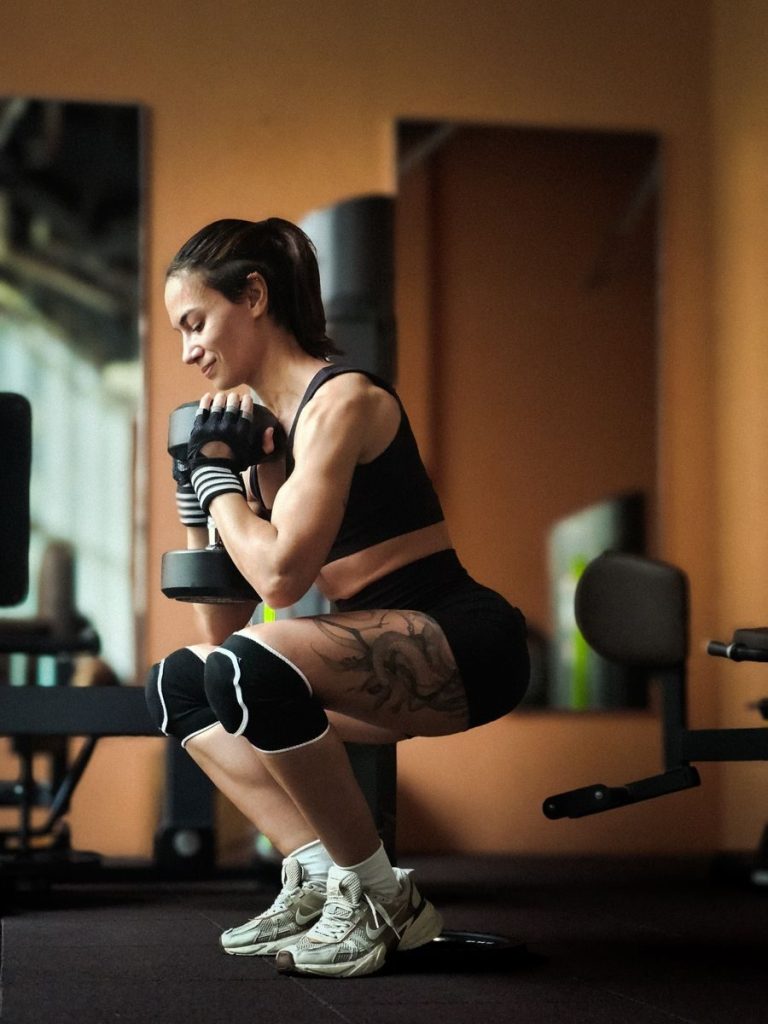
This guide covers 12 effective dumbbell glute exercises, including proper form, muscles worked, common mistakes, regressions, progressions, and practical programming. A 2025 systematic review found that both single exercises and programs combining different hip-extension movements can increase gluteus maximus size, supporting a varied rather than one-exercise approach.
Dumbbell Glute Exercises at a Glance
The sets and repetitions below are practical starting points. Beginners can start with two sets and add volume after their technique becomes consistent.
| Exercise | Best for | Suggested sets and reps | |
|---|---|---|---|
| 1 | Dumbbell hip thrust | Loadable hip extension | 3–4 sets of 8–12 |
| 2 | Dumbbell glute bridge | Beginner floor-based training | 2–3 sets of 10–15 |
| 3 | Dumbbell Romanian deadlift | Glutes and hamstrings | 3–4 sets of 6–10 |
| 4 | Dumbbell single-leg Romanian deadlift | Unilateral hip control | 2–3 sets of 8–12 per side |
| 5 | Dumbbell goblet squat | Learning the squat pattern | 3–4 sets of 8–12 |
| 6 | Dumbbell sumo squat | Wide-stance lower-body strength | 3 sets of 8–12 |
| 7 | Dumbbell Bulgarian split squat | Challenging single-leg strength | 3 sets of 6–10 per side |
| 8 | Dumbbell reverse lunge | Controlled unilateral training | 2–3 sets of 8–12 per side |
| 9 | Dumbbell walking lunge | Dynamic lower-body strength | 2–3 sets of 8–12 per side |
| 10 | Dumbbell step-up | Hip and leg strength | 2–3 sets of 8–12 per side |
| 11 | Dumbbell lateral lunge | Side-to-side strength | 2–3 sets of 8–12 per side |
| 12 | Dumbbell lateral step-up | Pelvic control and lateral stability | 2–3 sets of 8–12 per side |
You do not need to perform all 12 exercises in one session. Most workouts only need three to five movements selected from different categories.
What Muscles Do Dumbbell Glute Exercises Work?
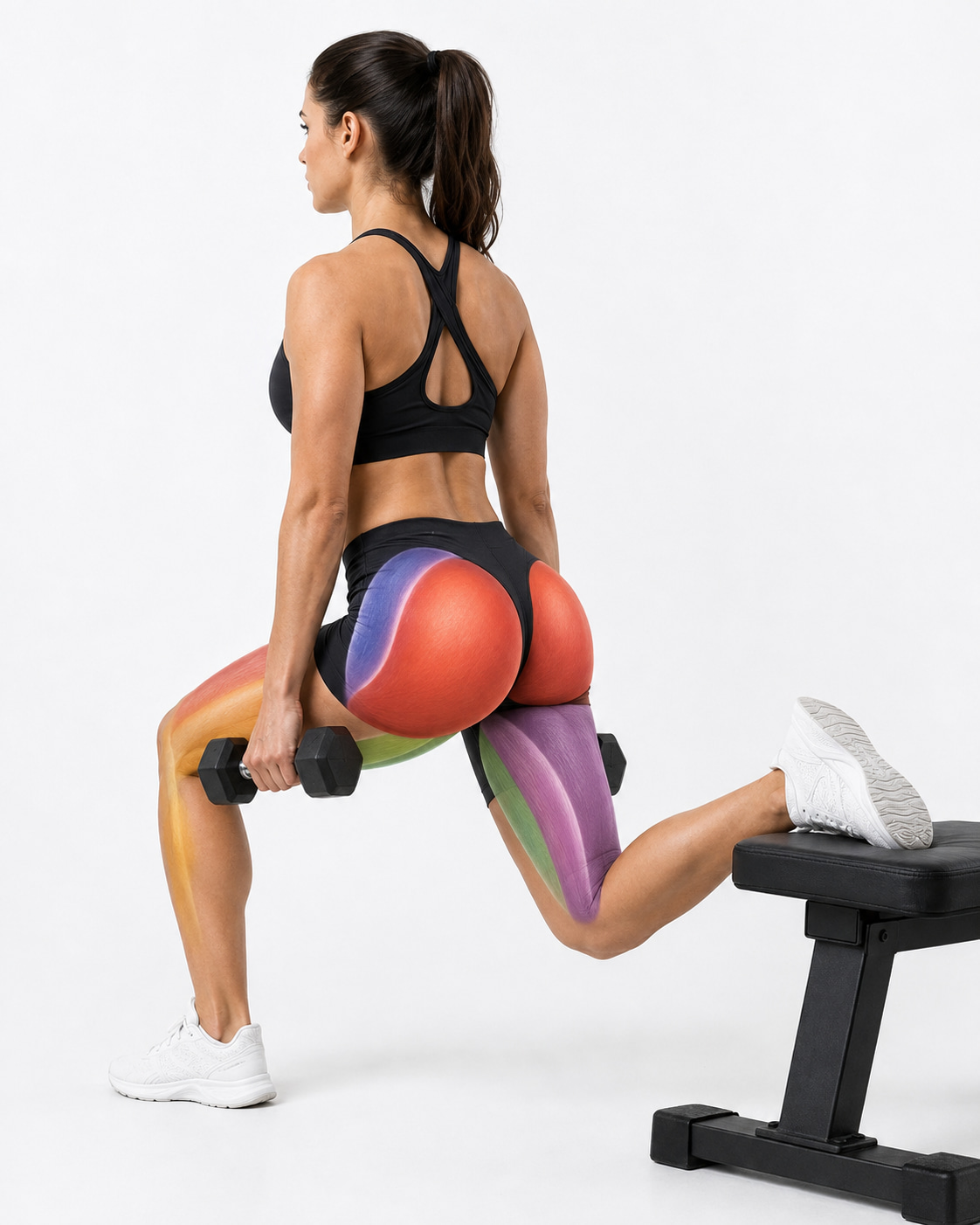
Gluteus Maximus
The gluteus maximus is the main muscle targeted by most dumbbell glute exercises. It extends the hip and works strongly during hip thrusts, glute bridges, Romanian deadlifts, squats, lunges, and step-ups. The NCBI Bookshelf describes hip extension as one of its primary functions.
Gluteus Medius and Minimus
The gluteus medius and minimus help move the leg outward and stabilize the pelvis during single-leg movements. They are especially important during:
- Single-leg Romanian deadlifts
- Bulgarian split squats
- Lunges
- Step-ups
- Lateral lunges
The NCBI Bookshelf notes their important role in pelvic stability during single-leg support.
Hamstrings, Quadriceps, and Adductors
Most dumbbell glute exercises also involve the hamstrings, quadriceps, and adductors. The hamstrings assist during hip hinges and bridges, while the quadriceps work more during squats, lunges, and step-ups. Your core and spinal muscles also help keep the torso stable throughout these movements.
How to Choose the Right Dumbbell Weight
Choose a weight that makes the final repetitions challenging without changing your technique.
A practical target is to finish most sets with roughly 2–3 good repetitions still possible.
The weight is probably too heavy if:
- Your range of motion becomes much shorter
- Your back position changes during a hinge
- You lose balance repeatedly
- Your knees collapse inward
- You need momentum to finish repetitions
- You cannot control the lowering portion
Once you can reach the top of your repetition range with consistent form across your sets, increase the dumbbell weight by the smallest practical amount.
The updated American College of Sports Medicine resistance-training guidance emphasizes progressive resistance and notes that complicated programming or taking every set to complete muscular failure is not necessary for most healthy adults.
Quick Warm-Up Before Glute Training
Spend about 5–10 minutes warming up before loading the exercises. The American Academy of Orthopaedic Surgeons similarly recommends low-impact activity before hip-strengthening work.
A simple warm-up can include:
- 5–10 minutes of walking or easy cycling
- 10 bodyweight glute bridges
- 8–10 bodyweight squats
- 8 unloaded hip hinges
- One light practice set of your first weighted exercise
The goal is to prepare for the workout, not tire yourself out.
12 Best Dumbbell Glute Exercises for Strength
These 12 dumbbell glute exercises combine hip thrusts, hinges, squats, lunges, and step-ups to train the glutes through different movement patterns. Choose 3–5 exercises per workout and focus on controlled form, progressive resistance, and consistent technique.
1. Dumbbell Hip Thrust
Best for: Loadable hip extension and developing strength near the top of the movement.
Muscles worked: Gluteus maximus, hamstrings, adductor magnus, quadriceps, and trunk stabilizers.
Equipment needed: One dumbbell, a stable flat bench, and an optional pad or folded towel.
Sets, reps, and rest: Perform 3–4 sets of 8–12 repetitions. Rest 75–120 seconds between sets.
How to Do It
- Sit on the floor with your upper back against the long edge of a stable bench.
- Place a dumbbell horizontally across the crease of your hips. Use a pad or folded towel if needed.
- Position your feet approximately hip-width apart with the soles fully supported.
- Brace your midsection and keep your chin slightly tucked.
- Press through your feet and raise your hips until your torso and thighs form a straight line.
- Squeeze the glutes briefly without pushing the ribs upward or arching the lower back.
- Lower the hips under control and repeat.
The bench-supported setup is also used in the ACE elevated glute bridge guide, which emphasizes pressing through the feet and squeezing the glutes at the top.
Common mistakes: Using an unstable bench, placing the feet too far forward, pushing mainly through the toes, bouncing out of the bottom, and continuing to lift by arching the lower back after the hips have finished extending.
Progression or regression: Regress to a floor-based dumbbell glute bridge. Progress by using a heavier dumbbell, adding a one- or two-second pause at the top, or performing additional controlled repetitions.
Coaching cue: Lift with the hips, not the lower back.
2. Dumbbell Glute Bridge
Best for: Beginners, home workouts, and learning controlled hip extension.
Muscles worked: Gluteus maximus, hamstrings, adductor magnus, and abdominal stabilizers.
Equipment needed: One dumbbell and an exercise mat.
Sets, reps, and rest: Perform 2–3 sets of 10–15 repetitions. Rest 60–90 seconds between sets.
How to Do It
- Lie on your back with your knees bent and feet flat on the floor.
- Place the feet approximately hip-width apart and close enough that you can keep them fully planted.
- Position one dumbbell across your hips and hold it securely with both hands.
- Brace your midsection and gently press your lower ribs downward.
- Push through the whole foot and raise your hips.
- Stop when the hips are fully extended without excessive lower-back arching.
- Lower slowly until the hips lightly approach the floor.
Common mistakes: Driving through the toes, letting the knees collapse inward, placing the feet too far from the hips, lifting the head, and turning the top position into a lower-back arch.
Progression or regression: Begin with the bodyweight glute bridge. Progress to a heavier dumbbell, paused repetitions, or the bench-supported dumbbell hip thrust.
Coaching cue: Keep the ribs quiet while the hips move.
3. Dumbbell Romanian Deadlift
Best for: Strengthening the glutes and hamstrings through the hip-hinge pattern.
Muscles worked: Gluteus maximus, hamstrings, adductor magnus, spinal erectors, and abdominal stabilizers.
Equipment needed: Two dumbbells.
Sets, reps, and rest: Perform 3–4 sets of 6–10 repetitions. Rest 90–150 seconds between sets.
How to Do It
- Stand with your feet approximately hip-width apart and hold the dumbbells in front of your thighs.
- Soften your knees without turning the movement into a squat.
- Brace your trunk and push your hips backward.
- Keep the dumbbells close to your thighs and shins as your torso inclines forward.
- Continue until you feel strong tension through the glutes and hamstrings while maintaining a controlled spine position.
- Press the feet into the floor and drive the hips forward to stand.
- Finish tall without leaning backward.
Common mistakes: Bending the knees excessively, allowing the dumbbells to drift away from the legs, reaching for the floor, rounding the back, looking too far upward, and leaning backward at the top.
Progression or regression: Practice the hip hinge without weight or with very light dumbbells. Progress by increasing the load or using a staggered-stance Romanian deadlift.
Coaching cue: Push the hips toward the wall behind you.
4. Dumbbell Single-Leg Romanian Deadlift
Best for: Unilateral glute strength, balance, and pelvic control.
Muscles worked: Gluteus maximus, gluteus medius, hamstrings, adductors, calves, and trunk stabilizers.
Equipment needed: One dumbbell. A wall, rack, or chair can provide support.
Sets, reps, and rest: Perform 2–3 sets of 8–12 repetitions per side. Rest 60–90 seconds between sides or sets.
How to Do It
- Stand on your right leg and hold a dumbbell in your left hand.
- Keep a slight bend in the supporting knee.
- Brace your trunk and begin pushing your hips backward.
- Allow the free leg to extend behind you as your torso inclines forward.
- Keep the hips facing the floor rather than rotating the free hip upward.
- Lower the dumbbell toward the inside of the supporting shin.
- Drive through the standing foot and return to an upright position.
- Complete the set before switching sides.
Common mistakes: Locking the standing knee, twisting the pelvis, reaching for the floor, moving too quickly, and continuing downward after losing a stable spine position.
Progression or regression: Use one hand on a stable support or perform a kickstand Romanian deadlift with the rear toes lightly touching the floor. Progress by holding two dumbbells or increasing the load.
Coaching cue: Keep both hip bones facing the floor.
5. Dumbbell Goblet Squat
Best for: Learning squat mechanics while training the glutes, thighs, and trunk.
Muscles worked: Gluteus maximus, quadriceps, adductors, hamstrings, calves, and trunk stabilizers.
Equipment needed: One dumbbell.
Sets, reps, and rest: Perform 3–4 sets of 8–12 repetitions. Rest 75–120 seconds between sets.
How to Do It
- Hold one end of a dumbbell close to your chest with both hands.
- Stand with your feet around shoulder-width apart and turn the toes outward slightly if comfortable.
- Brace your midsection and keep the dumbbell close to your body.
- Bend your hips and knees together, lowering between your legs.
- Keep the heels supported and allow the knees to follow the direction of the toes.
- Descend as far as you can while maintaining control.
- Press through the floor and stand tall.
A small 10-week study involving 17 men found greater gluteus maximus growth from full-squat training than half-squat training. That does not mean everyone must use the same depth. Use the deepest range you can control without forcing your hips, knees, or back into an uncomfortable position.
Common mistakes: Holding the dumbbell away from the chest, lifting the heels, allowing the knees to collapse inward, dropping too quickly, and forcing more depth than you can control.
Progression or regression: Squat to a bench or box as a regression. Progress by increasing the weight, adding a pause near the bottom, or using two dumbbells in a front-rack position.
Coaching cue: Sit between your feet rather than only pushing backward.
6. Dumbbell Sumo Squat
Best for: Wide-stance lower-body strength with additional involvement from the inner thighs.
Muscles worked: Gluteus maximus, quadriceps, adductors, hamstrings, and trunk stabilizers.
Equipment needed: One dumbbell.
Sets, reps, and rest: Perform 3 sets of 8–12 repetitions. Rest 75–120 seconds between sets.
How to Do It
- Stand wider than shoulder width with your toes turned outward comfortably.
- Hold one dumbbell vertically in front of your body with both hands.
- Brace your midsection and keep your chest naturally lifted.
- Bend the hips and knees while keeping the whole foot supported.
- Lower the dumbbell between your legs without allowing it to pull your torso forward.
- Keep the knees moving in the same general direction as the toes.
- Press through the floor and stand tall.
Common mistakes: Taking an excessively wide stance, allowing the knees to collapse inward, lifting the inner edges of the feet, folding sharply forward, and resting the dumbbell on the floor between repetitions.
Progression or regression: Use a slightly narrower stance or perform a standard goblet squat. Progress by increasing the dumbbell weight or adding a controlled pause at the bottom.
7. Dumbbell Bulgarian Split Squat
Best for: Challenging each glute and leg with moderate dumbbell loads.
Muscles worked: Gluteus maximus, quadriceps, adductors, hamstrings, gluteus medius, and trunk stabilizers.
Equipment needed: Two dumbbells and a stable bench.
Sets, reps, and rest: Perform 3 sets of 6–10 repetitions per side. Rest 90–150 seconds between sets.
How to Do It
- Stand approximately one stride in front of a stable bench.
- Place the top of one foot on the bench behind you.
- Hold one dumbbell in each hand with your arms hanging naturally.
- Set most of your weight over the front leg.
- Bend the front knee and lower the rear knee toward the floor.
- Allow a small forward torso lean while keeping the spine controlled.
- Press through the front foot to return to the starting position.
- Complete the set before changing legs.
Common mistakes: Standing with the feet on a narrow tightrope line, pushing heavily from the elevated foot, allowing the front heel to lift, twisting the pelvis, and using a bench that is too high for a comfortable setup.
Progression or regression: Keep the rear foot on the floor and perform a regular split squat. Progress by increasing the dumbbell load or pausing briefly near the bottom.
Coaching cue: Let the front leg do the work.
8. Dumbbell Reverse Lunge
Best for: Controlled single-leg training with less forward momentum than a forward or walking lunge.
Muscles worked: Gluteus maximus, quadriceps, hamstrings, adductors, gluteus medius, and calves.
Equipment needed: Two dumbbells.
Sets, reps, and rest: Perform 2–3 sets of 8–12 repetitions per side. Rest 75–120 seconds between sets.
How to Do It
- Stand tall with one dumbbell in each hand.
- Step one foot backward and place the ball of that foot on the floor.
- Lower the rear knee toward the floor while keeping the front foot fully supported.
- Maintain a stable trunk and allow a slight forward lean from the hips.
- Press through the front foot to return to standing.
- Alternate legs or complete all repetitions on one side before switching.
Common mistakes: Stepping directly behind the other foot, taking a step that is too short, allowing the front knee to collapse inward, pushing forcefully from the rear foot, and rushing the transition between repetitions.
Progression or regression: Begin without weights or hold a stable support. Progress by using heavier dumbbells or holding the dumbbells in a front-rack position.
9. Dumbbell Walking Lunge
Best for: Dynamic unilateral strength, coordination, and training when you have enough open space.
Muscles worked: Gluteus maximus, quadriceps, hamstrings, adductors, gluteus medius, and calves.
Equipment needed: Two dumbbells and a clear walking path.
Sets, reps, and rest: Perform 2–3 sets of 8–12 repetitions per leg. Rest 75–120 seconds between sets.
How to Do It
- Stand with one dumbbell in each hand.
- Step forward far enough that both knees can bend comfortably.
- Lower the rear knee toward the floor while keeping the front foot supported.
- Maintain a controlled trunk and keep the front knee aligned with the foot.
- Push through the front foot and bring the rear leg forward into the next repetition.
- Continue alternating legs for the planned number of steps.
Common mistakes: Using an extremely short or long step, placing each foot on the same narrow line, bouncing the rear knee off the floor, losing control between steps, and using momentum to carry the body forward.
Progression or regression: Use a reverse lunge or stationary split squat when space or balance is limited. Progress by increasing the load or total repetitions, but avoid increasing both at the same time.
10. Dumbbell Step-Up
Best for: Developing unilateral hip and leg strength through a stepping movement.
Muscles worked: Gluteus maximus, gluteus medius, quadriceps, hamstrings, adductors, and calves.
Equipment needed: Two dumbbells and a stable box, step, or bench.
Sets, reps, and rest: Perform 2–3 sets of 8–12 repetitions per side. Rest 60–90 seconds between sets.
How to Do It
- Stand close to a stable platform with one dumbbell in each hand.
- Place your entire right foot on the platform.
- Lean forward slightly from the hips while keeping your spine controlled.
- Press through the right foot and step onto the platform.
- Stand tall without forcefully pushing from the trailing foot.
- Step down slowly and maintain control.
- Complete all repetitions before switching sides.
Loaded step-ups involve hip and knee extension while challenging the gluteus maximus, gluteus medius, quadriceps, hamstrings, and other lower-body muscles.
Common mistakes: Choosing a platform that is too high, placing only part of the foot on the platform, pushing excessively from the floor leg, allowing the working knee to collapse inward, and dropping quickly to the floor.
Progression or regression: Start with a low step, body weight, and a hand support. Progress by adding dumbbells before increasing the platform height.
Coaching cue: Use the top leg to lift you.
11. Dumbbell Lateral Lunge
Best for: Side-to-side strength and training the hips in the frontal plane.
Muscles worked: Gluteus maximus, gluteus medius, quadriceps, adductors, hamstrings, and trunk stabilizers.
Equipment needed: One dumbbell.
Sets, reps, and rest: Perform 2–3 sets of 8–12 repetitions per side. Rest 60–90 seconds between sets.
How to Do It
- Hold one dumbbell close to your chest.
- Stand tall with your feet together or approximately hip-width apart.
- Step your right foot out to the side.
- Shift your hips backward over the right leg while bending the right knee.
- Keep the left leg long without forcefully locking the knee.
- Keep the right foot fully supported and the right knee aligned with the toes.
- Push through the right foot and return to standing.
- Complete the planned repetitions before changing sides.
Common mistakes: Bending both knees equally, allowing the working foot to roll inward or outward, collapsing the torso toward the floor, taking a step that is too short, and letting the dumbbell move away from the body.
Progression or regression: Begin with body weight and a shorter comfortable range. Progress by holding a heavier dumbbell or using one dumbbell in each hand.
Coaching cue: Sit into one hip while the other leg stays long.
12. Dumbbell Lateral Step-Up
Best for: Glute strength, side-to-side control, and pelvic stability.
Muscles worked: Gluteus maximus, gluteus medius, quadriceps, hamstrings, adductors, and calves.
Equipment needed: Two dumbbells and a stable low platform.
Sets, reps, and rest: Perform 2–3 sets of 8–12 repetitions per side. Rest 60–90 seconds between sets.
How to Do It
- Stand sideways beside a stable platform.
- Place the foot closest to the platform fully on top.
- Hold one dumbbell in each hand and brace your trunk.
- Press through the elevated foot and lift your body onto the platform.
- Keep the working knee aligned with the foot and the pelvis reasonably level.
- Lightly tap the trailing foot on the platform or keep it slightly elevated.
- Lower slowly to the floor.
- Complete the set before turning around to train the other side.
Research comparing loaded step-up variations has examined forward, crossover, diagonal, and lateral step-ups, confirming that these variations challenge several hip and thigh muscles while adding unilateral resistance.
Common mistakes: Pushing forcefully from the floor leg, allowing the pelvis to drop, rotating toward the platform, letting the working knee collapse inward, and using a platform that is too high.
Progression or regression: Start with a low platform, body weight, and a nearby support. Progress by adding dumbbells once you can lift and lower without pushing from the trailing leg.
Coaching cue: Rise from the leg on the platform.
Benefits of Dumbbell Glute Exercises
They Train More Than One Hip Function
A well-designed glute routine includes several movement patterns:
- Thrusts and bridges: Emphasize hip extension near the top of the movement
- Romanian deadlifts: Load the glutes and hamstrings as the hips move backward
- Squats and split squats: Train the hips and knees together
- Lunges and step-ups: Add unilateral strength and stability demands
- Lateral movements: Challenge side-to-side hip control
Using more than one pattern gives the glutes experience producing and controlling force through different joint positions.
They Can Build Strength and Muscle
The 2026 American College of Sports Medicine resistance-training guidance confirms that free weights, machines, resistance bands, bodyweight exercises, and home-based training can all improve strength and muscle size when the program is performed consistently and progressed appropriately.
Dumbbells are particularly useful because you can increase resistance gradually while using both bilateral and single-leg exercises.
Hip Thrusts and Squats Can Both Be Useful
You do not need to choose between hip thrusts and squats as though one makes the other unnecessary.
A nine-week training study found that hip thrust and back-squat programs produced similar gluteal growth. Squats produced greater quadriceps and adductor growth, while strength gains were greatest in the exercise each group practiced. The study used barbells, but its main practical lesson still applies: different movement patterns can contribute to the same program.
They Make Unilateral Training Accessible
Exercises such as reverse lunges, step-ups, and single-leg Romanian deadlifts allow one leg to work at a time.
Unilateral training can be useful when:
- One side is noticeably less coordinated
- You have limited dumbbell weight
- Bilateral exercises no longer feel challenging
- You want to improve single-leg control
- You need more training stimulus without holding extremely heavy weights
The goal is not to make both sides perfectly identical. The goal is to train each side with consistent technique and an appropriate load.
They Work in Home and Gym Programs
Many dumbbell glute exercises require only:
- One or two dumbbells
- A clear section of floor
- A stable bench or step for selected exercises
Floor-based bridges, Romanian deadlifts, goblet squats, reverse lunges, and lateral lunges can all be performed without a weight bench.
How to Build a Dumbbell Glute Workout
A balanced workout does not require all 12 exercises. Choose one movement from most of the following categories:
- Hip thrust or bridge: Dumbbell hip thrust or glute bridge
- Hip hinge: Romanian deadlift or single-leg Romanian deadlift
- Squat or split squat: Goblet squat, sumo squat, or Bulgarian split squat
- Lunge or step-up: Reverse lunge, walking lunge, or step-up
- Optional lateral movement: Lateral lunge or lateral step-up
Place the most technically demanding or heavily loaded exercise near the beginning of the workout. Lighter unilateral or lateral exercises usually fit better later in the session.
Practical Programming Guidelines
- Frequency: Begin with two nonconsecutive lower-body sessions per week.
- Exercises per workout: Choose three to five.
- Sets: Start with two sets per exercise and progress to three or four when needed.
- Repetitions: Use 6–10 repetitions for heavier strength-focused work and 8–15 for moderate-load accessory exercises.
- Rest: Take 90–150 seconds after demanding bilateral movements and 60–90 seconds after lighter accessory exercises.
- Effort: Finish most sets with approximately two or three technically sound repetitions in reserve.
- Tempo: Lower the dumbbell under control instead of dropping quickly into the next repetition.
The ACSM recommends training all major muscle groups at least twice weekly and adjusting load and volume to match the goal. Its updated guidance associates heavier loads and two to three sets per exercise with greater strength development, while higher weekly volume can support muscle growth.
Beginner Dumbbell Glute Workout
Alternate Workout A and Workout B on two nonconsecutive days each week.
Workout A
| Exercise | Sets | Reps | Rest |
|---|---|---|---|
| Dumbbell glute bridge | 2 | 10–15 | 60 seconds |
| Dumbbell goblet squat | 2 | 8–12 | 90 seconds |
| Dumbbell Romanian deadlift | 2 | 8–12 | 90 seconds |
| Dumbbell lateral lunge | 2 | 8 per side | 60–90 seconds |
Workout B
| Exercise | Sets | Reps | Rest |
|---|---|---|---|
| Dumbbell hip thrust | 2 | 8–12 | 90 seconds |
| Dumbbell reverse lunge | 2 | 8 per side | 90 seconds |
| Dumbbell step-up | 2 | 8 per side | 60–90 seconds |
| Supported single-leg Romanian deadlift | 2 | 8 per side | 60–90 seconds |
Use weights that leave two or three repetitions in reserve. During the first few workouts, prioritize learning the movements rather than increasing the dumbbell weight.
When you reach the top of the repetition range for every set with consistent form, increase the weight slightly or add one repetition to each set.
Intermediate Dumbbell Glute Strength Workout
Perform this workout once weekly as one of two lower-body sessions.
| Exercise | Sets | Reps | Rest |
|---|---|---|---|
| Dumbbell hip thrust | 4 | 6–8 | 2 minutes |
| Dumbbell Romanian deadlift | 3 | 6–8 | 2 minutes |
| Dumbbell Bulgarian split squat | 3 | 8 per side | 90–120 seconds |
| Dumbbell lateral step-up | 2 | 10 per side | 60–90 seconds |
The final repetitions should be challenging without changing your technique. Progress one exercise at a time rather than increasing every load during the same workout.
Common Dumbbell Glute Training Mistakes
Performing All 12 Exercises in One Workout
More exercise variety does not automatically create a better session. Performing every movement can add unnecessary fatigue and make it difficult to track progress.
Choose three to five exercises that cover different patterns.
Using Only Hip Thrusts and Bridges
Hip thrusts and bridges are useful, but they do not replace hinges, squats, lunges, and step-ups.
A balanced routine should train the glutes when the hips are flexed, extended, and supporting the body on one leg.
Lifting More Weight Than You Can Control
A heavier dumbbell is only a progression when you can maintain the intended movement.
Reducing the range, twisting the pelvis, dropping quickly, or relying on momentum changes the exercise and may reduce the quality of the set.
Turning Romanian Deadlifts Into Squats
The Romanian deadlift should begin by pushing the hips backward. Excessive knee bending turns the movement into more of a squat and reduces the hip-hinge emphasis.
Keep the knees soft, move the hips back, and keep the dumbbells close to the legs.
Forcing Squat or Lunge Depth
Use a range that allows you to keep the feet supported, knees controlled, and trunk stable. Depth can improve gradually as your control and mobility improve.
Do not force a lower position simply because another person can reach it.
Using an Unstable Bench or Step
Place the bench against a wall or heavy structure when necessary. Check that steps and boxes do not slide, tip, or separate before adding dumbbells.
Pushing From the Trailing Leg
During step-ups, split squats, and lunges, the working leg should produce most of the effort. Pushing strongly from the floor leg can make the exercise easier without actually progressing the working side.
Taking Every Set to Failure
Training hard is useful, but reaching complete failure on every set can increase fatigue and make technique harder to maintain.
Most sets can stop when you feel you could perform another two or three controlled repetitions.
Frequently Asked Questions
Can You Build Strong Glutes With Only Dumbbells?
Yes. Dumbbells can provide progressive resistance for hip thrusts, Romanian deadlifts, squats, lunges, and step-ups.
As your strength improves, you can progress by increasing the weight, repetitions, sets, range of motion, pauses, or unilateral demands.
How Often Should You Perform Dumbbell Glute Exercises?
Two nonconsecutive lower-body sessions per week are a practical starting point for most beginners. More experienced trainees may distribute their weekly training across two or three sessions.
Allow enough recovery that you can repeat the exercises with stable technique and normal strength.
How Many Glute Exercises Should You Do in One Workout?
Most workouts need three to five exercises.
A simple structure is one hip thrust or bridge, one hinge, one squat or split squat, and one lunge or step-up. Add a lateral movement when it supports your goals and available training time.
What Is the Best Dumbbell Exercise for the Glutes?
There is no single best exercise for every person or every goal.
Hip thrusts are highly loadable near full hip extension. Romanian deadlifts challenge the glutes and hamstrings as the hips move backward. Squats, lunges, and step-ups train the glutes alongside the thighs through larger multi-joint movements.
A combination is usually more useful than relying on one exercise.
Are Dumbbell Hip Thrusts or Squats Better for the Glutes?
Both can strengthen the glutes.
Hip thrusts emphasize hip extension with the torso supported. Squats train the hips and knees together and involve the quadriceps and adductors more substantially. They can be used in the same program or placed on separate lower-body days.
Why Do I Feel Romanian Deadlifts in My Hamstrings?
The hamstrings and glutes both contribute to hip extension, so feeling the hamstrings during Romanian deadlifts is expected.
You should also feel tension around the hips. Reduce the range or load if you lose your controlled spine position or feel the movement primarily through the lower back.
Can You Perform These Exercises at Home?
Yes. Glute bridges, Romanian deadlifts, goblet squats, sumo squats, reverse lunges, and lateral lunges require little space.
Hip thrusts and step-ups require a stable bench or platform. Do not substitute lightweight furniture that may slide, tip, or break.
Conclusion
Dumbbell glute exercises work best when they are treated as a complete training system rather than a list of unrelated movements.
Combine a hip thrust or bridge with a hinge, squat, and unilateral exercise. Use weights you can control, stop sets before your technique breaks down, and increase the challenge gradually.
Start with three or four exercises performed twice weekly. Track your repetitions and dumbbell weights, and progress only after you can complete the current workload with consistent form.
References
- American College of Sports Medicine: 2026 Resistance Training Guidelines
- NCBI Bookshelf: Gluteus Maximus Anatomy and Gluteus Medius Anatomy
- Frontiers in Physiology: Resistance Training and Gluteus Maximus Hypertrophy
- PubMed: Hip Thrust and Back Squat Training Comparison
- PubMed: Effects of Squat Depth on Lower-Limb Muscle Volume
- PubMed: Muscle Activation During Loaded Step-Up Variations
- American Academy of Orthopaedic Surgeons: Hip Conditioning Program
Stop exercising and seek appropriate professional help if a movement causes sharp pain, numbness, dizziness, chest pain, or other unusual symptoms.
This content is for informational purposes only and is not a substitute for medical advice.