The best dumbbell leg exercises include squats, hip hinges, lunges, step-ups, hip thrusts, and calf raises because these movements collectively train the quadriceps, hamstrings, glutes, inner thighs, and calves.
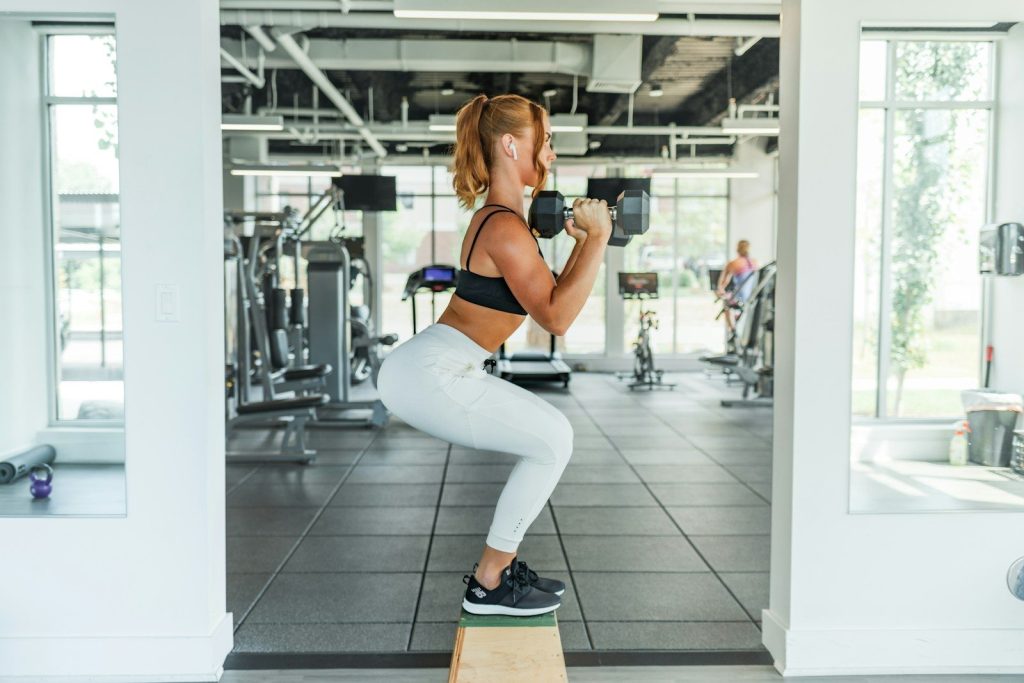
You do not need a barbell, squat rack, or leg machine to build a productive lower-body workout. A pair of dumbbells—and sometimes just one dumbbell—can provide enough resistance for beginners and experienced lifters when exercises are performed with controlled form and progressively made more challenging.
The American College of Sports Medicine emphasizes in its 2026 resistance-training guidance that consistent training matters more than complicated programming. It also notes that free weights, resistance bands, bodyweight exercises, and home-based routines can all improve strength, muscle size, and physical function.
This guide explains how to perform ten effective dumbbell exercises for legs, avoid common mistakes, select appropriate weights, and combine the movements into a practical two-day workout.
Dumbbell Leg Exercises at a Glance
| Exercise | Best for | Main muscles worked | Difficulty | |
|---|---|---|---|---|
| 1 | Dumbbell Goblet Squat | Learning the squat pattern | Quadriceps, glutes, adductors | Beginner |
| 2 | Dumbbell Romanian Deadlift | Posterior-chain strength | Hamstrings, glutes, adductors | Beginner–intermediate |
| 3 | Dumbbell Reverse Lunge | Accessible single-leg training | Quadriceps, glutes, hamstrings | Beginner–intermediate |
| 4 | Dumbbell Bulgarian Split Squat | Challenging each leg with less total weight | Quadriceps, glutes, adductors | Intermediate |
| 5 | Dumbbell Step-Up | Unilateral strength and control | Quadriceps, glutes, hamstrings | Beginner–intermediate |
| 6 | Dumbbell Front Squat | Loading the squat with two dumbbells | Quadriceps, glutes, adductors | Intermediate |
| 7 | Dumbbell Lateral Lunge | Side-to-side lower-body strength | Adductors, glutes, quadriceps | Intermediate |
| 8 | Dumbbell Hip Thrust | Glute-focused hip extension | Glutes, hamstrings | Beginner–intermediate |
| 9 | Dumbbell Single-Leg Romanian Deadlift | Unilateral hinging and balance | Hamstrings, glutes, hip stabilizers | Intermediate |
| 10 | Standing Dumbbell Calf Raise | Direct calf training | Gastrocnemius, soleus | Beginner |
You do not need to perform all 10 exercises in one workout. For most sessions, choose 4–6 movements that include a squat, hip hinge, unilateral exercise, and calf exercise.
What Muscles Do Dumbbell Leg Exercises Work?
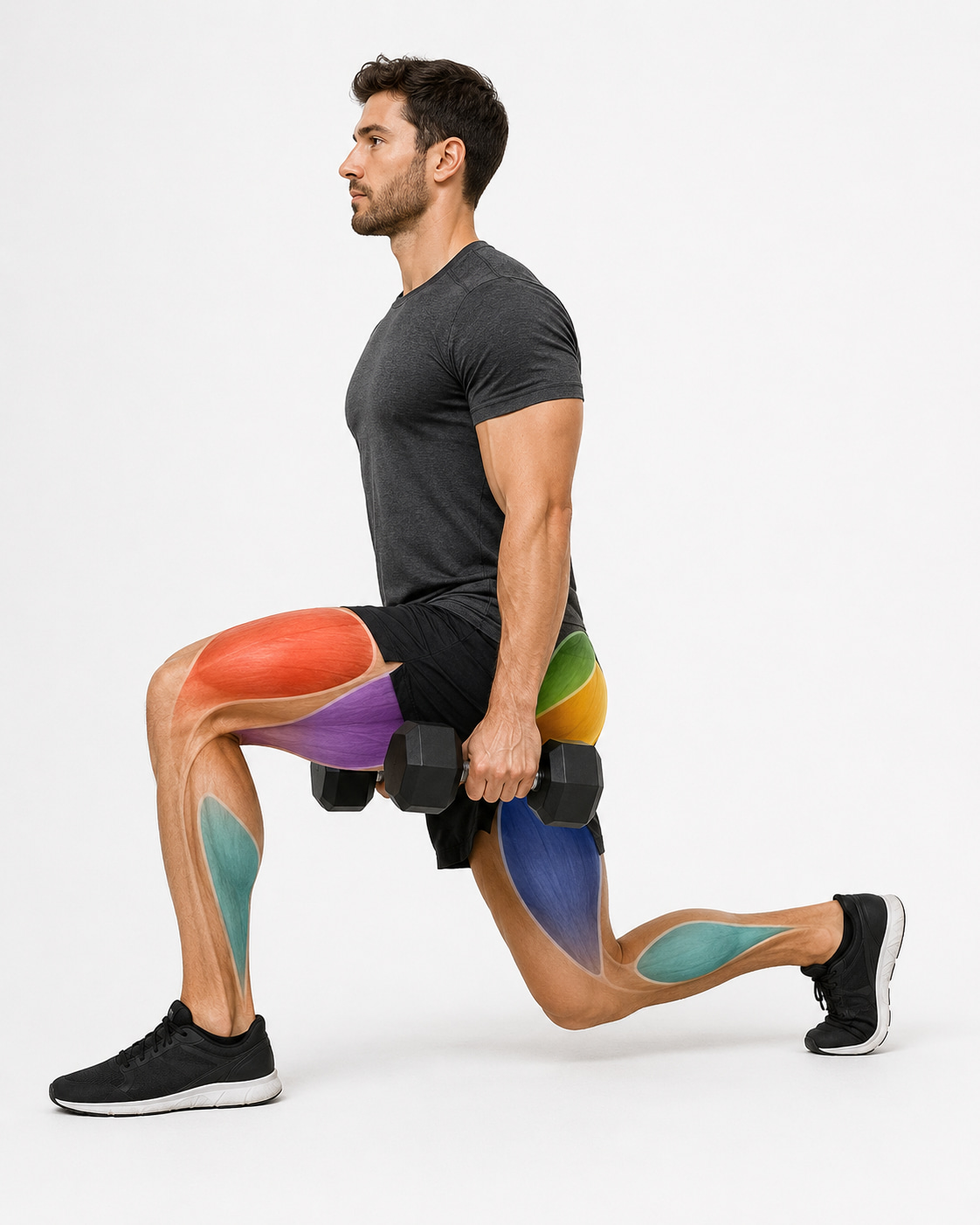
Dumbbell leg exercises can train all the major muscles of the lower body:
- Quadriceps: Straighten the knees during squats, lunges, split squats, and step-ups.
- Hamstrings: Help extend the hips and control the knees, especially during Romanian deadlifts.
- Glutes: Extend and stabilize the hips during squats, lunges, step-ups, hinges, and hip thrusts.
- Adductors: Help control the thighs and contribute to squats, hinges, and lateral lunges.
- Calves: Raise the heels and help stabilize the ankles during standing movements.
The American Academy of Orthopaedic Surgeons includes the quadriceps, hamstrings, gluteal muscles, adductors, and abductors among the major muscle groups involved in lower-body strength and movement.
Benefits of Dumbbell Leg Exercises
- Minimal equipment: Most exercises need only one or two dumbbells.
- Complete lower-body training: Squats, hinges, lunges, and calf raises collectively train the quads, hamstrings, glutes, adductors, and calves.
- Useful with moderate weights: Single-leg exercises can make lighter dumbbells more challenging.
- Train each side independently: Lunges, step-ups, and single-leg hinges allow each leg to work separately.
- Easy to progress: You can add repetitions, weight, pauses, sets, or more challenging variations as you improve.
Before Starting a Dumbbell Leg Workout
Use the Right Equipment
You need one or two dumbbells and enough clear floor space to move safely.
A stable bench, box, or step is useful for:
- Bulgarian split squats
- Step-ups
- Dumbbell hip thrusts
Make sure the surface cannot slide, tip, or fold. Avoid using unstable furniture.
Warm Up for 5–10 Minutes
Start with five to ten minutes of easy activity such as walking, cycling, or marching in place.
Then perform one or two lighter practice sets of your first exercise. For example:
- Bodyweight squats before goblet squats
- Unloaded hip hinges before Romanian deadlifts
Choose a Weight You Can Control
Use a dumbbell weight that feels challenging without causing your balance, posture, or movement path to change.
A practical target is to finish most working sets with about 1–3 repetitions in reserve, meaning you could complete roughly one to three more controlled repetitions if necessary.
A systematic review indexed by PubMed found that taking every resistance-training set to momentary muscular failure is not required for muscle growth.
Use lighter dumbbells when learning a new exercise or when balance is a major challenge.
Use a Comfortable Range of Motion
Do not force a squat or lunge deeper just to reach a specific position.
Use the range where you can maintain:
- Stable foot pressure
- Controlled knee movement
- A braced torso
- Comfortable joints
- Consistent form
Your usable range of motion may improve as your strength, mobility, and coordination develop.
10 Best Dumbbell Leg Exercises
These 10 dumbbell leg exercises target the quads, hamstrings, glutes, calves, and other lower-body muscles through squats, hinges, lunges, and single-leg movements.
Choose four to six exercises per workout, use controlled form, and gradually increase reps or weight as you get stronger.
1. Dumbbell Goblet Squat
Best for: Learning the squat pattern and training the quadriceps and glutes with one dumbbell.
Muscles worked: Quadriceps, gluteus maximus, adductors, hamstrings, calves, and trunk muscles.
Equipment needed: One dumbbell.
Sets, reps, and rest: Perform 2–4 sets of 8–15 repetitions. Rest for 90–150 seconds.
How to Do a Dumbbell Goblet Squat
- Stand with your feet approximately shoulder-width apart and your toes pointing in a comfortable direction.
- Hold one end of a dumbbell with both hands and keep it close to your upper chest.
- Brace your midsection and bend your knees and hips together.
- Lower your hips between your legs while keeping the whole foot planted.
- Allow your knees to follow the direction of your toes.
- Descend as far as you can control without your heels lifting or your torso collapsing.
- Push the floor away and extend your hips and knees to stand.
The ACE goblet squat guide similarly emphasizes holding the dumbbell close to the chest, controlling the descent, and pushing both feet into the floor to stand.
Common mistakes: Letting the dumbbell drift away from the chest, rising onto the toes, allowing the knees to collapse inward, or forcing more depth than you can control.
Regression: Perform a bodyweight box squat to a secure bench or use a shallower range.
Progression: Use a heavier dumbbell, pause briefly at the bottom, or advance to the two-dumbbell front squat.
Coaching cue: Keep the dumbbell attached to your chest.
2. Dumbbell Romanian Deadlift
Best for: Training the hamstrings and glutes through a controlled hip hinge.
Muscles worked: Hamstrings, gluteus maximus, adductors, spinal erectors, upper back, forearms, and grip muscles.
Equipment needed: Two dumbbells, although one dumbbell can also be used.
Sets, reps, and rest: Perform 3–4 sets of 6–12 repetitions. Rest for 90–180 seconds.
How to Do a Dumbbell Romanian Deadlift
- Stand with your feet approximately hip-width apart and hold the dumbbells in front of your thighs.
- Soften your knees slightly and brace your torso.
- Push your hips backward while allowing your torso to lean forward as one controlled unit.
- Keep the dumbbells close to the fronts or sides of your legs.
- Stop when you feel a strong but comfortable hamstring stretch or before your back begins to round.
- Push through your feet and drive your hips forward to stand.
- Finish tall without leaning backward or aggressively squeezing the lower back.
The National Academy of Sports Medicine emphasizes pushing the hips backward, maintaining a slight knee bend, keeping a neutral spine, and using the hamstring stretch—not the dumbbells reaching the floor—to determine depth.
Common mistakes: Turning the hinge into a squat, letting the dumbbells move far away from the legs, rounding the back to reach lower, or bending and straightening the knees throughout the repetition.
Regression: Practice an unloaded hip hinge while reaching your hips toward a wall behind you.
Progression: Increase the dumbbell weight, use a slower lowering phase, or advance to a kickstand or single-leg Romanian deadlift.
Coaching cue: Move your hips back as though closing a car door behind you.
3. Dumbbell Reverse Lunge
Best for: Building single-leg strength with a relatively accessible lunge pattern.
Muscles worked: Quadriceps, gluteus maximus, hamstrings, adductors, calves, and hip stabilizers.
Equipment needed: One or two dumbbells.
Sets, reps, and rest: Perform 2–3 sets of 8–12 repetitions per leg. Rest for 60–120 seconds.
How to Do a Dumbbell Reverse Lunge
- Stand with your feet approximately hip-width apart and hold the dumbbells beside your thighs.
- Step one foot backward, keeping enough space between your feet to remain balanced.
- Lower your rear knee toward the floor while bending the front knee.
- Keep the front foot planted and allow the front knee to track in the direction of the toes.
- Maintain a tall torso or use a small, controlled forward lean from the hips.
- Push through the front foot and bring the rear foot forward.
- Regain your balance before beginning the next repetition.
The ACE reverse lunge guide uses the same basic step-back, controlled lowering, and front-leg drive pattern.
Common mistakes: Placing both feet on a narrow tightrope line, stepping so short that the front heel lifts, pushing excessively from the rear foot, or rushing the return to standing.
Regression: Use bodyweight and hold a wall, rack, or stable support. A stationary split squat is another useful starting option.
Progression: Hold two heavier dumbbells, use a front-rack position, or perform the movement from a small deficit once the standard version is stable.
Coaching cue: Let the front leg bring you home.
4. Dumbbell Bulgarian Split Squat
Best for: Challenging the quadriceps and glutes when your available dumbbells are not especially heavy.
Muscles worked: Quadriceps, gluteus maximus, adductors, hamstrings, calves, and hip stabilizers.
Equipment needed: One or two dumbbells and a secure bench.
Sets, reps, and rest: Perform 2–3 sets of 6–12 repetitions per leg. Rest for 90–150 seconds.
How to Do a Dumbbell Bulgarian Split Squat
- Stand approximately one stride in front of a stable bench.
- Place the top of one foot on the bench behind you.
- Keep the front foot fully planted and square your hips forward.
- Brace your torso and lower the rear knee toward the floor.
- Allow the front knee to move naturally in the direction of the toes.
- Descend only as far as you can maintain balance and control.
- Drive through the front foot to return to the starting position.
The National Academy of Sports Medicine presents the Bulgarian split squat as an intermediate unilateral lower-body movement that can be performed with a bench and dumbbells.
Common mistakes: Standing too close to the bench, using an excessively high rear-foot position, bouncing at the bottom, losing front-foot pressure, or trying to push strongly through the elevated leg.
Regression: Perform a regular split squat with both feet on the floor. You can also hold a stable support and use no dumbbells.
Progression: Add weight, pause at the bottom, or slightly elevate the front foot to increase the available range when you can control it.
Coaching cue: Lower straight down instead of lunging forward.
5. Dumbbell Step-Up
Best for: Building controlled unilateral strength through a stair-climbing movement.
Muscles worked: Quadriceps, gluteus maximus, hamstrings, adductors, calves, and hip stabilizers.
Equipment needed: One or two dumbbells and a stable box or step.
Sets, reps, and rest: Perform 2–3 sets of 8–12 repetitions per leg. Rest for 60–120 seconds.
How to Do a Dumbbell Step-Up
- Stand in front of a stable box and place one entire foot on top.
- Hold the dumbbells beside your thighs and brace your torso.
- Lean forward slightly from the ankle and hip without rounding your back.
- Push through the elevated foot to lift your body.
- Minimize the push from the foot remaining on the floor.
- Stand under control on the box without forcefully swinging the free leg.
- Step down slowly with the same trailing leg.
The ACE step-up guide uses dumbbells held with the palms facing inward and emphasizes controlled body positioning during the movement.
Common mistakes: Selecting a platform that is too high, pushing hard from the trailing foot, allowing the working knee to collapse inward, or dropping quickly back to the floor.
Regression: Use a lower step, remove the dumbbells, and hold a stable support.
Progression: Add weight or gradually increase platform height, but only while the working foot remains fully supported and the movement stays controlled.
Coaching cue: Make the leg on the box perform the work.
6. Dumbbell Front Squat
Best for: Progressing beyond the goblet squat and loading the squat with two dumbbells.
Muscles worked: Quadriceps, gluteus maximus, adductors, hamstrings, abdominal muscles, upper back, and shoulders.
Equipment needed: Two dumbbells.
Sets, reps, and rest: Perform 3–4 sets of 6–12 repetitions. Rest for 120–180 seconds.
How to Do a Dumbbell Front Squat
- Lift the dumbbells to shoulder height with your palms facing inward.
- Keep the dumbbells supported near the shoulders and position the elbows slightly forward.
- Stand with your feet in a comfortable squat stance.
- Brace your torso and bend the hips and knees together.
- Lower under control while keeping the whole foot planted.
- Keep the dumbbells stable rather than allowing them to drift forward.
- Push through the floor and stand without letting the hips rise much faster than the chest.
The National Academy of Sports Medicine identifies the quadriceps and glutes as primary movers and notes that the front-loaded position also challenges the trunk and upper back.
Common mistakes: Letting the elbows and dumbbells drop, rising onto the toes, allowing the knees to move inward, or losing upper-back position near the bottom.
Regression: Return to a goblet squat or use only one dumbbell at shoulder height.
Progression: Add weight, use a controlled pause, or perform more repetitions within the recommended range.
Coaching cue: Keep your chest and dumbbells rising together.
7. Dumbbell Lateral Lunge
Best for: Training the lower body through controlled side-to-side movement.
Muscles worked: Adductors, gluteus maximus, gluteus medius, quadriceps, hamstrings, and calves.
Equipment needed: One or two dumbbells.
Sets, reps, and rest: Perform 2–3 sets of 8–12 repetitions per side. Rest for 60–120 seconds.
How to Do a Dumbbell Lateral Lunge
- Stand tall with your feet together or approximately hip-width apart.
- Hold one dumbbell at your chest or two dumbbells beside your thighs.
- Step widely to one side.
- Plant the stepping foot and push your hips backward over that leg.
- Bend the stepping knee while keeping the opposite leg mostly straight.
- Keep the stepping foot planted and the knee moving in the direction of the toes.
- Push through the stepping foot to return to the center.
The ACE lateral lunge guide instructs the exerciser to step directly sideways, push the hip backward over the stepping leg, and drive through that foot to return.
Common mistakes: Taking a step that is too narrow, allowing the heel to lift, collapsing the knee inward, rotating the movement into a forward lunge, or rounding the back to bring the dumbbells closer to the floor.
Regression: Practice with bodyweight while holding a stable support. A stationary side squat can also help you learn the hip shift.
Progression: Add weight, pause briefly in the lowered position, or increase depth gradually while maintaining foot pressure and balance.
Coaching cue: Sit into the hip of the stepping leg.
8. Dumbbell Hip Thrust
Best for: Adding glute-focused hip extension after squats, lunges, or hinges.
Muscles worked: Gluteus maximus, hamstrings, adductors, and trunk stabilizers.
Equipment needed: One dumbbell, a secure bench, and optional padding.
Sets, reps, and rest: Perform 3–4 sets of 8–15 repetitions. Rest for 60–120 seconds.
How to Do a Dumbbell Hip Thrust
- Sit on the floor with your upper back against the long edge of a secure bench.
- Place a dumbbell across your hip crease and hold it in place with both hands.
- Position your feet approximately hip-width apart.
- Keep your chin gently tucked and your ribs controlled.
- Drive through your feet and extend your hips.
- Stop when your hips are fully extended without arching your lower back.
- Pause briefly, then lower your hips under control.
The bench-supported movement described by ACE in its elevated glute bridge guide uses the same upper-back position, dumbbell placement, foot drive, and controlled hip extension.
Common mistakes: Positioning the feet too far away or too close, pushing mainly through the toes, extending through the lower back instead of the hips, or using a bench that moves.
Regression: Perform a dumbbell glute bridge from the floor.
Progression: Add weight, pause for one to two seconds at the top, or progress to a controlled single-leg version.
Coaching cue: Lift the hips without lifting the ribs.
9. Dumbbell Single-Leg Romanian Deadlift
Best for: Training the hamstrings and glutes while challenging balance and pelvic control.
Muscles worked: Hamstrings, gluteus maximus, adductors, gluteus medius, spinal erectors, and trunk stabilizers.
Equipment needed: One or two dumbbells.
Sets, reps, and rest: Perform 2–3 sets of 6–10 repetitions per leg. Rest for 60–120 seconds.
How to Do a Dumbbell Single-Leg Romanian Deadlift
- Stand on one leg with the working knee slightly bent.
- Hold a dumbbell in the opposite hand or one in each hand.
- Brace your torso and begin pushing the working-side hip backward.
- Reach the free leg behind you as your torso leans forward.
- Keep the hips mostly square to the floor and the dumbbell close to the working leg.
- Stop when you reach the deepest position you can control without rotating or rounding.
- Push through the working foot and extend the hip to stand.
- Regain your balance before beginning the next repetition.
The ACE single-arm, single-leg Romanian deadlift guide similarly uses a softly bent working knee, a straight back, a backward-reaching free leg, and a controlled return to standing.
Common mistakes: Opening the hips toward the ceiling, locking the working knee, reaching toward the floor by rounding the back, or moving too quickly to maintain balance.
Regression: Perform a kickstand Romanian deadlift with the toes of the rear foot lightly touching the floor. You can also hold a wall or rack with one hand.
Progression: Reduce external support, hold two dumbbells, or add a pause near the bottom.
Coaching cue: Reach your head and back heel in opposite directions.
10. Standing Dumbbell Calf Raise
Best for: Directly training the muscles that raise the heel.
Muscles worked: Gastrocnemius, soleus, and smaller foot and ankle stabilizers.
Equipment needed: One or two dumbbells and an optional stable step.
Sets, reps, and rest: Perform 3–4 sets of 10–20 repetitions. Rest for 60–90 seconds.
How to Do a Standing Dumbbell Calf Raise
- Stand with your feet approximately hip-width apart and hold the dumbbells beside your thighs.
- Keep your knees mostly straight but not forcefully locked.
- Use a wall or secure support if balance is difficult.
- Press through the balls of your feet and raise your heels as high as you can control.
- Pause briefly at the top without allowing the ankles to roll outward.
- Lower your heels slowly.
- When using a step, descend only into a comfortable stretch while maintaining control.
A 2023 study indexed by PubMed found greater gastrocnemius growth from straight-leg standing calf raises than from seated calf raises. Soleus growth was similar between the two versions. The study did not specifically test dumbbells, but dumbbells provide a practical way to load the standing variation.
Common mistakes: Bouncing through the repetitions, performing only a short range, allowing the ankles to roll, or using more weight than you can balance safely.
Regression: Perform two-leg bodyweight calf raises while holding a wall.
Progression: Add weight, pause at the top and bottom, or perform one leg at a time.
Coaching cue: Rise straight upward through the big toe and second toe.
Two-Day Dumbbell Leg Workout
You do not need to perform all ten exercises in one workout. The following routine divides the movements across two nonconsecutive lower-body sessions.
The Centers for Disease Control and Prevention recommends that adults perform muscle-strengthening activity involving all major muscle groups on at least two days each week. Your upper-body training would need to be included separately to meet that full-body recommendation.
Day A: Squat and Posterior-Chain Emphasis
| Exercise | Sets and reps | Rest |
|---|---|---|
| Dumbbell Goblet Squat | 3 × 8–12 | 90–150 seconds |
| Dumbbell Romanian Deadlift | 3 × 8–12 | 90–180 seconds |
| Dumbbell Reverse Lunge | 2–3 × 8–10 per leg | 60–120 seconds |
| Dumbbell Hip Thrust | 3 × 10–15 | 60–120 seconds |
| Standing Dumbbell Calf Raise | 3 × 12–20 | 60–90 seconds |
Day B: Unilateral and Lateral Emphasis
| Exercise | Sets and reps | Rest |
|---|---|---|
| Dumbbell Front Squat | 3 × 6–10 | 120–180 seconds |
| Bulgarian Split Squat or Step-Up | 3 × 8–10 per leg | 90–150 seconds |
| Single-Leg Romanian Deadlift | 2–3 × 8–10 per leg | 60–120 seconds |
| Dumbbell Lateral Lunge | 2 × 8–10 per side | 60–120 seconds |
| Standing Dumbbell Calf Raise | 3 × 12–20 | 60–90 seconds |
Alternate Bulgarian split squats and step-ups between training blocks rather than trying to fit every unilateral movement into the same session.
Effort Level
During the first few weeks, finish most sets with two to three repetitions in reserve.
Once your technique is consistent, the final set of an exercise can occasionally finish with approximately one to two controlled repetitions remaining. End the set when you can no longer maintain the same range, balance, or movement path.
Weekly Schedule
A simple schedule could be:
- Monday: Day A
- Thursday: Day B
Another option is Tuesday and Saturday. The exact days matter less than training consistently and allowing enough recovery to perform the next session with good control.
How to Progress Your Dumbbell Leg Workout
Add Repetitions Before Weight
Choose a repetition range, such as 8–12.
Suppose you begin goblet squats with three sets of eight. Continue using the same dumbbell until you can perform three controlled sets of twelve with the planned repetitions in reserve.
Then increase the weight and return to approximately eight repetitions.
Increase Weight Gradually
Use the smallest practical increase. A large jump can turn a controlled exercise into a different movement.
This is particularly important for lateral lunges and single-leg Romanian deadlifts, where balance may limit the movement before the target muscles do.
Add Pauses
Pause for one or two seconds:
- Near the bottom of a squat
- Near the bottom of a split squat
- At the top of a hip thrust
- At the top of a calf raise
Do not relax in the paused position. Maintain tension and posture.
Slow the Lowering Phase
Take approximately two to four seconds to lower the weight while keeping the lifting phase controlled.
A slower lowering phase can make lighter dumbbells more demanding, but excessively slow repetitions are not necessary.
Use a More Challenging Variation
Logical progressions include:
- Bodyweight squat to goblet squat
- Goblet squat to dumbbell front squat
- Split squat to Bulgarian split squat
- Bilateral Romanian deadlift to kickstand Romanian deadlift
- Kickstand Romanian deadlift to single-leg Romanian deadlift
- Two-leg calf raise to single-leg calf raise
Progress only when the current version is stable and repeatable.
Add Sets Carefully
Beginners can start with two working sets per exercise. Add a third set only when you are recovering well and maintaining performance.
Do not increase the weight, repetitions, sets, and exercise difficulty at the same time.
Common Dumbbell Leg-Training Mistakes
Trying to Perform All Ten Exercises
More exercises do not automatically create a better workout. Performing four to six well-selected movements with consistent effort is usually more useful than rushing through ten exercises.
Using Only Squats and Lunges
Squats and lunges are valuable, but they do not fully replace hip hinges or direct calf work.
Include at least one Romanian deadlift variation and one calf-raise variation in your weekly plan.
Turning Romanian Deadlifts Into Squats
A Romanian deadlift should involve a noticeable backward hip movement with only a small change in knee angle.
When the knees bend deeply and the hips move mostly downward, the exercise becomes more squat-like and places less emphasis on the hamstrings.
Using Unstable Furniture
A chair may slide, tip, or collapse during Bulgarian split squats and step-ups.
Use equipment designed to support body weight or a bench that you have confirmed is secure.
Progressing Before Balance Is Ready
Holding heavier dumbbells will not improve a movement that is already unstable.
Use bodyweight, a support, a kickstand stance, or a lower platform until you can control every repetition.
Chasing Depth Instead of Control
The deepest possible repetition is not automatically the best repetition.
Use the range in which you can maintain stable feet, controlled knees, a braced torso, and a comfortable joint position.
Holding the Same Weight Indefinitely
Strength and muscular development require the training challenge to increase over time.
Track your sets, repetitions, weight, and exercise variation so you know when progression is appropriate.
Safety Considerations
Keep the following guidelines in mind:
- Clear the training area before beginning.
- Place dumbbells down under control rather than dropping them near your feet.
- Use a secure bench or step.
- Learn balance-dependent movements with bodyweight first.
- Maintain a controlled range rather than forcing depth.
- Avoid prolonged breath-holding if you have not been coached in advanced bracing techniques.
- Stop the exercise if you experience sharp pain, numbness, dizziness, chest pain, or unusual symptoms.
- Speak with a qualified healthcare professional or physical therapist when pain, a recent injury, surgery, or a medical condition affects your ability to train.
Frequently Asked Questions
Can You Build Strong Legs With Only Dumbbells?
Yes. Dumbbell squats, Romanian deadlifts, lunges, split squats, step-ups, hip thrusts, and calf raises can train the major muscles of the lower body.
Results depend on choosing exercises you can progressively challenge, training consistently, and allowing enough recovery. ACSM’s current guidance supports free-weight and home-based resistance training rather than identifying one required equipment type.
How Many Dumbbell Leg Exercises Should You Do in One Workout?
Four to six exercises are enough for most general leg workouts.
A practical session might include:
- One squat
- One hip hinge
- One unilateral exercise
- One glute or lateral accessory
- One calf exercise
Adding more exercises is optional and should not reduce the quality of the main movements.
How Often Should You Train Your Legs?
Two nonconsecutive lower-body sessions per week are a practical starting point for most beginners and intermediate exercisers.
The CDC recommends muscle-strengthening activity on at least two days each week, while ACSM emphasizes training all major muscle groups consistently.
What Dumbbell Weight Should a Beginner Use?
Use a weight that allows you to complete the intended range with stable, controlled form and approximately two to three repetitions remaining.
The correct weight will differ between exercises. You may need lighter dumbbells for lateral lunges and single-leg Romanian deadlifts than for goblet squats and two-leg Romanian deadlifts.
Can You Train Your Legs With One Dumbbell?
Yes. One dumbbell can be used for:
- Goblet squats
- Reverse lunges
- Split squats
- Step-ups
- Lateral lunges
- Hip thrusts
- Single-leg Romanian deadlifts
- Calf raises
Unilateral exercises and pauses are especially helpful when one dumbbell is not heavy enough for a standard two-leg movement.
Are Squats Enough for a Complete Leg Workout?
Squats train several major lower-body muscles, but they do not provide the same hamstring challenge as a controlled Romanian deadlift or the same direct calf work as a calf raise.
A more complete routine combines squatting, hinging, unilateral work, and ankle plantar flexion.
How Can You Make Light Dumbbells Harder?
Use additional controlled repetitions, pauses, slower lowering phases, unilateral variations, or a larger controlled range of motion.
You can also add a set, but avoid increasing every training variable simultaneously.
Conclusion
The best dumbbell leg exercises are not simply ten versions of the squat. A productive routine combines squats for the quadriceps and glutes, Romanian deadlifts for the posterior chain, unilateral exercises for each leg, lateral movement for the inner thighs and hips, and calf raises for the lower legs.
Start with four or five exercises, learn the movement patterns with manageable weights, and record your repetitions. Add repetitions before increasing weight, and progress to harder variations only when your current form is stable.
References
- American College of Sports Medicine — Resistance Training Prescription for Muscle Function, Hypertrophy, and Physical Performance in Healthy Adults (2026)
PubMed - Chaves TS, et al. — Effects of Resistance Training Overload Progression Methods on Muscle Strength and Size in Healthy Adults (2024)
PubMed - Refalo MC, et al. — Influence of Resistance Training Proximity-to-Failure on Skeletal Muscle Hypertrophy
PubMed - Grgic J, et al. — Effects of Rest Interval Duration in Resistance Training on Muscular Strength
PubMed - Plotkin DL, et al. — Hip Thrust and Back Squat Training Elicit Similar Gluteus Muscle Hypertrophy (2023)
PubMed - Kinoshita M, et al. — Triceps Surae Muscle Hypertrophy Is Greater After Standing Versus Seated Calf-Raise Training (2023)
PubMed - Centers for Disease Control and Prevention — Physical Activity Guidelines for Adults
CDC
This content is for informational purposes only and is not a substitute for medical advice.
2 thoughts on “10 Best Dumbbell Leg Exercises for Stronger Legs”