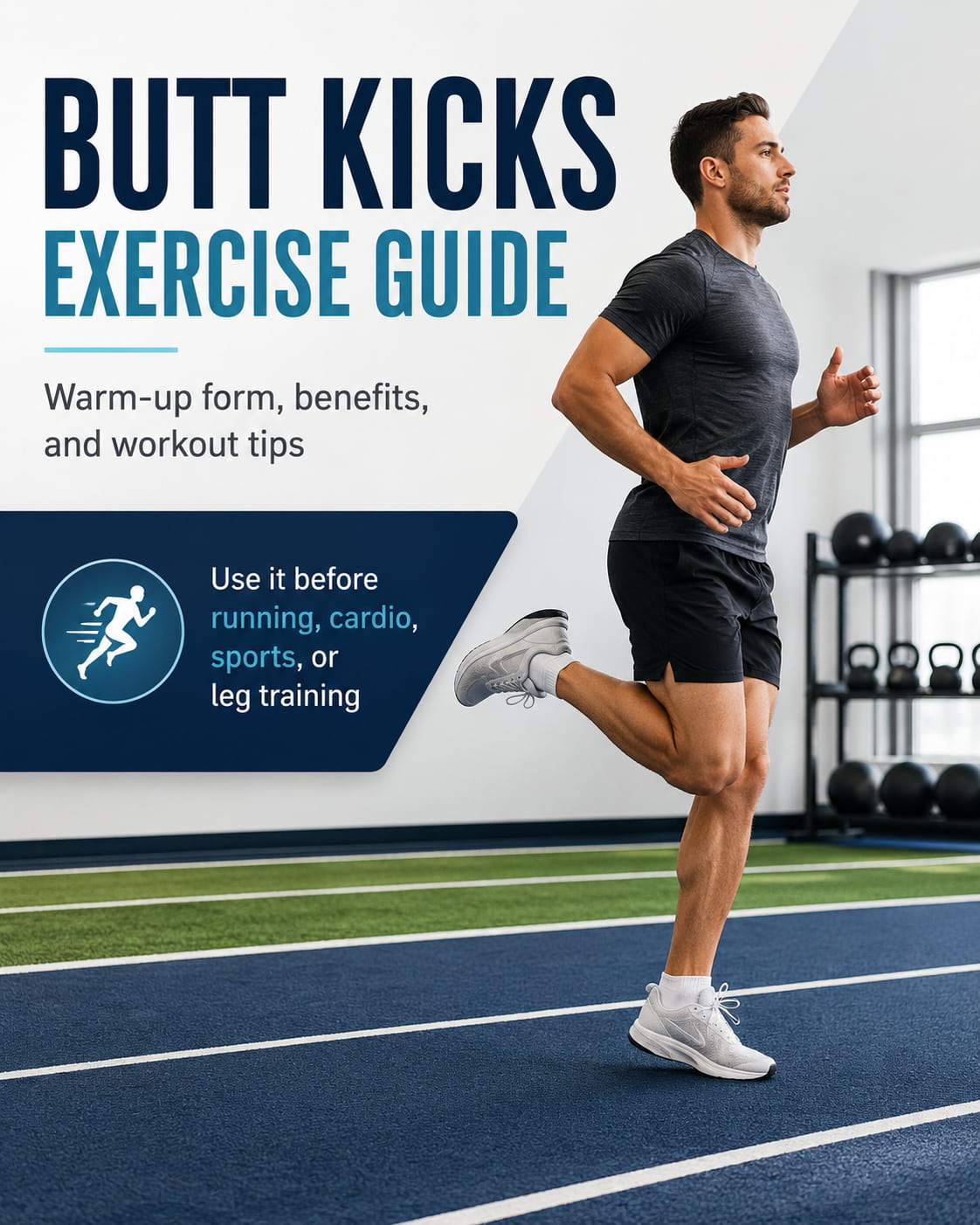
The butt kicks exercise is a simple bodyweight cardio drill where you jog in place or move forward while lifting your heels toward your glutes. It is most useful as a dynamic warm-up, running drill, or low-equipment conditioning move rather than a main strength exercise.
In this guide, you will learn how to do the butt kicks exercise with proper form, which muscles it works, the main benefits, common mistakes, beginner modifications, harder progressions, and how to use it in a real workout.
What Is the Butt Kicks Exercise?
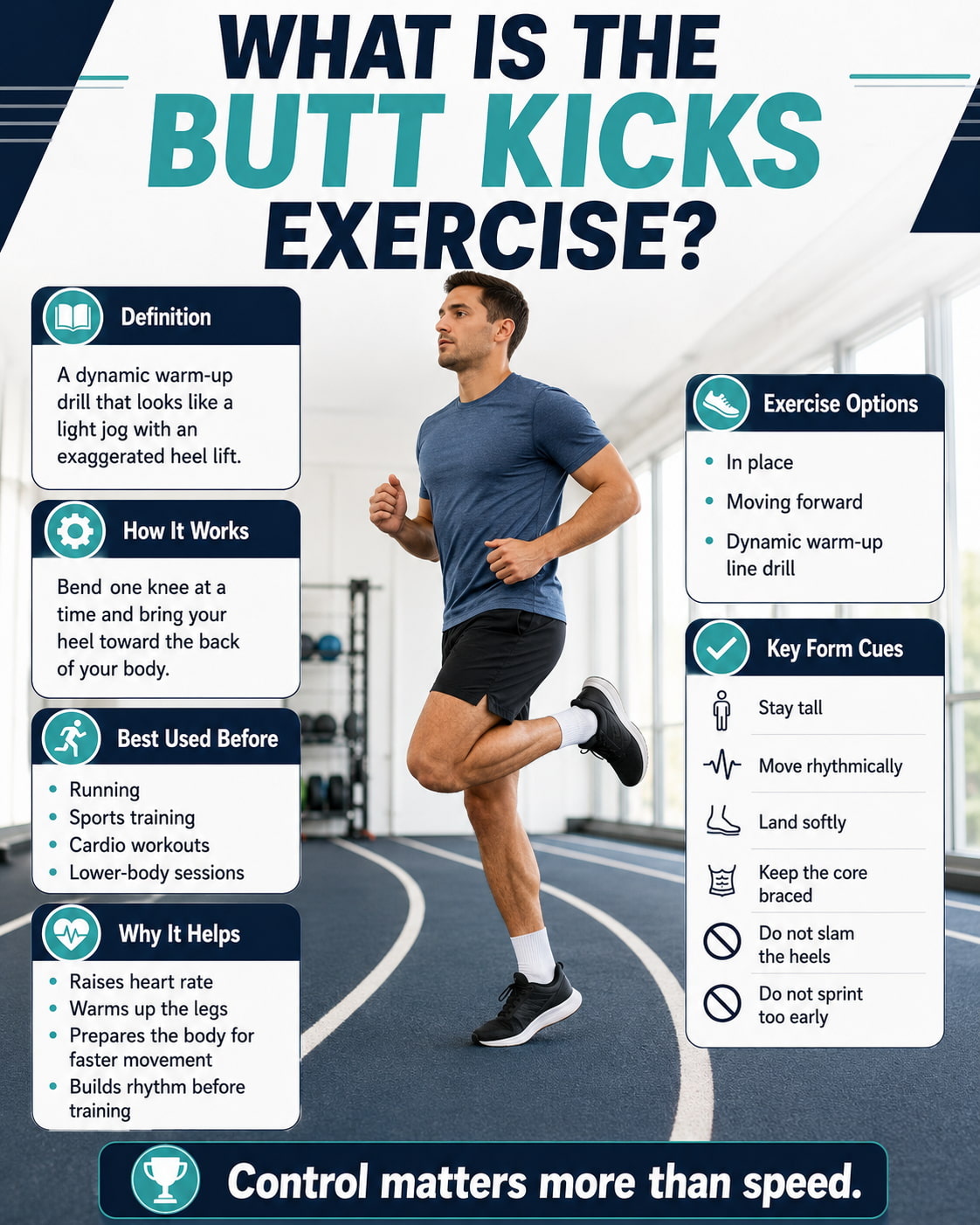
The butt kicks exercise is a dynamic movement that looks like a light jog with an exaggerated heel lift. Instead of simply jogging in place, you bend one knee at a time and bring your heel toward the back of your body.
This exercise is often used before running, sports training, cardio workouts, and lower-body sessions because it raises your heart rate while preparing the legs for faster movement. The American Council on Exercise describes butt kicks as a light jogging drill performed on the balls of the feet while kicking the heels toward the glutes.
Butt kicks can be performed in place, moving forward, or as part of a dynamic warm-up line drill. The version you choose depends on your space, fitness level, and training goal.
The key is control. You are not trying to slam your heels into your body or sprint as fast as possible. You are trying to stay tall, move rhythmically, land softly, and warm up the lower body without wasting energy before the main workout.
Butt Kicks Exercise Form Guide
Best for: Butt kicks are best for dynamic warm-ups, running preparation, cardio circuits, beginner-friendly conditioning, and improving lower-body rhythm before exercise.
Muscles worked: Butt kicks primarily involve the hamstrings because they bend the knee as the heel moves toward the glutes. The quadriceps work dynamically as the front of the thigh opens and controls leg position. The calves and ankles help with light bouncing and foot contact. The hip flexors assist with leg cycling, while the core helps keep the torso upright. The glutes assist with posture and running mechanics, but butt kicks are not a strong glute-building exercise.
Equipment needed: No equipment is required. You only need enough space to jog in place or move forward safely.
Why it stands out: Butt kicks are easy to learn, require no equipment, and fit well into almost any warm-up. They are especially useful before running, jumping, agility work, sports practice, and cardio workouts because they help raise your heart rate while preparing the knees, hips, ankles, and thighs for movement.
Suggested sets and reps: For a warm-up, use 2–4 rounds of 15–30 seconds. For a cardio circuit, use 3–5 rounds of 20–45 seconds. Keep the effort moderate during warm-ups and save faster versions for conditioning work.
Beginners: Start with marching butt kicks or low-impact butt kicks. Move slowly, keep one foot close to the floor at all times, and focus on smooth heel lifts. Use 10–20 seconds per round until the movement feels natural.
Intermediate: Use jogging butt kicks in place or moving forward. Aim for 20–30 seconds per round with soft landings, relaxed shoulders, and controlled breathing.
Advanced: Use faster butt kicks with stronger arm drive, forward movement, or interval-style conditioning. Keep the movement sharp without losing posture. Stop the set when your landings get loud or your torso starts folding forward.
Rest: Rest 20–45 seconds between rounds during warm-ups. For conditioning circuits, rest as needed to keep form clean and breathing controlled.
How to do it:
- Stand tall with your feet hip-width apart and your arms relaxed at your sides.
- Brace your core lightly and keep your chest lifted.
- Begin jogging in place at an easy pace.
- Bend your right knee and bring your right heel toward your glutes.
- Lower the right foot softly to the floor and repeat with the left heel.
- Keep alternating sides in a smooth, quick rhythm.
- Land on the balls of your feet with quiet, controlled contact.
- Keep your knees pointing mostly downward instead of driving far forward.
- Pump your arms naturally, similar to a relaxed running motion.
- Continue for the planned time while staying tall and controlled.
Common mistakes: The most common mistakes are leaning too far forward, kicking too aggressively, landing loudly, letting the knees drift too far in front of the body, shrugging the shoulders, holding the breath, and turning the drill into an uncontrolled sprint. Keep the movement light and rhythmic instead of forced.
Expert tip: Think “quick heel lift, soft landing, tall posture.” Your heel does not have to touch your glutes. A controlled range of motion is better than forcing the kick and straining the back of the thigh.
Exercise variations: Useful variations include marching butt kicks, low-impact butt kicks, forward butt kicks, fast-feet butt kicks, and butt kicks with strong arm drive. Choose the version that matches your current fitness level and workout goal.
Easier variation: Marching butt kicks are the best easier variation. Stand tall, shift your weight from side to side, and lift one heel toward your glutes without jogging or bouncing.
Harder variation: Forward-moving butt kicks or fast interval butt kicks are harder because they demand more coordination, ankle stiffness, cardio effort, and running rhythm.
Muscles Worked by Butt Kicks
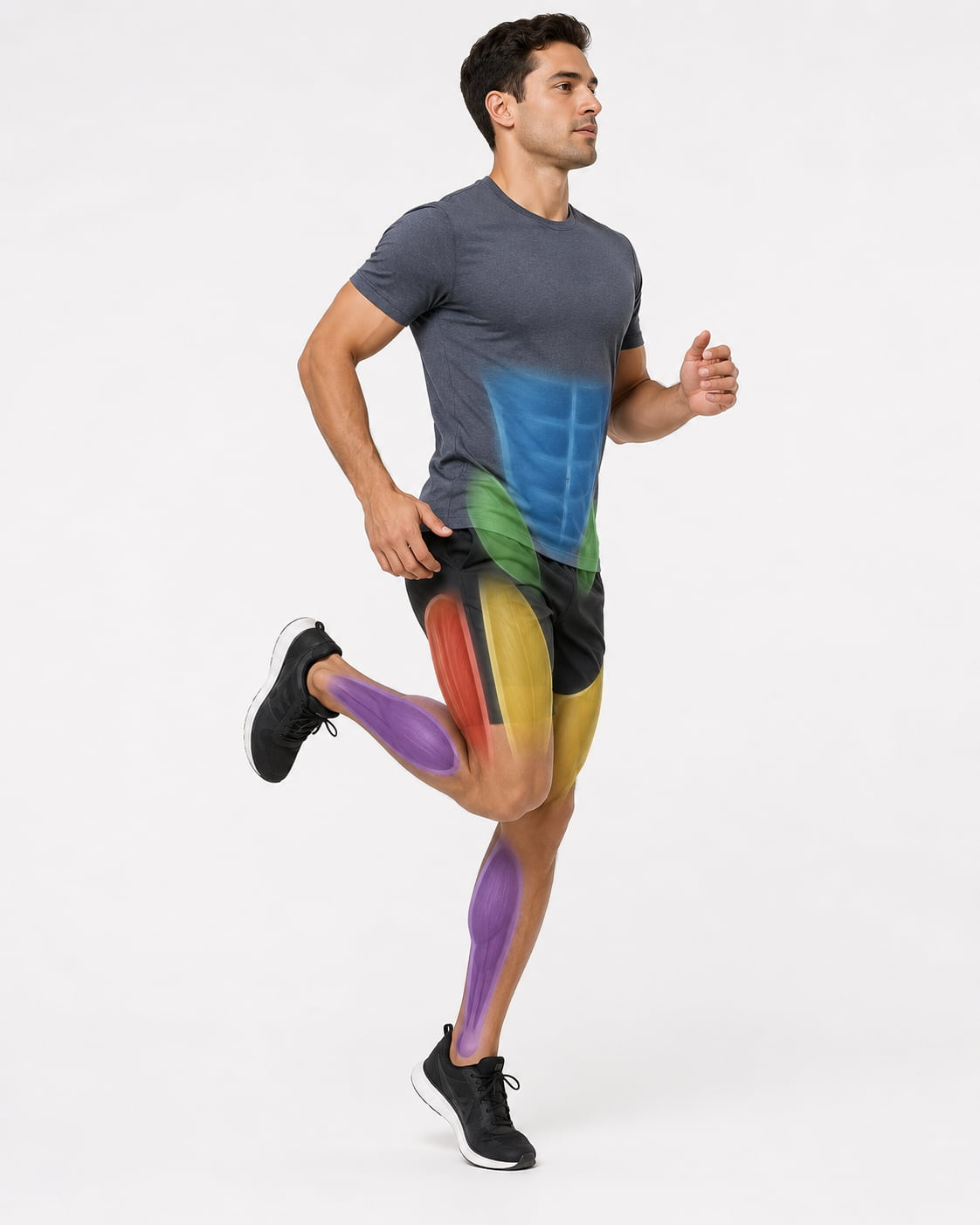
The butt kicks exercise trains several lower-body muscles, but not all muscles work equally hard.
The hamstrings are the main active muscle group because they help bend the knee. When your heel travels toward the back of your body, your hamstrings shorten to create that knee-bending motion. The Cleveland Clinic explains that the hamstrings help bend the knee and extend the hip, which is why they are heavily involved in running and leg recovery drills.
The quadriceps are also involved, but they do not work the same way they would during squats or lunges. During butt kicks, the front of the thigh moves through a dynamic range as the heel travels back. ACE notes that butt kicks can dynamically mobilize the quadriceps during a runner-focused warm-up. The Cleveland Clinic also explains that the quadriceps help with knee extension, hip flexion, posture, balance, and gait.
The calves and ankles help you bounce lightly and land on the balls of your feet. This is one reason butt kicks feel more like a running drill than a stretching exercise. Your lower legs help absorb each landing and prepare your feet for quicker ground contact.
The hip flexors assist with the cycling action of the legs, especially when you perform faster butt kicks or move forward. The core muscles help keep your rib cage stacked over your pelvis so you do not lean, twist, or collapse as the legs move.
The glutes help maintain posture and support hip control, but they are not the prime mover in this drill. If your goal is to build stronger glutes, exercises like hip thrusts, squats, lunges, step-ups, and Romanian deadlifts will usually be more effective. Butt kicks can support warm-up quality, but they should not be treated as a main glute-strength exercise.
Benefits of the Butt Kicks Exercise
1. Raises Your Heart Rate Before Training
Butt kicks are a simple way to move from resting to training mode. They increase breathing rate, body temperature, and circulation without needing equipment.
This makes them useful before running, bodyweight workouts, sports practice, and gym sessions. The American Heart Association recommends warming up for 5–10 minutes before exercise and gradually increasing heart rate and breathing.
2. Helps Prepare the Hamstrings and Quads
Butt kicks move the knee through repeated flexion and extension. This helps prepare the hamstrings, quadriceps, knees, and hips for more demanding movement.
They work especially well after a few minutes of easy walking, jogging, cycling, or general movement. The Mayo Clinic recommends warming up with large muscle groups first, then using movements that match the activity you are about to perform.
3. Useful for Running and Sports Warm-Ups
Butt kicks are common in running and athletic warm-ups because they teach rhythm, quick foot contact, and leg recovery. NASM describes butt kicks as a forward-running drill using short strides while pulling the heels up directly beneath the legs in an SAQ workout.
This makes them useful before activities that involve jogging, sprinting, cutting, jumping, or quick changes of pace. They are not a complete warm-up by themselves, but they can be one effective piece of a dynamic sequence.
4. Requires No Equipment
One of the biggest benefits of butt kicks is convenience. You can do them at home, in a gym, on a track, outside before a run, or in a small workout area.
If you have limited space, perform them in place. If you have a hallway, turf area, court, or track, perform them moving forward for 10–20 yards at a time.
5. Easy to Adjust for Different Fitness Levels
Butt kicks can be scaled up or down quickly. Beginners can march slowly. Intermediate exercisers can jog in place. Advanced athletes can use faster forward-moving drills or interval circuits.
This makes the exercise useful for many people, as long as the movement stays pain-free and controlled.
Common Mistakes to Avoid
Leaning Too Far Forward
A small forward lean is normal during running drills, but folding at the waist changes the movement. It can make the drill feel rushed and may place more stress on the lower back or hamstrings.
Stay tall, keep your chest open, and imagine your head reaching toward the ceiling.
Kicking Too Aggressively
Your heel does not need to hit your glutes. Forcing the heel too high can turn the drill into a harsh hamstring movement instead of a smooth warm-up.
Use a comfortable range of motion. The goal is a quick, controlled heel lift, not maximum flexibility.
Letting the Knees Drift Too Far Forward
Butt kicks are different from high knees. In high knees, the thigh drives upward in front of the body. In butt kicks, the focus is on the heel lifting behind you.
Keep your knees pointing mostly down as your heels lift.
Landing Loudly
Loud landings usually mean you are hitting the floor too hard, losing rhythm, or moving faster than you can control.
Land softly on the balls of your feet. If your feet slap the floor, slow down or switch to a marching version.
Moving Too Fast Too Soon
Butt kicks are often used in warm-ups, so they should not exhaust you before the real workout begins.
Start easy. Build speed only after your body feels warm and your coordination feels smooth.
Butt Kicks Variations and Modifications
Marching Butt Kicks
Marching butt kicks are the best starting point for beginners. Instead of jogging, you stand tall and lift one heel toward your glutes at a time.
This version reduces impact and gives you time to feel the hamstrings working. Use it before walking workouts, beginner cardio, or lower-body mobility sessions.
Low-Impact Butt Kicks
Low-impact butt kicks keep the movement gentle. You alternate heel lifts while keeping the bounce small and controlled.
This option works well if you want a warm-up drill without much jumping. It is also useful on hard floors where repeated bouncing may feel uncomfortable.
Butt Kicks in Place
Butt kicks in place are the most common version. You jog lightly while alternating heel lifts behind your body.
This is the best option for home workouts, small spaces, and cardio circuits because it does not require forward space.
Forward Butt Kicks
Forward butt kicks are performed while traveling forward. This version feels more like a running drill and is often used on turf, tracks, courts, or open gym floors.
The Houston Methodist dynamic functional warm-up includes butt kicks alongside other athletic drills such as high knees, carioca, back pedal, and A-skips.
Fast-Feet Butt Kicks
Fast-feet butt kicks increase the speed of the drill while keeping the same basic form. This version is more demanding for the calves, ankles, coordination, and cardiovascular system.
Use it as a short conditioning interval, not as your first warm-up movement.
Butt Kicks With Arm Drive
Adding a stronger arm drive makes butt kicks feel more athletic. Keep your elbows bent near 90 degrees, swing your arms from shoulder to hip, and avoid crossing your hands in front of your body.
This variation is useful before running or sprint-focused training because it connects upper-body rhythm with lower-body movement.
How to Use Butt Kicks in a Workout
Butt kicks work best near the middle or end of a warm-up, after your body has already started moving. Start with easy movement first, then add butt kicks when your legs feel warmer.
For a beginner warm-up, do 3–5 minutes of easy walking or light marching. Then perform marching butt kicks for 2 rounds of 15–20 seconds with 30–45 seconds of rest. Keep the effort around 4–5 out of 10.
For a running warm-up, start with 5 minutes of brisk walking or easy jogging. Then perform butt kicks for 2–3 rounds of 20–30 seconds. Rest or walk for 30 seconds between rounds. Keep the movement quick but relaxed, around 5–6 out of 10 effort.
For a cardio circuit, use butt kicks for 20–45 seconds between lower-impact exercises such as bodyweight squats, step jacks, marching high knees, or reverse lunges. Keep the effort around 6–8 out of 10, but stop before your form breaks down.
For a leg-day warm-up, place butt kicks after general movement and before squats, lunges, or deadlifts. Use 2 rounds of 20 seconds, then move into exercise-specific warm-up sets. Butt kicks can help prepare the legs, but they should not replace lighter ramp-up sets for loaded lifts.
To progress safely, add time before adding speed. For example, move from 15 seconds to 20 seconds, then 30 seconds. Once you can stay tall and land softly for 30 seconds, you can try a faster version or forward-moving version.
Butt Kicks vs High Knees
Butt kicks and high knees are both bodyweight cardio drills, but they emphasize different parts of the running motion.
Butt kicks focus more on heel recovery behind the body, hamstring action, and dynamic movement through the front of the thigh. They are useful when you want to prepare the legs for running rhythm without driving the knees high.
High knees focus more on lifting the thigh in front of the body, hip flexor activity, and stronger front-side running mechanics. They usually feel more intense and can raise the heart rate quickly.
A good warm-up can use both. For example, you might do 20 seconds of butt kicks, rest briefly, then do 20 seconds of high knees. Keep both controlled and avoid turning them into sloppy sprinting.
Who Should Modify Butt Kicks?
Modify butt kicks if bouncing bothers your knees, ankles, hips, or lower back. You can switch to marching butt kicks, reduce the range of motion, slow down, or perform the movement on a softer surface.
People returning after a hamstring strain, calf strain, knee irritation, or running-related injury should be careful with fast butt kicks. A gentle marching version may be more appropriate, but professional guidance is best if pain or symptoms are present.
Stop the exercise and seek professional help if you feel sharp pain, numbness, dizziness, chest pain, sudden pulling in the hamstring, or any unusual symptoms.
How Often Should You Do Butt Kicks?
You can use butt kicks several times per week as part of a warm-up if they feel good and do not cause pain. They are low-equipment and easy to recover from when done at a moderate pace.
For general fitness, 2–4 sessions per week is plenty. For runners or athletes, butt kicks can appear more often as part of a short dynamic warm-up, especially before running drills, sprint practice, or sport sessions.
Avoid doing long, high-speed sets every day. More is not always better. The goal is better preparation, rhythm, and movement quality.
Sample Butt Kicks Warm-Up Routine
Use this routine before a run, cardio workout, or lower-body training session.
Start with 3–5 minutes of easy walking, light jogging, or cycling. Then perform marching butt kicks for 20 seconds, followed by 20 seconds of regular butt kicks. Rest 30 seconds. Repeat for 2–3 total rounds.
After that, add one or two movements that match your workout. Before running, use high knees or A-skips. Before leg training, use bodyweight squats or reverse lunges. Before sports practice, use lateral shuffles or light acceleration drills.
Keep the full warm-up around 5–10 minutes for most general workouts. Make it longer if your session is more intense or if you need extra time to feel ready.
Frequently Asked Questions
Do butt kicks build glutes?
Butt kicks involve the glutes for posture and hip control, but they are not a strong glute-building exercise. The name can be misleading. If your goal is glute strength or muscle growth, use exercises such as hip thrusts, glute bridges, squats, lunges, step-ups, and Romanian deadlifts.
Are butt kicks good for beginners?
Yes, butt kicks can be beginner-friendly when performed slowly. Beginners should start with marching butt kicks or low-impact butt kicks before trying faster jogging versions.
How long should I do butt kicks?
For warm-ups, 15–30 seconds per round is usually enough. For conditioning, 20–45 seconds can work well. Stop the set if your posture, breathing, or landings become uncontrolled.
Should my heels touch my glutes?
Your heels do not have to touch your glutes. Some people can do that comfortably, while others cannot because of mobility, limb length, or current fitness level. Aim for a smooth heel lift without forcing the range.
Are butt kicks cardio or stretching?
Butt kicks are best described as a dynamic cardio warm-up drill. They move the legs through a repeated range of motion and can help warm the front and back of the thighs, but they are not the same as holding a static stretch.
Can I do butt kicks every day?
You can do easy butt kicks often if they feel comfortable, but there is usually no need to do intense versions every day. Use them as part of a balanced warm-up, not as a complete workout by themselves.
Are butt kicks better in place or moving forward?
Both versions work. Butt kicks in place are better for small spaces and home workouts. Forward butt kicks are better for running warm-ups, field drills, and athletic training because they feel more like real movement.
Conclusion
The butt kicks exercise is a simple, practical drill for warming up, raising your heart rate, and preparing your legs for running, cardio, sports, and lower-body workouts. Use it with tall posture, soft landings, controlled heel lifts, and a pace that matches your current fitness level.
Start with the marching version if you are new, progress to regular butt kicks when your rhythm improves, and use faster versions only when you can keep the movement clean. For best results, treat butt kicks as one part of a complete warm-up, not as a stand-alone strength exercise.