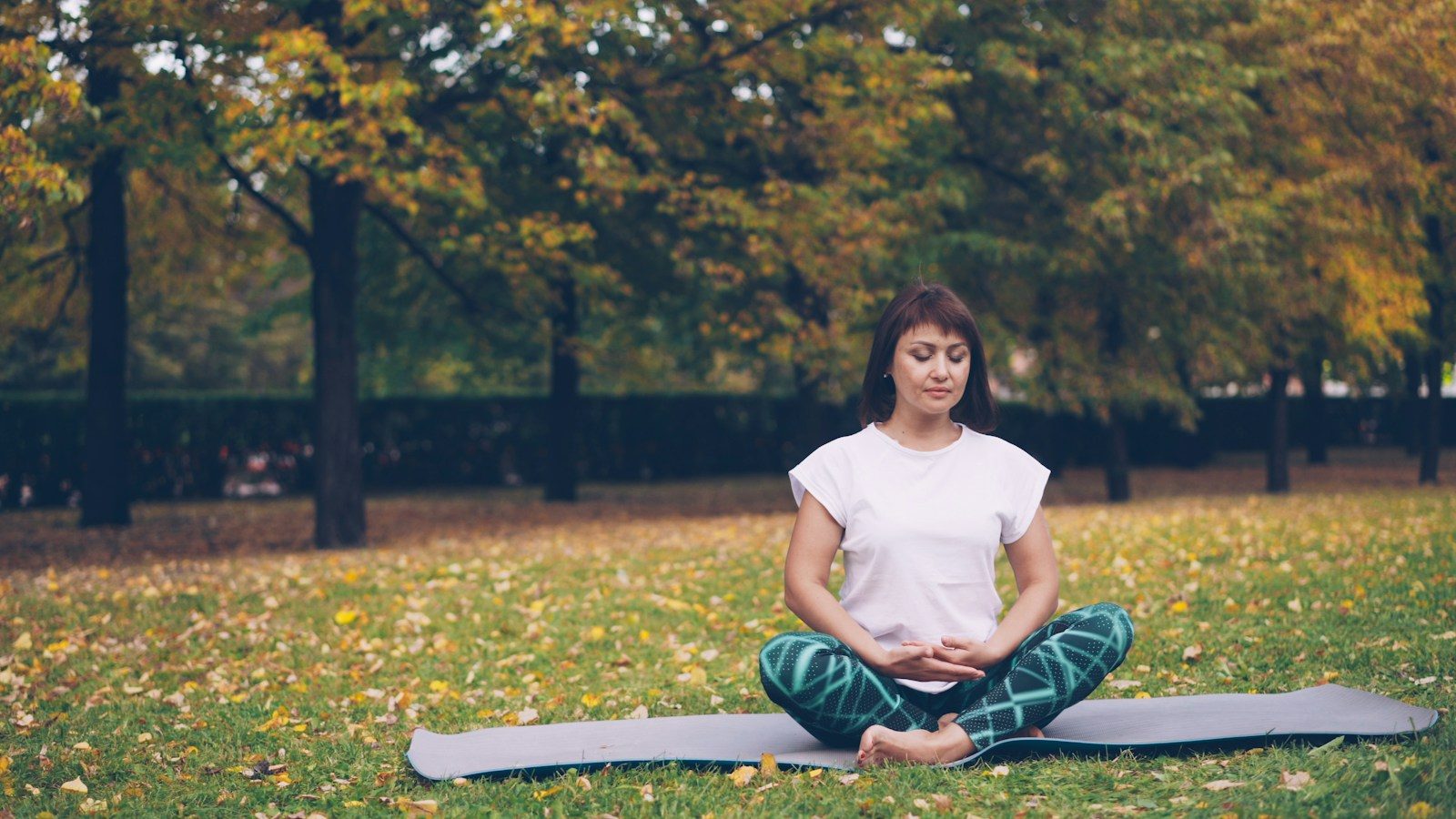
Breathing exercises may help you relax by using a gentle breathing rhythm or giving your attention a steady point of focus. You do not need unusually deep breaths, long breath holds, or a complicated routine to get started. Comfortable practice matters more than completing a particular count.
The 10 techniques below offer different ways to take a calming pause. Choose one that feels manageable, learn the steps, and use the short routine near the end to build a regular practice.
Before You Start
Sit comfortably with your feet supported and your neck and shoulders relaxed. Loosen clothing that restricts your breathing. For belly breathing, lying down is another option. The NHS recommends letting the breath flow gently without forcing its depth or duration.
Treat the starting amounts below as practice suggestions, not quotas. Breath holds are optional choices—not skills you must master. Start with a no-hold exercise when pauses feel uncomfortable.
If you have a heart or lung condition, ask your healthcare professional which techniques are appropriate. The American Heart Association advises stopping if breathing exercises make you feel dizzy or lightheaded.
10 Best Breathing Exercises for Relaxation
These exercises emphasize different skills: breathing awareness, comfortable pacing, a longer exhale, or a physical point of focus. Some overlap, so there is no need to practice all 10 in one session.
1. Diaphragmatic Breathing
Best for: Learning to breathe gently while noticing movement around your abdomen.
Also called belly breathing, this exercise brings attention to the diaphragm, the main muscle used for breathing. As the diaphragm moves during inhalation, your abdomen can expand; air still enters your lungs, not your belly. Cleveland Clinic describes diaphragmatic breathing as a technique that can help you use the diaphragm more effectively.
How to do it:
- Sit in a comfortable chair or lie down. Rest your hands lightly on your abdomen.
- Inhale gently through your nose, allowing your abdomen to rise beneath your hands.
- Breathe out slowly through loosely pursed lips, letting your abdomen settle.
- Continue without deliberately lifting your shoulders or trying to take the largest possible breath.
Start with: Three to five comfortable breaths. Once the movement feels familiar, try one to two minutes.
Common mistakes: Pushing your belly outward deliberately, lifting your shoulders with every inhale, or squeezing hard to finish the exhale. Your hands provide feedback; they should not force the movement.
2. Equal Breathing Without Holds
Best for: Using a simple, repeatable rhythm without breath retention.
Equal breathing uses the same count for inhaling and exhaling. Unlike box breathing, it does not add deliberate pauses between phases.
How to do it:
- Sit comfortably and let a few natural breaths pass.
- Inhale gently through your nose for five counts.
- Exhale smoothly for the same five counts.
- Continue from inhale to exhale without deliberately holding your breath. Keep the counting pace steady rather than rushing the last few numbers.
Start with: Three to five cycles, then return to natural breathing.
Make it easier: Use two or three counts in and the same number out. Do not force yourself to match a recording when its pace feels too slow.
Common mistake: Taking an oversized inhale to “last” through the count. Choose a shorter count instead.
3. Longer-Exhale Breathing
Best for: Practicing a smooth out-breath without adding a hold.
This variation makes the exhale slightly longer than the inhale. The four-in, six-out pattern is one option—not a requirement or a uniquely effective formula.
How to do it:
- Sit comfortably and release unnecessary tension in your shoulders.
- Inhale gently through your nose for four counts.
- Exhale smoothly for six counts, keeping the airflow easy.
- Begin the next inhale without adding a timed pause. Repeat only while the rhythm remains comfortable.
Start with: Three to five cycles.
Make it easier: Shorten both phases, such as two counts in and three out. Alternatively, stop counting and simply let the exhale last a little longer.
Common mistake: Squeezing out air to reach six. End the exhale comfortably rather than turning it into an effort.
4. Pursed-Lip Breathing
Best for: Using lip position to guide a slow, gentle exhale.
This technique also uses a longer out-breath, but the main cue is different: you release air through a small, relaxed opening between your lips. The American Lung Association teaches pursed-lip breathing using a gentle nasal inhale followed by a slow exhale through loosely pursed lips.
How to do it:
- Sit comfortably and relax your neck and shoulders.
- Close your mouth and breathe in gently through your nose.
- Loosely purse your lips as though preparing to whistle.
- Breathe out slowly through the opening. Let the exhale last longer than the inhale without forcefully blowing. An optional rhythm is two counts in and four out.
Start with: Three to five easy breaths.
Common mistakes: Clenching your lips, puffing your cheeks, or blowing hard. Think of a soft stream of air rather than trying to blow out a candle across the room.
5. Mindful Breathing
Best for: Taking a quiet break without controlling breathing speed.
Mindful breathing asks you to notice the breath rather than change it. UCLA Health teaches a breathing meditation that emphasizes natural breathing and gently returning your attention when the mind wanders.
How to do it:
- Sit comfortably with your back upright but not rigid.
- Notice where your body meets the chair, cushion, or floor.
- Pay attention to one breathing sensation, such as air moving at your nostrils or movement in your abdomen.
- When thoughts distract you, acknowledge them and return to the next breath. You do not need to make the breath longer, deeper, or more regular.
Start with: One to two minutes. Gradually extend toward five minutes when the practice feels comfortable.
Common mistake: Trying to empty your mind. Noticing a distraction and returning is part of the exercise, not evidence that you are doing it incorrectly.
6. Five-Finger Breathing
Best for: Adding touch and movement to your breathing practice.
Five-finger breathing combines gentle breathing with tracing the outline of your hand. This gives you a physical sensation to follow instead of relying only on counting.
How to do it:
- Hold one hand comfortably in front of you with the fingers spread.
- Place the opposite index finger at the outside base of your thumb. Trace upward while breathing in.
- Trace down the other side of your thumb while breathing out.
- Continue around the remaining fingers, inhaling as you trace upward and exhaling as you trace downward. Let your tracing speed follow a comfortable breath.
Start with: One complete hand, giving you five breathing cycles.
Common mistakes: Rushing through the tracing, pressing hard into the skin, or holding your arm so high that your shoulder becomes tense. Keep your hands at a comfortable height.
7. Physiological Sigh
Best for: Trying a brief double-inhale, long-exhale pattern.
A physiological sigh uses two inhalations followed by one extended exhalation. Repeating this pattern is commonly called cyclic sighing. A 2023 randomized study published through Cell Reports Medicine found promising mood benefits from five minutes of daily cyclic sighing over one month. The findings do not mean that one sigh guarantees immediate relief.
How to do it:
- Sit comfortably and relax your shoulders.
- Take a comfortable inhale through your nose.
- Before exhaling, add a smaller second inhale—a gentle top-up, not another maximum breath.
- Release the air slowly through your mouth in one long, unforced exhale. Return to natural breathing afterward.
Start with: One to three comfortable sighs, rather than immediately attempting a prolonged session.
Common mistakes: Taking two forceful gulps, repeatedly filling your lungs as much as possible, or chasing a dramatic sensation. Keep the pattern gentle and stop if it feels uncomfortable.
8. Alternate Nostril Breathing Without Timed Holds
Best for: Following a simple sequence with a hands-on point of focus.
This version alternates airflow between the nostrils without adding counted breath retention. Its sequence is: left in, right out; right in, left out. Dana-Farber Cancer Institute demonstrates a short alternate-nostril breathing practice using this basic switching pattern.
How to do it:
- Sit upright comfortably. Fold your right index and middle fingers toward your palm.
- Gently close your right nostril with your thumb and inhale through the left.
- Close the left nostril with your ring finger, release your thumb, and exhale through the right.
- Inhale through the right nostril. Then close it with your thumb, release your ring finger, and exhale through the left.
- That completes one cycle. Continue gently without adding timed holds, then lower your hand and breathe normally.
Start with: Three to five cycles.
Common mistakes: Pressing hard against your nose, lifting your shoulder to hold your hand in place, or forcing air through a congested nostril. Choose another exercise when nasal airflow is uncomfortable.
9. Box Breathing
Best for: Readers who enjoy a four-part pattern and find brief pauses comfortable.
Box breathing gives equal time to inhaling, holding, exhaling, and pausing.
How to do it:
- Sit comfortably and allow your breathing to settle.
- Inhale gently through your nose for four counts.
- Hold the breath for four counts without tightening your face or straining.
- Exhale gently for four counts, then pause for four counts before beginning again.
Start with: Two to three cycles, followed by natural breathing.
Make it easier: Switch to equal breathing without holds. Removing the pauses changes the technique, but it is a useful alternative—not a lesser version you need to progress beyond.
Common mistake: Treating the holds as an endurance challenge. Stop the pattern when a pause creates discomfort or a strong urge to gulp air.
10. 4-7-8 Breathing
Best for: Readers who prefer a structured counting pattern and tolerate breath retention comfortably.
The numbers describe the sequence: inhale for four counts, hold for seven, and exhale for eight. Ohio State Wexner Medical Center demonstrates this sequence as a structured mindfulness breathing practice.
How to do it:
- Sit upright in a comfortable chair with your feet supported and your hands resting on your thighs.
- Inhale gently through your nose for four counts.
- Hold for seven counts only while it remains comfortable.
- Exhale slowly through your lips for eight counts. Let the next breath begin naturally, and return to normal breathing after your chosen rounds.
Start with: One to three cycles.
Comfort adjustment: A count does not have to last one second. Keep the counting pace consistent, but do not deliberately slow it until you struggle. Choose a no-hold exercise when retention feels uncomfortable.
Common mistakes: Taking an oversized inhale, straining through the hold, or squeezing hard to finish the exhale.
How to Choose a Breathing Exercise
Start with the feature that appeals to you, not the most complicated technique.
| Your preference | A useful starting option |
|---|---|
| You want to learn gentle breathing with physical feedback. | Diaphragmatic breathing |
| You like counting but dislike breath holds. | Equal breathing or longer-exhale breathing |
| You would rather observe than control your breathing. | Mindful breathing |
| You want something to follow with your hands. | Five-finger breathing |
| You enjoy a structured pattern and comfortable pauses. | Box breathing or 4-7-8 breathing |
Try one option for a few short sessions before adding another. Keep the exercise that feels comfortable and fits your day; there is no need to collect techniques or continually increase difficulty.
A Simple Five-Minute Breathing Routine
Once a no-hold exercise feels familiar, use this as a practical starting routine. It is not necessary to combine several techniques.
| Time | What to do |
|---|---|
| First minute | Settle into a comfortable position. Breathe naturally and relax your shoulders. |
| Next three minutes | Practice one comfortable option: belly breathing, equal breathing without holds, or mindful breathing. |
| Final minute | Let go of counting or deliberate pacing. Notice your surroundings before returning to your next activity. |
Frequency: Try once daily at a convenient time, such as after work or before your evening routine. Regular practice can make it easier to become familiar with the technique.
Effort and rest: Keep the effort easy. Return to natural breathing whenever needed; you do not have to finish the timer.
Progression: Begin with one or two minutes total when five feels like too much. Add 30–60 seconds after several comfortable sessions. Extend practice time only when useful—do not make breaths increasingly large or holds increasingly long.
What Benefits Can You Realistically Expect?
Breathing exercises may support everyday stress management, but the evidence does not establish one technique as best for everyone.
A 2023 meta-analysis published in Scientific Reports examined 12 randomized trials involving 785 adults and found a small-to-medium average benefit for self-reported stress. Most of the included studies had a moderate risk of bias, so the findings support cautious expectations rather than guaranteed results.
More complicated timing is not necessarily more effective. In a separate randomized trial, researchers found no statistically significant advantage for a longer-exhale pattern over equal-length inhalations and exhalations for the measured psychological outcomes.
The practical takeaway is to choose a comfortable method rather than chase a supposedly perfect ratio. Use these exercises as relaxation tools, not replacements for medical or mental health care. The National Center for Complementary and Integrative Health similarly describes relaxation techniques as complementary practices rather than substitutes for conventional care.
Safety and When to Stop
Stop the exercise if you become dizzy or lightheaded, and return to normal comfortable breathing. Do not assume that feeling unwell means the technique is working or that you should push through it.
Seek professional help if an exercise causes sharp pain, numbness, chest pain, or other unusual symptoms.
According to MedlinePlus, severe difficulty breathing can require urgent medical care. Call 911 or your local emergency number for severe breathing difficulty, severe chest pain or pressure, or breathing trouble that prevents normal speech. Do not keep trying relaxation exercises while waiting for serious symptoms to pass.
Practice seated or otherwise safely supported, and do not follow guided relaxation exercises while driving or operating machinery.
Frequently Asked Questions
Should you breathe through your nose or your mouth?
Follow the technique’s instructions. Belly breathing and pursed-lip breathing commonly use a nasal inhale and mouth exhale. Alternate nostril breathing uses the nose for both phases. Mindful breathing does not require changing your natural airflow. Do not force nasal breathing through an uncomfortable blockage.
Why do breathing exercises sometimes make you dizzy?
Breathing too deeply or rapidly can lower carbon dioxide levels and cause symptoms such as dizziness, tingling, or a feeling of breathlessness. Johns Hopkins Medicine explains that overbreathing can produce these symptoms. However, dizziness has other possible causes, so stop the exercise, return to comfortable natural breathing, and seek medical advice if symptoms persist or concern you.
Can you practice breathing exercises before bed?
Yes. A comfortable seated or lying practice can be part of winding down before bed. Choose a method that feels easy rather than one that makes you concentrate on difficult counts or holds.
Treat breathing exercises as a relaxation routine rather than a guarantee that you will fall asleep immediately.
What if focusing on your breathing makes you more anxious?
Stop the exercise rather than forcing yourself to continue. Relaxation practices can occasionally increase anxiety or bring up uncomfortable thoughts.
Choose a different relaxing activity, such as listening to quiet music, taking a gentle walk, or focusing your attention on something outside your body. Discuss persistent or distressing reactions with a qualified healthcare professional.
The Bottom Line
Start with one breathing exercise you can perform comfortably—such as diaphragmatic breathing, equal breathing without holds, or mindful breathing. Give it a short, regular place in your day.
For your next practice, set aside two minutes, relax your shoulders, and let comfort—not the timer or counting pattern—guide you. You do not need to complete all 10 techniques to make a useful calming pause.
This content is for informational purposes only and is not a substitute for medical advice.