
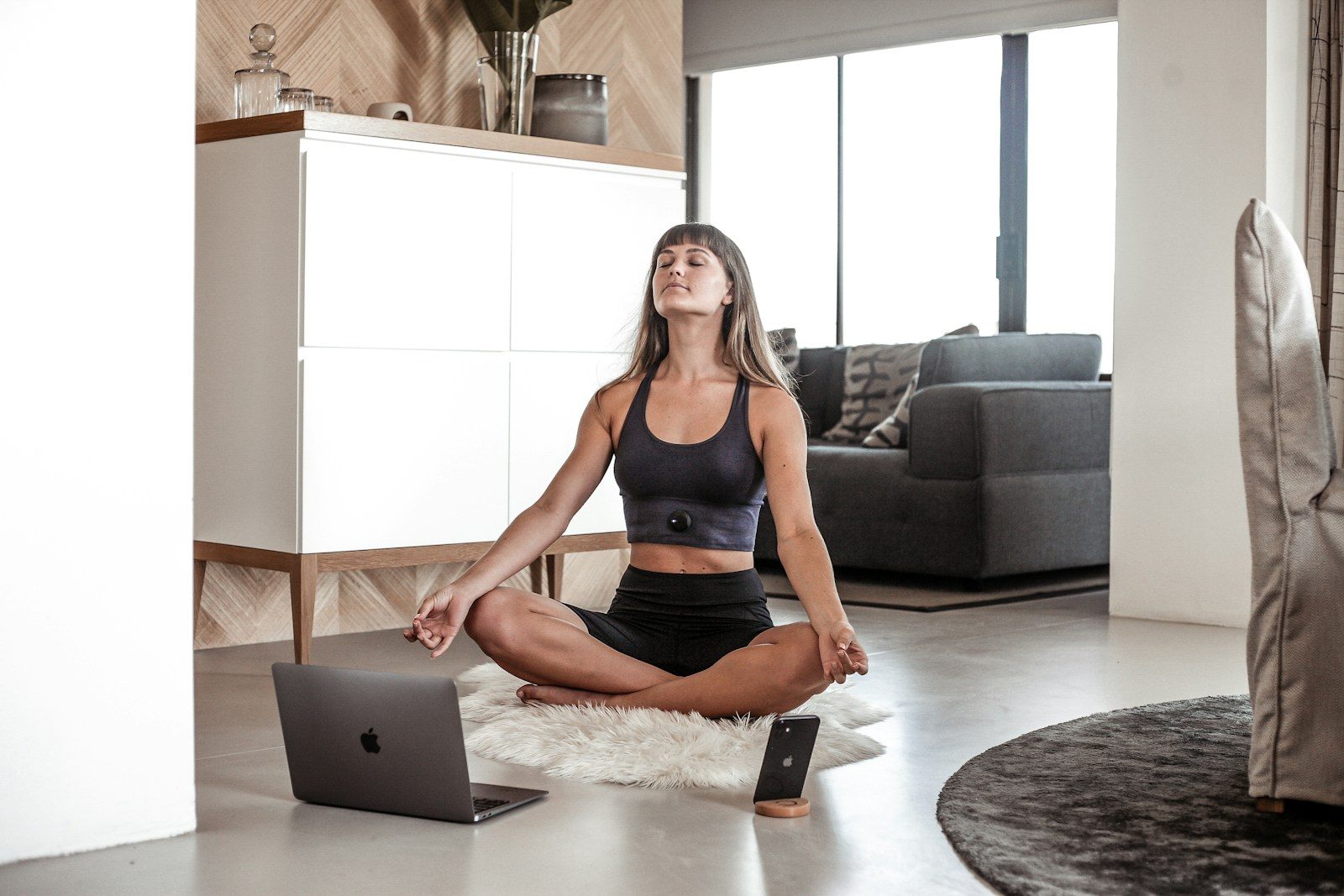
Breathing exercises for anxiety may help ease anxious feelings by gently regulating your breathing or focusing your attention on the breath. They are coping tools—not a cure for anxiety or a replacement for professional care.
The seven techniques below include clear instructions, manageable starting amounts, and easier options. Choose one that feels comfortable; you do not need to practice them all.
Before You Start
Sit comfortably with your back supported and shoulders relaxed. Loosen clothing that restricts your breathing. The NHS recommends gentle, unforced breathing rather than trying to take the largest possible breath.
Treat counting as a guide, not a test. Stop if you become dizzy, lightheaded, or increasingly uncomfortable. The American Heart Association advises checking with a healthcare professional before trying breathing techniques when you have a heart or lung condition.
7 Breathing Exercises for Anxiety
Start with a no-hold option, such as belly breathing, pursed-lip breathing, or mindful breathing. The practice amounts below are starting suggestions—not targets you need to push through.
1. Diaphragmatic Breathing (Belly Breathing)
Best for: Learning a relaxed breathing pattern with hand placement to guide you.
This technique emphasizes abdominal movement while keeping the upper body relaxed. Cleveland Clinic describes both seated and lying versions.
How to do it:
- Sit comfortably, or lie on your back with your head supported and knees bent.
- Rest one hand on your upper chest and the other on your abdomen, just below your rib cage.
- Inhale gently through your nose. Allow your abdomen to expand beneath the lower hand while keeping upper-chest movement relatively small.
- Exhale slowly through lightly pursed lips, letting your abdomen move inward.
- Continue without lifting your shoulders or deliberately forcing your belly outward.
How long to try it: Begin with a few comfortable breaths. As the movement becomes familiar, try one to two minutes.
Common mistakes: Taking oversized breaths, stiffening your chest to prevent all movement, or pushing your stomach out instead of allowing it to move naturally.
Easier option: Use the supported lying position when sitting makes it difficult to relax.
2. Pursed-Lip Breathing
Best for: Practicing a longer exhale without holding your breath.
The American Lung Association teaches this technique as a way to slow breathing. Although commonly used in guidance for lung conditions, its basic breathing pattern is straightforward to learn.
How to do it:
- Sit in a supported position and relax your neck and shoulders.
- Close your mouth and inhale gently through your nose for approximately two counts.
- Loosely purse your lips as though preparing to whistle.
- Breathe out slowly through your pursed lips for approximately four counts.
- Repeat without blowing hard or squeezing your lungs empty. Keep the exhale longer than the inhale only while it feels comfortable.
How long to try it: Start with three to five comfortable cycles, then return to ordinary breathing.
Common mistakes: Tightening the lips excessively, forcefully blowing air out, or stretching the exhale until you need to gasp.
Easier option: Drop the counting and simply let your exhale last a little longer than your inhale.
3. Mindful Breathing
Best for: Practicing attention without deliberately changing your breathing rhythm.
Unlike the other techniques here, mindful breathing does not require slower breaths, deeper breaths, or breath holds. The practice shared by the UC Berkeley Greater Good Science Center emphasizes observing the breath as it is.
How to do it:
- Sit comfortably with your hands resting naturally. Keep your eyes open, softly focused, or closed—whichever feels comfortable.
- Notice where breathing is easiest to feel: your nostrils, chest, or abdomen.
- Observe the sensations of inhaling and exhaling without adjusting them.
- When your mind wanders, gently bring your attention back to the next breath.
- Finish by noticing your whole body and the room around you.
How long to try it: Begin with one to two minutes. Gradually extend the practice when it feels manageable.
Common mistakes: Trying to empty your mind, judging yourself for getting distracted, or turning observation into constant checking that you are breathing “correctly.”
Coaching cue: Notice the breath; you do not have to improve it.
4. Physiological Sigh (Double Inhale, Longer Exhale)
Best for: Learning a brief breathing pattern that emphasizes a slow release of air.
This involves one fuller inhale, a smaller additional inhale, and a longer exhale. Repeating the pattern is commonly called cyclic sighing, as described by Stanford Medicine.
How to do it:
- Sit comfortably and release unnecessary tension in your shoulders.
- Take a comfortable, fuller breath through your nose, leaving room for a small additional inhale.
- Without exhaling first, take a smaller second inhale through your nose.
- Release the air slowly through your mouth in one longer, gentle exhale.
- Return to ordinary breathing before deciding whether to repeat.
How long to try it: Start with one cycle. Take a few ordinary breaths afterward; repeat once or twice only if comfortable.
Common mistakes: Making both inhales equally large, repeatedly gulping air, raising your shoulders, or pushing the exhale beyond comfort.
Important distinction: Trying one or two sighs is not the same as completing the five-minute daily cyclic-sighing practice examined in research. Neither approach guarantees immediate anxiety relief.
5. Box Breathing
Best for: People who prefer a simple counting pattern and find brief breath holds comfortable.
Box breathing has four equal phases: inhale, hold, exhale, and hold again. It should feel controlled and comfortable rather than forced.
How to do it:
- Sit comfortably and let out an ordinary breath.
- Inhale gently through your nose for four counts.
- Pause for four counts without bracing or straining.
- Exhale slowly for four counts.
- Pause for another four counts, then begin the next cycle.
How long to try it: Start with three or four comfortable cycles.
Common mistakes: Taking a maximum inhale before the hold, squeezing out every bit of air, or forcing yourself to wait when you feel an urgent need to breathe.
Easier option: Use a shorter, comfortable count for all four phases. When any breath hold increases discomfort, choose belly breathing or pursed-lip breathing instead.
6. Alternate-Nostril Breathing Without Timed Holds
Best for: People who prefer a breathing sequence with a simple hand movement.
This version alternates airflow between nostrils without adding deliberate timed holds. The Dana-Farber Cancer Institute describes the left-in, right-out, right-in, left-out sequence.
How to do it:
- Sit comfortably with your back upright and shoulders relaxed. Bring your right hand toward your nose.
- Gently close your right nostril with your thumb and inhale through your left nostril.
- Close your left nostril with your ring finger, release your thumb, and exhale through your right nostril.
- Inhale through your right nostril. Close it with your thumb, release your ring finger, and exhale through your left nostril.
- Repeat with smooth, unforced breaths. Keep the switches brief rather than adding timed holds.
How long to try it: Begin with two or three complete cycles. One cycle includes breathing in and out through both sides.
Common mistakes: Pressing hard against your nose, tilting your head toward your hand, or forcing air through a blocked nostril.
Easier option: Skip this technique when nasal congestion makes it uncomfortable. Choose a method that does not require closing either nostril.
7. 4-7-8 Breathing
Best for: People who enjoy structured counting and can comfortably tolerate a longer pause.
This is an optional technique—not a necessary progression from simpler breathing exercises. The counts guide the relative timing of each phase and do not need to represent exact seconds.
How to do it:
- Sit comfortably with your back upright. Rest your tongue near the ridge behind your upper front teeth and begin with a comfortable exhale.
- Close your mouth and inhale through your nose for four counts.
- Gently hold your breath for seven counts without straining.
- Exhale through your mouth for eight counts, allowing a soft whooshing sound.
- Repeat only while comfortable, using the same counting pace throughout.
How long to try it: Begin with one cycle. Work up to three or four comfortable cycles rather than trying to lengthen the hold.
Common mistakes: Counting so slowly that you struggle for air, tightening your body during the pause, or continuing through lightheadedness.
Easier option: Choose a no-hold technique when the seven-count pause feels uncomfortable. You do not need to master this pattern to benefit from breathing practice.
Do Breathing Exercises Help Anxiety?
Research suggests that breathwork can help some people, but benefits vary.
A 2023 meta-analysis published in Scientific Reports found small-to-moderate average improvements in self-reported anxiety across 20 studies. However, the studies used different techniques and populations, and the researchers emphasized the need for stronger evidence. The findings do not establish that all seven methods above work equally well.
In a separate Stanford-led randomized study, participants practiced breathing exercises or mindfulness meditation for five minutes daily over one month. Both approaches reduced momentary anxiety. Cyclic sighing showed particular promise for improving positive mood and reducing resting breathing rate; that is not proof that one sigh can stop a panic attack.
Use breathing as one coping skill, not as a test of whether you can make anxiety disappear. A comfortable practice that helps a little can still be useful, and a technique that feels unpleasant is not one you need to force.
A Simple Daily Breathing Practice
Choose one no-hold method—belly breathing, pursed-lip breathing, or mindful breathing—for this suggested routine. Start with a shorter session when learning, then try the five-minute structure below.
| Part | Time | What to do |
|---|---|---|
| Settle in | 30 seconds | Sit comfortably, release shoulder tension, and let breathing happen naturally. |
| Practice one technique | Up to 4 minutes | Keep the breath gentle. Return to ordinary breathing whenever needed. |
| Finish | 30 seconds | Stop directing the breath and notice your surroundings before returning to your day. |
Frequency: Try practicing once daily, including during relatively settled moments. Regular practice can make it easier to become familiar with the technique before trying to use it during a more anxious moment.
Effort: Keep it easy. You should not be straining, forcefully expanding your chest, or struggling to reach the next inhale.
Progression: Add a little practice time only when the shorter session feels comfortable. Do not progress by taking larger breaths, extending breath holds, or trying to reach the slowest possible breathing rate.
The brief physiological-sigh practice and the breath-hold techniques do not need to be stretched to fill this routine.
When to Stop or Get Help
Stop the exercise and return to ordinary breathing if it causes dizziness, numbness, sharp pain, chest pain, or unusual symptoms. Seek medical guidance rather than repeatedly trying to breathe through unexplained symptoms. New or severe chest pain, fainting, or severe difficulty breathing needs urgent medical assessment. Do not assume these symptoms are anxiety.
When anxiety regularly interferes with sleep, work, relationships, or everyday activities, speak with a healthcare professional. The National Institute of Mental Health explains that anxiety treatment may include psychotherapy, medication, or both, depending on the person’s needs. Breathing practice should support—not replace—recommended care.
Frequently Asked Questions
Which breathing exercise works fastest for anxiety?
The research does not establish one technique as the fastest option for everyone. Start with a method you can perform comfortably rather than choosing the most complicated pattern. A physiological sigh is brief, but evidence from repeated daily practice should not be interpreted as a guarantee of instant relief.
Can breathing exercises stop a panic attack?
Gentle breathing may help some people manage symptoms, but it cannot be relied on to stop every panic attack. For episodes previously assessed by a healthcare professional, follow your agreed coping plan. Unfamiliar, severe, or changing symptoms need medical assessment rather than an assumption that they are panic.
Why do breathing exercises sometimes make me dizzy?
One possible reason is overbreathing. MedlinePlus explains that excessive breathing can lower carbon dioxide levels in the blood and contribute to dizziness, tingling, or feelings of breathlessness.
Stop the exercise, sit safely, and return to ordinary breathing. Do not respond by repeatedly taking bigger breaths. Persistent or recurring symptoms should be assessed by a healthcare professional.
What should I do when focusing on my breath increases anxiety?
Stop focusing on your breathing. The National Center for Complementary and Integrative Health notes that relaxation techniques occasionally increase anxiety or uncomfortable thoughts.
Keep your eyes open and direct attention outward—for example, notice objects you can see or sounds you can hear. Sensory grounding is another option when focusing inward does not feel helpful. A therapist can help you find approaches that fit your needs.
The Bottom Line
Start with one comfortable technique and a short practice. Keep your breathing gentle, use counts only when helpful, and leave out breath holds when they create discomfort.
The goal is not perfect breathing or immediate calm. It is finding a manageable coping skill you can use alongside other support. Try a brief session during a settled moment, then keep the approach that feels most useful.
This content is for informational purposes only and is not a substitute for medical advice.
References
- Fincham GW, Strauss C, Montero-Marin J, et al. Effect of breathwork on stress and mental health: A meta-analysis of randomised-controlled trials. Scientific Reports. 2023.
View Research - Morgan SP, Lengacher CA, Seo Y. A Systematic Review of Breathing Exercise Interventions: An Integrative Complementary Approach for Anxiety and Stress in Adult Populations. Journal of Holistic Nursing. 2025.
View on PubMed - Yilmaz Balban M, Neri E, Kogon MM, et al. Brief structured respiration practices enhance mood and reduce physiological arousal. Cell Reports Medicine. 2023.
View Full Research - Hopper SI, Murray SL, Ferrara LR, Singleton JK. Effectiveness of diaphragmatic breathing for reducing physiological and psychological stress in adults: A quantitative systematic review. JBI Database of Systematic Reviews and Implementation Reports. 2019.
View on PubMed - Leyro TM, Versella MV, Yang MJ, et al. Respiratory therapy for the treatment of anxiety: Meta-analytic review and regression. Clinical Psychology Review. 2021.
View on PubMed - Kamath A, Urval RP, Shenoy AK. Effect of Alternate Nostril Breathing Exercise on Experimentally Induced Anxiety in Healthy Volunteers Using the Simulated Public Speaking Model: A Randomized Controlled Pilot Study. BioMed Research International. 2017.
View on PubMed