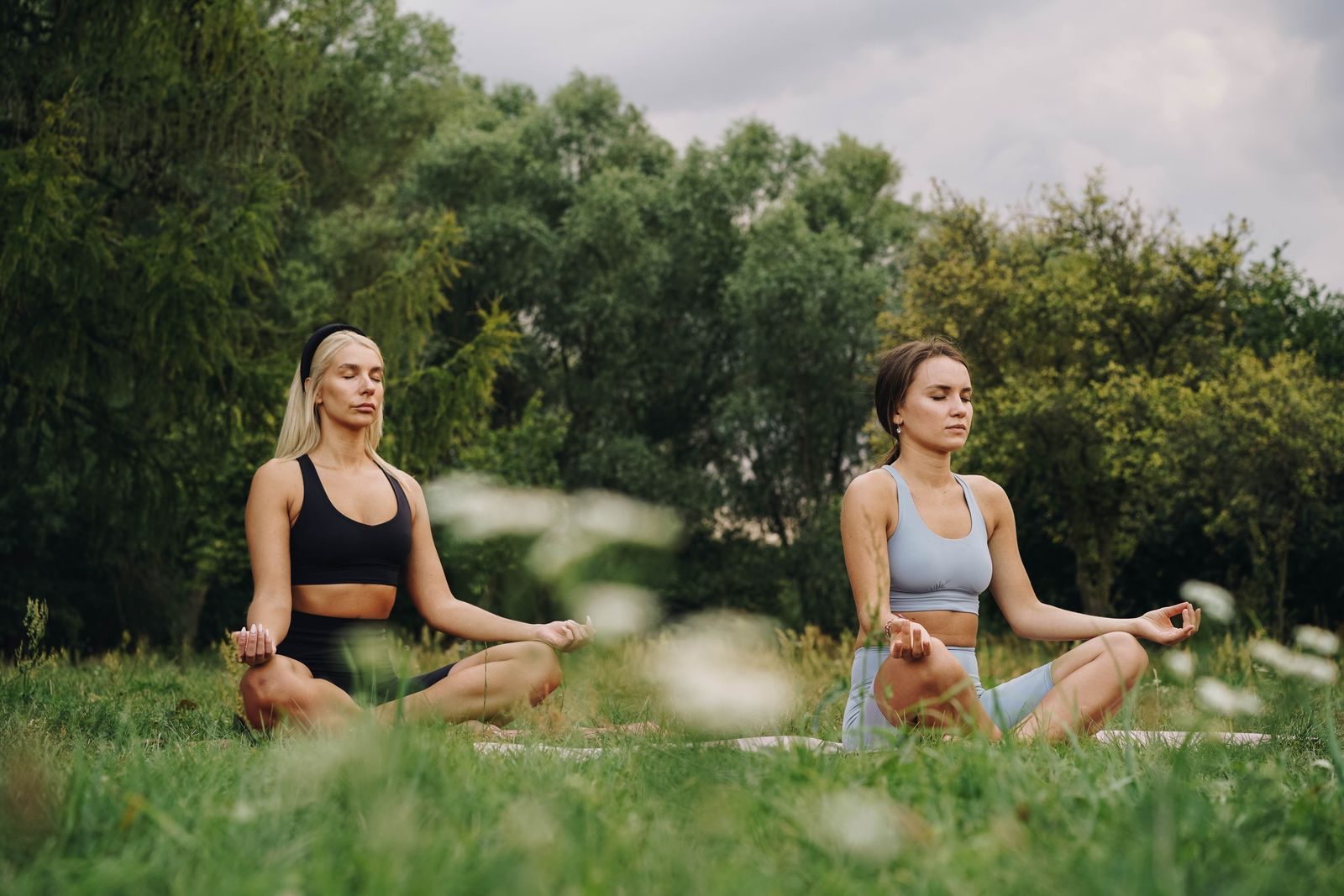
Breathing exercises to calm down may help you feel more relaxed by slowing your breathing, easing physical tension, and shifting your attention away from stressful thoughts. You can practice most of them while sitting comfortably, without special equipment.
Whether you feel overwhelmed, need a quiet moment during the day, or want to unwind before bed, these eight techniques offer simple ways to relax. Each includes clear instructions, recommended practice times, and tips to help you breathe comfortably.
8 Breathing Exercises to Calm Down
These breathing exercises use different approaches, including gentle abdominal breathing, longer exhalations, timed breathing, and mindful awareness.
If you are new to breathwork, start with diaphragmatic breathing, 4-6 breathing, or mindful breath awareness. You do not need to practice all eight in one session.
1. Diaphragmatic (Belly) Breathing
Best for: Beginners who want to relax their body and develop a comfortable breathing rhythm.
Practice time: Start with 1–3 minutes and gradually work toward 5 minutes.
Diaphragmatic breathing encourages your diaphragm, the main muscle involved in breathing, to work naturally. Your abdomen gently rises as you inhale and falls as you exhale.
The American Lung Association recommends this technique for improving breathing control, particularly for people learning to manage breathlessness.
How to Do It
- Sit upright in a comfortable chair with your feet flat on the floor, or lie on your back.
- Place one hand on your abdomen. Rest your other hand on your upper chest if helpful.
- Breathe in gently through your nose, allowing your abdomen to expand naturally.
- Keep your neck and shoulders relaxed without lifting your chest excessively.
- Exhale slowly through softly pursed lips, noticing your abdomen gradually fall.
- Repeat with smooth, comfortable breaths.
Common mistakes: Forcing your belly outward, taking excessively large breaths, or lifting your shoulders with every inhale.
Beginner tip: Focus on gentle abdominal movement rather than trying to fill your lungs as much as possible.
2. 4-6 Breathing
Best for: Slowing your breathing when you feel tense, rushed, or mentally overwhelmed.
Practice time: 1–3 minutes.
The 4-6 breathing technique uses a four-count inhale followed by a six-count exhale. The longer exhalation provides a steady rhythm that may encourage relaxation.
You can practice it discreetly while sitting at your desk, taking a short break, or preparing for a stressful situation.
How to Do It
- Sit comfortably with your back supported and shoulders relaxed.
- Inhale gently through your nose for four counts.
- Allow a brief, natural transition at the top of your inhale.
- Exhale slowly through your nose or mouth for six counts.
- Pause naturally before beginning the next breath.
- Continue at an easy, steady pace.
Common mistakes: Trying to complete the full count when it feels uncomfortable, forcing the exhale, or breathing more deeply than necessary.
Beginner modification: Use a three-count inhale and four-count exhale if the original pattern feels too slow.
3. Cyclic Sighing (Physiological Sigh)
Best for: A short breathing reset when you feel physically tense or emotionally overwhelmed.
Practice: Begin with 2–3 comfortable cycles.
Cyclic sighing combines two consecutive nasal inhales with one slow, extended exhale through the mouth.
A 2023 Stanford Medicine study found that participants practicing cyclic sighing for five minutes daily over a month improved their mood and reduced their resting breathing rate. The study was relatively small, so individual results may vary.
How to Do It
- Sit or stand comfortably with your shoulders relaxed.
- Take a gentle inhale through your nose.
- Without exhaling, take a second, smaller inhale through your nose.
- Exhale slowly through your mouth, allowing the air to leave comfortably.
- Make the exhale longer than the combined inhales without straining.
- Repeat two or three times, then return to your natural breathing rhythm.
Common mistakes: Gasping during the second inhale, pulling in too much air, or forcing an unusually long exhale.
Practice tip: A few cycles are a reasonable starting point. If you enjoy the technique and remain comfortable, gradually extend your practice.
4. Box Breathing (4-4-4-4)
Best for: People who prefer a structured breathing pattern to help them focus during stressful moments.
Practice: 3–5 comfortable rounds.
Box breathing divides one complete breathing cycle into four equal parts: inhale, hold, exhale, and hold again.
The counting pattern gives your attention a simple task and may help reduce mental distractions. Cleveland Clinic describes it as a practical technique for managing everyday stress.
How to Do It
- Sit comfortably with your spine naturally upright.
- Inhale slowly through your nose for four counts.
- Hold your breath gently for four counts.
- Exhale slowly for four counts.
- Pause after exhaling for another four counts.
- Repeat for three to five rounds if comfortable.
Common mistakes: Straining during the breath holds, inhaling too forcefully, or treating each count as a challenge.
Beginner modification: If the four-count holds feel difficult, use a shorter count or choose 4-6 breathing without deliberate breath holds.
5. 4-7-8 Breathing
Best for: Unwinding in the evening or preparing for sleep.
Practice: Start with 2–4 comfortable cycles.
The 4-7-8 method follows a longer breathing sequence: inhale for four counts, hold for seven, and exhale for eight.
The pattern combines focused counting with an extended exhalation. It may help some people settle their attention before bedtime, although evidence for the exact 4-7-8 ratio remains limited.
How to Do It
- Sit comfortably or lie down in a supported position.
- Relax your face, shoulders, and jaw.
- Exhale gently through your mouth.
- Close your mouth and inhale quietly through your nose for four counts.
- Hold your breath for seven counts without straining.
- Exhale slowly through your mouth for eight counts.
- Repeat for up to four comfortable cycles.
Common mistakes: Rushing the exhale, holding your breath until you feel uncomfortable, or taking an exaggerated recovery breath between rounds.
Beginner tip: The counts do not need to represent exact seconds. If the breath hold feels difficult, switch to a technique without breath holding rather than forcing the pattern.
6. Pursed-Lip Breathing
Best for: Practicing a slow, controlled exhale when your breathing feels hurried.
Practice time: 1–3 minutes or several comfortable breaths.
Pursed-lip breathing involves inhaling through the nose and exhaling gently through narrowed lips.
It is frequently taught in pulmonary rehabilitation because it can help people with certain lung conditions control their breathing. For general relaxation, its main practical advantage is encouraging a slower, more deliberate exhale.
How to Do It
- Sit comfortably and relax your neck and shoulders.
- Keep your mouth closed and inhale gently through your nose for approximately two counts.
- Purse your lips loosely, as though preparing to whistle or blow out a candle.
- Exhale slowly through your pursed lips for approximately four counts.
- Repeat, allowing the exhale to remain longer than the inhale.
Common mistakes: Blowing the air out forcefully, tightening your lips excessively, or emptying your lungs until you feel strained.
Practice tip: Imagine gently cooling a spoonful of hot soup rather than blowing out a candle with force.
This exercise is not a replacement for medical treatment if you experience unexplained or significant shortness of breath.
7. Alternate-Nostril Breathing
Best for: Relaxation, concentration, and redirecting attention away from distracting thoughts.
Practice time: 1–3 minutes.
Alternate-nostril breathing is a traditional yoga breathing technique that involves breathing through one nostril at a time.
The sequence requires gentle attention to hand placement and breathing rhythm. This can make it useful when you want a quiet, focused activity.
How to Do It
- Sit comfortably with your spine upright and shoulders relaxed.
- Raise your right hand toward your nose. Fold your index and middle fingers toward your palm, leaving your thumb and ring finger available.
- Gently close your right nostril with your thumb and inhale through your left nostril.
- Close your left nostril with your ring finger, release your thumb, and exhale through your right nostril.
- Inhale through your right nostril.
- Switch sides and exhale through your left nostril.
- Continue alternating smoothly without forcing your breathing.
Common mistakes: Pressing too hard against your nose, tensing your raised shoulder, or rushing the changes between nostrils.
Beginner tip: Practice the hand movements slowly before adding the breathing sequence. Skip this exercise if nasal congestion makes comfortable breathing difficult.
8. Mindful Breath Awareness
Best for: People who find counting distracting or prefer a breathing exercise without deliberate breath control.
Practice time: 2–5 minutes.
Mindful breath awareness involves observing your natural breathing rhythm instead of trying to change it.
You pay attention to sensations such as air passing through your nostrils or the gentle movement of your chest and abdomen.
How to Do It
- Sit comfortably with your back supported or naturally upright.
- Relax your shoulders and rest your hands comfortably.
- Keep your eyes softly open or gently closed.
- Allow your breathing to continue naturally without changing its speed or depth.
- Notice the feeling of each inhale and exhale.
- When your thoughts wander, gently return your attention to the sensation of breathing.
- Continue for two to five minutes.
Common mistakes: Trying to stop every thought, controlling your breathing unnecessarily, or becoming frustrated when your attention wanders.
Practice tip: Mind wandering is normal. The exercise is about noticing when your attention shifts and gently bringing it back.
Which Breathing Exercise Should You Choose?
The best technique is one that feels comfortable and fits the situation.
| Your situation | Breathing exercise to try |
|---|---|
| Feeling stressed during the day | 4-6 breathing |
| New to breathing exercises | Diaphragmatic breathing |
| Wanting a short breathing reset | Cyclic sighing |
| Needing concentration | Box breathing |
| Unwinding before sleep | Gentle belly breathing or 4-7-8 breathing |
| Preferring a slow, controlled exhale | Pursed-lip breathing |
| Wanting a focused breathing activity | Alternate-nostril breathing |
| Disliking counting or breath holds | Mindful breath awareness |
If you are uncertain where to begin, try belly breathing for one or two minutes. It requires no special counting, complicated movements, or breath holds.
A Simple 5-Minute Breathing Routine to Calm Down
You do not need a long session to start practicing relaxation breathing. This five-minute routine uses three gentle techniques and is suitable for many beginners.
| Time | Exercise | What to focus on |
|---|---|---|
| Minute 1 | Diaphragmatic breathing | Let your abdomen rise and fall naturally |
| Minutes 2–3 | 4-6 breathing | Keep your exhale slightly longer than your inhale |
| Minutes 4–5 | Mindful breath awareness | Observe your natural breathing without controlling it |
How to Practice
Find a comfortable place to sit and allow your shoulders to relax. Follow each technique at a pace that feels natural.
If the 4-6 pattern feels uncomfortable, shorten the counts or continue with gentle belly breathing instead.
Try this routine once daily, perhaps after work or before bed. As it becomes familiar, you can use your favorite technique during stressful moments.
Progression: Begin with two or three minutes if needed. Gradually work toward five minutes of comfortable practice rather than making every breath deeper or slower.
How Do Breathing Exercises Help You Feel Calmer?
When you experience stress, your heart rate may increase, your breathing may become faster, and your muscles may tense.
Gentle breathing exercises may help by encouraging a slower breathing rhythm, reducing physical tension, and directing attention toward a simple, manageable activity.
A 2023 meta-analysis published in Scientific Reports reviewed 12 randomized controlled trials involving 785 adults. The researchers found that breathwork was associated with small-to-moderate reductions in reported stress, while emphasizing limitations in the available evidence.
The National Institutes of Health also recognizes slow breathing as one method used to encourage the body’s relaxation response.
However, no single breathing technique works equally well for everyone. Some people prefer longer exhales, while others feel more comfortable simply observing their natural breathing.
Common Breathing Mistakes to Avoid
Breathing exercises should feel gentle and manageable, not like a physical challenge.
- Taking excessively deep breaths: More air is not always better. Breathe only as deeply as feels comfortable.
- Forcing a slow breathing rate: If a counting pattern feels difficult, shorten it rather than struggling.
- Tensing your shoulders or jaw: Keep your upper body relaxed and allow your ribs and abdomen to move naturally.
- Holding your breath too long: Skip timed holds if they cause discomfort, lightheadedness, or distress.
- Expecting immediate results: Some sessions may feel relaxing, while others may not produce a noticeable change.
The NHS breathing exercises for stress emphasize breathing gently without forcing the depth or pace.
Safety Tips Before You Start
Most gentle breathing exercises are accessible, but comfort and safety should come first.
Practice while seated or lying down until you know how a technique affects you. Do not perform breath-holding exercises while driving, swimming, or doing activities that require continuous attention.
Stop if you experience dizziness, sharp pain, numbness, or other unusual symptoms. Seek urgent medical care for chest pain, severe difficulty breathing, fainting, or other potentially serious symptoms.
If you have a heart or lung condition, frequent panic symptoms, or a history of fainting, ask a qualified healthcare professional which techniques are appropriate, particularly those involving breath holds.
If focusing on breathing makes you feel more anxious, return to normal breathing and shift your attention to something around you.
Breathing exercises can support relaxation, but they should not replace appropriate medical or mental health treatment.
Frequently Asked Questions
1. What is the best breathing exercise to calm down quickly?
Cyclic sighing and 4-6 breathing are practical options to try. Cyclic sighing emphasizes a long exhale, while 4-6 breathing provides a steady rhythm. Neither guarantees instant relief, so choose whichever feels more comfortable.
2. How long should I practice breathing exercises?
Start with one to three minutes and gradually increase to approximately five minutes if comfortable. Regular short sessions can be easier to maintain than occasional long sessions.
3. Should I breathe through my nose or mouth?
Many relaxation exercises use nasal inhalation and a gentle exhale through the nose or mouth. Some methods, such as pursed-lip breathing, specifically require exhaling through the mouth. Follow the technique while keeping breathing comfortable.
4. Why do I feel dizzy during deep breathing exercises?
Breathing too quickly or too deeply may lower carbon dioxide levels in your blood and contribute to lightheadedness. If this happens, stop the exercise and return to gentle, normal breathing. Seek medical guidance if dizziness is persistent, severe, or unexplained.
5. Can I practice breathing exercises while lying down?
Yes. Diaphragmatic breathing, mindful breath awareness, and gentle relaxation breathing can be practiced while lying down. Use a comfortable, supported position and avoid exercises that make you feel dizzy or strained.
6. Can breathing exercises help me relax before sleep?
They may help you unwind by shifting attention away from racing thoughts and encouraging a quieter breathing rhythm. Gentle belly breathing or mindful breath awareness may be useful before bed. However, breathing exercises are not a guaranteed treatment for insomnia.
The Bottom Line
Breathing exercises to calm down offer a simple way to practice relaxation during everyday stress. You do not need special equipment or complicated routines to begin.
Start with diaphragmatic breathing or 4-6 breathing for two minutes, then gradually build a short daily practice. Focus on smooth, comfortable breaths rather than perfect counts or immediate results.
The most useful technique is the one you can practice safely, comfortably, and consistently.
References
- NHS — Breathing Exercises for Stress
- American Lung Association — Breathing Exercises
- Stanford Medicine — Cyclic Sighing Can Help Breathe Away Anxiety
- Scientific Reports — Effect of Breathwork on Stress and Mental Health
- NIH NCCIH — Relaxation Techniques: What You Need to Know
- Cleveland Clinic — Box Breathing Benefits and Techniques
- Cleveland Clinic — How to Do 4-7-8 Breathing
This content is for informational purposes only and is not a substitute for medical advice.