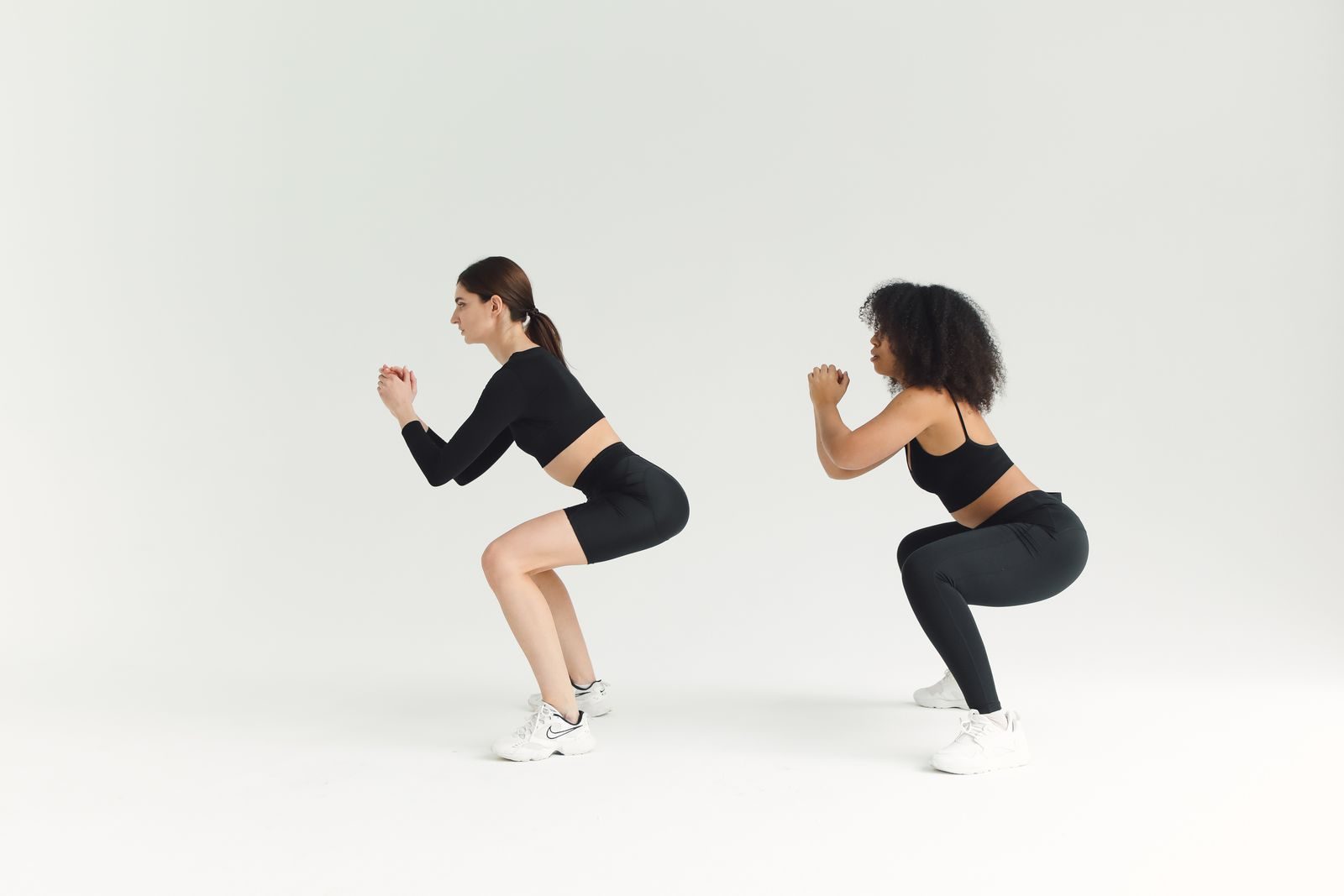
The best quad exercises for women combine squats, lunges, step-ups, machine presses, and knee-extension movements to build stronger, more capable legs. You do not need a women-specific training method or all 12 exercises in one workout.
This guide explains how to perform each movement, which muscles it trains, how to adjust it to your experience level, and how to build a practical quad workout at home or in the gym.
What Are the Quadriceps?
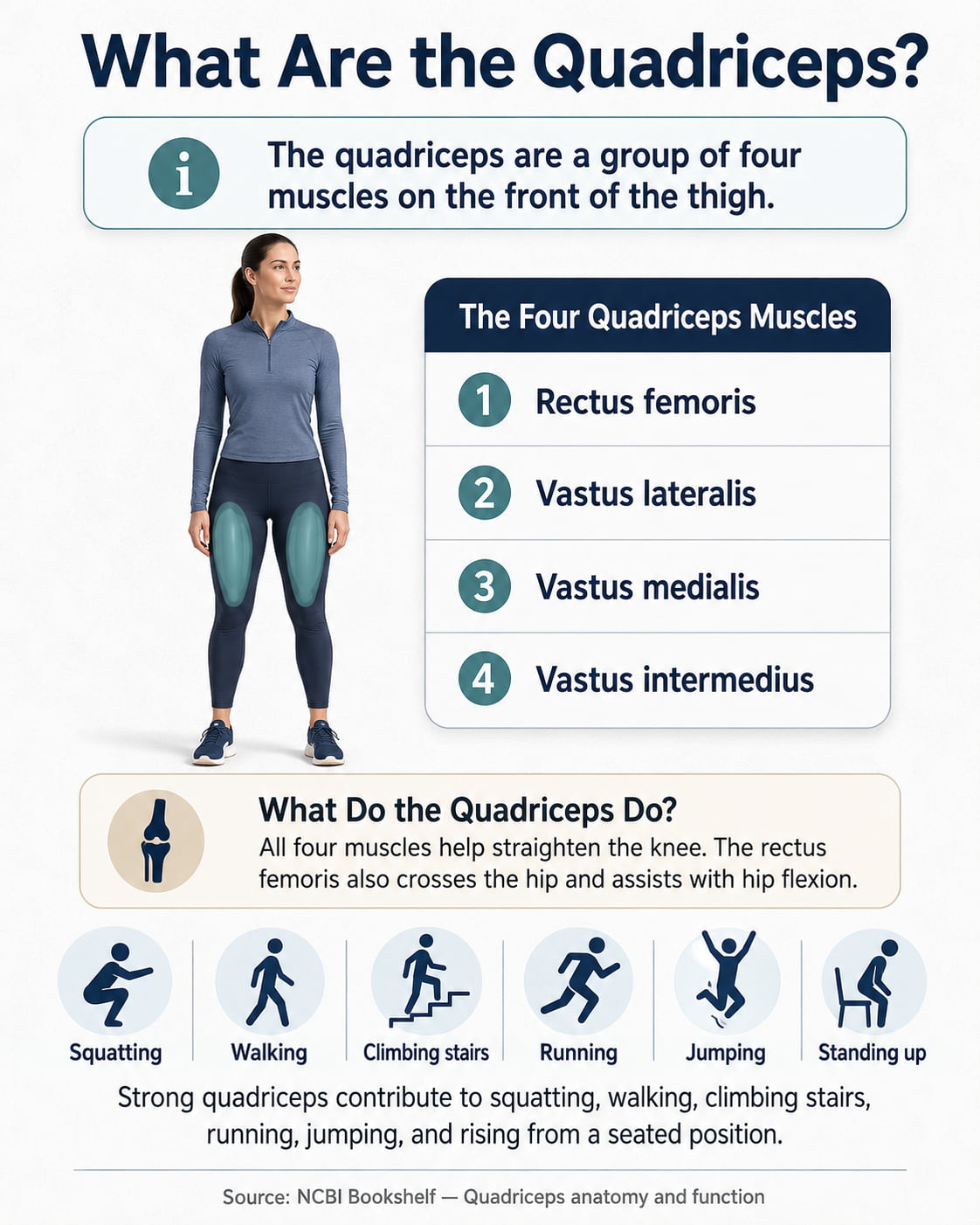
The quadriceps are a group of four muscles on the front of the thigh:
- Rectus femoris
- Vastus lateralis
- Vastus medialis
- Vastus intermedius
All four muscles help straighten the knee. The rectus femoris also crosses the hip and assists with hip flexion. Strong quadriceps contribute to squatting, walking, climbing stairs, running, jumping, and rising from a seated position. You can learn more from this NCBI overview of quadriceps anatomy and function.
Benefits of Quad Training for Women
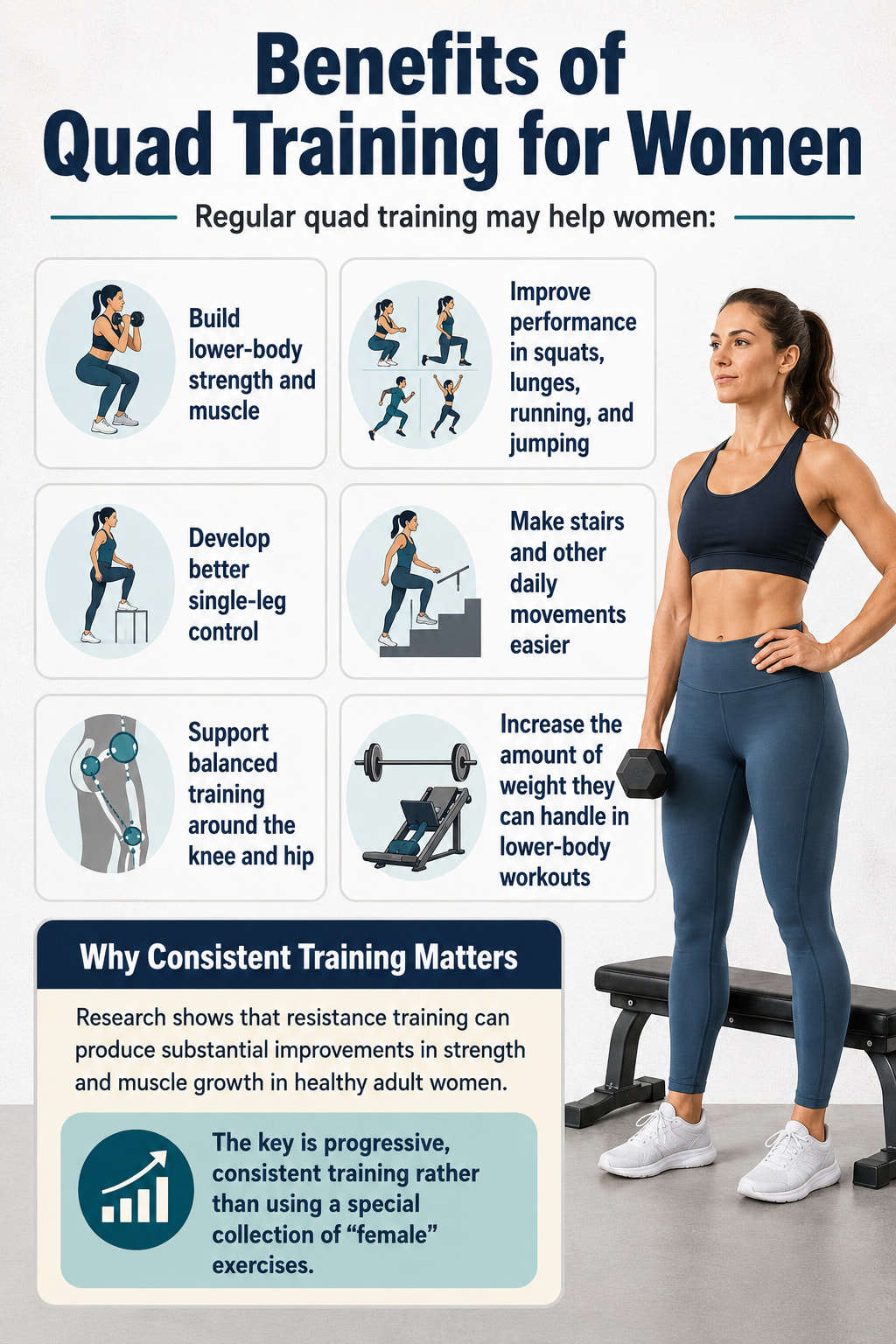
Regular quad training may help women:
- Build lower-body strength and muscle
- Improve performance in squats, lunges, running, and jumping
- Develop better single-leg control
- Make stairs and other daily movements easier
- Support balanced training around the knee and hip
- Increase the amount of weight they can handle in lower-body workouts
Research shows that resistance training can produce substantial improvements in strength and muscle growth in healthy adult women. The key is progressive, consistent training rather than using a special collection of “female” exercises.
12 Best Quad Exercises for Women
You do not need to perform every movement below. Most effective quad workouts include one main squat or machine exercise, one single-leg exercise, and sometimes one isolation or finishing movement.
Use a controlled range of motion that allows you to keep your feet stable, knees aligned, and torso under control. Research generally supports training through a full available range for lower-body muscle development, but depth should match your mobility and technique.
1. Bodyweight Squat
Best for: Beginners learning the squat pattern and anyone training without equipment.
Muscles worked: Quadriceps, gluteus maximus, adductors, hamstrings, calves, and core.
Sets, reps, and rest: Perform 2–4 sets of 8–15 repetitions. Rest for 60–90 seconds.
How to do it:
- Stand with your feet approximately hip- to shoulder-width apart.
- Turn your toes slightly outward if that feels natural.
- Brace your abdomen and keep your chest comfortably upright.
- Bend your knees and hips, lowering between your legs.
- Keep your heels and the balls of your feet in contact with the floor.
- Stand by pushing the floor away and straightening your knees and hips.
Common mistakes: Allowing the knees to collapse inward, lifting the heels, dropping too quickly, or forcing a depth that causes the lower back to round.
Progression or regression: Squat to a chair if you need a clear depth target. Progress by holding a dumbbell in the goblet position.
Coaching cue: Keep your knees moving in the same direction as your toes.
2. Goblet Squat
Best for: Learning a loaded squat before progressing to heavier barbell exercises.
Muscles worked: Quadriceps, glutes, adductors, hamstrings, upper back, and core.
Equipment needed: One dumbbell or kettlebell.
Sets, reps, and rest: Perform 3–4 sets of 8–12 repetitions. Rest for 90 seconds.
How to do it:
- Hold a dumbbell vertically against the center of your chest.
- Place your feet in a comfortable squat stance.
- Brace your midsection before beginning each repetition.
- Sit down between your legs while keeping the weight close to your body.
- Lower as far as you can without losing foot pressure or spinal control.
- Push through both feet to stand.
Common mistakes: Holding the dumbbell away from the chest, allowing the elbows to flare excessively, collapsing the chest, or shifting onto the toes.
Progression or regression: Use a lighter weight or squat to a box if needed. Progress by adding weight, repetitions, or a slower lowering phase.
3. Heel-Elevated Squat
Best for: Creating a more upright, knee-dominant squat and emphasizing the quadriceps.
Muscles worked: Quadriceps, glutes, adductors, calves, and core.
Equipment needed: A stable squat wedge, slant board, or firmly positioned weight plates.
Sets, reps, and rest: Perform 2–4 sets of 8–15 repetitions. Rest for 60–90 seconds.
How to do it:
- Position both heels securely on the wedge or plates.
- Stand with your feet approximately hip- to shoulder-width apart.
- Hold a dumbbell at your chest or begin with body weight.
- Keep your torso upright as your knees travel forward over your toes.
- Lower under control while maintaining full foot contact.
- Straighten your knees and hips to return to standing.
Common mistakes: Using an unstable heel support, allowing the knees to collapse inward, rising onto the toes, or adding more weight than you can control.
Progression or regression: Hold a rack or post for balance when learning the exercise. Progress by adding a dumbbell or increasing the controlled range of motion.
4. Barbell Back Squat
Best for: Building overall lower-body strength with progressively heavier loads.
Muscles worked: Quadriceps, glutes, adductors, hamstrings, spinal erectors, and abdominal muscles.
Equipment needed: Barbell, weight plates, squat rack, and safety bars.
Sets, reps, and rest: Perform 3–5 sets of 5–10 repetitions. Rest for 2–3 minutes.
How to do it:
- Set the bar slightly below shoulder height and position the safety bars.
- Place the bar securely across your upper back, not directly on your neck.
- Brace your torso, stand up, and take a controlled step away from the rack.
- Bend your knees and hips while keeping the bar balanced over your midfoot.
- Descend to the deepest position you can control.
- Push the floor away and stand without allowing your knees to collapse inward.
Common mistakes: Starting with excessive weight, placing the bar on the neck, losing torso tension, shifting onto the toes, or relying on an uncontrolled bounce at the bottom.
Progression or regression: Learn the bodyweight and goblet squat first. A hack squat or leg press can provide a more stable alternative when barbell balance is the limiting factor.
Safety note: Use safety bars and collars, especially when training without a spotter.
5. Bulgarian Split Squat
Best for: Building unilateral quad strength, balance, and side-to-side control.
Muscles worked: Quadriceps, gluteus maximus, gluteus medius, adductors, hamstrings, and core.
Equipment needed: Bench or low platform; dumbbells are optional.
Sets, reps, and rest: Perform 2–4 sets of 8–12 repetitions per leg. Rest for 90–120 seconds.
How to do it:
- Stand a comfortable stride in front of a bench.
- Place the top of one foot lightly on the bench behind you.
- Keep most of your weight over the front leg.
- Lower your back knee toward the floor while the front knee bends.
- Keep the front heel planted and the knee tracking with the toes.
- Push through the front foot to return to the starting position.
Common mistakes: Standing with the feet on a narrow line, pushing excessively through the rear leg, letting the front heel lift, or using a bench that is too high.
Progression or regression: Begin with a regular split squat while keeping both feet on the floor. Progress by holding dumbbells at your sides.
Coaching cue: Think of the rear leg as a kickstand rather than the main working leg.
6. Reverse Lunge
Best for: Beginners developing single-leg strength with a controlled stepping pattern.
Muscles worked: Quadriceps, glutes, adductors, hamstrings, calves, and core.
Equipment needed: None; dumbbells are optional.
Sets, reps, and rest: Perform 2–3 sets of 8–12 repetitions per side. Rest for 60–90 seconds.
How to do it:
- Stand tall with your feet about hip-width apart.
- Step one foot backward and land on the ball of that foot.
- Bend both knees as you lower the rear knee toward the floor.
- Keep the front foot firmly planted.
- Push through the front leg to return to standing.
- Repeat on the same side or alternate legs.
Common mistakes: Taking an extremely short step, allowing the front knee to collapse inward, leaning excessively to one side, or pushing primarily from the rear foot.
Progression or regression: Hold a stable support while learning the movement. Progress by carrying dumbbells or using a front-rack position.
7. Walking Lunge
Best for: Combining quad strength with coordination, balance, and continuous movement.
Muscles worked: Quadriceps, glutes, hamstrings, adductors, calves, and core.
Equipment needed: None; dumbbells are optional.
Sets, reps, and rest: Perform 2–3 sets of 8–12 repetitions per leg or 10–20 total steps. Rest for 60–90 seconds.
How to do it:
- Stand upright with enough open space in front of you.
- Step forward and plant your entire front foot.
- Bend both knees and lower the rear knee toward the floor.
- Push through the front foot to bring the rear leg forward.
- Move directly into the next repetition with the opposite leg.
- Keep each step controlled rather than rushing forward.
Common mistakes: Taking inconsistent step lengths, bouncing between repetitions, allowing the front knee to collapse, or striking the back knee against the floor.
Progression or regression: Use reverse lunges or stationary split squats when balance is difficult. Add dumbbells once your steps remain steady.
8. Step-Up
Best for: Training one leg at a time with a movement that resembles climbing stairs.
Muscles worked: Quadriceps, glutes, adductors, hamstrings, calves, and core.
Equipment needed: Stable step, box, or bench.
Sets, reps, and rest: Perform 2–4 sets of 8–12 repetitions per side. Rest for 60–90 seconds.
How to do it:
- Place one entire foot on a stable step.
- Lean forward slightly from the hips while keeping your spine controlled.
- Push through the top foot to lift your body onto the step.
- Avoid jumping or driving forcefully from the lower foot.
- Stand tall at the top without losing your balance.
- Lower slowly using the working leg.
Common mistakes: Selecting a step that is too high, pushing strongly from the trailing foot, allowing the working knee to collapse inward, or dropping quickly during the descent.
Progression or regression: Start with a low platform and use a railing for balance. Progress with dumbbells only after you can control both the upward and downward phases.
9. Leg Press
Best for: Loading the quadriceps without the balance requirements of a free-weight squat.
Muscles worked: Quadriceps, glutes, adductors, and hamstrings.
Equipment needed: Leg-press machine.
Sets, reps, and rest: Perform 3–4 sets of 8–15 repetitions. Rest for 90–150 seconds.
How to do it:
- Adjust the seat so your hips and lower back remain against the pad.
- Place your feet about hip- to shoulder-width apart on the platform.
- Release the safety handles and lower the platform under control.
- Allow your knees to bend as far as you can without your pelvis rolling away from the pad.
- Push through your whole feet to extend your legs.
- Finish with controlled knees rather than forcefully snapping them straight.
Common mistakes: Lowering so far that the lower back rounds, allowing the knees to collapse inward, using very short repetitions, or placing the feet partly off the platform.
Progression or regression: Begin with a light load and increase it gradually. Adjust the seat or reduce the depth if you cannot keep your hips and back stable.
10. Hack Squat
Best for: Training the quadriceps with a supported torso and less balance demand than a barbell squat.
Muscles worked: Quadriceps, glutes, adductors, hamstrings, and calves.
Equipment needed: Hack-squat machine.
Sets, reps, and rest: Perform 3–4 sets of 6–12 repetitions. Rest for about 2 minutes.
How to do it:
- Place your shoulders under the pads and your back against the machine.
- Position your feet at a height that lets you keep your heels down.
- Release the safety handles and unlock your knees.
- Lower the platform slowly while your knees track with your toes.
- Stop before your hips or lower back lose contact with the pad.
- Push through your whole feet to return to the top.
Common mistakes: Positioning the feet so low that the heels lift, allowing the knees to collapse, dropping too quickly, or forcefully locking the knees at the top.
Progression or regression: Begin with the empty machine or a light load. Add weight only when every repetition reaches a consistent, controlled depth.
11. Leg Extension
Best for: Directly training knee extension and adding quad volume without another squat or lunge.
Muscles worked: Rectus femoris, vastus lateralis, vastus medialis, and vastus intermedius.
Equipment needed: Leg-extension machine.
Sets, reps, and rest: Perform 2–4 sets of 10–20 repetitions. Rest for 60–90 seconds.
How to do it:
- Adjust the seat so your knees align closely with the machine’s pivot point.
- Position the lower pad just above the front of your ankles.
- Sit against the back pad and hold the handles.
- Extend your knees smoothly without swinging your torso.
- Pause briefly near the top without forcefully locking the knees.
- Lower the weight slowly until you reach your controlled starting position.
Common mistakes: Using momentum, lifting the hips from the seat, allowing the weight stack to slam down, or selecting a load that prevents a controlled range.
Progression or regression: Start with a light load and a range that feels comfortable. Increase repetitions before making a small weight increase.
Squats and leg extensions should not always be treated as interchangeable. Recent research in untrained women found that the two exercises produced different regional quadriceps adaptations, supporting the use of both compound and isolation movements when the goal is complete quad development.
12. Wall Sit
Best for: Equipment-free quad endurance and a simple finishing exercise.
Muscles worked: Quadriceps, glutes, calves, and core.
Equipment needed: A sturdy wall.
Sets, reps, and rest: Perform 2–4 holds of 20–60 seconds. Rest for about 60 seconds.
How to do it:
- Stand with your back against a wall and walk your feet forward.
- Slide down until you reach a challenging but controllable position.
- Keep your entire back supported by the wall.
- Place your feet flat and keep your knees aligned with your toes.
- Hold the position while breathing normally.
- Push through your feet and slide back up when the hold is complete.
Common mistakes: Sliding deeper than you can control, holding your breath, allowing the knees to collapse inward, or pressing down on the thighs with your hands.
Progression or regression: Use a shallower position for an easier hold. Progress by increasing the hold time or placing a light weight securely on your lap.
How to Choose Quad Exercises for Women
A productive workout does not require several versions of the same movement. Choose exercises that fill different roles.
Choose One Main Squat or Press
Good options include:
- Goblet squat
- Barbell back squat
- Leg press
- Hack squat
Perform this exercise early in the workout when you have the most energy.
Choose One Single-Leg Exercise
Good options include:
- Bulgarian split squat
- Reverse lunge
- Walking lunge
- Step-up
Single-leg exercises can help develop balance and reveal differences in control between sides.
Add One Isolation or Finishing Exercise
Good options include:
- Leg extension
- Wall sit
These movements add quad work without requiring another demanding squat variation.
Beginner Home Quad Workout
Perform this workout twice per week with at least one recovery day between sessions.
- Bodyweight or goblet squat: 3 sets of 8–12 repetitions
- Reverse lunge: 2 sets of 6–10 repetitions per leg
- Step-up: 2 sets of 8–12 repetitions per leg
- Wall sit: 2 sets of 20–40 seconds
Rest for 60–90 seconds between sets. Finish most sets while you could still complete approximately two or three good repetitions.
When you reach the top of the repetition range with stable technique, add a small amount of weight or choose a slightly harder variation.
Gym Quad Workout
Perform this workout once or twice per week, depending on your other lower-body training.
- Barbell back squat or hack squat: 3 sets of 6–10 repetitions
- Bulgarian split squat: 3 sets of 8–12 repetitions per leg
- Leg extension: 2 sets of 10–15 repetitions
Rest for 2–3 minutes after the main squat and 60–120 seconds after the remaining exercises.
Beginners can start with two sets per exercise. Add sets gradually rather than beginning with a high-volume routine.
How Often Should Women Train Their Quads?
Most women can train their quads two times per week, although one well-planned session may be enough for beginners who also perform other lower-body activities.
The updated ACSM resistance-training guidelines emphasize training major muscle groups at least twice weekly. For muscle growth, approximately 10 challenging weekly sets per muscle group is a useful general target, but it is not a rigid requirement. Bodyweight exercises, machines, resistance bands, and free weights can all be effective.
Your total quad volume also includes sets of squats, lunges, presses, and other lower-body exercises. You do not need 10 additional isolation sets if your regular workouts already contain substantial quad work.
How to Progress Your Quad Exercises
Use one of the following methods:
- Add one or two repetitions while maintaining form.
- Add a small amount of weight after reaching the top of the repetition range.
- Add one set when your current workload is easy to recover from.
- Increase the controlled range of motion.
- Use a slower lowering phase.
- Progress from supported to unsupported single-leg exercises.
- Move from bilateral to more demanding unilateral variations.
Adding repetitions and adding weight can both be effective forms of progressive overload.
Avoid increasing weight, repetitions, sets, and training frequency at the same time. Change one variable, assess your recovery, and then progress again.
Common Quad-Training Mistakes
Performing Too Many Similar Exercises
Four different squat variations in one workout often create unnecessary repetition. A squat, a single-leg exercise, and a knee-extension movement usually provide a more balanced session.
Using More Weight Than You Can Control
A heavier load is only useful when you can maintain foot pressure, knee alignment, range of motion, and torso control.
Turning Every Set Into a Failure Set
You do not need to reach complete muscular failure on every set. The ACSM notes that failure training is not consistently necessary for the average healthy adult. Stop most working sets when you have approximately one to three controlled repetitions remaining.
Cutting Every Repetition Short
Consistently using a very short range may limit the training stimulus. Use the largest controlled range that matches your current mobility and exercise setup.
Letting the Knees Collapse Inward
Your knees do not have to remain perfectly straight ahead, but they should generally track in the same direction as your toes without suddenly collapsing inward.
Progressing Before Technique Is Consistent
Do not add weight simply because you completed the target repetitions. First confirm that the final repetition looked similar to the first.
Safety Tips Before Training Your Quads
- Warm up with five minutes of easy movement and one or two lighter practice sets.
- Use stable benches, boxes, wedges, and machines.
- Wear shoes that provide secure contact with the floor.
- Increase weights gradually.
- Use squat-rack safety bars when training with a barbell.
- Avoid holding your breath for long periods.
- Stop exercising if you experience sharp pain, numbness, dizziness, chest pain, or unusual symptoms.
Muscle fatigue and temporary effort are expected during resistance training. Sharp or worsening joint pain is not something to push through.
Frequently Asked Questions
What is the best quad exercise for women?
There is no single best exercise for everyone. Goblet squats are excellent for beginners, while back squats, hack squats, and leg presses allow greater loading. Leg extensions are useful for directly training knee extension.
A strong routine usually combines more than one movement pattern.
Can women build their quads at home?
Yes. Bodyweight squats, goblet squats, heel-elevated squats, lunges, step-ups, and wall sits can all be performed at home. Over time, you may need dumbbells, resistance bands, or harder variations to continue progressing.
Are squats enough to build the quadriceps?
Squats can provide a strong foundation, especially when performed consistently through a controlled range. However, adding a single-leg exercise and a knee-extension movement can provide a broader training stimulus.
How many quad exercises should I do in one workout?
Two to four exercises are enough for most people. Beginners may start with two or three movements, while experienced lifters may use three or four depending on their weekly training volume.
Should women train their quads and glutes together?
Yes. Many effective lower-body exercises train both muscle groups. Squats, lunges, step-ups, and leg presses involve the quadriceps and glutes, although exercise setup and range of motion influence how much each contributes.
How long does it take to strengthen the quads?
Beginners may notice improved exercise control and strength within several weeks. Visible muscle changes usually require a longer period of consistent resistance training, adequate recovery, and sufficient nutrition. Progress varies with training history, effort, genetics, sleep, and total workload.
Can I train quads if my legs are still sore?
Mild soreness does not always prevent training, but the next session should not significantly worsen your movement quality. Use a lighter session, train another muscle group, or take an additional recovery day when soreness changes how you squat, walk, or control your knees.
Conclusion
The best quad exercises for women are the ones that match your experience, equipment, and ability to train consistently. Begin with a controllable squat, add one single-leg movement, and use a leg extension or wall sit when additional quad work is needed.
Focus on stable technique, gradual progression, and enough recovery between sessions. You do not need to complete all 12 exercises—three well-chosen movements performed consistently can build strong, capable legs.
References
- American College of Sports Medicine: 2026 Resistance Training Guidelines
- NCBI Bookshelf: Quadriceps Anatomy and Function
- PubMed: Effects of Resistance Training in Healthy Adult Women
- PubMed: Squat Versus Leg Extension for Quadriceps Adaptations
- PubMed: Range of Motion and Lower-Body Muscle Development
- PubMed: Progressive Overload Through Repetitions or Load
- ACE Exercise Library
This content is for informational purposes only and is not a substitute for professional medical advice.