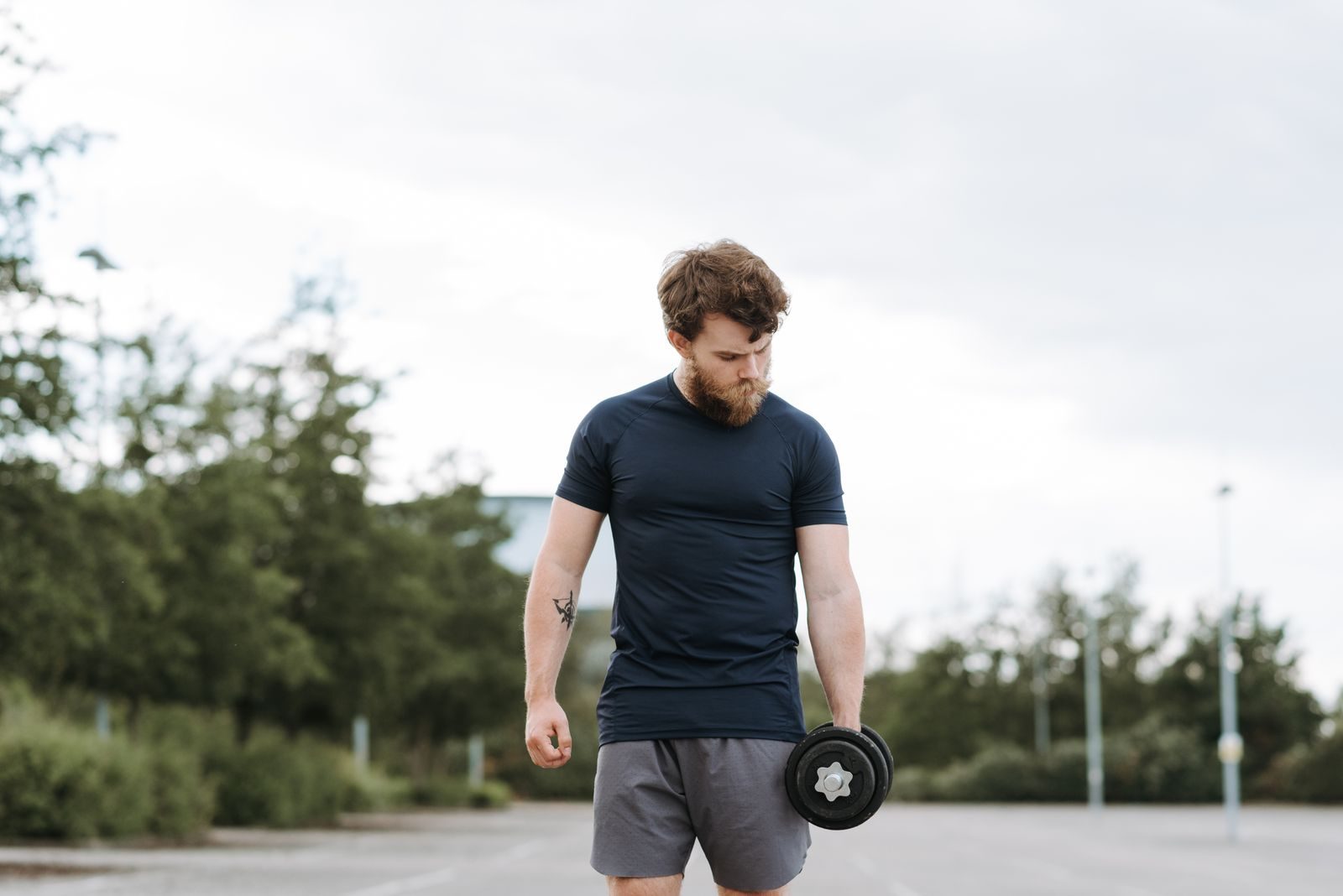
Dumbbell oblique exercises strengthen the sides of your core by training your torso to bend, rotate, and resist unwanted movement. With one or two dumbbells, you can build lateral core strength, improve trunk control, and add resistance without needing a cable machine.
The best routine does not use all 10 exercises at once. Choose two or three movements that train different core functions, use a manageable weight, and prioritize controlled repetitions over speed.
Dumbbell Oblique Exercises at a Glance
| Exercise | Main core demand | Best for | Level | Suggested starting dose |
|---|---|---|---|---|
| Dumbbell suitcase carry | Anti-lateral flexion | Learning upright bracing | Beginner | 2–4 sets of 20–40 seconds per side |
| One-dumbbell side bend | Lateral flexion | Direct side-core loading | Beginner | 2–3 sets of 8–15 reps per side |
| Single-arm dumbbell dead bug | Anti-extension and anti-rotation | Floor-based core control | Beginner | 2–3 sets of 6–10 reps per side |
| Dumbbell side plank | Anti-lateral flexion | Side-core endurance | Beginner to intermediate | 2–3 sets of 15–30 seconds per side |
| High plank dumbbell pull-through | Anti-rotation | Keeping the hips square | Intermediate | 2–3 sets of 6–10 reps per side |
| Dumbbell Russian twist | Rotation | Controlled seated rotation | Intermediate | 2–3 sets of 8–12 reps per side |
| Standing dumbbell wood chop | Diagonal rotation | Full-body rotational coordination | Intermediate | 2–3 sets of 8–12 reps per side |
| Dumbbell renegade row | Anti-rotation | Combining back and core training | Intermediate to advanced | 3 sets of 6–10 reps per side |
| Single-arm overhead march or carry | Anti-lateral flexion and anti-rotation | Shoulder and trunk stability | Intermediate to advanced | 2–3 sets of 20–30 seconds per side |
| Dumbbell windmill | Hip-hinge and lateral stability | Advanced mobility and control | Advanced | 2–3 sets of 5–8 reps per side |
These are starting ranges, not rigid rules. Select a load that lets you complete every repetition without leaning, rushing, holding your breath, or losing control of your pelvis.
What Muscles Do Dumbbell Oblique Exercises Work?
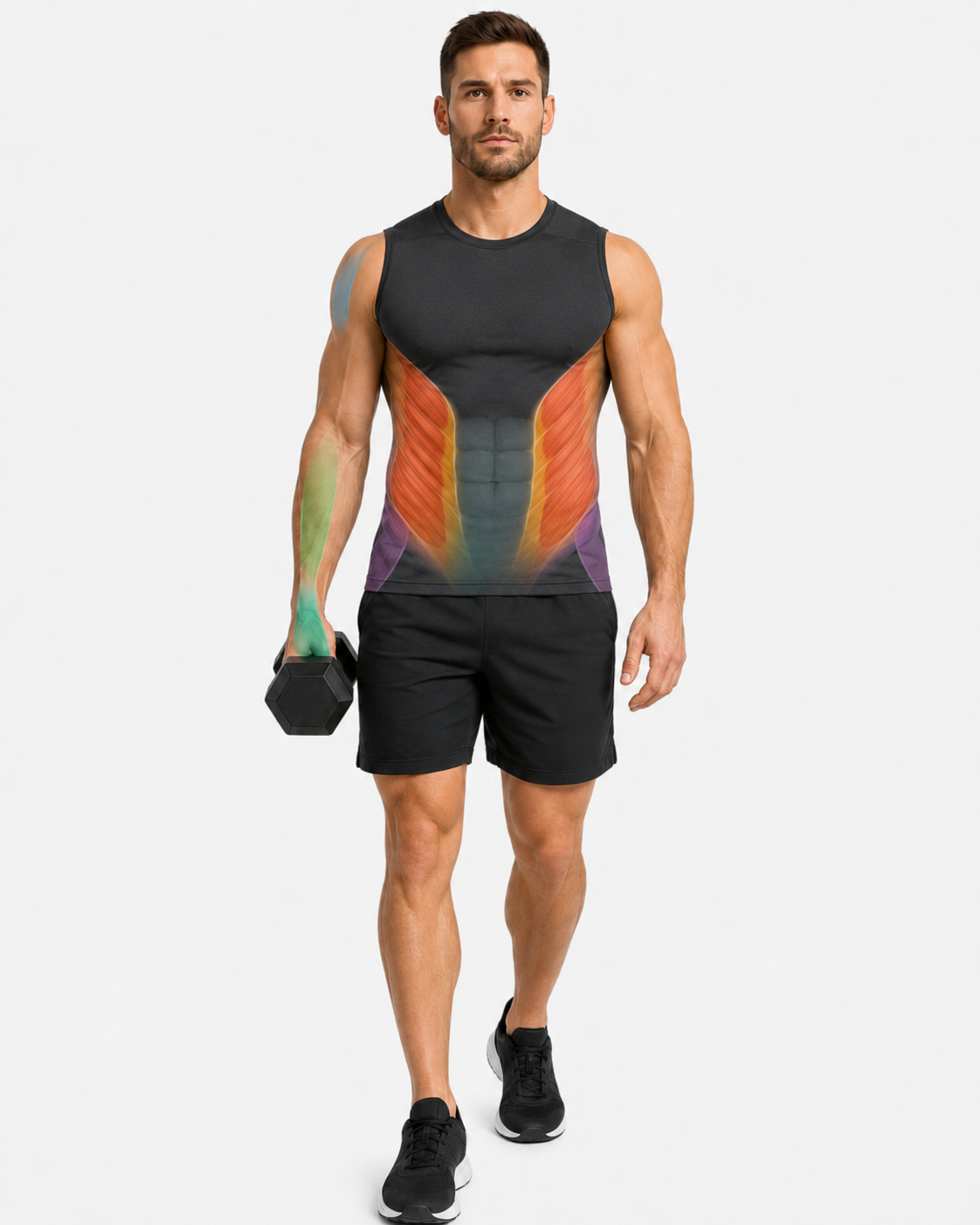
The main muscles trained are the external obliques and internal obliques, which form two layers along the sides of the abdominal wall. Together, they contribute to trunk rotation, side bending, abdominal compression, and spinal control.
According to the National Library of Medicine’s abdominal-wall anatomy review, the obliques work as part of a larger abdominal system that also includes the transversus abdominis and rectus abdominis.
Other muscles assisting during these exercises may include:
- Transversus abdominis: Helps create abdominal tension and trunk stability.
- Rectus abdominis: Helps control the relationship between the rib cage and pelvis.
- Quadratus lumborum: Assists with lateral flexion and resisting sideways movement.
- Erector spinae: Helps maintain spinal position.
- Glutes: Stabilize the pelvis during carries, planks, rows, and standing exercises.
- Shoulder stabilizers: Work during side planks, renegade rows, overhead carries, and windmills.
- Grip and forearm muscles: Support every loaded carry and dumbbell hold.
No dumbbell movement completely isolates the obliques. Effective core exercises usually require several trunk, hip, and shoulder muscles to work together.
How Dumbbell Oblique Exercises Build Core Strength
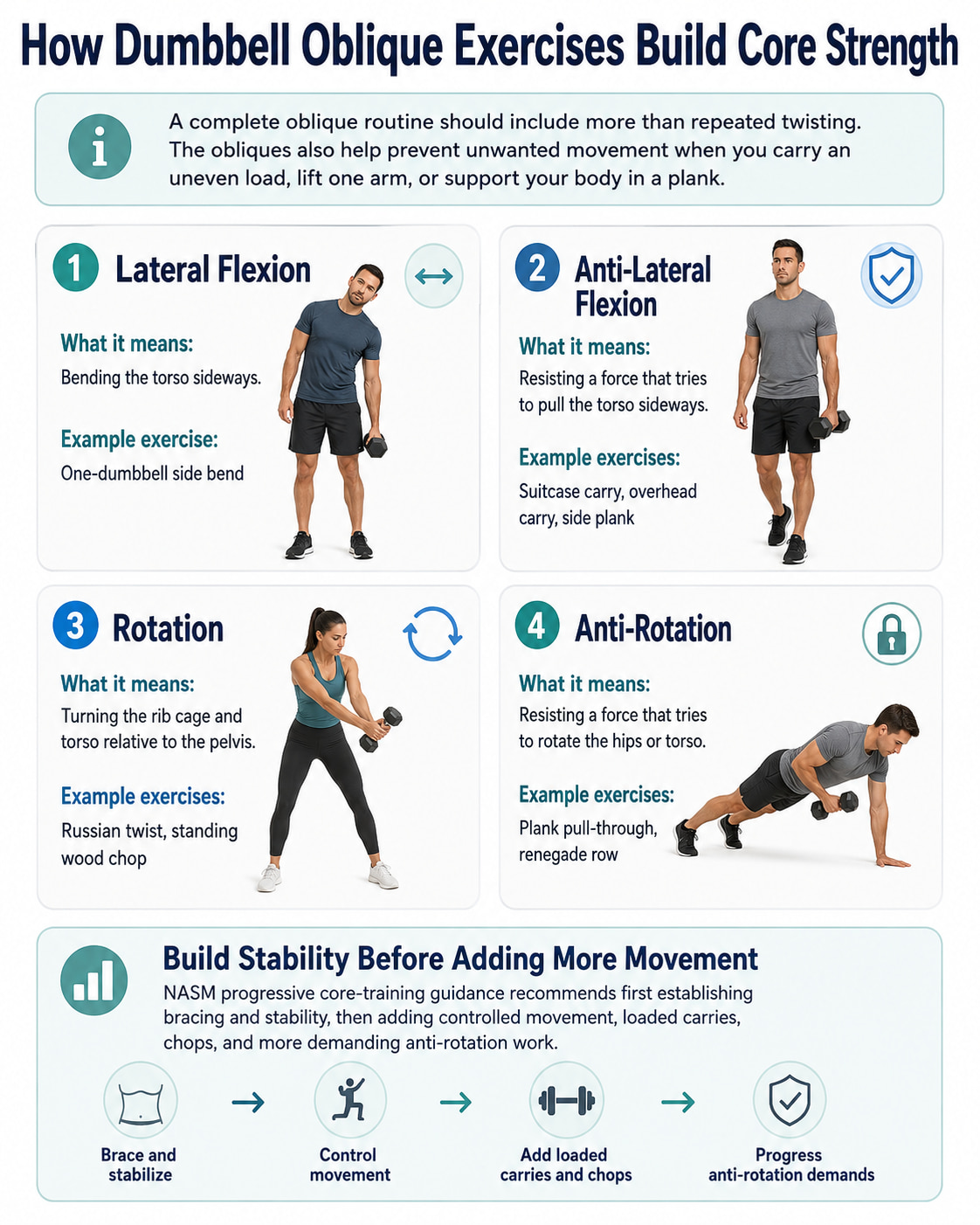
A complete oblique routine should include more than repeated twisting. The obliques also help prevent unwanted movement when you carry an uneven load, lift one arm, or support your body in a plank.
- Lateral flexion: Bending the torso sideways. The one-dumbbell side bend directly trains this action.
- Anti-lateral flexion: Resisting a force that tries to pull your torso sideways. Suitcase carries, overhead carries, and side planks train your core to keep you upright.
- Rotation: Turning the rib cage and torso relative to the pelvis. Russian twists and standing wood chops train controlled rotation.
- Anti-rotation: Resisting a force that tries to rotate your hips or torso. Plank pull-throughs and renegade rows are common examples.
Current NASM progressive core-training guidance recommends first developing bracing and stability, then progressing to controlled movement, loaded carries, chops, and more demanding anti-rotation exercises.
10 Best Dumbbell Oblique Exercises
These 10 dumbbell oblique exercises train your core through side bending, rotation, anti-rotation, and lateral stability. Choose movements that match your experience level and focus on slow, controlled form before increasing weight.
1. Dumbbell Suitcase Carry
Best for: Learning to brace while standing and walking.
Muscles worked: Internal and external obliques, transversus abdominis, quadratus lumborum, erector spinae, glutes, grip, and shoulder stabilizers.
Equipment needed: One dumbbell and a short walking area.
Sets, time, and rest: Perform 2–4 sets of 20–40 seconds per side. Rest for 45–75 seconds.
How to do it
- Hold one dumbbell at your right side with your arm straight and shoulder relaxed.
- Stand tall with your feet approximately hip-width apart, ribs positioned over your pelvis, and abdominal muscles braced.
- Walk forward using short, controlled steps without leaning toward or away from the dumbbell.
- Turn carefully, complete the required time or distance, and repeat with the dumbbell in your left hand.
Common mistakes: Leaning sideways, shrugging the loaded shoulder, taking hurried steps, arching the lower back, or choosing a weight that changes your walking pattern.
Progression or regression: Use a lighter dumbbell or march in place when space or balance is limited. Progress by increasing the weight, distance, or walking time while maintaining the same posture.
Coaching cue: Stay as tall as though the dumbbell is not there.
The suitcase carry is an effective starting choice because the one-sided load creates an anti-lateral-flexion challenge without requiring repeated spinal bending or twisting. NASM also includes unilateral carries among its recommended loaded core exercises.
2. One-Dumbbell Side Bend
Best for: Directly loading controlled lateral flexion.
Muscles worked: Internal and external obliques, quadratus lumborum, transversus abdominis, and erector spinae.
Equipment needed: One dumbbell.
Sets, reps, and rest: Perform 2–3 sets of 8–15 reps per side. Rest for 45–75 seconds.
How to do it
- Hold a dumbbell in your right hand with your arm hanging naturally. Place your left hand on your hip.
- Stand with your feet hip-width apart, knees soft, chest facing forward, and ribs stacked over your pelvis.
- Slowly slide the dumbbell a short distance down the outside of your right thigh by bending directly to the right.
- Contract the muscles on the opposite side of your torso to return to an upright position.
- Finish the set, move the dumbbell to your left hand, and repeat.
Common mistakes: Holding a dumbbell in each hand, rotating the shoulders, bending forward, forcing a deep range, or jerking the weight to return upright. Two equally loaded dumbbells can partly counterbalance each other and make the exercise less clearly unilateral.
Progression or regression: Begin without weight or use a very light dumbbell. Progress by adding a brief pause in the lowered position before increasing the load.
Coaching cue: Move sideways as though standing between two panes of glass.
A small, controlled range is enough. Going deeper does not automatically create a better oblique exercise and may make it harder to maintain a stable spinal position.
3. Single-Arm Dumbbell Dead Bug
Best for: Beginners learning to control the rib cage and pelvis.
Muscles worked: Obliques, transversus abdominis, rectus abdominis, hip flexors, and shoulder stabilizers.
Equipment needed: One light dumbbell and an exercise mat.
Sets, reps, and rest: Perform 2–3 sets of 6–10 reps per side. Rest for 45–60 seconds.
How to do it
- Lie on your back with your hips and knees bent to approximately 90 degrees.
- Hold a light dumbbell in your right hand directly above your shoulder. Keep your wrist straight.
- Exhale, brace your abdomen, and gently maintain contact between your lower back and the floor.
- Slowly extend your left leg until the heel approaches the floor without allowing your back to arch.
- Return the leg to the starting position, finish the set, and switch the dumbbell to your left hand while extending your right leg.
Common mistakes: Lowering the leg farther than you can control, allowing the lower back to arch, letting the dumbbell drift toward the head, rushing the movement, or holding your breath.
Progression or regression: Begin with unweighted heel taps. Progress by straightening the moving leg more fully, lowering it closer to the floor, or increasing the dumbbell by the smallest available amount.
Coaching cue: Keep your ribs heavy and the dumbbell stacked over your shoulder.
4. Dumbbell Side Plank
Best for: Building isometric lateral-core strength.
Muscles worked: Internal and external obliques, transversus abdominis, quadratus lumborum, gluteus medius, shoulder stabilizers, and spinal stabilizers.
Equipment needed: One light dumbbell and an exercise mat.
Sets, time, and rest: Perform 2–3 sets of 15–30 seconds per side. Rest for 45–75 seconds.
How to do it
- Lie on your right side with your right elbow directly beneath your shoulder.
- Extend your legs and stack or stagger your feet. Bend your knees for an easier variation.
- Place a light dumbbell against your top hip and secure it with your left hand.
- Brace your core and lift your hips until your head, trunk, and legs form a straight line.
- Hold while breathing normally, lower with control, and repeat on the other side.
Common mistakes: Letting the hips sag, rotating the chest toward the floor, collapsing into the supporting shoulder, holding the breath, or adding a dumbbell before mastering the unweighted position.
Progression or regression: Perform the plank from bent knees or remove the dumbbell. Progress to straight legs, stacked feet, a longer hold, or a carefully controlled top-arm dumbbell hold when shoulder stability is sufficient.
Coaching cue: Push the floor away and keep both hip bones facing forward.
Research measuring muscle activity has recorded substantial internal and external oblique activation during lateral plank tasks. However, muscle-activity measurements should not be interpreted as direct proof of long-term muscle growth.
5. High Plank Dumbbell Pull-Through
Best for: Training the obliques to resist hip and torso rotation.
Muscles worked: Obliques, transversus abdominis, rectus abdominis, serratus anterior, shoulders, chest, glutes, and quadriceps.
Equipment needed: One stable dumbbell and an exercise mat.
Sets, reps, and rest: Perform 2–3 sets of 6–10 pull-throughs per side. Rest for 60–90 seconds.
How to do it
- Begin in a high plank with your hands beneath your shoulders, feet wider than hip-width, and the dumbbell outside your right hand.
- Brace your abdomen and squeeze your glutes to keep your hips approximately level.
- Reach your left hand beneath your body, grasp the dumbbell, and slowly drag it across the floor to your left side.
- Return your left hand to the floor, then use your right hand to pull the dumbbell back.
- Continue alternating while keeping your pelvis as still as possible.
Common mistakes: Rocking the hips from side to side, shifting all your weight onto one arm, holding the breath, placing the feet too close together, or using a heavy dumbbell that must be yanked across the floor.
Progression or regression: Perform the exercise from your knees or with your hands elevated on a stable bench. Progress by narrowing your stance slightly or adding a small amount of weight.
Coaching cue: Move the dumbbell while keeping your belt buckle still.
Use a stable hex-shaped dumbbell when possible. A round dumbbell may roll unexpectedly during plank exercises.
6. Dumbbell Russian Twist
Best for: Developing controlled seated rotation.
Muscles worked: Internal and external obliques, rectus abdominis, transversus abdominis, hip flexors, and spinal stabilizers.
Equipment needed: One light dumbbell and an exercise mat.
Sets, reps, and rest: Perform 2–3 sets of 8–12 reps per side. Rest for 45–75 seconds.
How to do it
- Sit with your knees bent and heels resting on the floor.
- Hold one dumbbell close to the center of your chest with both hands.
- Sit tall, brace your abdomen, and lean back slightly without rounding your lower back.
- Rotate your rib cage and shoulders toward one side while keeping the dumbbell close to your torso.
- Return through the center and rotate to the other side.
Common mistakes: Swinging the dumbbell with the arms, moving too quickly, rounding the lower back, rotating farther than you can control, or raising the feet before mastering the supported version.
Progression or regression: Begin without weight and remain more upright. Progress with a slower tempo, a slightly longer lever, or a small increase in weight rather than immediately lifting the feet.
Coaching cue: Turn your chest, not just the dumbbell.
The ACE seated trunk-rotation progression begins with the heels supported and only adds a greater lean or elevated feet after basic control improves.
Twisting exercises are not appropriate for everyone. The Hospital for Special Surgery cautions that Russian twists and similar bending or twisting exercises may stress the spine when performed carelessly. Choose a carry, dead bug, or plank variation when rotation is uncomfortable.
7. Standing Dumbbell Wood Chop
Best for: Training diagonal rotation through the hips and torso.
Muscles worked: Internal and external obliques, transversus abdominis, rectus abdominis, shoulders, glutes, quadriceps, hamstrings, and calf muscles.
Equipment needed: One light-to-moderate dumbbell.
Sets, reps, and rest: Perform 2–3 sets of 8–12 reps per side. Rest for 60–90 seconds.
How to do it
- Stand with your feet approximately shoulder-width apart and hold one dumbbell securely with both hands.
- Position the dumbbell near the outside of your right shoulder.
- Brace your core and begin rotating your rib cage and hips toward the left.
- Pivot through your feet as needed while guiding the dumbbell diagonally across your body toward your left hip.
- Reverse the movement slowly, finish the set, and repeat in the opposite direction.
Common mistakes: Forcing rotation through the lower back while the feet remain fixed, swinging the dumbbell, moving only the arms, allowing the knees to collapse inward, or using a weight that makes the movement jerky.
Progression or regression: Use a smaller range and keep the dumbbell close to your torso. Progress by increasing the lever length slightly or adding a controlled lunge after mastering the basic chop.
Coaching cue: Let your hips and chest turn together.
The ACE wood-chop progression builds the movement in stages before combining the arms, hips, and torso. This is a useful approach when first learning the exercise.
8. Dumbbell Renegade Row
Best for: Combining anti-rotation core work with upper-back training.
Muscles worked: Obliques, transversus abdominis, rectus abdominis, latissimus dorsi, rhomboids, trapezius, biceps, shoulders, chest, glutes, and quadriceps.
Equipment needed: Two stable hex-shaped dumbbells.
Sets, reps, and rest: Perform 3 sets of 6–10 reps per side. Rest for 75–120 seconds.
How to do it
- Place two dumbbells on the floor approximately shoulder-width apart.
- Grip the handles and step into a high plank with your feet wider than hip-width.
- Brace your abdomen, squeeze your glutes, and press one dumbbell firmly into the floor.
- Row the opposite dumbbell toward the side of your rib cage without turning your hips.
- Lower it slowly and repeat with the other arm.
Common mistakes: Rotating the pelvis to lift the weight, sagging through the lower back, rowing the dumbbell toward the shoulder, shrugging, using round dumbbells, or selecting weights based on rowing strength rather than core control.
Progression or regression: Perform the rows from your knees or elevate the dumbbells on a stable bench. Progress by gradually narrowing the foot position or increasing the load without increasing hip movement.
Coaching cue: Keep both front pockets facing the floor.
The obliques are stabilizers rather than the only muscles working. Treat the renegade row as a full-body pulling exercise with a strong anti-rotation demand, not as an isolated abdominal movement.
9. Single-Arm Dumbbell Overhead March or Carry
Best for: Challenging the trunk under a longer lever while building overhead stability.
Muscles worked: Obliques, transversus abdominis, rectus abdominis, quadratus lumborum, shoulder stabilizers, upper back, glutes, hip flexors, and grip.
Equipment needed: One light-to-moderate dumbbell.
Sets, time, and rest: Perform 2–3 sets of 20–30 seconds per side. Rest for 60–90 seconds.
How to do it
- Press one dumbbell overhead with your wrist positioned over your elbow and shoulder.
- Keep the arm straight without forcing the elbow into an uncomfortable locked position.
- Bring your ribs down, brace your abdomen, and stand tall without leaning away from the dumbbell.
- Walk slowly or march in place, raising one foot at a time without shifting your torso.
- Lower the dumbbell carefully and repeat on the other side.
Common mistakes: Flaring the ribs, arching the lower back, leaning sideways, bending the wrist, shrugging excessively, or using a weight that cannot be held directly over the shoulder.
Progression or regression: Use a front-rack hold at shoulder height or return to the suitcase carry when overhead control is limited. Progress by increasing time, distance, or load gradually.
Coaching cue: Keep the dumbbell over your shoulder and your ribs over your hips.
Only use the overhead version when you can maintain a comfortable, pain-free arm position. Shoulder discomfort is a reason to choose a suitcase or front-rack carry instead.
10. Dumbbell Windmill
Best for: Advanced trainees combining hip mobility, shoulder stability, and lateral core control.
Muscles worked: Obliques, glutes, hamstrings, adductors, quadratus lumborum, erector spinae, upper back, and shoulder stabilizers.
Equipment needed: One light dumbbell.
Sets, reps, and rest: Perform 2–3 sets of 5–8 reps per side. Rest for 75–120 seconds.
How to do it
- Hold a light dumbbell overhead in your right hand and stand with your feet slightly wider than hip-width.
- Turn your feet slightly toward the left, with the left foot turned out more than the right.
- Keep your right arm stacked over your shoulder, look toward the dumbbell, and soften both knees.
- Push your hips toward the right while sliding your left hand down the inside of your left leg.
- Stop when your hip motion ends or your overhead arm begins to lose position.
- Drive through your feet and hips to return to standing before repeating on the other side.
Common mistakes: Trying to touch the floor, bending through the lower back instead of hinging at the hips, allowing the knees to collapse, losing sight of the dumbbell, or beginning with too much weight.
Progression or regression: Learn the movement without weight or use a bottom-loaded windmill with the dumbbell in the lower hand. Use only a partial range until the hip hinge and overhead position are stable.
Coaching cue: Send the hips back instead of folding the spine.
The dumbbell windmill is an advanced exercise. ACE notes that the loaded version requires lumbar stability and hip mobility and is not recommended for people with existing shoulder or back discomfort.
How to Choose the Right Dumbbell Oblique Exercises
Choose movements according to your experience, comfort, equipment, and training goal.
| Goal or situation | Suitable choices |
|---|---|
| Best overall starting exercise | Dumbbell suitcase carry |
| Direct side-bending strength | One-dumbbell side bend |
| Beginner floor exercise | Single-arm dumbbell dead bug |
| Isometric side-core training | Dumbbell side plank |
| Anti-rotation control | High plank dumbbell pull-through |
| Controlled rotation | Russian twist or standing wood chop |
| Combined back and core training | Dumbbell renegade row |
| Limited training space | Dead bug, side plank, side bend, or marching carry |
| Advanced shoulder and trunk control | Overhead carry or dumbbell windmill |
| Twisting feels uncomfortable | Carries, dead bugs, or side-plank variations |
For a balanced session, pair one movement exercise with one exercise that resists movement. Examples include:
- Side bend plus suitcase carry
- Wood chop plus side plank
- Russian twist plus plank pull-through
- Windmill plus renegade row for advanced trainees
Avoid filling one workout with four nearly identical twisting exercises. More variation does not automatically create better training.
Sample Dumbbell Oblique Workout
This beginner-to-intermediate workout trains lateral stability, anti-rotation, and controlled lateral flexion.
| Exercise | Sets | Reps or time | Rest |
|---|---|---|---|
| Dumbbell suitcase carry | 3 | 20–30 seconds per side | 45–60 seconds |
| Single-arm dumbbell dead bug | 3 | 8 reps per side | 45–60 seconds |
| Dumbbell side plank | 2 | 15–25 seconds per side | 45–60 seconds |
| One-dumbbell side bend | 2 | 10–12 reps per side | 60 seconds |
Perform the routine two nonconsecutive days per week after your main strength exercises. Stop each dynamic set with approximately two or three technically clean repetitions remaining. End each plank or carry when you feel you could maintain proper form for only another 5–10 seconds.
For a more challenging version:
- Replace the dead bug with a plank pull-through.
- Replace the side bend with a standing wood chop.
- Replace the side plank with a renegade row.
- Increase only one variable at a time: load, repetitions, hold duration, range, or stability demand.
How to Program Dumbbell Oblique Exercises
Exercise Selection
Use two or three oblique exercises in one session. A practical combination includes:
- One stability exercise, such as a carry, side plank, or dead bug.
- One anti-rotation exercise, such as a pull-through or renegade row.
- One optional movement exercise, such as a side bend or wood chop.
Sets and Repetitions
For most exercises, begin with 2–3 sets of 8–15 controlled repetitions per side. Use 20–40-second sets for carries and planks.
NASM’s progressive core framework uses controlled repetitions and recommends progressing load, lever length, or stability demand one variable at a time.
Frequency
Two or three focused core sessions per week is sufficient for many readers, especially because squats, rows, presses, lunges, and deadlifts also require trunk stability.
Allow recovery between demanding sessions. Training the core hard every day is not necessary.
Weight Selection
Choose a dumbbell that allows you to:
- Maintain the intended torso position.
- Breathe throughout the set.
- Control both the lifting and lowering portions.
- Finish with approximately two or three good repetitions remaining.
- Complete both sides with similar technique.
The American College of Sports Medicine’s 2026 resistance-training update emphasizes consistency, individualization, and gradual progression rather than unnecessarily complicated programming. It also indicates that training to momentary failure is not required for most healthy adults.
Workout Placement
Perform demanding oblique training after your main compound lifts so a fatigued core does not reduce your control during heavier exercises.
Suitcase carries also work well as a short workout finisher. A light dead bug can be used earlier in a session to practice bracing, provided it does not create fatigue.
How to Progress
Increase the difficulty only after you can complete the top of the recommended range without:
- Leaning or rotating unintentionally
- Arching or rounding the lower back
- Holding your breath
- Shortening the range because of fatigue
- Losing control during the final repetitions
Progress by adding the smallest available weight increase, one or two repetitions, 5–10 seconds of carrying time, or a slightly more difficult variation. Do not increase all variables at once.
Common Dumbbell Oblique Exercise Mistakes
Using Too Much Weight
Heavy dumbbells often turn a controlled core exercise into a full-body swing. Reduce the weight when your posture, breathing, or range changes.
Moving Too Quickly
Momentum reduces the time available to control rotation and lateral flexion. Use a deliberate tempo, especially during side bends, Russian twists, wood chops, and windmills.
Forcing a Large Range of Motion
Your range should come from the movement you can control, not from trying to touch the floor or move the dumbbell as far as possible.
Moving the Arms Without the Torso
During twists and chops, moving only the dumbbell does not create meaningful trunk rotation. Keep the weight connected to the center of your body and rotate through a comfortable range.
Allowing Unwanted Hip Rotation
Plank pull-throughs and renegade rows are designed to resist rotation. Widen your feet, reduce the load, or elevate your hands when your hips repeatedly turn.
Holding Your Breath
Exhale during the hardest portion of a repetition and inhale during the return. Continue taking controlled breaths during carries and planks.
Doing Too Many Similar Exercises
A routine containing several twists may neglect anti-rotation and lateral stability. Train different functions rather than collecting multiple versions of the same movement.
Safety Considerations
Warm up with 5–10 minutes of easy walking, cycling, or similar low-impact activity. You can then rehearse the selected movements without weight before beginning your working sets. The American Academy of Orthopaedic Surgeons recommends a brief low-impact warm-up and advises exercisers not to ignore pain.
Use these safety guidelines:
- Start with a light dumbbell and earn a larger range gradually.
- Keep movements controlled rather than ballistic.
- Use stable dumbbells for plank-based exercises.
- Do not force overhead positions when shoulder control is limited.
- Choose carries, dead bugs, or planks when loaded twisting feels uncomfortable.
- Seek individualized guidance before training around an existing back, shoulder, hip, abdominal, or pelvic condition.
- Stop exercising if you experience sharp pain, numbness, dizziness, chest pain, or other unusual symptoms.
Normal muscular effort and mild fatigue are different from sharp, radiating, or worsening pain.
Frequently Asked Questions
What is the best dumbbell exercise for the obliques?
The suitcase carry is a strong starting choice for many people because it trains the obliques to resist sideways movement while standing and walking. However, the best exercise depends on your goal. Use side bends for lateral flexion, wood chops for rotation, and plank pull-throughs for anti-rotation.
Can beginners perform dumbbell oblique exercises?
Yes. Beginners can start with suitcase carries, single-arm dead bugs, short side-plank holds from the knees, and light side bends. Learn to brace and breathe before adding heavier twisting or overhead exercises.
How heavy should the dumbbell be?
Use a weight you can control without leaning, swinging, holding your breath, or changing your spinal position. Finish most sets with approximately two or three good repetitions remaining. The appropriate weight will differ significantly between a dead bug, side bend, carry, and renegade row.
Are dumbbell side bends effective?
Side bends can be useful for training lateral flexion when performed with one dumbbell, a controlled tempo, and a moderate range. They should be one part of a complete routine rather than the only exercise used for the obliques.
Are Russian twists safe for the lower back?
Russian twists may be appropriate for people who can rotate comfortably and maintain control, but they are not necessary for everyone. Keep the heels supported, use a light weight, and avoid forcing the range. Stop when the exercise causes back discomfort and use a carry, side plank, or dead bug instead.
Can oblique exercises reduce fat around the waist?
Oblique exercises strengthen the muscles beneath the area, but they should not be used as a reliable spot-reduction strategy. A 2011 trial found that abdominal exercise improved muscular endurance without reducing abdominal subcutaneous fat. A small 2023 study involving adult men reported a greater localized trunk-fat change under a specific endurance-training protocol, showing that research is not completely uniform. The practical approach is still to use oblique exercises for strength while managing body composition through overall activity, resistance training, nutrition, recovery, and consistency.
How often should you train your obliques?
Two or three nonconsecutive sessions per week works well for many people. You may need less direct work when your regular program already includes heavy unilateral carries, rows, presses, squats, and other exercises requiring substantial trunk stability.
Conclusion
Dumbbell oblique exercises are most effective when they train several core functions rather than relying only on twisting. Start with a suitcase carry, dead bug, or side plank, then add a controlled side bend, wood chop, or anti-rotation exercise.
Choose two or three movements, keep the repetitions smooth, and increase difficulty only after you can maintain stable hips, steady breathing, and consistent posture.
References
- American College of Sports Medicine: 2026 Resistance-Training Guidelines Update
- National Library of Medicine: Anatomy of the Abdominal Wall
- NASM: Progressive Core Training Beyond Crunches
- NASM: Science-Based Core Exercise Guide
- ACE Exercise Library: Seated Trunk Rotations
- ACE Exercise Library: Standing Wood Chop
- American Academy of Orthopaedic Surgeons: Spine Conditioning Program
- Hospital for Special Surgery: Lower-Back Disc and Exercise Guidance
- PubMed: Abdominal Exercise and Abdominal Fat
- PubMed: Internal and External Oblique Activity During Lateral-Trunk Exercises
This content is for informational purposes only and is not a substitute for medical advice.