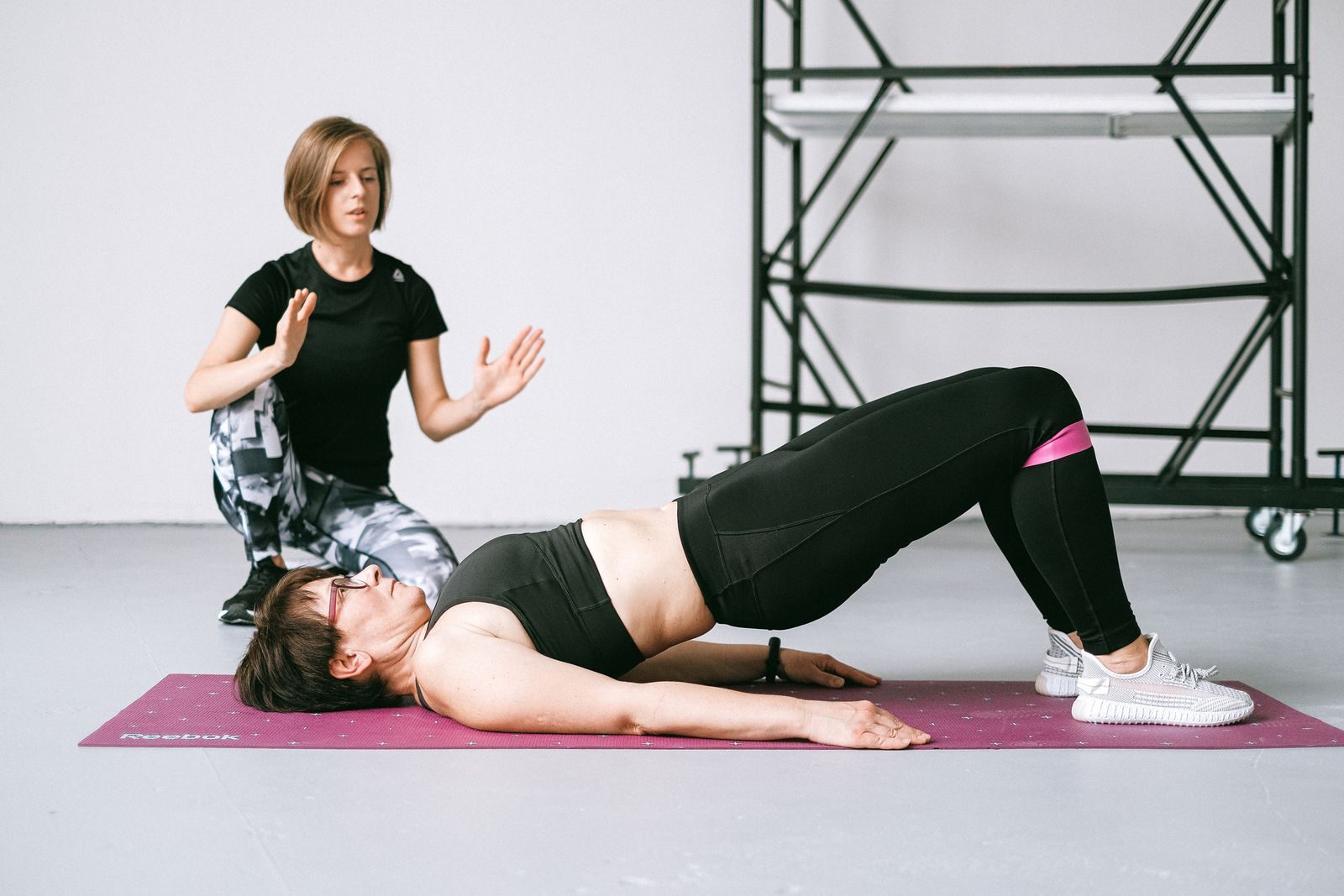
Pilates mat exercises for beginners use controlled bodyweight movements to build foundational core strength, hip stability, muscular endurance, balance, and movement control. You only need a mat, enough floor space, and exercises that match your current ability.
The following 12 exercises cover more than the abdominals. They also train the glutes, hips, back, shoulders, and other muscles that help stabilize your body.
Start with six to eight exercises rather than attempting the entire list at once. Move slowly, breathe normally, and make each exercise harder only after you can maintain good control.
What Is Mat Pilates?
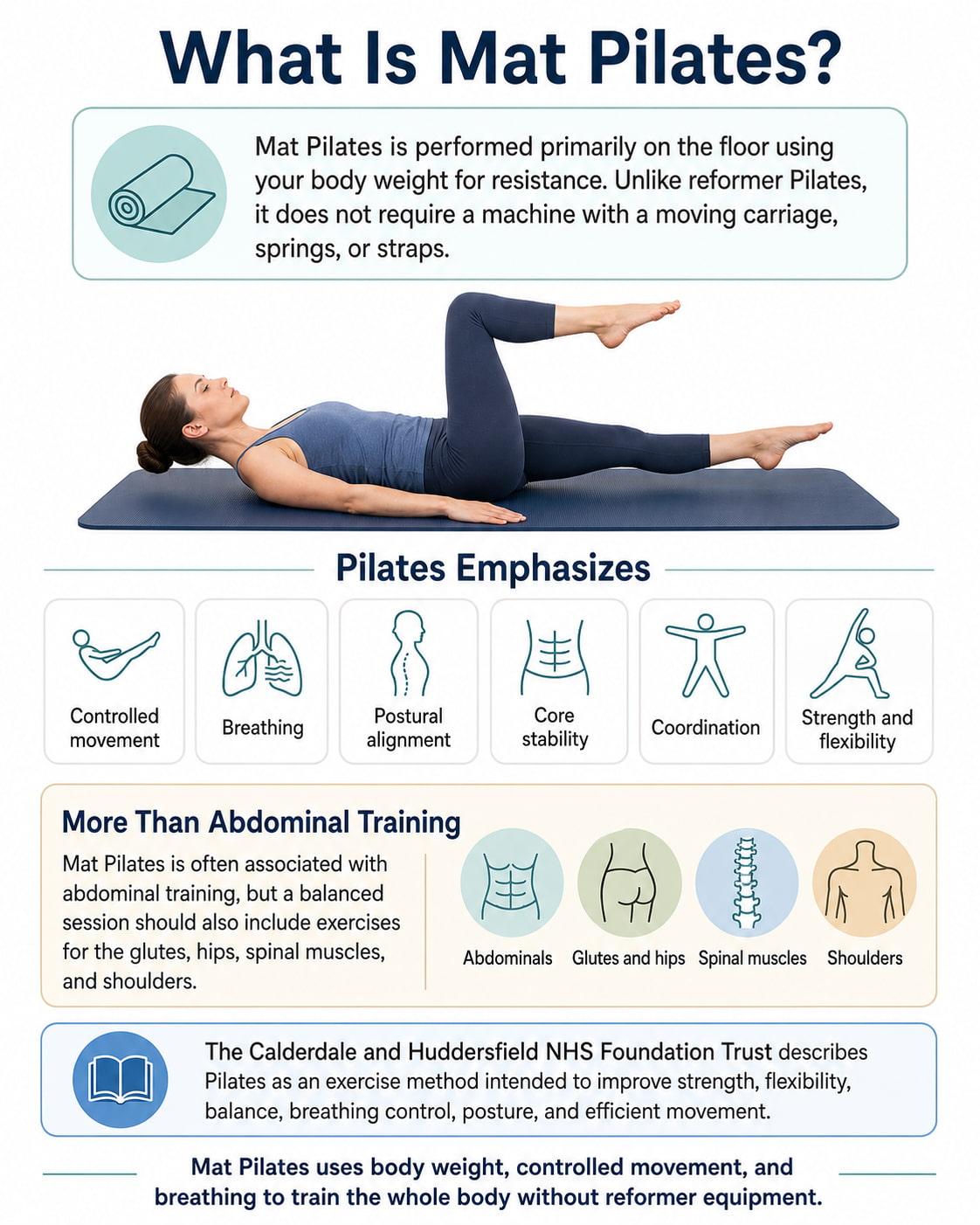
Mat Pilates is performed on the floor using your body weight for resistance. Unlike reformer Pilates, it does not require a machine with springs, straps, or a moving carriage.
The exercises combine controlled movement and breathing to improve:
- Core stability
- Posture and alignment
- Coordination
- Balance
- Strength and muscular endurance
- Flexibility
Although Pilates is often associated with abdominal training, a balanced routine should also work the glutes, hips, back, and shoulders.
Can Beginner Mat Pilates Build Strength?
Beginner mat Pilates can help develop foundational strength, muscular endurance, stability, and body control. Your muscles still work against gravity when you lift, lower, or hold parts of your body without weights.
Pilates is especially useful for learning how to control your trunk and pelvis while your arms and legs move. However, it is not a complete replacement for progressive resistance training. People who want to maximize strength or muscle growth may eventually need to add resistance bands, weights, or other progressively heavier exercises.
The American College of Sports Medicine recognizes that bodyweight and home-based resistance exercises can improve muscular fitness when performed consistently and progressed appropriately.
What You Need
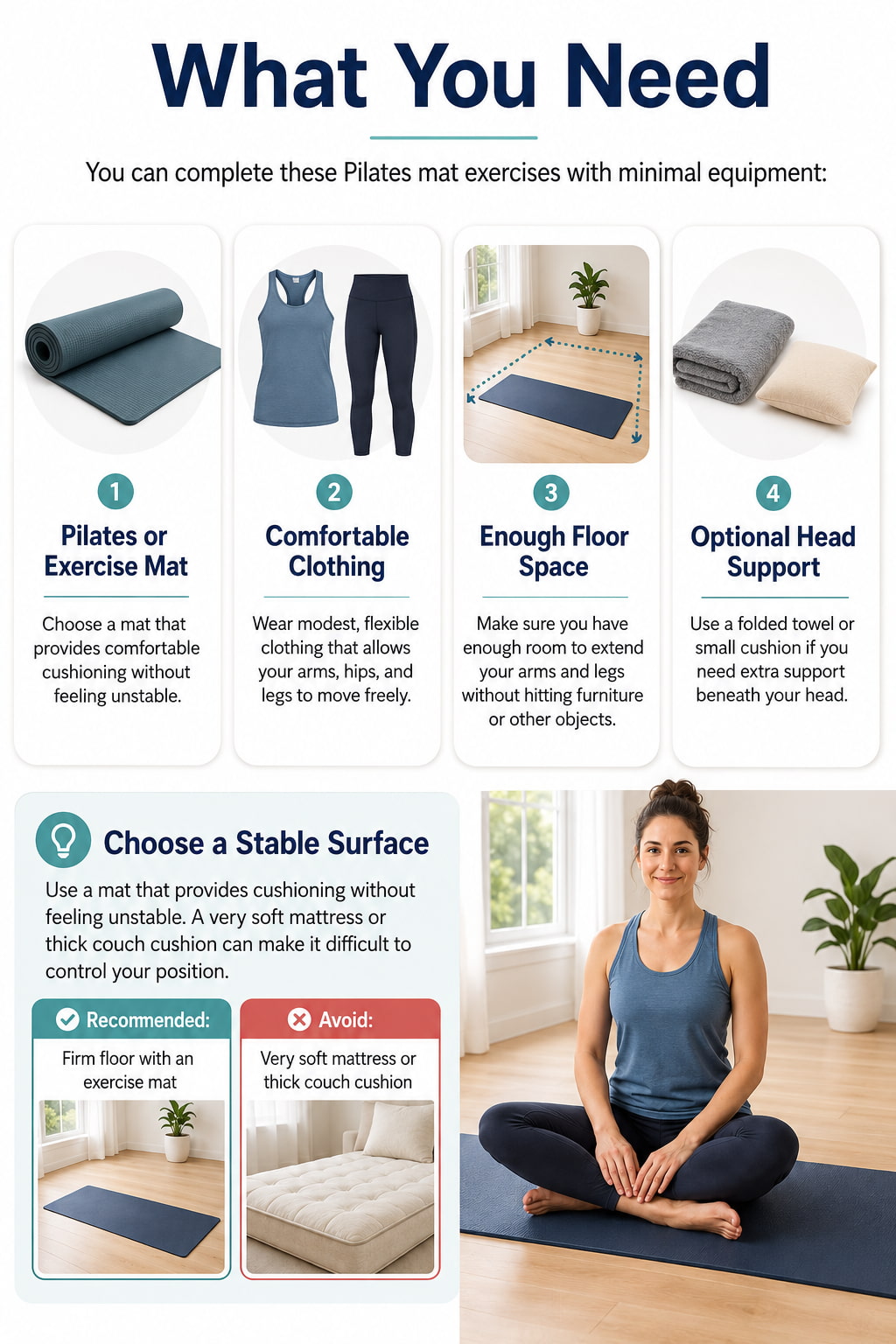
You only need a few basic items:
- A Pilates or exercise mat
- Comfortable clothing that allows free movement
- Enough space to extend your arms and legs
- An optional folded towel or small cushion for head support
Choose a mat that offers cushioning without feeling unstable. Avoid exercising on a very soft mattress or thick couch cushion because it can make your position harder to control.
Before You Start
Keep these simple principles in mind:
Move slowly: Control the lifting and lowering phases of every repetition rather than rushing.
Keep breathing: Avoid holding your breath. Exhale during the hardest part of the movement and inhale as you return.
Use a manageable range: Reduce the movement if your lower back arches, your pelvis rotates, your shoulders shrug, or you need momentum.
Begin with one set: Start with one set of each exercise. Add a second set when your form feels controlled and you recover comfortably.
Use a comfortable spinal position: Some exercises use a neutral spine, while others involve a gentle pelvic tilt. Do not force your lower back flat or exaggerate its natural curve.
The NHS beginner Pilates workout also encourages beginners and people returning to exercise to work at a comfortable, controlled level.
12 Pilates Mat Exercises for Beginners
These 12 beginner Pilates mat exercises help build core strength, improve stability, and develop better movement control. Start with a few exercises, move slowly, and progress only when you can maintain proper form.
1. Pilates Knee Fold
Best for: Learning to move one leg without rocking or twisting the pelvis.
Muscles worked: Abdominals, hip flexors, pelvic-floor muscles, and muscles surrounding the spine.
Sets, reps, and rest: Perform 1–2 sets of 6–10 repetitions per side. Rest for 20–30 seconds when needed.
How to do it:
- Lie on your back with your knees bent and feet flat, approximately hip-width apart.
- Rest your arms beside your body and allow your ribs and shoulders to relax.
- Exhale and slowly lift one foot until the thigh moves toward a tabletop position.
- Keep the knee bent and the pelvis still.
- Lower the foot quietly and repeat with the opposite leg.
Common mistakes: Pulling the knee too far toward the chest, gripping with the shoulders, holding the breath, or allowing the pelvis to tip toward the lifting leg.
Progression or regression: Make it easier by lifting the heel only slightly. Progress by lifting one leg to tabletop and then bringing the second leg up without changing your pelvic position.
Coaching cue: Imagine that a glass of water is resting across the front of your pelvis.
2. Heel Slide With Arm Reach
Best for: Practicing abdominal control while the arms and legs move away from the body.
Muscles worked: Abdominals, hip flexors, shoulders, chest, and muscles surrounding the rib cage.
Sets, reps, and rest: Perform 1–2 sets of 5–8 repetitions per side. Rest for 20–30 seconds.
How to do it:
- Lie on your back with your knees bent and feet flat.
- Reach both arms toward the ceiling.
- Exhale as you slide your right heel forward while reaching your left arm overhead.
- Stop before your ribs lift or your lower back arches excessively.
- Return to the starting position and repeat on the other side.
Common mistakes: Moving too far, allowing the ribs to flare, lifting the shoulder toward the ear, or sliding the heel without control.
Progression or regression: Reach only the arm or slide only the heel when coordinating both feels difficult. Progress by hovering the moving heel slightly above the mat.
3. Tabletop Toe Tap
Best for: Developing abdominal control with both legs held above the floor.
Muscles worked: Rectus abdominis, transverse abdominis, obliques, and hip flexors.
Sets, reps, and rest: Perform 1–2 sets of 5–8 repetitions per side. Rest for 30 seconds.
How to do it:
- Lie on your back and bring one leg, then the other, into tabletop with the hips and knees bent.
- Keep your arms beside your body.
- Exhale and lower one foot toward the floor while keeping the knee bent.
- Lightly tap the mat or stop just above it.
- Return to tabletop and alternate sides.
Common mistakes: Lowering the foot until the back arches, pulling the knees too close to the chest, rushing the tap, or pressing the arms forcefully into the floor.
Progression or regression: Begin with one foot remaining on the mat while the other leg moves. Progress by tapping farther away from your body.
Coaching cue: Move from the hip while keeping the shape of the knee unchanged.
4. Modified Pilates Hundred
Best for: Building abdominal endurance and coordinating breathing with repeated arm movement.
Muscles worked: Abdominals, hip flexors, shoulders, chest, and upper-back stabilizers.
Sets, reps, and rest: Start with 20–40 arm pumps. Rest for 30–45 seconds. Gradually work toward longer sets.
How to do it:
- Lie on your back with your knees bent and feet flat.
- Keep your head on the mat or lift it slightly only when your neck feels comfortable.
- Hover your arms just above the mat with the palms facing down.
- Pump your arms through a small, controlled range.
- Inhale for five pumps and exhale for five pumps.
Common mistakes: Believing that beginners must immediately complete 100 pumps, tensing the neck, using large uncontrolled arm swings, or holding the breath.
Progression or regression: Keep the head and feet supported for the easiest version. Progress by lifting one leg or bringing both legs into tabletop.
Coaching cue: Keep the arm movement quick but the rest of your body quiet.
The NHS Pilates exercise booklet presents supported versions of Pilates movements before more demanding leg positions, allowing difficulty to increase gradually.
5. Pilates Shoulder Bridge
Best for: Strengthening the glutes and hamstrings while learning to control the pelvis and spine.
Muscles worked: Gluteus maximus, hamstrings, abdominals, and spinal muscles.
Sets, reps, and rest: Perform 1–2 sets of 8–12 repetitions. Rest for 30–45 seconds.
How to do it:
- Lie on your back with your knees bent and feet approximately hip-width apart.
- Keep your feet flat and arms relaxed beside you.
- Exhale, gently tilt the pelvis, and lift your hips.
- Stop when your shoulders, hips, and knees form a comfortable diagonal line.
- Pause briefly before lowering slowly to the mat.
Common mistakes: Pushing the hips so high that the lower back arches, allowing the knees to spread apart, driving through the toes, or turning the head while the hips are elevated.
Progression or regression: Reduce the lifting height when necessary. Progress by adding a pause at the top or slowly marching one foot a few inches from the floor.
The ACE glute bridge guide also emphasizes a stable foot position and controlled hip movement rather than excessive lower-back extension.
Coaching cue: Lift with your hips, not by pushing your ribs upward.
6. Pilates Ab Curl
Best for: Building abdominal strength with a smaller range than a full sit-up.
Muscles worked: Rectus abdominis, internal and external obliques, and deep abdominal stabilizers.
Sets, reps, and rest: Perform 1–2 sets of 6–10 repetitions. Rest for 30 seconds.
How to do it:
- Lie on your back with your knees bent and feet flat.
- Reach your arms toward your feet.
- Gently nod your chin without pressing it tightly toward your chest.
- Exhale and lift your head and shoulder blades a short distance.
- Inhale at the top, then lower with control.
Common mistakes: Pulling the chin toward the chest, swinging the arms, lifting into a full sit-up, or forcing the movement after the neck becomes tired.
Progression or regression: Keep the head down and practice only the abdominal brace when neck control is limited. Progress by placing your fingertips lightly behind your head without pulling.
Coaching cue: Slide your ribs toward your pelvis rather than reaching your head toward your knees.
7. Bent-Knee Single-Leg Stretch
Best for: Training abdominal control while alternating the position of the legs.
Muscles worked: Abdominals, hip flexors, and muscles that stabilize the pelvis.
Sets, reps, and rest: Perform 1–2 sets of 5–8 repetitions per side. Rest for 30 seconds.
How to do it:
- Lie on your back and bring both legs into tabletop.
- Place your hands lightly behind one thigh.
- Extend the opposite leg by reaching the heel forward while keeping the knee slightly bent.
- Return the leg to tabletop and change sides.
- Keep your head on the mat or lift it only when you can maintain a relaxed neck.
Common mistakes: Pulling on the knee, extending the leg too low, rocking the pelvis, or moving so quickly that the legs use momentum.
Progression or regression: Keep one foot on the floor and perform a heel slide. Progress by straightening the moving leg or holding the abdominal curl.
8. Bent-Knee Single-Leg Circle
Best for: Improving pelvic stability while the hip moves through different directions.
Muscles worked: Abdominals, hip flexors, adductors, glutes, and deep hip muscles.
Sets, reps, and rest: Perform 1–2 sets of 5–8 circles in each direction per leg. Rest for 20–30 seconds.
How to do it:
- Lie on your back with both knees bent and feet flat.
- Lift one leg into tabletop.
- Draw a small circle with the knee, allowing the movement to come from the hip.
- Keep the opposite foot grounded and the pelvis level.
- Reverse the direction before changing legs.
Common mistakes: Making the circle so large that the pelvis rolls, moving from the knee instead of the hip, or tensing the shoulders.
Progression or regression: Make smaller circles for more control. Progress by gradually straightening the moving leg.
Coaching cue: Make the circle only as large as your pelvis can remain still.
9. Pilates Clamshell
Best for: Strengthening the side of the hips without requiring standing balance.
Muscles worked: Gluteus medius, gluteus minimus, deep hip rotators, and lateral trunk stabilizers.
Sets, reps, and rest: Perform 1–2 sets of 8–12 repetitions per side. Rest for 20–30 seconds between sides.
How to do it:
- Lie on your side with your knees bent and heels roughly in line with your hips.
- Stack your hips and shoulders.
- Keep your heels together.
- Lift the top knee without allowing your pelvis to roll backward.
- Pause briefly and lower with control.
Common mistakes: Rolling the top hip backward, separating the feet, lifting the knee too high, or arching the lower back.
Progression or regression: Use a smaller range to make the exercise easier. Progress by keeping both feet slightly elevated or placing a light resistance band above the knees.
The NHS Pilates booklet similarly instructs exercisers to keep the hips stacked and avoid rolling backward during the clamshell.
Coaching cue: Open the knee without opening the waist or pelvis.
10. Side-Lying Leg Lift
Best for: Progressing from the clamshell to a longer-lever hip-strengthening exercise.
Muscles worked: Gluteus medius, gluteus minimus, upper gluteus maximus, and lateral core muscles.
Sets, reps, and rest: Perform 1–2 sets of 8–12 repetitions per side. Rest for 30 seconds between sides.
How to do it:
- Lie on your side with your bottom knee bent for support.
- Extend the top leg in line with your body.
- Keep the toes facing forward or slightly toward the floor.
- Lift the leg without shortening the top side of your waist.
- Pause and lower slowly.
Common mistakes: Turning the toes toward the ceiling, swinging the leg, lifting it too high, or allowing it to drift in front of the body.
Progression or regression: Lift through a smaller range if you cannot keep the pelvis stacked. Progress by adding a brief hold or drawing small circles.
Coaching cue: Reach the leg long before lifting it.
11. Bird Dog
Best for: Developing whole-body stability while the opposite arm and leg move.
Muscles worked: Abdominals, spinal extensors, glutes, shoulders, and upper-back muscles.
Sets, reps, and rest: Perform 1–2 sets of 5–8 repetitions per side. Rest for 30–45 seconds.
How to do it:
- Begin on your hands and knees with your hands under your shoulders and knees under your hips.
- Brace your trunk gently without holding your breath.
- Slide one leg backward and reach the opposite arm forward.
- Lift only as high as you can without arching or rotating your back.
- Return slowly and repeat on the other side.
Common mistakes: Lifting the leg too high, twisting the pelvis, shifting the body sideways, locking the supporting elbow, or looking forward.
Progression or regression: Move only one limb at a time when the opposite-arm-and-leg version is difficult. Progress by pausing for two or three seconds in the extended position.
The ACE bird-dog instructions recommend limiting arm and leg height to the range in which the lower back and pelvis remain controlled.
Coaching cue: Reach outward rather than trying to lift upward.
12. Modified Side Plank
Best for: Building lateral core, hip, and shoulder strength.
Muscles worked: Obliques, transverse abdominis, gluteus medius, quadratus lumborum, and shoulder stabilizers.
Sets, reps, and rest: Hold for 10–25 seconds per side. Complete 1–2 sets with 30–45 seconds of rest.
How to do it:
- Lie on your side with your bottom forearm under your shoulder.
- Bend the bottom knee and keep the top leg extended.
- Press your forearm and bottom knee into the mat.
- Lift your hips until your head, torso, and top leg form a long line.
- Breathe steadily before lowering with control.
Common mistakes: Letting the supporting shoulder collapse, rotating the chest toward the floor, holding the breath, or allowing the hips to sag.
Progression or regression: Keep both knees bent for an easier version. Progress by straightening both legs or performing the exercise with the supporting arm straight.
Coaching cue: Push the floor away and lift the underside of your waist.
Beginner Pilates Mat Workout
Beginners do not need to complete all 12 exercises in one session. The following routine uses eight movements to provide a balanced starting workout.
15- to 20-Minute Beginner Routine
- Pilates knee fold: 6–8 repetitions per side
- Heel slide with arm reach: 5–6 repetitions per side
- Pilates shoulder bridge: 8–12 repetitions
- Tabletop toe tap: 5–8 repetitions per side
- Pilates clamshell: 8–12 repetitions per side
- Bird dog: 5–8 repetitions per side
- Modified side plank: 10–20 seconds per side
- Modified Pilates Hundred: 20–40 pumps
Complete one round during your first few workouts. Rest for approximately 20–45 seconds between exercises and up to 60 seconds when changing positions.
After two or three weeks of comfortable, controlled practice, consider completing a second round.
Effort Level
Aim for approximately 5–7 out of 10 effort. The final few repetitions should require concentration, but you should still be able to maintain your breathing and alignment.
Stop a set when:
- Your movement becomes rushed
- Your back begins arching or twisting
- You can no longer maintain your starting position
- Your neck or shoulders take over
- You must hold your breath to continue
Common Beginner Pilates Mistakes
Trying to Make Every Movement Large
Smaller movements are often more useful for beginners because they are easier to control. Increase the range only when the pelvis, ribs, and shoulders remain stable.
Holding the Breath
Breath holding can create unnecessary tension. Exhale during the most demanding part of the exercise and inhale during the easier return.
Pulling on the Neck
Your hands should support the head rather than pull it forward. Keep the head on the mat when your abdominal muscles cannot yet support an ab curl comfortably.
Rushing Through Repetitions
Momentum reduces the amount of muscular control required. Slow down the lowering phase and finish each repetition before beginning the next.
Doing Only Abdominal Exercises
The core includes more than the visible abdominal muscles. Include bridges, clamshells, side-lying exercises, bird dogs, and side planks to train the hips, back, and shoulders.
Attempting Advanced Exercises Too Soon
Full roll-ups, teasers, rollovers, and long-lever double-leg stretches can require considerable strength, mobility, and control. Beginners do not need these movements to have an effective workout.
How to Progress Pilates Mat Exercises
Progress only when you can complete the top of the recommended repetition range without losing alignment or holding your breath.
Use one of the following methods at a time:
- Add two repetitions to each set
- Add a second set
- Increase a hold by five seconds
- Move the arms or legs farther from the body
- Straighten a previously bent knee
- Reduce external support
- Add a light resistance band
- Advance to a harder exercise variation
Changing several variables at once makes it difficult to judge what caused an exercise to become too difficult. Consistent, manageable progression is generally more useful than frequently changing the entire routine.
How Often Should Beginners Do Mat Pilates?
Most beginners can perform a mat Pilates strength routine two or three times per week. Allow a recovery day between more demanding sessions when your muscles are noticeably fatigued.
You may practice gentle breathing, pelvic positioning, or mobility exercises more frequently, but additional sessions are not automatically better. Training quality and consistency matter more than completing long workouts every day.
For general health, adults should also include aerobic activity and strengthening exercises that cover all the major muscle groups. The NHS physical activity guidelines recommend muscle-strengthening activities on at least two days each week.
Safety Tips
Stop exercising if you experience sharp pain, numbness, dizziness, chest pain, difficulty breathing, or other unusual symptoms.
Ask a qualified healthcare professional or appropriately trained instructor for individualized guidance before beginning when you:
- Are recovering from an injury or surgery
- Are pregnant or recently postpartum
- Have a condition that affects your spine, joints, balance, or breathing
- Have been advised to restrict certain movements
- Are unsure whether floor exercise is appropriate for you
Exercise should feel challenging to the muscles, but it should not require you to push through sharp or increasing pain.
Frequently Asked Questions
Is mat Pilates suitable for complete beginners?
Yes. Mat Pilates can be adapted by reducing the range, keeping the head down, supporting the feet, bending the knees, and completing fewer repetitions. Beginners should start with stable positions before advancing to longer-lever exercises.
How long should a beginner Pilates workout be?
A practical starting session is approximately 15–20 minutes. As your endurance improves, you can add a second set or additional exercises rather than extending every workout immediately.
Do beginners need to perform all 100 pumps in the Hundred?
No. The exercise name does not mean a beginner must complete 100 arm pumps. Start with 20–40 controlled pumps and stop before your breathing, neck position, or abdominal control deteriorates.
Should my lower back stay flat during Pilates?
Not during every exercise. Some movements use a neutral spine, while others involve a gentle pelvic tilt. The important goal is to avoid uncontrolled arching or forcefully flattening the back.
Can Pilates replace weight training?
Pilates may build foundational strength, stability, and muscular endurance, particularly for beginners. However, people whose main goals are maximal strength or substantial muscle growth will generally need progressively heavier resistance over time.
Why does my neck become tired during abdominal exercises?
The neck muscles may become tired when the abdominals cannot yet support the lifted position. Keep your head down, reduce the duration, use a folded towel for support, or choose an exercise such as toe taps that does not require lifting the head.
When should I move to harder Pilates exercises?
Progress when you can complete the current version while breathing normally and keeping your pelvis, ribs, shoulders, and spine controlled. Difficulty should increase because your ability has improved—not simply because the easier version feels less exciting.
Conclusion
Pilates mat exercises for beginners are most effective when you prioritize control over complexity. Start with six to eight exercises, perform each repetition slowly, and practice two or three times per week.
As your strength and coordination improve, add repetitions, a second set, or a more challenging variation. You do not need advanced exercises or long daily workouts to make steady progress.
References
- NHS: Pilates for Beginners
- Calderdale and Huddersfield NHS Foundation Trust: Pilates
- Calderdale and Huddersfield NHS Foundation Trust: Pilates Exercise Booklet
- American College of Sports Medicine: Effective Resistance Training
- American Council on Exercise: Bird Dog
- American Council on Exercise: Glute Bridge
- PubMed: Pilates and Muscular Endurance
- PubMed: Pilates, Strength, Endurance, and Muscle Power
This content is for informational purposes only and is not a substitute for medical advice.