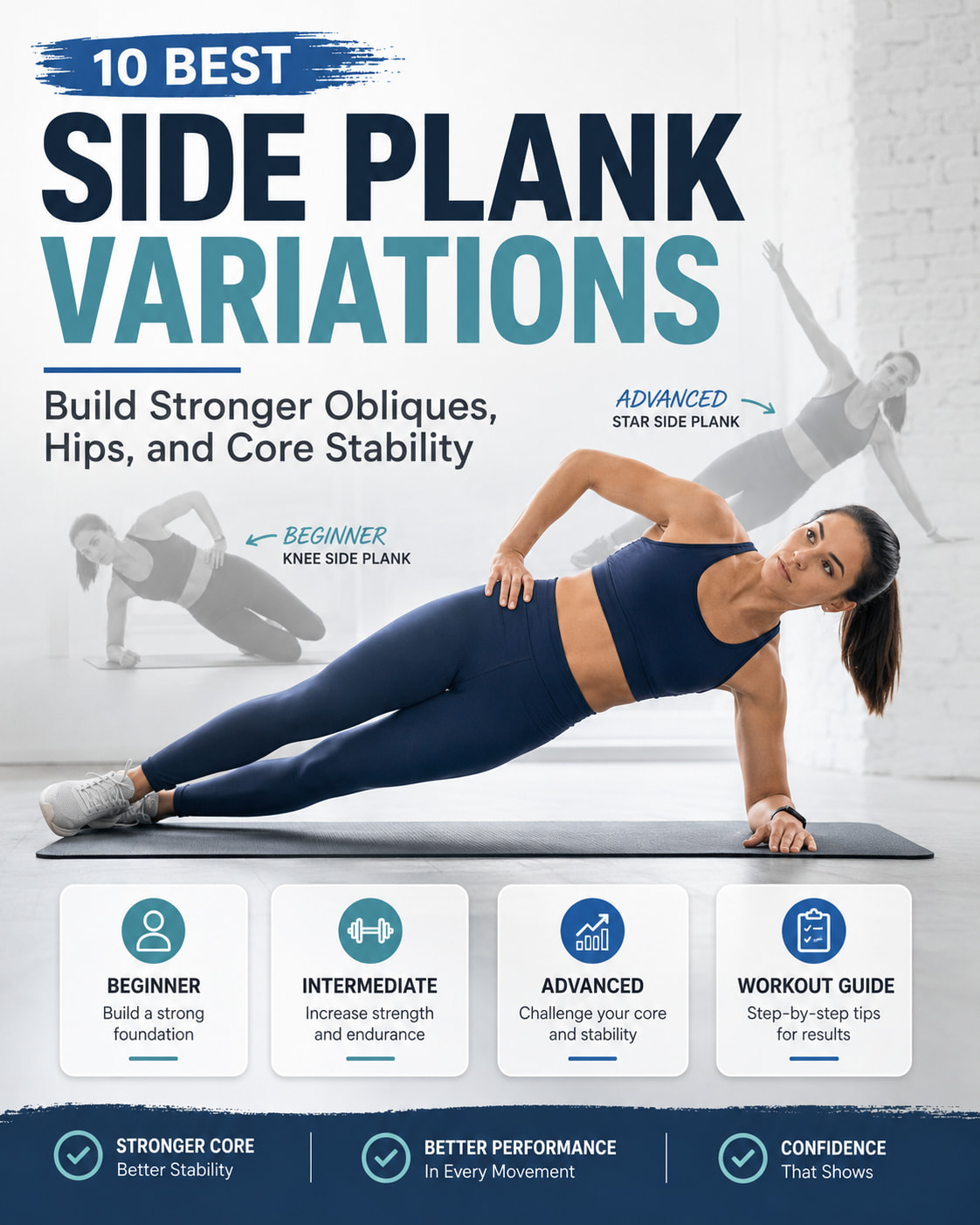
Side plank variations help you build lateral core strength, train your obliques, improve hip stability, and progress from beginner-friendly holds to advanced full-body core challenges. The best variation for you depends on your current strength, shoulder comfort, control, and ability to keep your body aligned without letting the hips sag.
In this guide, you will learn how to do side planks correctly, which muscles they work, the best side plank variations from easiest to hardest, common mistakes to avoid, and how to use them in a real workout routine.
What Are Side Plank Variations
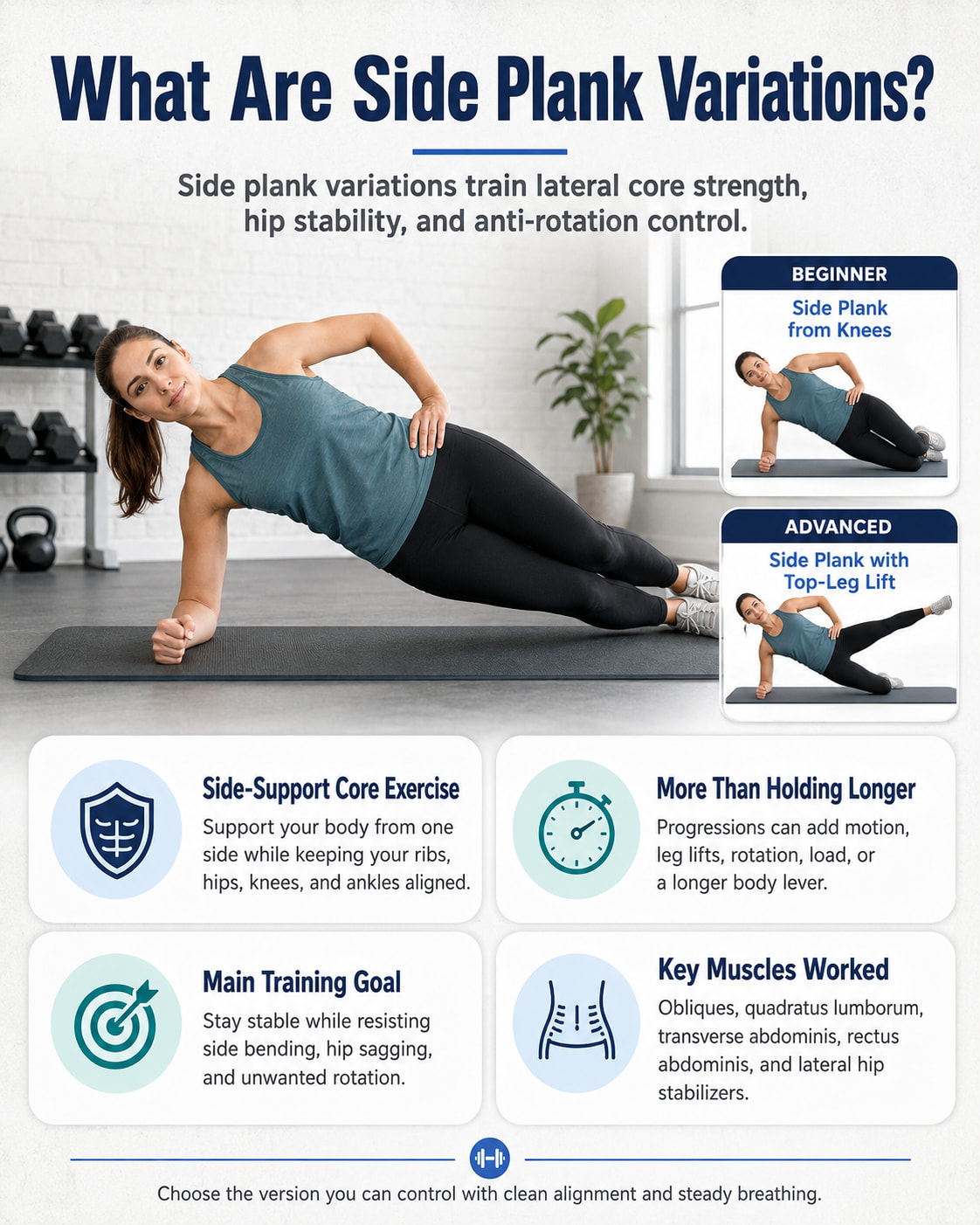
Side plank variations are core exercises based on the side plank position. Instead of facing the floor like a regular plank, you support your body from one side while keeping your ribs, hips, knees, and ankles aligned.
The basic side plank is an isometric exercise, meaning you hold a position without visible movement. Other versions add motion, leg lifts, rotation, external load, or a longer lever to make the exercise harder.
The main goal is not just to “hold longer.” The goal is to keep your body stable while resisting side bending, hip sagging, and unwanted rotation. NASM’s side plank exercise guide explains that the side plank trains lateral core mechanics and highlights the obliques, quadratus lumborum, rectus abdominis, transverse abdominis, and lateral hip stabilizers as key contributors.
Muscles Worked by Side Plank Variations
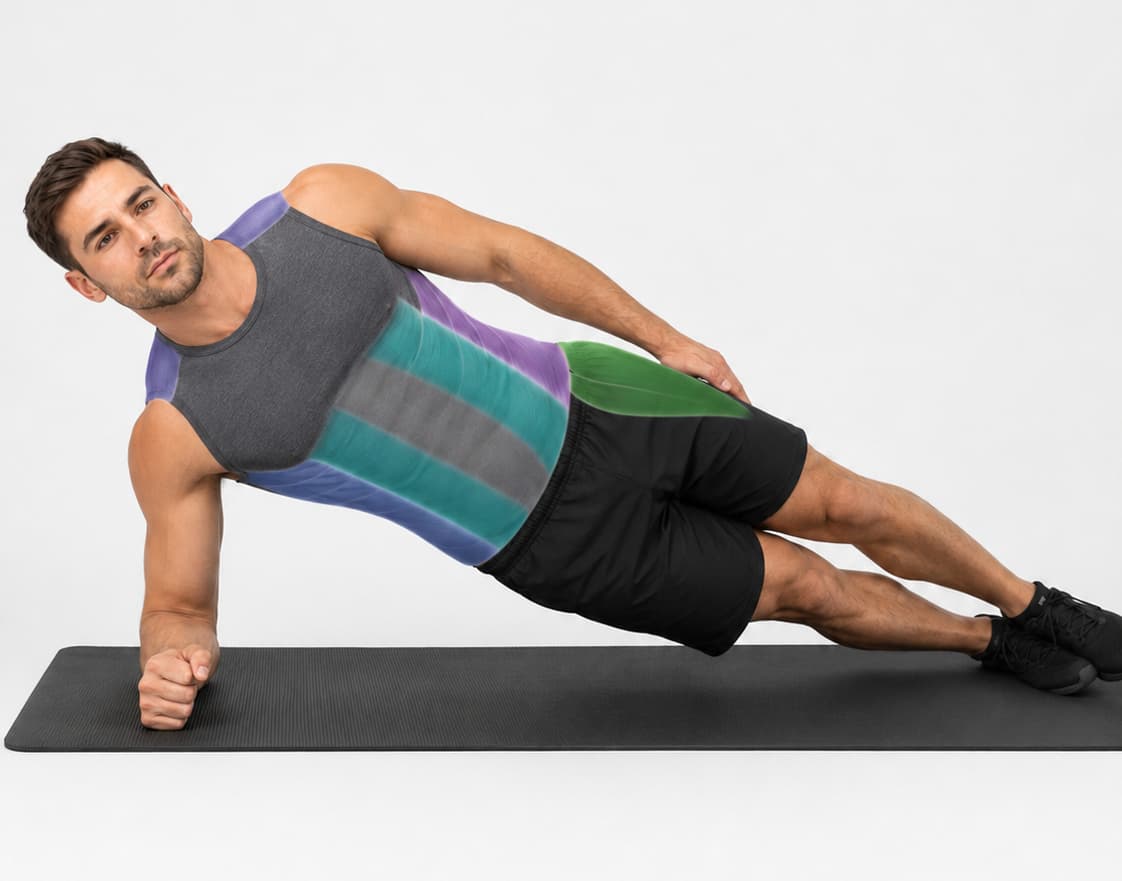
Side plank variations mainly train the obliques, which are the muscles along the sides of your trunk. They also challenge the transverse abdominis, rectus abdominis, quadratus lumborum, gluteus medius, gluteus minimus, gluteus maximus, shoulders, upper back, and deep spinal stabilizers.
Your obliques help keep your trunk from collapsing sideways. Your transverse abdominis helps brace your midsection. Your glute medius and other lateral hip muscles help keep your pelvis from dropping. Your shoulder and upper back muscles help support your body against the floor.
Research on side-bridge exercises found that these movements can provide strengthening benefits for the core, hip, trunk, and abdominal muscles on the weight-bearing side. This supports using side plank variations as more than just an “ab exercise.” They are useful for core stability, hip control, and full-body tension.
How to Do a Basic Side Plank With Good Form
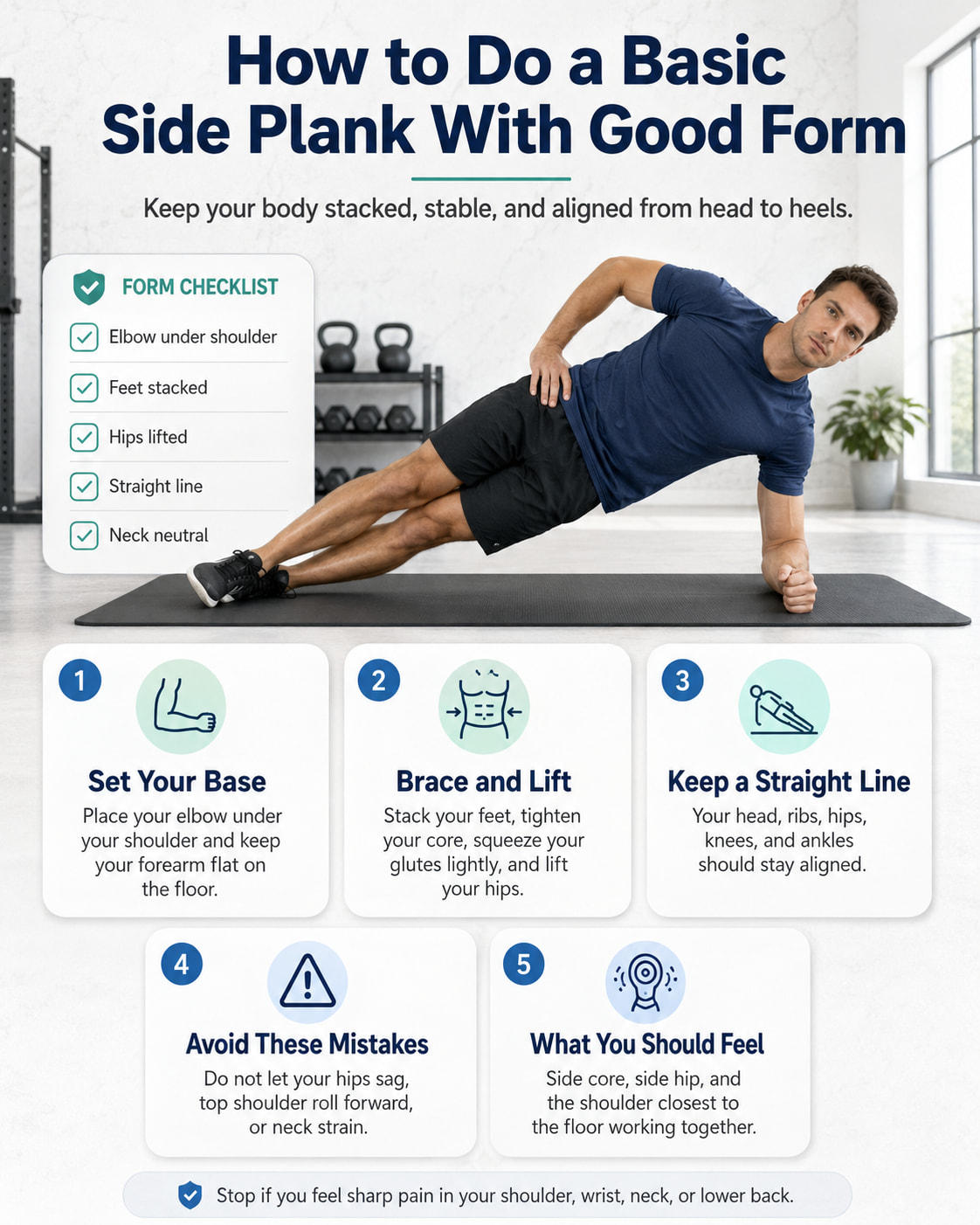
Start on your side with your elbow under your shoulder and your forearm on the floor. Stack your feet, brace your core, squeeze your glutes lightly, and lift your hips until your body forms a straight line from head to heels.
Your neck should stay neutral. Your ribs should stay stacked over your pelvis. Your top shoulder should not roll forward. Your hips should not sag toward the floor.
ACE’s side plank with straight leg guide recommends keeping the elbow under the shoulder, bracing the abdominal muscles, lifting the hips and knees off the mat, and keeping the head aligned with the spine.
A good side plank should feel like your whole body is working together. You should feel the side of your core, the side of your hip, and the shoulder closest to the floor. You should not feel sharp pain in your shoulder, wrist, neck, or lower back.
10 Best Side Plank Variations for Core Strength
Use these side plank variations to progress from simple beginner holds to advanced core and hip stability challenges. Start with the version you can control with clean form, then move to harder variations as your strength improves.
1. Knee Side Plank
Best for: The knee side plank is best for beginners, people learning side plank alignment, and anyone who cannot yet hold a straight-leg side plank without the hips dropping.
Muscles worked: This variation trains the obliques, transverse abdominis, quadratus lumborum, glute medius, shoulder stabilizers, and deep core muscles.
Suggested sets and reps: Perform 2 to 3 sets of 10 to 25 seconds per side.
Rest: Rest 30 to 45 seconds between sides.
How to do it:
- Lie on one side with your bottom elbow under your shoulder.
- Bend your knees so your thighs line up with your torso.
- Stack your knees and keep your forearm flat on the floor.
- Brace your core and lift your hips off the floor.
- Keep a straight line from your head to your knees.
- Hold with control, then lower slowly.
Common mistakes: The most common mistakes are letting the hips drift backward, pushing the head forward, shrugging the bottom shoulder, and relaxing the glutes.
Progression or regression: Make it easier by using shorter holds with the bottom hip lightly touching down between reps. Make it harder by extending the top leg while keeping the bottom knee bent.
Expert tip: Think about pushing the floor away with your forearm while pulling your ribs slightly down toward your hips.
2. Forearm Side Plank
Best for: The forearm side plank is best for building the standard side plank foundation and improving lateral core endurance.
Muscles worked: This exercise trains the obliques, transverse abdominis, rectus abdominis, quadratus lumborum, glute medius, glutes, shoulders, and upper back.
Suggested sets and reps: Perform 2 to 3 sets of 15 to 40 seconds per side.
Rest: Rest 30 to 60 seconds between sets.
How to do it:
- Lie on your side with your elbow directly under your shoulder.
- Extend both legs and stack your feet.
- Brace your core and squeeze your glutes lightly.
- Lift your hips until your body forms a straight line.
- Keep your top shoulder stacked over your bottom shoulder.
- Hold without rotating forward or backward.
Common mistakes: Common mistakes include placing the elbow too far from the shoulder, letting the hips sag, rotating the chest toward the floor, and holding your breath.
Progression or regression: Make it easier by staggering your feet or bending your knees. Make it harder by adding hip dips, a leg lift, or a longer hold.
Expert tip: Imagine your body is between two glass walls. Your hips and shoulders should stay stacked, not twisted.
3. High Side Plank
Best for: The high side plank is best for training straight-arm shoulder stability while still challenging the obliques and hips.
Muscles worked: This variation works the obliques, transverse abdominis, rectus abdominis, glute medius, shoulders, triceps, chest, wrists, and upper back.
Suggested sets and reps: Perform 2 to 3 sets of 10 to 30 seconds per side.
Rest: Rest 45 to 60 seconds between sets.
How to do it:
- Start on your side with your bottom hand under your shoulder.
- Extend your legs and stack or stagger your feet.
- Press firmly through your palm.
- Brace your core and lift your hips.
- Keep your wrist, elbow, and shoulder lined up.
- Hold your body in one long line.
Common mistakes: The main mistakes are locking the shoulder passively, letting the bottom shoulder collapse, bending the wrist too aggressively, and letting the hips rotate open.
Progression or regression: Make it easier by bending your knees or using the forearm version. Make it harder by adding a top-leg lift or moving toward a star side plank.
Expert tip: Push the floor away and keep your shoulder blade stable instead of sinking into the joint.
4. Side Plank With Top-Leg Forward Stance
Best for: This variation is best for people who struggle with balance in the standard stacked-feet side plank.
Muscles worked: It trains the obliques, transverse abdominis, quadratus lumborum, glute medius, glutes, shoulders, and inner thighs.
Suggested sets and reps: Perform 2 to 3 sets of 20 to 45 seconds per side.
Rest: Rest 30 to 60 seconds between sides.
How to do it:
- Set up in a forearm side plank position.
- Place your top foot slightly in front of your bottom foot.
- Keep both legs straight.
- Brace your core and lift your hips.
- Keep your chest facing forward, not down.
- Hold while pressing both feet into the floor.
Common mistakes: Common mistakes include stepping the top foot too far forward, letting the hips drop, and using the front foot so much that the core relaxes.
Progression or regression: Make it easier by bending the bottom knee. Make it harder by stacking the feet or adding a small hip dip.
Expert tip: Use the forward foot for balance, not as a kickstand that takes over the whole exercise.
5. Side Plank Hip Dips
Best for: Side plank hip dips are best for building dynamic oblique endurance and learning to control side bending.
Muscles worked: This variation targets the obliques, quadratus lumborum, transverse abdominis, rectus abdominis, glute medius, shoulders, and glutes.
Suggested sets and reps: Perform 2 to 3 sets of 8 to 15 reps per side.
Rest: Rest 45 to 60 seconds between sets.
How to do it:
- Start in a forearm side plank.
- Stack or stagger your feet.
- Lower your hips a few inches toward the floor.
- Keep your chest facing forward.
- Lift your hips back to the starting position.
- Repeat slowly without bouncing.
Common mistakes: The biggest mistakes are dropping too low, rushing the reps, rotating the torso, and turning the movement into a shoulder shrug.
Progression or regression: Make it easier by doing the movement from your knees. Make it harder by adding a pause at the top or holding a light weight on your top hip.
Expert tip: Move from the side of your waist, not from your neck or shoulder.
6. Side Plank Reach-Through
Best for: The side plank reach-through is best for training rotation control, shoulder stability, and oblique strength.
Muscles worked: This exercise works the obliques, transverse abdominis, rectus abdominis, quadratus lumborum, glute medius, shoulders, upper back, and thoracic rotators.
Suggested sets and reps: Perform 2 to 3 sets of 6 to 12 reps per side.
Rest: Rest 45 to 60 seconds between sides.
How to do it:
- Start in a forearm side plank.
- Reach your top arm toward the ceiling.
- Brace your core and rotate slightly toward the floor.
- Thread your top arm under your ribs.
- Reverse the motion and reach back toward the ceiling.
- Keep your hips lifted throughout the rep.
Common mistakes: Common mistakes include rushing the twist, letting the hips sag, rotating through the lower back too much, and losing shoulder position.
Progression or regression: Make it easier by doing the reach-through from a knee side plank. Make it harder by using a high side plank position or slowing each rep down.
Expert tip: Rotate through your upper back while keeping your hips controlled.
7. Side Plank With Leg Lift
Best for: This variation is best for training the obliques and lateral hip muscles together.
Muscles worked: It trains the obliques, transverse abdominis, quadratus lumborum, glute medius, glute minimus, glute maximus, shoulders, and outer hip muscles.
Suggested sets and reps: Perform 2 to 3 sets of 6 to 12 controlled leg lifts per side or 10 to 25 seconds of holds.
Rest: Rest 45 to 75 seconds between sets.
How to do it:
- Start in a forearm side plank.
- Stack your feet and lift your hips.
- Keep your ribs and pelvis aligned.
- Raise your top leg without leaning backward.
- Pause briefly at the top.
- Lower the leg with control and repeat.
Common mistakes: The most common mistakes are turning the toes upward, leaning the torso back, swinging the leg, and letting the bottom hip drop.
Progression or regression: Make it easier by keeping the bottom knee on the floor. Make it harder by holding the top leg up for 2 to 3 seconds on each rep.
Expert tip: Lift the leg only as high as you can without changing your trunk position.
8. Star Side Plank
Best for: The star side plank is best for advanced trainees who already have strong side plank control and hip stability.
Muscles worked: This variation trains the obliques, transverse abdominis, quadratus lumborum, glute medius, glute minimus, shoulders, upper back, adductors, and full-body stabilizers.
Suggested sets and reps: Perform 2 to 3 sets of 8 to 20 seconds per side.
Rest: Rest 60 to 90 seconds between sets.
How to do it:
- Start in a strong side plank.
- Stack your feet and lift your hips.
- Reach your top arm toward the ceiling.
- Slowly raise your top leg.
- Keep your body long and steady.
- Hold, then lower with control.
Common mistakes: Common mistakes include kicking the top leg too high, twisting the torso, letting the bottom shoulder collapse, and sacrificing alignment for a longer hold.
Progression or regression: Make it easier by doing a side plank with leg lift. Make it harder by adding a slow top-leg pulse while keeping your hips high.
Expert tip: Make the hold clean before making it long.
9. Weighted Side Plank
Best for: The weighted side plank is best for advanced trainees who need more challenge without adding a lot of movement.
Muscles worked: This variation trains the obliques, transverse abdominis, quadratus lumborum, glute medius, glutes, shoulders, and trunk stabilizers.
Equipment needed: Use a light weight plate, dumbbell, or kettlebell placed carefully on the top hip or held close to the body.
Suggested sets and reps: Perform 2 to 4 sets of 10 to 30 seconds per side.
Rest: Rest 60 to 90 seconds between sets.
How to do it:
- Set up in a forearm side plank.
- Place a light weight on your top hip.
- Hold the weight steady with your top hand.
- Brace your core and lift your hips.
- Keep your body aligned from head to heels.
- Hold without twisting or sagging.
Common mistakes: Common mistakes include using too much weight, placing the weight too high on the ribs, letting the hips sag, and losing shoulder position.
Progression or regression: Make it easier by using an unweighted side plank. Make it harder by slowly increasing the load or adding controlled hip dips.
Expert tip: Add load only if your bodyweight side plank looks the same from the first second to the last second.
10. Copenhagen Side Plank
Best for: The Copenhagen side plank is best for advanced trainees who want to challenge the adductors, lateral core, and hip stability.
Muscles worked: This variation trains the adductors, obliques, transverse abdominis, quadratus lumborum, glute medius, shoulders, and deep trunk stabilizers.
Equipment needed: Use a sturdy bench, box, or partner support.
Suggested sets and reps: Perform 2 to 3 sets of 5 to 15 seconds per side or 4 to 8 controlled reps per side.
Rest: Rest 60 to 120 seconds between sets.
How to do it:
- Lie on your side next to a sturdy bench.
- Place your top knee or top foot on the bench.
- Put your bottom elbow under your shoulder.
- Brace your core and lift your hips.
- Keep your bottom leg off the floor if you can control it.
- Hold briefly, then lower with control.
Common mistakes: Common mistakes include starting with the full version too soon, letting the pelvis rotate, overloading the groin area, and holding through discomfort.
Progression or regression: Make it easier by using the bent-knee version with the top knee on the bench. Make it harder by using the long-lever version with the top foot on the bench and the bottom leg hovering.
Expert tip: Treat this as an advanced strength exercise, not a casual plank variation. Start with short holds and progress slowly.
How to Choose the Right Side Plank Variation
Choose the variation that lets you keep perfect alignment. If your hips sag, shoulder collapses, or torso rotates, the exercise is too hard for your current level.
Beginners should start with the knee side plank or top-leg-forward side plank. These options build confidence and teach body position.
Intermediate trainees can use forearm side planks, hip dips, reach-throughs, and leg lifts. These build endurance, movement control, and hip stability.
Advanced trainees can use star side planks, weighted side planks, and Copenhagen side planks. These should be programmed carefully because they place more demand on the shoulder, trunk, hips, and inner thighs.
NASM suggests starting with 20 to 30 second holds and progressing toward longer holds when form stays clean. For most people, quality matters more than chasing a long hold time.
Sample Side Plank Workout Routine
Use this routine 2 to 3 times per week after your main strength work or as a short core finisher. The CDC recommends adults perform muscle-strengthening activities at least 2 days per week, and side plank variations can fit into that broader strength plan when paired with exercises for the rest of the body.
| Level | Exercise | Sets | Time or Reps | Rest |
|---|---|---|---|---|
| Beginner | Knee Side Plank | 2 | 10 to 20 seconds per side | 30 to 45 seconds |
| Beginner | Side Plank With Top-Leg Forward Stance | 2 | 15 to 25 seconds per side | 30 to 45 seconds |
| Intermediate | Forearm Side Plank | 3 | 20 to 40 seconds per side | 45 to 60 seconds |
| Intermediate | Side Plank Hip Dips | 2 to 3 | 8 to 12 reps per side | 45 to 60 seconds |
| Advanced | Side Plank With Leg Lift | 3 | 6 to 10 reps per side | 60 seconds |
| Advanced | Copenhagen Side Plank | 2 to 3 | 5 to 15 seconds per side | 60 to 120 seconds |
Keep the effort around 1 to 3 reps in reserve or 5 to 10 seconds in reserve. That means you stop before your form breaks. Current ACSM resistance training guidance emphasizes individualized programming based on personal goals, enjoyment, and safety, which fits well with progressing side plank variations gradually instead of forcing the hardest version too soon.
Common Side Plank Mistakes
The most common side plank mistake is letting the hips sag. When the hips drop, the exercise becomes less effective for lateral core strength and may create unwanted stress in the shoulder or lower back.
Another common mistake is placing the elbow too far away from the shoulder. Your elbow should stay under your shoulder so your upper body has a strong support position.
Many people also rotate the torso forward or backward. Your chest should face forward, and your shoulders and hips should stay stacked.
Holding your breath is another issue. You should be able to breathe while bracing. If you cannot breathe, the variation may be too hard or the hold may be too long.
Finally, do not progress just because an exercise looks impressive. A clean knee side plank is more useful than a messy star side plank.
Safety Tips for Side Plank Variations
Start with the easiest version that lets you control your body. Progress when you can hold the position without sagging, twisting, shaking excessively, or feeling joint discomfort.
Use a mat if your elbow feels uncomfortable on the floor. If your wrist bothers you, choose forearm variations instead of high side plank variations.
Stop the exercise if you feel sharp pain, numbness, dizziness, chest pain, unusual shortness of breath, or symptoms that do not feel normal. If you have a history of back, shoulder, hip, or groin problems, get guidance from a qualified healthcare professional or fitness professional before using advanced variations.
Cleveland Clinic’s plank exercise guidance notes that personal trainers and physical therapists can help people choose and progress plank exercises safely, especially when there is a history of back pain or movement limitations.
Side Plank Variations FAQ
Are side plank variations good for obliques
Yes. Side plank variations are excellent for training the obliques because your trunk has to resist side bending and rotation. They also train the deep core, hips, shoulders, and glutes.
How long should I hold a side plank
Most beginners should start with 10 to 20 seconds per side. Intermediate trainees can work toward 30 to 45 seconds. Advanced trainees may hold longer, but only if alignment stays clean. A shorter hold with better form is usually more valuable than a long hold with sagging hips.
Which side plank variation is best for beginners
The knee side plank is usually the best beginner option. It shortens the lever, reduces the load, and helps you learn how to stack your shoulders and hips before moving to the full version.
Which side plank variation is hardest
The Copenhagen side plank and star side plank are two of the hardest bodyweight options. The Copenhagen side plank is especially demanding because it adds strong inner-thigh and adductor involvement.
Should I do side planks every day
Most people do not need to do side planks every day. Two to three times per week is enough for many training goals, especially if you are also doing strength training, carries, squats, lunges, rows, and other core exercises.
Why do my shoulders feel side planks more than my abs
Your shoulder has to support your body, so some shoulder work is normal. However, if your shoulder takes over completely, check your elbow position, push the floor away, brace your core, and try an easier variation.
Can side planks reduce belly fat
Side planks can strengthen your core, but they do not directly reduce fat from one specific area. For body composition goals, combine strength training, regular physical activity, enough recovery, and nutrition habits that support your needs.
Conclusion
Side plank variations are a practical way to build lateral core strength, stronger obliques, better hip control, and improved full-body stability. Start with the version you can perform with clean alignment, then progress gradually from knee side planks to standard holds, dynamic reps, leg lifts, weighted options, and Copenhagen side planks.
The best side plank variation is not always the hardest one. It is the one you can control, repeat, and progress safely.
References
- NASM Side Plank Exercise Guide
- ACE Fitness Side Plank With Straight Leg
- Cleveland Clinic Plank Exercise Benefits
- CDC Adult Physical Activity Guidelines
- ACSM Updated Resistance Training Guidelines
- Surface Electromyographic Analysis of Core Trunk and Hip Muscles During Side-Bridge Exercises
- Large Eccentric Strength Increase Using the Copenhagen Adduction Exercise
This content is for informational purposes only and is not a substitute for professional medical advice.
2 thoughts on “10 Best Side Plank Variations From Beginner to Advanced”