Dumbbell side bends are a standing core exercise that trains the muscles responsible for controlling and producing side-to-side trunk movement, especially the obliques and quadratus lumborum. The exercise is simple, but using too much weight, bending too far, or misunderstanding which side is doing the work can reduce its effectiveness.
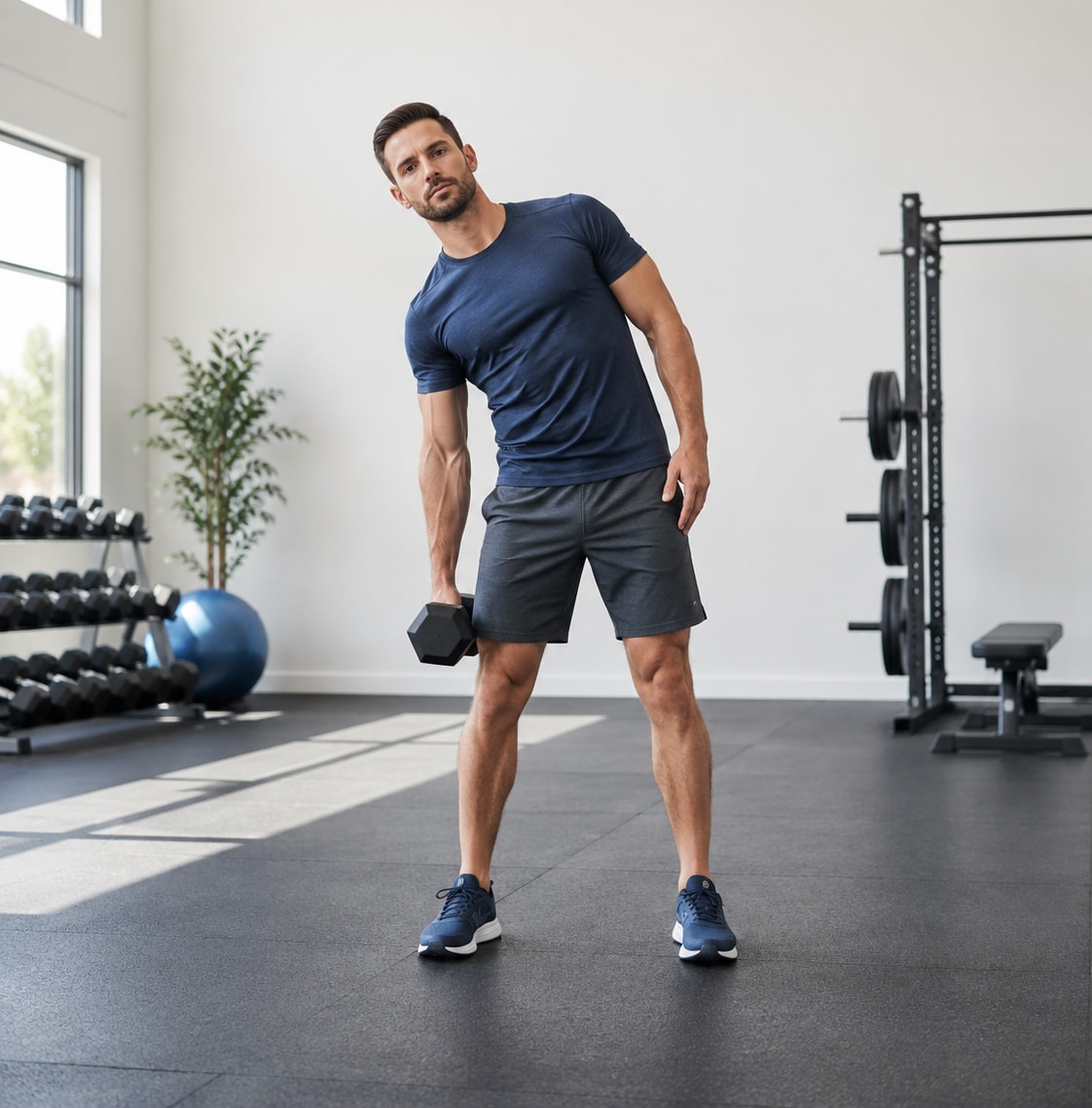
This guide explains how to perform dumbbell side bends correctly, which muscles they work, how to choose an appropriate weight, common mistakes to avoid, and how to include them in a balanced core workout.
Dumbbell Side Bends at a Glance
| Category | Recommendation |
|---|---|
| Exercise type | Weighted trunk lateral flexion |
| Main purpose | Lateral core strength and control |
| Primary muscles | Internal and external obliques |
| Assisting muscles | Quadratus lumborum, erector spinae and other trunk stabilizers |
| Equipment | One dumbbell |
| Difficulty | Beginner–intermediate |
| Beginner sets | 2 |
| Typical reps | 8–15 per side |
| Rest | 45–90 seconds |
| Tempo | Slow and controlled |
| Best placement | Accessory core work after main lifts |
What Are Dumbbell Side Bends?
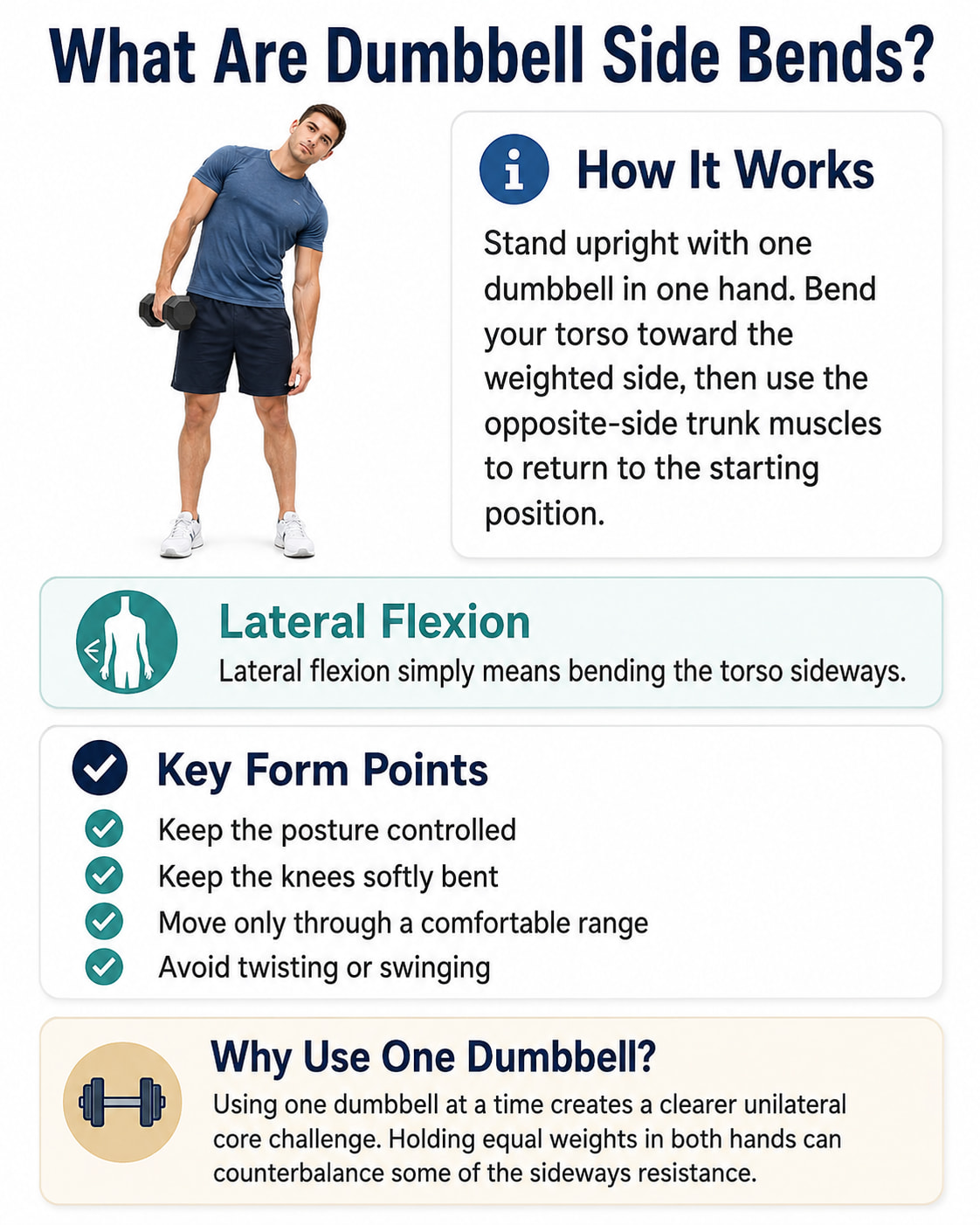
A dumbbell side bend is performed by standing upright with a dumbbell in one hand, allowing the torso to bend toward the weighted side, and then using the opposite-side trunk muscles to return to the starting position.
The movement is called lateral flexion, which simply means bending the torso sideways.
The National Strength and Conditioning Association demonstrates loaded lateral bending with controlled posture, softly bent knees, and movement only through a comfortable range.
For most people, using one dumbbell at a time is preferable when the goal is unilateral core training. Holding equal weights in both hands can counterbalance some of the sideways resistance.
Dumbbell Side Bends Muscles Worked
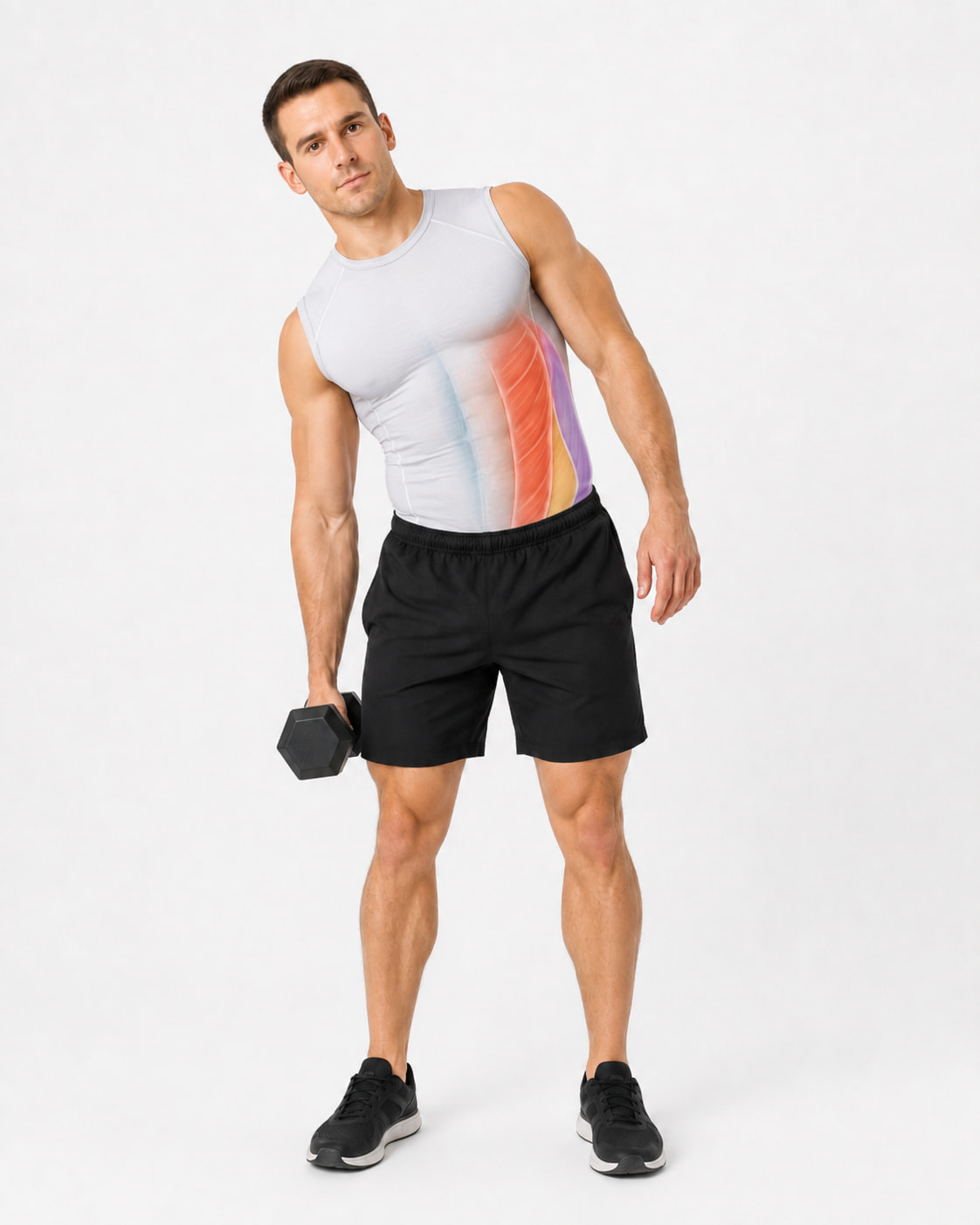
Dumbbell side bends primarily challenge the muscles along the sides of your trunk.
1. Internal and External Obliques
The obliques are the major abdominal muscles involved in lateral flexion and rotation of the torso. They also help stabilize the trunk when an external load tries to pull the body sideways.
The NCBI Bookshelf overview of abdominal-wall anatomy describes the internal and external obliques as important contributors to trunk movement and abdominal-wall stability.
2. Quadratus Lumborum
The quadratus lumborum, often shortened to QL, is a deep muscle on each side of the lower back. It contributes to lateral flexion and helps control the relationship between the pelvis, lumbar spine, and lower ribs.
According to the NCBI Bookshelf overview of posterior abdominal-wall anatomy, unilateral contraction of the quadratus lumborum contributes to lateral flexion of the vertebral column.
3. Other Trunk Muscles
Your spinal erectors, multifidus, rectus abdominis, and deeper abdominal muscles also contribute to maintaining trunk position while you move.
These muscles should generally be viewed as part of a coordinated stabilization system rather than muscles that a side bend completely isolates.
How to Do Dumbbell Side Bends
Best for: Adding controlled lateral-flexion training to a core routine.
Equipment needed: One dumbbell.
Sets, reps, and rest: Start with 2 sets of 10–12 repetitions per side. More experienced lifters can use 2–3 sets of 8–15 repetitions. Rest about 45–90 seconds between sets.
How to Do It
- Stand with your feet approximately hip- to shoulder-width apart.
- Hold one dumbbell beside your right thigh with your right arm straight.
- Keep your knees softly bent and your feet firmly planted.
- Brace your trunk while keeping your chest and pelvis facing forward.
- Slowly bend your torso toward the dumbbell.
- Stop when you reach a comfortable range without twisting, leaning forward, or shifting your hips excessively.
- Use the muscles on the opposite side of your trunk to return to a tall, centered position.
- Complete your repetitions, switch the dumbbell to the other hand, and repeat.
Coaching Cue
“Bend sideways, then pull your ribs back over your hips.”
Think about moving your torso as one controlled unit rather than trying to drag the dumbbell as low as possible.
Which Side Do Dumbbell Side Bends Work?
This is one of the most confusing parts of the exercise.
If you hold the dumbbell in your right hand and bend toward the right, gravity and the dumbbell pull your torso toward that side. The muscles on the left side of your trunk help control the descent and then work to bring you back upright.
For example:
- Dumbbell in right hand → bend right → left-side trunk muscles resist and return you upright.
- Dumbbell in left hand → bend left → right-side trunk muscles resist and return you upright.
Muscles on both sides still contribute to trunk control, so it is not accurate to say that only one side is active.
A study indexed by PubMed examining unilateral dumbbell loading also found increased activation of several trunk muscles on the side opposite the hand holding the weight. That study did not test complete dumbbell side bends, so it supports the loading principle rather than proving the exact activation pattern throughout every phase of the exercise.
Should You Use One Dumbbell or Two?
For standard dumbbell side bends, one dumbbell is usually the better choice.
With one weight, gravity creates a clearer sideways challenge that your trunk must control.
If you hold an equally heavy dumbbell in each hand, the weight on the opposite side produces a counterbalancing effect. You are carrying more total weight, but you may reduce some of the unilateral lateral-flexion demand you were trying to create.
If your goal is specifically to train side bending, perform one side at a time.
Benefits of Dumbbell Side Bends
Provide Direct Lateral-Flexion Training
Many common core exercises focus on flexion, bracing, or resisting extension. Side bends directly train controlled lateral flexion, adding another movement pattern to your program.
Strengthen the Obliques
The obliques help move and stabilize the trunk. Progressive resistance from a dumbbell allows you to challenge these muscles beyond what an unloaded standing side bend provides.
Require Minimal Equipment
You only need a single dumbbell and enough room to stand comfortably, making side bends practical for both gym and home workouts.
Train Each Side Separately
Unilateral loading gives each side an opportunity to control the resistance independently. This can also make noticeable differences in control or coordination easier to identify.
Complement Anti-Lateral-Flexion Exercises
Side bends involve deliberately moving into lateral flexion. Exercises such as suitcase carries and side planks train you to resist that same movement.
Including both approaches can provide more varied trunk training.
Common Dumbbell Side Bend Mistakes
Using Too Much Weight
Heavy dumbbells often cause people to swing, rotate, or shift their hips instead of controlling the trunk.
Start lighter than you think you need. The movement should stay smooth from beginning to end.
Bending Too Far
More range is not automatically better.
Stop when you can no longer maintain control of your pelvis and torso. There is no requirement for the dumbbell to reach your knee.
Twisting the Torso
Your shoulders and pelvis should remain generally facing forward.
Rotating while bending changes the movement and may indicate that your weight is too heavy or your range is too large.
Leaning Forward
Keep the movement primarily side to side. Allowing the chest to collapse forward turns the repetition into a combination of lateral flexion and forward bending.
Shifting the Hips
A small natural adjustment can occur, but pushing the hips dramatically in the opposite direction turns the exercise into a whole-body sway.
Pulling With the Arm
Keep the arm holding the dumbbell relatively straight and relaxed. Do not curl, row, or shrug the weight during the repetition.
Moving Too Fast
Dropping quickly toward the dumbbell and bouncing back upright makes the exercise harder to control.
Use approximately 2–3 seconds for the lowering phase and return smoothly to center.
How Heavy Should Dumbbell Side Bends Be?
Use a weight that allows you to complete every repetition without:
- Twisting
- Swinging
- Excessive hip movement
- Shrugging the dumbbell
- Shortening your controlled range
- Rushing the repetition
For beginners, a relatively light dumbbell is usually enough.
A useful target is to finish each set feeling that you could still perform about 2–3 technically clean repetitions.
Current resistance-training guidance from the American College of Sports Medicine emphasizes consistent training and appropriate progressive overload rather than making every set maximally difficult.
How to Progress
A simple progression could look like this:
- Begin with 2 sets of 10 repetitions per side.
- Gradually increase toward 15 controlled repetitions.
- Once 15 repetitions feel comfortable with consistent technique, increase the dumbbell slightly.
- Return to the lower end of the repetition range.
- Build the repetitions back up before increasing weight again.
Do not add weight if it causes your range or technique to deteriorate.
Dumbbell Side Bend Regressions
Bodyweight Side Bend
Perform the same movement without a dumbbell.
This is useful for learning how to bend sideways without rotating or shifting the hips.
Reduced-Range Dumbbell Side Bend
Use a light dumbbell but shorten the movement.
Gradually increase your comfortable range as your coordination improves.
Static Suitcase Hold
Hold one dumbbell at your side while maintaining a perfectly upright posture.
Instead of producing lateral flexion, your goal is to resist being pulled toward the weight.
Dumbbell Side Bend Progressions and Alternatives
Slow-Tempo Dumbbell Side Bend
Take approximately three seconds to lower toward the dumbbell before returning upright.
The slower tempo increases control without immediately requiring a heavier load.
Cable Side Bend
A low cable can provide resistance through a different loading profile while using the same general lateral-flexion movement.
Suitcase Carry
Carry one dumbbell while walking with your shoulders and hips level.
Instead of bending sideways, you resist the weight’s attempt to pull you out of position.
The National Strength and Conditioning Association recommends maintaining upright posture and avoiding lateral trunk movement during loaded carries.
Side Plank
The side plank challenges the lateral trunk without repeated spinal bending and requires no dumbbell.
It is a useful option when you want to emphasize anti-lateral-flexion strength.
Are Dumbbell Side Bends Safe?
Dumbbell side bends can be an appropriate accessory exercise for healthy lifters when performed with a manageable load, controlled speed, and comfortable range.
Before training, the American Academy of Orthopaedic Surgeons recommends warming up with approximately 5–10 minutes of low-impact activity and advises against continuing exercises that cause pain.
Avoid forcing a deeper side bend simply because you can reach farther.
Stop exercising and seek appropriate professional guidance if you experience sharp pain, numbness, radiating symptoms, dizziness, unusual weakness, chest pain, or other concerning symptoms.
People with an existing spinal condition, recent back or abdominal surgery, or ongoing unexplained back pain should get individualized guidance before performing loaded side bends.
Do Dumbbell Side Bends Reduce Love Handles?
No exercise can reliably target fat loss from one specific area of the body.
Dumbbell side bends can strengthen your obliques and other lateral trunk muscles, but strengthening a muscle does not mean the fat directly above it will selectively decrease.
A controlled study indexed by PubMed found that six weeks of abdominal exercise improved abdominal muscular endurance but did not significantly reduce abdominal fat.
Use side bends because they fit your core-strengthening goals rather than as a method for changing fat in one particular area.
Sample Dumbbell Side Bend Core Workout
This short routine combines lateral flexion with other forms of trunk control.
| Exercise | Sets | Reps/Time | Rest |
|---|---|---|---|
| Dumbbell Side Bend | 2–3 | 10–15 per side | 45–60 sec |
| Dead Bug | 2–3 | 6–10 per side | 45–60 sec |
| Suitcase Carry | 2 | 20–40 sec per side | 60 sec |
| Side Plank | 2 | 15–30 sec per side | 45–60 sec |
Perform the routine 1–2 times per week after your main strength exercises or on a separate core-training day.
Choose easier variations when necessary and progress only when your current version can be performed with consistent control.
Frequently Asked Questions
Are dumbbell side bends good for your obliques?
Yes. The internal and external obliques contribute to lateral flexion and trunk stabilization, making them major muscles involved in dumbbell side bends.
Should I hold a dumbbell in each hand?
Usually not if your main goal is unilateral side-bend training. A second dumbbell creates an opposing force that can counter some of the sideways resistance. One dumbbell makes the loading easier to understand and control.
How many dumbbell side bends should I do?
A practical starting point is 2 sets of 10–12 repetitions per side. Depending on your experience and goals, 2–3 sets of 8–15 controlled repetitions can work well.
How far should I bend?
Only move as far as you can while keeping the movement controlled and mostly side to side. Stop before your hips shift substantially, your torso rotates, or discomfort develops.
Should I feel dumbbell side bends in my lower back?
The quadratus lumborum and other muscles around the lower trunk contribute to the exercise, so muscular effort in that region can occur. Sharp, radiating, or worsening back pain is different and is a reason to stop.
Are side bends better than side planks?
Neither exercise is automatically better.
Side bends involve moving through lateral flexion, while side planks require you to resist lateral flexion. They can complement each other when both are appropriate for your training.
When should I do dumbbell side bends?
Use them as an accessory exercise after your main compound lifts or as part of a dedicated core session. Because they are not usually a primary strength exercise, there is little reason to perform them before demanding squats, deadlifts, or other major lifts.
Conclusion
Dumbbell side bends can be a simple way to train lateral trunk strength and control when they are performed with one manageable dumbbell and a comfortable range of motion.
Keep your feet planted, chest and pelvis facing forward, bend directly toward the dumbbell, and return to center without swinging or twisting. Start light, master the movement, and progress gradually rather than chasing heavier weights.
For more balanced core training, combine side bends with exercises that challenge other trunk functions, such as dead bugs, side planks, and suitcase carries.
References
- National Strength and Conditioning Association — Core Exercises
- NCBI Bookshelf — Anatomy, Abdomen and Pelvis: Abdominal Wall
- NCBI Bookshelf — Anatomy, Abdomen and Pelvis: Posterior Abdominal Wall
- American College of Sports Medicine — Resistance Training Guidelines Update
- American Academy of Orthopaedic Surgeons — Spine Conditioning Program
- PubMed — Trunk Muscle Activity During Unilateral Weight Bearing
- PubMed — The Effect of Abdominal Exercise on Abdominal Fat
This content is for informational purposes only and is not a substitute for medical advice.