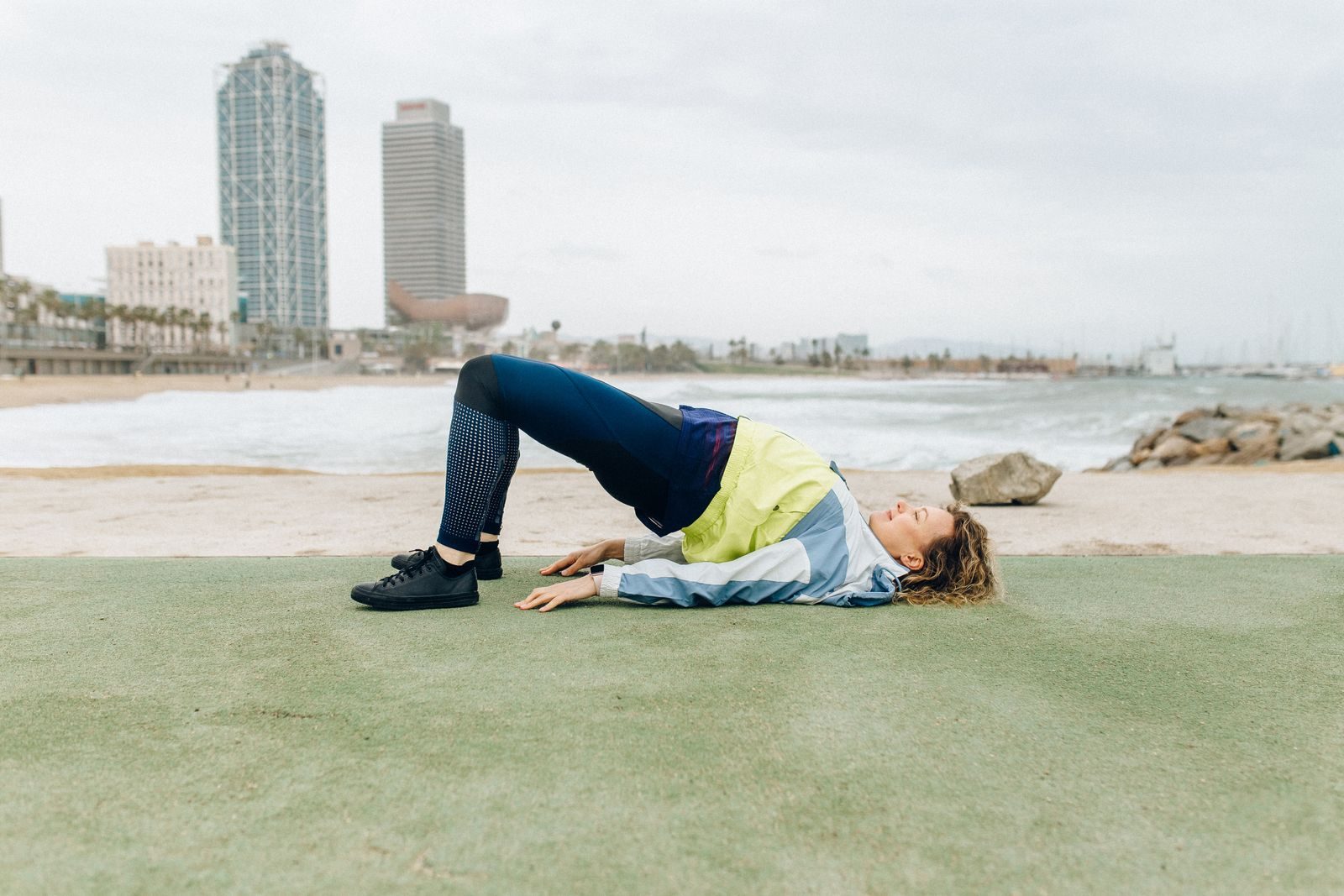
The best leg exercises for beginners are simple movements that train the thighs, glutes, hamstrings, hips, and calves without requiring advanced equipment or heavy weights. Start with controlled bodyweight variations, learn the basic movement patterns, and add resistance only when your technique remains consistent.
The latest American College of Sports Medicine resistance-training guidance emphasizes that consistency matters more than complicated programming. Bodyweight exercises, resistance bands, free weights, and home-based workouts can all build strength. Adults should generally perform muscle-strengthening activity on at least two days per week, according to the Physical Activity Guidelines for Americans.
This guide explains how to perform eight beginner leg exercises, avoid common mistakes, and organize them into a practical two-day workout.
Leg Exercises for Beginners at a Glance
| Exercise | Main training purpose | Easiest starting option |
|---|---|---|
| Chair Squat | Learn the squat pattern and strengthen the thighs and glutes | Use a higher chair |
| Glute Bridge | Build glute and hip-extension strength | Use a short lifting range |
| Dumbbell Romanian Deadlift | Strengthen the hamstrings and learn the hip hinge | Practice without weights |
| Supported Reverse Lunge | Develop single-leg strength | Hold a chair and use a shallow range |
| Low Step-Up | Build strength for climbing stairs | Use a low step and hand support |
| Standing Hamstring Curl | Train the backs of the thighs | Use bodyweight and hold a chair |
| Side-Lying Hip Abduction | Strengthen the outer hips | Lift through a small range |
| Standing Calf Raise | Strengthen the calves and ankles | Use both legs and hold a wall |
You do not need to perform all eight exercises in one workout. A beginner can choose four movements per session and train twice weekly on nonconsecutive days.
8 Best Leg Exercises for Beginners
These 8 beginner leg exercises help strengthen the quads, glutes, hamstrings, hips, and calves while teaching basic lower-body movement patterns. Start with controlled form and light resistance, then progress gradually as the exercises become easier.
1. Chair Squat
Best for: Learning the squat pattern while building the strength needed for standing up, sitting down, and progressing to weighted squats.
Muscles worked: Quadriceps and gluteus maximus, with assistance from the hamstrings, inner thighs, calves, and core.
Equipment needed: A sturdy, non-wheeled chair.
Sets, reps, and rest: Perform 1–2 sets of 8–12 repetitions. Rest for 60–90 seconds.
How to Do It
- Stand in front of the chair with your feet approximately hip- to shoulder-width apart.
- Turn your toes slightly outward if that feels more natural.
- Brace your abdomen and keep your chest comfortably lifted.
- Push your hips backward and bend your knees to lower toward the chair.
- Lightly touch the seat without dropping onto it.
- Press your feet into the floor and stand, extending your hips and knees together.
Keep your heels planted and allow your knees to follow the same general direction as your toes. The American Council on Exercise also recommends maintaining foot stability and controlled knee alignment throughout the squat.
Common mistakes: Avoid collapsing onto the chair, lifting your heels, allowing the knees to collapse inward, or letting your chest fall sharply toward the floor.
Progression or regression: Use a higher chair or light hand assistance to make the exercise easier. Progress by removing the chair, increasing the controlled range of motion, or holding a light dumbbell at your chest.
Coaching cue: Sit back toward the chair, then push the floor away to stand.
2. Glute Bridge
Best for: Strengthening the glutes and practicing hip extension without needing standing balance.
Muscles worked: Primarily the gluteus maximus, with assistance from the hamstrings and core.
Equipment needed: An exercise mat or comfortable floor surface.
Sets, reps, and rest: Perform 2 sets of 10–15 repetitions. Rest for 45–75 seconds.
How to Do It
- Lie on your back with your knees bent and feet flat.
- Position your feet about hip-width apart and comfortably close to your hips.
- Gently brace your abdomen.
- Press through your feet and squeeze your glutes to lift your hips.
- Stop when your body forms a comfortable line from your shoulders toward your knees.
- Pause briefly, then lower your hips slowly.
The American Council on Exercise emphasizes lifting through the glutes while keeping the abdominal muscles engaged to avoid excessive lower-back arching.
Common mistakes: Do not push your hips as high as possible, flare your ribs, arch your lower back, or drive mainly through your toes.
Progression or regression: Begin with a shorter lifting range if needed. Progress by pausing for two seconds at the top, placing a light dumbbell across your hips, or eventually using a single-leg variation.
Coaching cue: Lift with your glutes, not your lower back.
3. Dumbbell Romanian Deadlift
Best for: Learning the hip-hinge pattern and strengthening the hamstrings and glutes.
Muscles worked: Hamstrings, gluteus maximus, and inner thighs, with the spinal erectors, upper back, grip, and core working to stabilize the body.
Equipment needed: Two light dumbbells. Beginners can first practice without weights.
Sets, reps, and rest: Perform 1–2 sets of 8–12 repetitions. Rest for 60–90 seconds.
How to Do It
- Stand with your feet about hip-width apart and hold the dumbbells in front of your thighs.
- Keep your knees slightly bent and brace your abdomen.
- Push your hips backward while keeping the dumbbells close to your legs.
- Lower only until you feel tension in your hamstrings while maintaining a neutral spine.
- Press your feet into the floor and drive your hips forward.
- Finish standing tall without leaning backward.
A useful regression is the American Council on Exercise hip-hinge drill, which teaches the hips to move backward while the spine remains controlled. The National Academy of Sports Medicine similarly recommends a slight knee bend, neutral spine, backward hip movement, and a range determined by hamstring tension rather than how low the weights travel.
Common mistakes: Avoid turning the movement into a squat, rounding your back, letting the dumbbells drift forward, or choosing weights that pull you out of position.
Progression or regression: Practice a bodyweight wall-tap hinge before using dumbbells. Add weight gradually only after you can keep the same spine and hip position through every repetition.
Coaching cue: Close a car door behind you with your hips.
4. Supported Reverse Lunge
Best for: Developing single-leg strength while using external support for balance.
Muscles worked: Quadriceps and gluteus maximus, with assistance from the hamstrings, inner thighs, calves, outer hips, and core.
Equipment needed: A sturdy chair, wall, railing, or countertop.
Sets, reps, and rest: Perform 1–2 sets of 6–10 repetitions per leg. Rest for 60–90 seconds.
How to Do It
- Stand tall beside a stable support and hold it lightly.
- Keep most of your weight over one leg.
- Step the opposite foot backward and land on the ball of that foot.
- Bend both knees and lower only as far as you can control.
- Keep the front foot planted and the front knee following the toes.
- Push through the front foot to return to standing.
The National Academy of Sports Medicine recommends stepping backward while keeping the working emphasis on the front leg, then pressing through the front midfoot to stand.
Common mistakes: Avoid taking an extremely short step, pushing mainly from the back foot, losing front-foot contact, or allowing the front knee to collapse inward.
Progression or regression: Begin with a supported stationary split squat or shallow reverse step. Progress by increasing the range, reducing hand support, or holding light dumbbells.
5. Low Step-Up
Best for: Building single-leg strength for stairs, curbs, and other everyday stepping movements.
Muscles worked: Quadriceps and gluteus maximus, with assistance from the hamstrings, calves, and hip stabilizers.
Equipment needed: A low, stable step or exercise platform and optional hand support.
Sets, reps, and rest: Perform 1–2 sets of 6–10 repetitions per leg. Rest for 60–90 seconds.
How to Do It
- Stand close to the step and place your entire working foot on top.
- Lean forward slightly from the ankles while keeping your chest lifted.
- Press through the foot on the step to raise your body.
- Bring the trailing foot onto the step or tap it lightly beside the working foot.
- Step down slowly with the trailing leg first.
- Complete all repetitions before changing your lead leg.
The American Academy of Orthopaedic Surgeons advises placing the whole foot on the platform and avoiding forcefully locking the working knee.
Common mistakes: Do not use an unstable platform, place only your toes on the step, push excessively from the trailing foot, or drop quickly during the step-down.
Progression or regression: Use a lower step and hold a railing for support. Progress by controlling the lowering phase for longer, using a slightly higher step, or carrying light dumbbells.
Coaching cue: Let the leg on the step do the work.
6. Standing Hamstring Curl
Best for: Directly strengthening the hamstrings without floor exercises or gym machines.
Muscles worked: Primarily the hamstrings, with the calf assisting and the glutes and core helping maintain posture.
Equipment needed: A sturdy chair or countertop. An ankle weight or resistance band is optional.
Sets, reps, and rest: Perform 2 sets of 10–15 repetitions per leg. Rest for 45–60 seconds.
How to Do It
- Stand behind a chair and hold it lightly.
- Shift your weight onto one leg without locking that knee.
- Bend the opposite knee and bring your heel toward the back of your thigh.
- Keep your knees close together and your torso upright.
- Pause briefly, then lower your foot under control.
- Complete the set before changing sides.
The American Academy of Orthopaedic Surgeons recommends using chair support, keeping the knees close together, and avoiding forcefully bending the working knee beyond a comfortable range.
Common mistakes: Avoid swinging the leg, leaning forward, arching your back, or allowing the working thigh to move far in front of the supporting leg.
Progression or regression: Use a smaller range and both hands for support. Progress with a light ankle weight, resistance band, or cable attachment.
7. Side-Lying Hip Abduction
Best for: Strengthening the outer hips and improving control of the pelvis and thighs.
Muscles worked: Gluteus medius and gluteus minimus, with assistance from the tensor fasciae latae and core.
Equipment needed: An exercise mat.
Sets, reps, and rest: Perform 2 sets of 10–15 repetitions per side. Rest for 45–60 seconds.
How to Do It
- Lie on one side with your legs extended and stacked.
- Align your head, shoulders, hips, and feet.
- Brace your abdomen gently.
- Raise the top leg without turning your toes toward the ceiling.
- Stop before your waist or pelvis begins to move.
- Lower the leg slowly and complete the set before changing sides.
The American Council on Exercise recommends keeping the hips vertically stacked and stopping the lift before the pelvis tilts or the lower back begins compensating.
Common mistakes: Avoid rolling backward, lifting the leg excessively high, turning the toes upward, or using momentum.
Progression or regression: Use a shorter range if you cannot keep your hips stacked. Progress by adding a light ankle weight or resistance loop above the knees.
Coaching cue: Reach the top heel away from your body as you lift.
8. Standing Calf Raise
Best for: Strengthening the calves and improving control through the feet and ankles.
Muscles worked: Gastrocnemius and soleus.
Equipment needed: A wall, chair, or countertop for balance.
Sets, reps, and rest: Perform 2 sets of 10–15 repetitions. Rest for 45–60 seconds.
How to Do It
- Stand with your feet about hip-width apart and facing forward.
- Hold a stable surface lightly.
- Press through the balls of your feet and lift both heels.
- Keep your ankles aligned rather than allowing them to roll outward.
- Pause briefly at the top.
- Lower your heels slowly until they return to the floor.
The American Council on Exercise recommends keeping the feet facing forward and maintaining controlled alignment during standing calf raises. The American Academy of Orthopaedic Surgeons also presents two-legged calf raises as an appropriate starting option before progressing toward a single-leg variation.
Common mistakes: Avoid bouncing, rushing the lowering phase, turning the feet during the repetition, or shifting all your weight toward the outside edges of your feet.
Progression or regression: Use more hand support or a smaller lifting range. Progress to single-leg calf raises or hold a light dumbbell in one hand.
Beginner Leg Workout Routine
Use the eight exercises across two short workouts rather than completing every movement in one session.
Workout A
| Exercise | Sets and reps |
|---|---|
| Chair Squat | 2 × 8–12 |
| Glute Bridge | 2 × 10–15 |
| Low Step-Up | 2 × 6–10 per leg |
| Standing Calf Raise | 2 × 10–15 |
Workout B
| Exercise | Sets and reps |
|---|---|
| Dumbbell Romanian Deadlift | 2 × 8–12 |
| Supported Reverse Lunge | 2 × 6–10 per leg |
| Standing Hamstring Curl | 2 × 10–15 per leg |
| Side-Lying Hip Abduction | 2 × 10–15 per leg |
How to Schedule the Workouts
Perform Workout A and Workout B on nonconsecutive days, such as Monday and Thursday.
Before each session, complete 5–10 minutes of easy walking, stationary cycling, or another comfortable activity. You can also perform one slow practice set of the first exercise.
Rest approximately:
- 60–90 seconds after squats, Romanian deadlifts, lunges, and step-ups
- 45–60 seconds after bridges, hamstring curls, hip abductions, and calf raises
Finish most sets while you could still perform approximately two or three more controlled repetitions. Training until you cannot complete another repetition is not necessary for a beginner strength routine; current American College of Sports Medicine guidance notes that training to momentary muscle failure is not consistently required for general fitness results.
Someone completely new to exercise can begin with one set of each movement during the first one or two weeks and add a second set as the routine becomes more manageable.
How to Choose the Right Resistance
The correct resistance is one that challenges your muscles without changing how you perform the movement.
Use these guidelines:
- Start with bodyweight or very light dumbbells.
- Choose a resistance that allows you to complete the minimum number of repetitions with controlled form.
- Stop the set when your range of motion, balance, or body position begins to change.
- Keep approximately two or three good repetitions in reserve.
- Do not increase the weight simply because one repetition feels easy.
For the Romanian deadlift, lunge, and step-up, balance and control should improve before load becomes the priority.
How Beginners Should Progress
Progress does not always mean adding more weight. You can also improve by performing an extra repetition, using less assistance, increasing your controlled range, or slowing the lowering phase.
A simple progression method is:
- Begin near the lower end of the repetition range.
- Add one repetition when you can maintain good form.
- Work toward the top of the range for every set.
- Repeat that performance in at least two workouts.
- Add a small amount of resistance and return to the lower end of the range.
For example, progress from two sets of eight squats to two sets of 12. You can then hold a light dumbbell and return to two sets of eight.
Change only one variable at a time. Increasing weight, repetitions, range of motion, and training volume simultaneously makes it harder to determine whether you are progressing safely.
Common Beginner Leg-Training Mistakes
Doing Too Much in the First Workout
More exercises and sets are not automatically better. Beginning with four movements and one or two sets makes it easier to learn the exercises and recover between sessions.
Adding Weight Before Learning the Movement
A heavier dumbbell cannot correct poor balance, an unstable foot position, or an uncontrolled hip hinge. Practice the movement first.
Rushing the Repetitions
Fast repetitions often hide technique problems. Lower yourself under control, pause when appropriate, and avoid bouncing out of the bottom position.
Training Only With Squats
Squats are valuable, but they do not provide the same training emphasis as hip hinges, hamstring curls, hip abduction, or calf raises. A balanced routine should train several movement patterns.
Using the Maximum Possible Range
A deeper squat, lunge, or deadlift is not automatically better. Use the largest range you can control without losing balance or changing your spinal, knee, or foot position.
Ignoring Recovery
Leave at least one recovery day between demanding leg workouts. Your muscles need time to adapt before you train them hard again.
Safety Tips for Beginner Leg Exercises
Warm up before strength training and begin with a manageable range and resistance. The American Academy of Orthopaedic Surgeons recommends approximately 5–10 minutes of low-impact activity before strengthening exercises and advises against ignoring pain during exercise.
Use a sturdy chair, railing, or countertop whenever balance is uncertain. Exercise platforms should be stable and placed on a non-slip surface.
Stop the workout and seek appropriate professional help if you experience sharp pain, numbness, dizziness, chest pain, sudden loss of balance, or other unusual symptoms. Anyone recovering from an injury, surgery, or significant health concern should obtain individualized guidance from a qualified healthcare or exercise professional.
Frequently Asked Questions
How many leg exercises should a beginner do in one workout?
Four exercises are enough for most beginners when the routine includes a squat or lunge, a hip-focused movement, and one or two accessory exercises. Exercise quality is more important than completing a long list.
How often should beginners train their legs?
Two nonconsecutive sessions per week are a practical starting point. This provides regular practice while leaving recovery time between workouts. The Physical Activity Guidelines for Americans recommend muscle-strengthening activity involving the major muscle groups on at least two days each week.
Can beginners strengthen their legs without weights?
Yes. Chair squats, glute bridges, supported lunges, step-ups, hip abductions, and calf raises can all be started with bodyweight. Resistance can be added when the bodyweight version no longer feels sufficiently challenging.
Are squats enough for a complete beginner leg workout?
Squats train several major lower-body muscles, but they do not fully replace hip hinges, direct hamstring exercises, outer-hip work, or calf raises. Combining different movement patterns provides more balanced training.
When should a beginner start using dumbbells?
Add dumbbells when you can complete the top of the recommended repetition range with stable balance, controlled speed, and consistent technique. Begin with a small increase rather than the heaviest weight you can lift.
Should beginners train their legs until failure?
No. Beginners can build strength without taking every set to the point where another repetition is impossible. Stopping with two or three controlled repetitions remaining usually provides enough effort while making it easier to maintain technique.
Is soreness required after a leg workout?
No. Soreness is not required for an effective workout. Mild stiffness or muscle soreness can occur after unfamiliar exercise, but severe soreness that makes normal movement difficult may indicate that the session was too demanding. The American Academy of Orthopaedic Surgeons recommends reducing the workload and resting when post-exercise soreness is excessive.
Conclusion
The best leg exercises for beginners teach fundamental movement patterns while strengthening the thighs, glutes, hamstrings, hips, and calves. Begin with four exercises per session, train twice per week, and focus on controlled form rather than heavy resistance.
Track your repetitions and progress gradually. Once you can reach the top of the recommended range with consistent technique, make one small change—add resistance, reduce assistance, or use a slightly more challenging variation.
This content is for informational purposes only and is not a substitute for medical advice.
References
- American College of Sports Medicine — Resistance Training Prescription for Muscle Function, Hypertrophy, and Physical Performance in Healthy Adults
- Physical Activity Guidelines for Americans — U.S. Office of Disease Prevention and Health Promotion
- Currier et al. — Resistance Training Prescription for Muscle Strength and Hypertrophy: Systematic Review and Network Meta-analysis
- Grgic et al. — Effects of Resistance Training Performed to Repetition Failure or Non-Failure on Muscular Strength and Hypertrophy
- Pallarés et al. — Effects of Range of Motion on Resistance Training Adaptations: Systematic Review and Meta-analysis
- American Academy of Orthopaedic Surgeons — Knee Conditioning Program