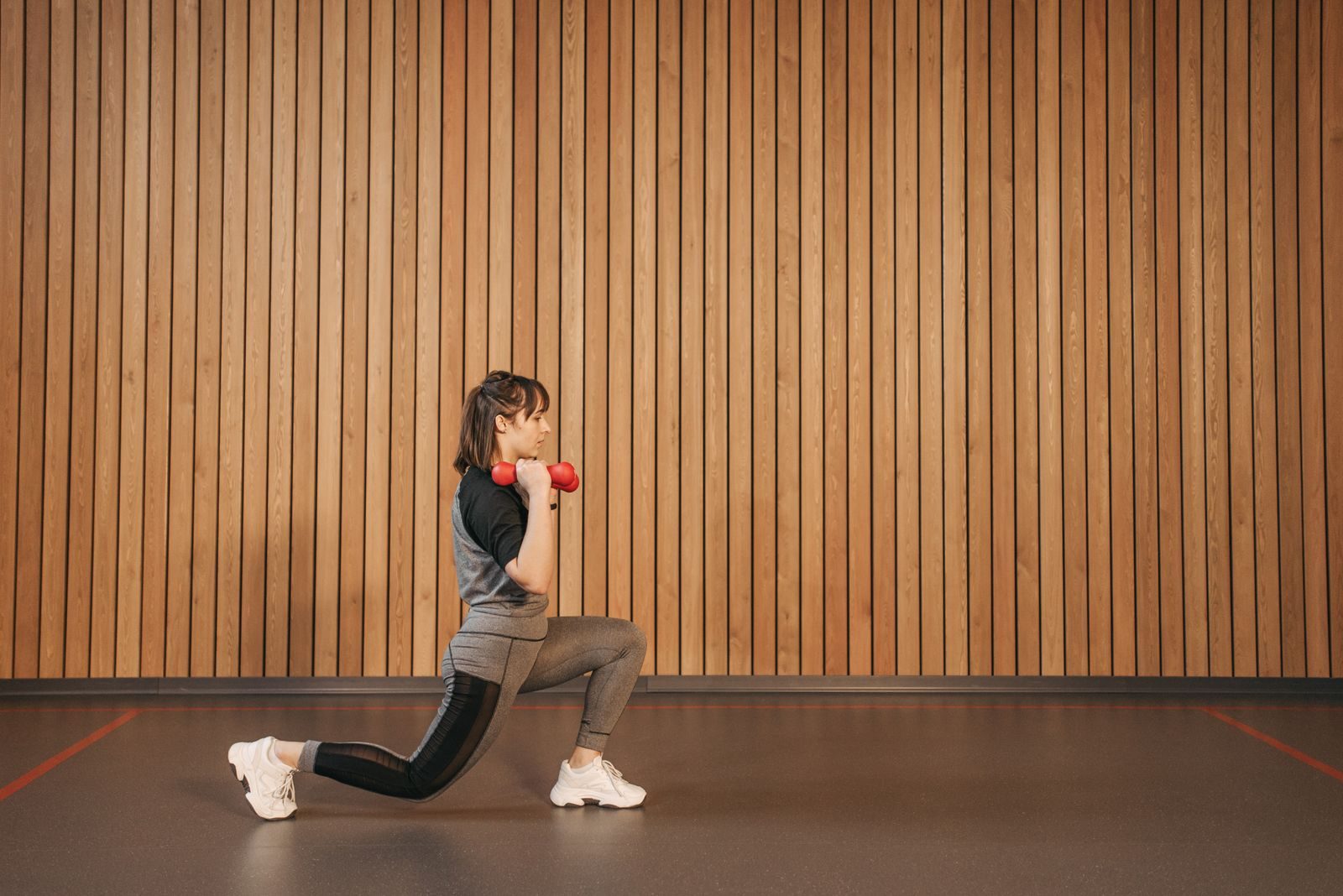
The best leg exercises for women combine squats, hip hinges, lunges, step-ups, hip-extension exercises, hamstring curls, and calf raises to train the entire lower body. The exercises below include practical form instructions, beginner modifications, progression options, and a complete lower-body workout.
Women do not need a separate set of “female-only” strength exercises. A PubMed systematic review and meta-analysis found similar improvements in muscle size and lower-body strength when women and men followed the same resistance-training programs. Exercise selection should instead reflect your goals, experience, available equipment, and ability to perform each movement comfortably.
Leg Exercises for Women at a Glance
These starting recommendations suit many healthy beginners and intermediate exercisers. Use a resistance that makes the final repetitions challenging without causing your technique to break down.
| Exercise | Main muscles worked | Equipment | Starting recommendation |
|---|---|---|---|
| Goblet squat | Quadriceps and glutes | One dumbbell or kettlebell | 2–3 sets of 8–12 reps |
| Dumbbell Romanian deadlift | Hamstrings and glutes | Two dumbbells | 2–3 sets of 8–12 reps |
| Reverse lunge | Quadriceps and glutes | Body weight or dumbbells | 2–3 sets of 8–12 reps per leg |
| Step-up | Glutes and quadriceps | Stable step or box | 2–3 sets of 8–12 reps per leg |
| Hip thrust | Glutes | Bench and dumbbell or barbell | 2–3 sets of 8–15 reps |
| Bulgarian split squat | Quadriceps and glutes | Bench and optional dumbbells | 2–3 sets of 6–10 reps per leg |
| Lateral lunge | Glutes, quadriceps, and adductors | Body weight or dumbbells | 2–3 sets of 8–10 reps per side |
| Seated leg press | Quadriceps, glutes, and hamstrings | Leg-press machine | 2–3 sets of 8–15 reps |
| Hamstring curl | Hamstrings | Machine or resistance band | 2–3 sets of 10–15 reps |
| Standing calf raise | Gastrocnemius and soleus | Body weight or dumbbells | 2–3 sets of 10–20 reps |
The American College of Sports Medicine emphasizes that resistance-training programs should be adjusted to individual goals and abilities. Regular training and appropriate effort matter more than following an unnecessarily complex routine.
10 Best Leg Exercises for Women
You do not need to perform all ten exercises in one session. Select four to six movements that collectively train the quadriceps, hamstrings, glutes, inner thighs, and calves.
1. Goblet Squat
Best for: Learning the squat pattern while building general lower-body strength.
Muscles worked: Quadriceps and gluteus maximus, with assistance from the adductors, hamstrings, calves, and core.
Equipment needed: One dumbbell or kettlebell. A sturdy chair can be used as a depth target.
Sets, reps, and rest: Perform 2–3 sets of 8–12 repetitions. Rest for 90–120 seconds.
How to do it:
- Stand with your feet approximately shoulder-width apart and your toes turned out slightly if comfortable.
- Hold the weight close to your chest with your elbows pointing downward.
- Brace your core and lower your hips between your legs while keeping your whole foot planted.
- Allow your knees to move in the same general direction as your toes.
- Descend only as far as you can maintain control, then press through your feet to stand.
Common mistakes: Holding the weight away from the chest, lifting the heels, allowing the knees to collapse inward, dropping too quickly, or forcing a depth that causes the lower back to round.
Regression or progression: Begin with a bodyweight squat to a chair. Progress by increasing the dumbbell weight or moving to a front-squat variation.
The American Council on Exercise recommends holding the weight close to the chest and maintaining a controlled torso position during the goblet squat.
2. Dumbbell Romanian Deadlift
Best for: Strengthening the hamstrings and glutes while learning a proper hip hinge.
Muscles worked: Hamstrings and gluteus maximus, with the adductors, spinal erectors, upper back, and core helping maintain position.
Equipment needed: Two dumbbells.
Sets, reps, and rest: Perform 2–3 sets of 8–12 repetitions. Rest for 90–150 seconds.
How to do it:
- Stand with your feet approximately hip-width apart and hold the dumbbells in front of your thighs.
- Soften your knees slightly and brace your torso.
- Push your hips backward while letting the dumbbells travel close to your legs.
- Continue until you feel tension through the backs of your thighs or can no longer move your hips backward without rounding your back.
- Press your feet into the floor and extend your hips to return to standing.
Common mistakes: Turning the exercise into a squat, lowering the weights too far, rounding the back, letting the dumbbells drift forward, or leaning backward at the top.
Regression or progression: Practice the hip hinge without weight by reaching your hips toward a wall behind you. Progress by using heavier dumbbells, a barbell, or a controlled single-leg Romanian deadlift.
The important goal is hip movement—not reaching the dumbbells to the floor. The American Council on Exercise recommends keeping the weight close and stopping when you feel tension along the back of the legs.
3. Reverse Lunge
Best for: Building single-leg strength with a controlled backward step.
Muscles worked: Quadriceps and glutes of the front leg, with assistance from the hamstrings, adductors, calves, and core.
Equipment needed: Body weight or two dumbbells.
Sets, reps, and rest: Perform 2–3 sets of 8–12 repetitions per leg. Rest for 90–120 seconds.
How to do it:
- Stand with your feet about hip-width apart.
- Step one foot backward far enough to create a stable split stance.
- Lower your back knee toward the floor while keeping the front foot firmly planted.
- Keep the front knee moving in line with the foot.
- Press through the front foot and bring the rear leg forward to return to standing.
Common mistakes: Stepping onto an imaginary tightrope, pushing mainly from the back foot, allowing the front knee to collapse inward, or losing control near the floor.
Regression or progression: Hold a wall or stable support and perform a stationary split squat. Progress by holding dumbbells or pausing briefly at the bottom.
American Council on Exercise guidance for the reverse lunge emphasizes a controlled backward step, an elevated chest, and pressing through the front foot to stand.
4. Step-Up
Best for: Developing unilateral leg strength through a movement similar to climbing stairs.
Muscles worked: Gluteus maximus and quadriceps, with support from the hamstrings, adductors, calves, and hip-stabilizing muscles.
Equipment needed: A secure exercise box, step, or stable platform. Dumbbells are optional.
Sets, reps, and rest: Perform 2–3 sets of 8–12 repetitions per leg. Rest for 90–120 seconds.
How to do it:
- Stand close to the platform and place your entire working foot on top.
- Keep your hips level and your knee aligned with your foot.
- Press through the elevated foot to bring your body onto the platform.
- Stand tall without forcefully leaning backward.
- Step down slowly and repeat before changing legs.
Common mistakes: Choosing a platform that is too high, pushing excessively from the trailing foot, placing only the toes on the step, or dropping quickly during the descent.
Regression or progression: Use a lower step and hold a railing or stable support. Progress by adding dumbbells or finishing each repetition in a controlled single-leg balance.
American Council on Exercise classifies the step-up as a beginner exercise but stresses secure foot placement and controlled knee alignment. The height of the platform and added resistance can significantly change its difficulty.
5. Hip Thrust
Best for: Building glute strength through loaded hip extension.
Muscles worked: Gluteus maximus, with assistance from the hamstrings, adductor magnus, and core.
Equipment needed: A stable bench or padded box and a dumbbell or barbell. Use a pad between the weight and your hips.
Sets, reps, and rest: Perform 2–3 sets of 8–15 repetitions. Rest for 90–120 seconds.
How to do it:
- Sit on the floor with your upper back against the long edge of a stable bench.
- Position your feet about hip-width apart and place the weight securely across your hips.
- Brace your abdomen and press through your feet to raise your hips.
- Stop when your hips are fully extended without arching your lower back.
- Pause briefly, then lower your hips under control.
Common mistakes: Pushing the head backward, flaring the ribs, overextending the lower back, placing the feet too close or too far away, or bouncing through the bottom.
Regression or progression: Begin with a floor glute bridge. Progress by increasing resistance, adding a pause at the top, or using a carefully controlled single-leg variation.
American Council on Exercise guidance for the elevated glute bridge uses the same basic bench-supported hip-extension pattern and emphasizes pressing through the feet while contracting the glutes.
6. Bulgarian Split Squat
Best for: Challenging single-leg strength once regular split squats and lunges feel stable.
Muscles worked: Quadriceps and glutes, with the hamstrings, adductors, gluteus medius, calves, and core assisting.
Equipment needed: A low bench or padded platform. Dumbbells are optional.
Sets, reps, and rest: Perform 2–3 sets of 6–10 repetitions per leg. Rest for 90–150 seconds.
How to do it:
- Stand a comfortable distance in front of the bench and place the top of one foot behind you.
- Keep most of your weight over the front leg.
- Brace your torso and lower the rear knee toward the floor.
- Let the front knee bend naturally while keeping the foot planted.
- Press through the front foot to return to the starting position.
Common mistakes: Placing the front foot too close to the bench, relying heavily on the rear leg, losing balance before every repetition, or forcing an uncomfortable depth.
Regression or progression: Perform a standard split squat with both feet on the floor or hold a stable support. Progress by adding dumbbells after you can complete every repetition without losing balance.
American Council on Exercise classifies the Bulgarian split squat as an advanced movement, so beginners should master a supported split squat first.
7. Lateral Lunge
Best for: Training side-to-side movement while strengthening the inner thighs, glutes, and quadriceps.
Muscles worked: Gluteus maximus, quadriceps, and adductors, with the hamstrings, calves, and core assisting.
Equipment needed: Body weight, one dumbbell held at the chest, or two dumbbells.
Sets, reps, and rest: Perform 2–3 sets of 8–10 repetitions per side. Rest for 90–120 seconds.
How to do it:
- Stand with your feet about hip-width apart.
- Step one foot directly to the side and place the whole foot on the floor.
- Push the working-side hip backward as that knee bends.
- Keep the opposite leg longer without forcing the knee completely straight.
- Press through the working foot to return to the center.
Common mistakes: Turning the working foot too far outward, allowing the knee to collapse inward, rounding the back, or taking such a wide step that the movement becomes difficult to control.
Regression or progression: Begin with a shorter step and shallow range. Progress by holding a dumbbell at your chest or carrying two dumbbells beside your legs.
American Council on Exercise guidance for the lateral lunge emphasizes stepping directly to the side, pushing the hip backward, and pressing through the working foot to return.
8. Seated Leg Press
Best for: Training the thighs and glutes with more external stability than a free-weight squat provides.
Muscles worked: Quadriceps, glutes, and hamstrings.
Equipment needed: Seated leg-press machine.
Sets, reps, and rest: Perform 2–3 sets of 8–15 repetitions. Rest for 90–150 seconds.
How to do it:
- Adjust the seat so your back and pelvis remain against the pad.
- Place your feet approximately hip- to shoulder-width apart with the heels flat.
- Brace your torso and push the platform away.
- Extend your legs without forcefully locking your knees.
- Lower the platform until you reach a controlled depth without your lower back or hips lifting from the pad.
Common mistakes: Locking the knees, lowering the platform until the pelvis rolls upward, allowing the heels to lift, using a very short range without a reason, or letting the weight return too quickly.
Regression or progression: Begin with a light resistance and moderate range. Progress by gradually increasing the load. A single-leg press is an advanced option that should only be used when the pelvis remains stable.
American Council on Exercise guidance recommends keeping the back and pelvis against the pad, maintaining heel contact, and avoiding forced knee lockout during the seated leg press.
9. Hamstring Curl
Best for: Directly strengthening knee flexion, one of the hamstrings’ main functions.
Muscles worked: Hamstrings, with some assistance from the gastrocnemius.
Equipment needed: Seated or lying hamstring-curl machine. A resistance band can be used at home.
Sets, reps, and rest: Perform 2–3 sets of 10–15 repetitions. Rest for 60–90 seconds.
How to do it:
- Adjust the machine so its pivot aligns closely with your knee joint.
- Position the pad against the lower part of your calves rather than directly on your heels.
- Brace your torso and bend your knees to move the pad toward you.
- Stop before your hips or lower back begin moving to create extra range.
- Return the weight slowly until your legs are almost straight.
Common mistakes: Using momentum, lifting the hips, arching the back, choosing more weight than can be controlled, or allowing the resistance to pull the legs back quickly.
Regression or progression: Use a light resistance band anchored securely away from your body for a prone band curl. Progress by increasing resistance or performing controlled single-leg repetitions.
American Council on Exercise instructions for machine and band-resisted hamstring curls emphasize keeping the torso and hips stable throughout the movement.
10. Standing Calf Raise
Best for: Strengthening the muscles that raise the heel and help control the ankle.
Muscles worked: Gastrocnemius and soleus.
Equipment needed: A wall or stable support. Dumbbells and a step are optional.
Sets, reps, and rest: Perform 2–3 sets of 10–20 repetitions. Rest for 60–90 seconds.
How to do it:
- Stand with your feet approximately hip-width apart and lightly hold a stable support.
- Keep your weight distributed across the balls of both feet.
- Raise your heels as high as you can without your ankles rolling inward or outward.
- Pause briefly at the top.
- Lower your heels slowly to the floor.
Common mistakes: Bouncing, rushing the lowering phase, rolling onto the outside edges of the feet, or using such a short range that the calf muscles are barely challenged.
Regression or progression: Begin with both feet on the floor. Progress to a single-leg calf raise, add dumbbells, or use a step for a larger comfortable range of motion.
American Council on Exercise guidance recommends using support, lifting the heels without rotating the feet, pausing briefly, and lowering under control.
Benefits of Leg Strength Training for Women
A balanced leg-training program may help:
- Build strength in the glutes, quadriceps, hamstrings, adductors, and calves
- Make everyday activities such as climbing stairs, standing from a chair, lifting objects, and carrying groceries feel more manageable
- Improve control during single-leg and side-to-side movements
- Maintain or increase lower-body muscle
- Support physical function as you age
- Support bone health when resistance exercise is combined with appropriate weight-bearing activity
The American College of Sports Medicine reports that resistance training can improve strength, muscle size, power, and physical performance. The American Academy of Orthopaedic Surgeons also identifies resistance and weight-bearing exercise as useful components of a bone-health program.
How to Build a Balanced Leg Workout
Most readers will get more from four to six well-chosen exercises than from trying to complete all ten in one session.
Build your workout around these movement categories:
| Training category | Exercise options |
|---|---|
| Squat or machine press | Goblet squat or seated leg press |
| Hip hinge | Dumbbell Romanian deadlift |
| Single-leg exercise | Reverse lunge, step-up, or Bulgarian split squat |
| Side-to-side exercise | Lateral lunge |
| Glute or hamstring accessory | Hip thrust or hamstring curl |
| Lower-leg exercise | Standing calf raise |
Place the most demanding compound exercise near the beginning, when you are less fatigued. Smaller accessory movements such as hamstring curls and calf raises usually fit better near the end.
Rest approximately 90–150 seconds after squats, deadlifts, lunges, step-ups, hip thrusts, and leg presses. Rest approximately 60–90 seconds after hamstring curls and calf raises. Longer rest is appropriate when a set uses a heavier load or leaves you unusually out of breath.
Sample Lower-Body Workout for Women
Perform this routine twice per week on nonconsecutive days. Beginners can start with two sets of each exercise and add a third set to the first two movements after several weeks of consistent training.
| Exercise | Sets and reps | Rest |
|---|---|---|
| Goblet squat | 2–3 sets of 8–12 reps | 120 seconds |
| Dumbbell Romanian deadlift | 2–3 sets of 8–12 reps | 120 seconds |
| Step-up | 2 sets of 8–10 reps per leg | 90 seconds |
| Hip thrust | 2 sets of 10–15 reps | 90 seconds |
| Standing calf raise | 2–3 sets of 12–20 reps | 60 seconds |
Effort level: Finish most sets when you believe you could still complete approximately two or three clean repetitions. The final repetitions should feel challenging, but your movement should remain controlled.
Exercise substitutions:
- Replace the goblet squat with the seated leg press.
- Replace step-ups with reverse lunges.
- Replace hip thrusts with hamstring curls when you want more direct hamstring work.
- Use a standard split squat before progressing to a Bulgarian split squat.
- Add lateral lunges occasionally when your workout lacks side-to-side movement.
The U.S. Office of Disease Prevention and Health Promotion recommends muscle-strengthening activity on at least two days per week. American College of Sports Medicine guidance also emphasizes training the major muscle groups regularly while choosing a program you can maintain consistently.
How to Progress the Exercises
Progress does not require changing your routine every week. Repeating the same main exercises gives you time to improve your coordination, control, and strength.
Use this simple progression method:
- Choose a repetition range, such as 8–12 reps.
- Start with a weight you can control for at least eight repetitions.
- Add repetitions gradually while maintaining the same load.
- Once you complete 12 controlled repetitions in every set, increase the weight by the smallest practical amount.
- Return to approximately eight repetitions and build upward again.
You can also progress by improving your range of motion, adding a set, using a slower lowering phase, or advancing from a supported exercise to an unsupported version. Change one variable at a time so you can judge how your body responds.
Heavier loads can be useful when maximal strength is the main goal, but they are not required for beginners. American College of Sports Medicine guidance notes that heavier resistance can optimize strength development while resistance bands, bodyweight exercises, machines, free weights, and home-based programs can all produce meaningful results. Training every set to muscular failure is not necessary for the average healthy adult.
Common Leg-Training Mistakes
Performing Too Many Similar Exercises
Five squat and lunge variations in the same session create considerable overlap. A better workout includes a squat, hinge, single-leg movement, accessory exercise, and calf movement.
Increasing Weight Before Learning the Movement
More resistance is only useful when you can control it. Reduce the weight when your range shortens, your balance becomes unreliable, or momentum begins doing the work.
Neglecting the Hamstrings and Calves
Glute and quadriceps exercises often receive most of the attention. Romanian deadlifts, hamstring curls, and calf raises help create a more complete program.
Rushing Every Repetition
Lowering the weight under control helps you maintain position and prevents bouncing through the most difficult part of an exercise.
Taking Every Set to Failure
Consistently pushing until no more movement is possible can create unnecessary fatigue. Most sets can stop while one to three technically sound repetitions are still possible. American College of Sports Medicine guidance reports that momentary muscular failure is not consistently necessary for the average healthy adult’s results.
Ignoring Recovery
More training is not automatically better. Persistent declines in performance, unusual fatigue, disrupted sleep, or soreness that affects normal movement may indicate that your current workload is too demanding.
Leg-Training Safety Tips
Warm up with 5–10 minutes of easy walking, cycling, or another comfortable activity. Then complete one or two lighter practice sets before the first demanding exercise. MedlinePlus recommends warming up gradually, using suitable equipment, learning correct technique, and increasing activity progressively.
Keep benches and platforms on a level surface, check that machine pins are fully inserted, and clear loose objects away from your training area. Do not use a chair, box, or bench that slides or tips.
Stop exercising if you experience sharp pain, numbness, dizziness, chest pain, faintness, severe shortness of breath, or another unusual symptom. Seek appropriate professional help rather than continuing through the symptom.
Frequently Asked Questions
How often should women train their legs?
Two lower-body sessions per week is a practical starting point for many people. Leave at least one recovery day between demanding sessions, such as training on Monday and Thursday. Federal physical activity guidelines recommend muscle-strengthening activity on at least two days each week.
How many leg exercises should be included in one workout?
Approximately four to six exercises are usually enough for a balanced session. Include one squat or leg-press movement, one hip hinge, one single-leg exercise, one glute or hamstring accessory, and one calf exercise.
What are the best beginner leg exercises for women?
Good starting choices include a bodyweight squat to a chair, light goblet squat, supported Romanian deadlift, low step-up, floor glute bridge, machine leg press, band hamstring curl, and supported calf raise. Begin with movements that allow you to maintain balance and control.
Can women build leg strength at home?
Yes. Goblet squats, Romanian deadlifts, reverse lunges, step-ups, glute bridges, lateral lunges, band hamstring curls, and calf raises can all be performed at home with limited equipment. American College of Sports Medicine guidance reports that bodyweight, resistance-band, and home-based training can improve strength and physical function.
How heavy should the weights be?
Choose a load that lets you complete the planned repetitions without losing balance, shortening the movement unintentionally, or using momentum. Near the end of a set, you should generally feel that only two or three more controlled repetitions would be possible.
Do women need to train to failure to build stronger legs?
No. You can build strength without taking every set to the point where another repetition is impossible. Stopping shortly before technique breaks down usually provides a productive training effort with less unnecessary fatigue. American College of Sports Medicine guidance indicates that training to momentary muscular failure is not consistently required for the average healthy adult.
Conclusion
The most effective leg exercises for women are not complicated. Combine a squat, hip hinge, single-leg movement, glute or hamstring exercise, and calf exercise, then practice those movements consistently.
Start with manageable resistance, use a range of motion you can control, and add repetitions or weight gradually. A simple routine performed regularly will usually be more useful than a difficult program that cannot be maintained.
This content is for informational purposes only and is not a substitute for medical advice.
References
- American College of Sports Medicine — 2026 Resistance Training Guidelines
- PubMed — Sex Differences in Resistance Training: A Systematic Review and Meta-Analysis
- PubMed — The Effect of Resistance Training in Women on Dynamic Strength and Muscular Hypertrophy
- U.S. Office of Disease Prevention and Health Promotion — Physical Activity Guidelines for Americans
- American Council on Exercise — Exercise Library
- MedlinePlus — How to Avoid Exercise Injuries