
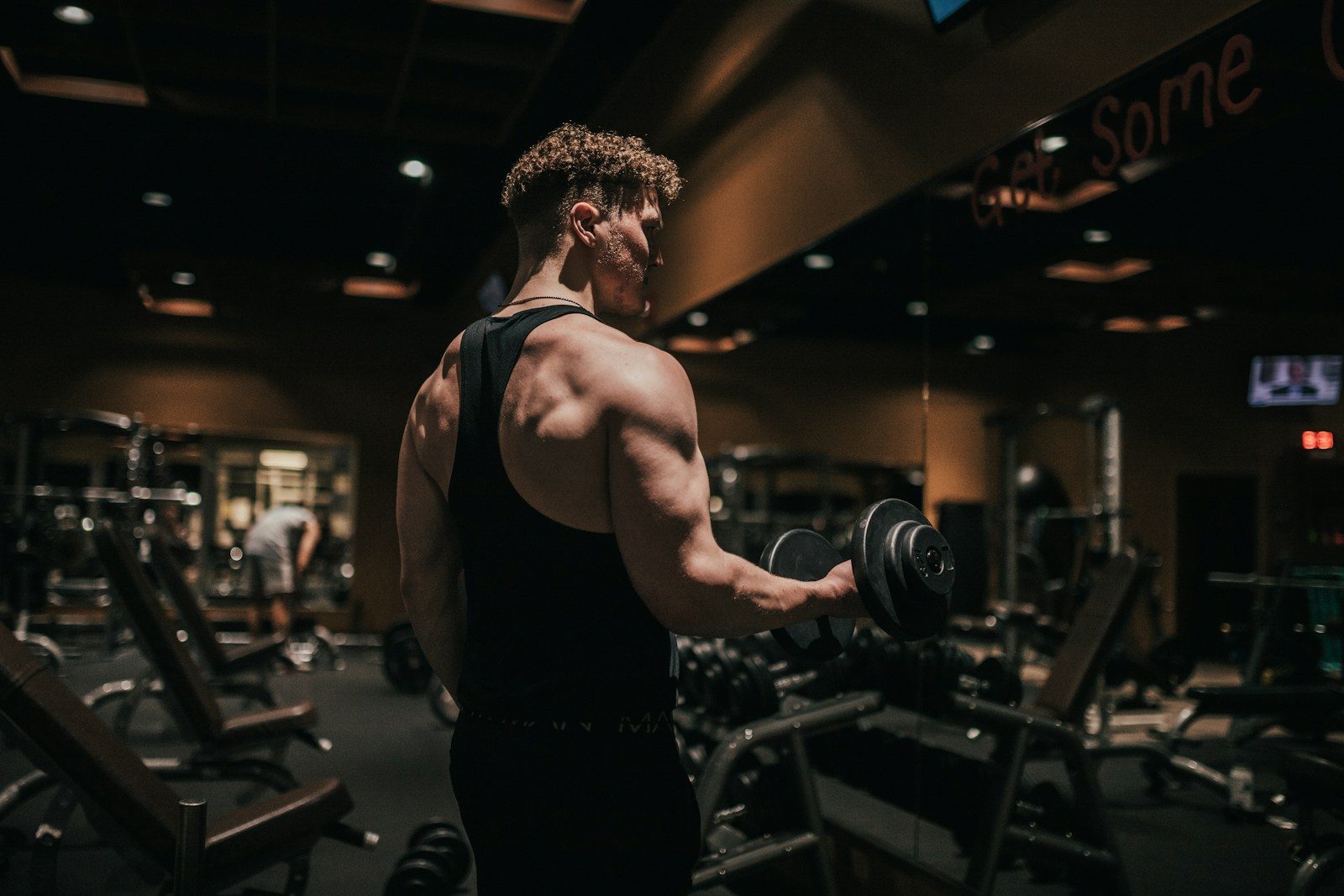
Effective shoulder exercises for men combine pressing movements with direct work for the side and rear delts. Start with one press, one lateral raise, and one rear-delt exercise—not all 12 movements in a single workout.
The exercises below give you dumbbell, barbell, cable, machine, and bodyweight options. Use the technique instructions to choose suitable movements, then build a manageable routine with the sample workout near the end.
How to Choose Shoulder Exercises for Men
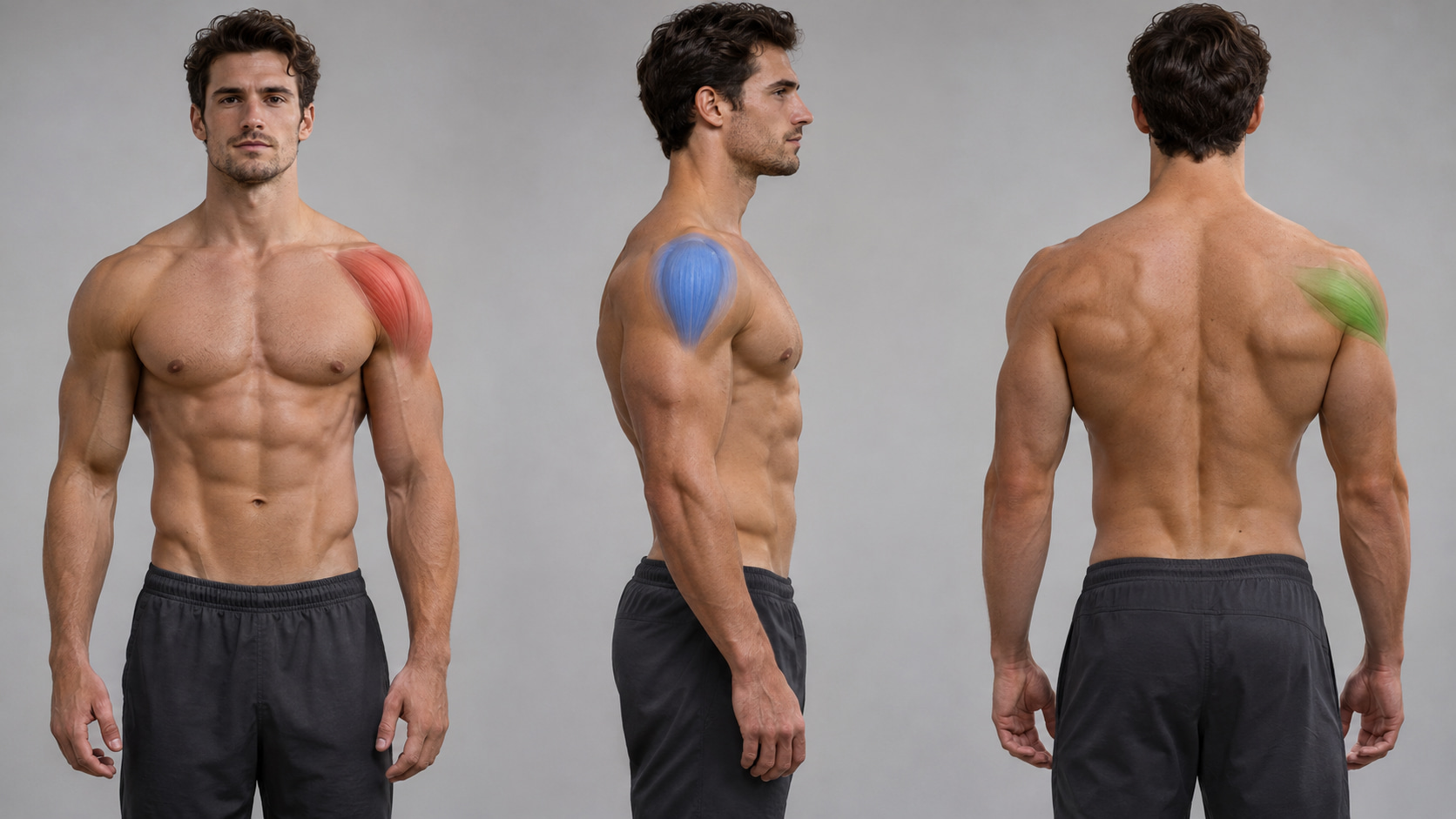
Your deltoid—the muscle covering your shoulder—has three main regions. They work together, but different movements emphasize different regions. Understanding those differences helps you avoid choosing several exercises that do essentially the same job.
| Delt region | Main role in these exercises | Useful exercise choices |
|---|---|---|
| Front delts: anterior deltoids | Help raise the arms forward and contribute to pressing | Shoulder presses, landmine presses, pike push-ups, front raises |
| Side delts: lateral deltoids | Help raise the upper arms out to the sides | Dumbbell, cable, and machine lateral raises |
| Rear delts: posterior deltoids | Help move the upper arms backward and outward | Reverse flyes, reverse pec deck, elbows-out rows, face pulls |
These are areas of emphasis, not complete isolation. Presses also involve the triceps, while rear-delt exercises often involve the muscles around your shoulder blades.
Choose Complementary Movements, Not Every Variation
For a straightforward shoulder session, choose one exercise from each movement category. A seated dumbbell press, dumbbell lateral raise, and chest-supported reverse fly make a practical starting combination.
Consider your existing training before adding more work. Chest presses already involve the front delts, so a program containing several challenging chest and overhead presses may not need front raises. Similarly, an elbows-out row may overlap with work already included in your back sessions.
Choose equipment you can set up consistently and control comfortably. A machine is a useful alternative, not an inferior exercise, and a standing barbell press is not a required upgrade from dumbbells.
Use the Suggested Sets as a Starting Point
The sets and repetitions below apply only to the exercises you select. Start at the lower end of the suggested set ranges, and finish most sets while you could still perform about two or three good repetitions.
Rest approximately two minutes between pressing sets and 60–90 seconds between raises, flyes, rows, and face pulls. Take longer when you need it to maintain your technique. Training to complete muscular failure is not required for progress.
Stop for sharp pain, numbness, dizziness, chest pain, or other concerning symptoms and seek appropriate care. Chest pain, fainting, or severe shortness of breath warrants urgent assessment. Get individualized guidance before using this routine after surgery, a recent injury, or persistent shoulder symptoms.
Front-Delt Exercises and Pressing Options
Choose one of the first four exercises as your main press. The front raise is an optional accessory rather than another required movement.
1. Seated Dumbbell Shoulder Press
Best use: A main shoulder press with back support.
Main muscles: Front delts and triceps, with the side delts contributing.
Equipment: Two dumbbells and a bench with a backrest.
How to do it:
- Set the backrest close to upright. Sit with your feet flat and your back supported, then bring the dumbbells to shoulder level.
- Face your palms forward, keep your wrists above your elbows, and position your elbows slightly in front of your torso.
- Brace your abdomen and press the weights overhead without pushing your ribs upward or leaning away from the backrest.
- Lower the dumbbells under control to a comfortable shoulder-level position. The weights do not need to touch at the top.
Common mistake and correction: Turning the last few repetitions into a pronounced backward lean. Reduce the weight when you can no longer keep your torso supported.
Suggested starting dose: 2–3 sets of 8–12 repetitions.
Choose weights you can get into and out of position safely, not merely weights you can press once someone places them in your hands.
2. Standing Barbell Overhead Press
Best use: Developing strict standing pressing strength.
Main muscles: Delts and triceps; the trunk muscles stabilize your body.
Equipment: Barbell, plates, and a suitable rack.
How to do it:
- Set the bar in the rack near upper-chest height. Grip it just outside shoulder width with your thumbs wrapped around it.
- Unrack the bar, stand approximately hip-width apart, and hold it in front of your shoulders with your elbows slightly forward.
- Brace your abdomen and glutes. Move your head just enough to clear the bar, then press overhead without bending and driving through your knees.
- Finish with the bar balanced over your body, then lower it to the front of your shoulders under control.
Common mistake and correction: Using a knee dip to finish a difficult repetition. That changes the movement into a push press. End the set or reduce the load instead.
Suggested starting dose: 2–3 sets of 6–10 repetitions, resting 2–3 minutes between sets.
Use a lighter training bar when an empty standard bar is already too demanding.
3. Half-Kneeling Single-Arm Landmine Press
Best use: An angled, one-arm pressing alternative.
Main muscles: Front delts, upper chest, and triceps; the trunk resists twisting.
Equipment: Barbell, secured landmine attachment, and optional knee pad.
How to do it:
- Secure the bar in the landmine attachment according to its instructions.
- Kneel with the working-side knee down and the opposite foot planted in front. Hold the bar’s free end near the working shoulder.
- Keep your torso tall, brace your abdomen, and press the bar upward and forward along its natural arc.
- Lower it slowly to shoulder height. Complete your repetitions, then switch arms and kneeling positions.
Common mistake and correction: Rotating your torso or leaning backward to move the bar. Use less weight and keep your chest facing the attachment.
Suggested starting dose: 2–3 sets of 8–12 repetitions per side.
Take a brief transition between arms, then rest about two minutes after completing both sides. The angled path offers a different pressing option, but it is not automatically pain-free for every shoulder.
4. Floor Pike Push-Up
Best use: A bodyweight pressing option for readers who can control the movement.
Main muscles: Delts and triceps.
Equipment: A nonslip floor.
How to do it:
- Place your hands and feet on the floor. Lift your hips into an inverted-V position, with your hands approximately shoulder-width apart.
- Keep your hips elevated as you bend your elbows and lower your head toward the floor slightly ahead of your hands.
- Descend only as far as you can control without collapsing through your shoulders or placing weight on your head.
- Press through your hands to straighten your arms and return to the pike position.
Common mistake and correction: Letting the hips drop until the exercise becomes a regular push-up. Keep the elevated hip position throughout the repetition.
Suggested starting dose: 2–3 sets of 5–10 controlled repetitions.
This is not automatically a beginner exercise just because it uses no weights. Start with a manageable range and gradually increase your depth. Choose a lightly loaded seated press instead when you cannot control the descent.
5. Standing Dumbbell Front Raise
Best use: Optional direct front-delt work.
Main muscles: Front delts.
Equipment: Two light dumbbells.
How to do it:
- Stand with your feet comfortably apart and a dumbbell in front of each thigh.
- Keep a small bend in your elbows and brace your abdomen.
- Raise both arms forward together until they reach approximately shoulder height. Keep your wrists straight and your torso still.
- Lower both weights slowly without bouncing them off your thighs.
Common mistake and correction: Leaning backward or swinging the dumbbells upward. Reduce the weight until the movement comes from your shoulders rather than your hips.
Suggested starting dose: 1–2 sets of 10–15 repetitions.
Treat this as an addition for a specific front-delt priority, not a compulsory finisher. When your chest and shoulder pressing already provide substantial work, put your available training time toward side or rear delts instead.
Side-Delt Exercises
Choose one of these lateral-raise variations initially. You do not need to perform all three to train your side delts effectively.
Dumbbells and cables are both reasonable choices. An eight-week study in resistance-trained adults found similar lateral-delt growth from the two when the tested range of motion was matched. That does not prove every setup is identical, but it does argue against assuming cables always produce better results.
6. Standing Dumbbell Lateral Raise
Best use: Direct side-delt work with minimal equipment.
Main muscles: Side delts, with other shoulder muscles assisting.
Equipment: Two dumbbells.
How to do it:
- Stand tall with a dumbbell beside each thigh, palms facing inward, and a slight bend in your elbows.
- Raise your arms outward and slightly forward of directly sideways.
- Stop around shoulder height, keeping your hands and elbows at roughly the same height. Avoid forcing an exaggerated pinky-up position.
- Lower the dumbbells slowly along the same path, maintaining the small elbow bend.
Common mistake and correction: Using a hip swing and a forceful shrug to lift heavy weights. Choose lighter dumbbells and think about moving your arms outward rather than throwing them upward.
Suggested starting dose: 2–3 sets of 12–20 repetitions.
Use controlled repetitions as your benchmark. A heavier pair is not progress when it requires a shorter range, more swinging, or a different movement.
7. Standing Single-Arm Cable Lateral Raise
Best use: A one-arm alternative with adjustable cable resistance.
Main muscles: Side delts.
Equipment: Low pulley and a single-handle attachment.
How to do it:
- Attach a handle to the lowest pulley setting. Stand side-on with the machine beside your nonworking arm.
- Reach across your body with the hand farthest from the machine. The cable should pass in front of your body, not behind your back or between your legs.
- Keep your torso steady and your elbow slightly bent as you raise the working arm outward to approximately shoulder height.
- Lower the handle across the front of your body under control. Complete that side before switching.
Common mistake and correction: Leaning away or rotating your torso to finish repetitions. Lower the resistance and keep the same body position throughout.
Suggested starting dose: 2–3 sets of 12–20 repetitions per side.
Allow time to change sides. Rest 60–90 seconds after completing both arms, taking additional recovery between sides when needed.
8. Seated Machine Lateral Raise
Best use: A supported lateral-raise option with a guided movement path.
Main muscles: Side delts.
Equipment: Lateral-raise machine with arm pads.
How to do it:
- Select a manageable resistance and adjust the seat according to the machine’s instructions. On models with marked pivot points, align your shoulders with them.
- Place your upper arms against the pads near your elbows and hold the handles.
- Keep your torso steady and lift the padded levers outward until your arms reach approximately shoulder height.
- Lower the levers slowly without letting the weight stack slam.
Common mistake and correction: Pushing mainly through the hands while the elbows separate from the pads. Maintain the intended arm-pad contact throughout the repetition.
Suggested starting dose: 2–3 sets of 12–20 repetitions.
Machine designs differ. Follow the placard on the equipment you are using rather than copying another machine’s seat setting. Record your machine and seat position alongside the weight so you can repeat the setup.
Rear-Delt Exercises
Reverse flyes and reverse pec-deck movements use a relatively fixed elbow angle. Rear-delt rows bend the elbows, while face pulls add an outward rotation of the upper arms. These are different options, not four versions you must include together.
9. Chest-Supported Incline Dumbbell Reverse Fly
Best use: Rear-delt work without holding an unsupported bent-over position.
Main muscles: Rear delts and upper-back muscles.
Equipment: Incline bench and two light dumbbells.
How to do it:
- Set the bench to approximately 45 degrees. Position yourself chest-down against the backrest with your feet firmly supported.
- Let the dumbbells hang beneath your shoulders, palms facing each other and elbows slightly bent.
- Raise both arms outward in a wide arc until your upper arms are near shoulder level. Keep your chest against the bench.
- Lower slowly without swinging the weights beneath you.
Common mistake and correction: Bending the elbows more as the weights rise, turning the fly into a row. Use lighter weights and maintain a consistent elbow angle.
Suggested starting dose: 2–3 sets of 12–20 repetitions.
Keep your neck in line with your torso rather than lifting your chin to watch yourself in a mirror. Stop at a controlled endpoint instead of forcing your arms far behind your body.
10. Reverse Pec Deck
Best use: A machine alternative to the chest-supported reverse fly.
Main muscles: Rear delts and upper-back muscles.
Equipment: Pec-deck machine with a rear-deltoid setting.
How to do it:
- Configure the machine for its rear-deltoid exercise, not its chest-fly setting.
- Adjust the seat as directed, sit facing the pad, and support your feet. Position the handles around shoulder level.
- Keep your chest against the pad and move your arms outward, maintaining a small, consistent bend in your elbows.
- Return the handles slowly without allowing the stack to drop.
Common mistake and correction: Lifting your chest off the pad and rocking backward to finish the repetition. Reduce the resistance and keep your torso supported.
Suggested starting dose: 2–3 sets of 12–20 repetitions.
Use the handle orientation specified for your machine. Some models use rotating handles; others require changing the starting position of the machine arms.
11. Chest-Supported Dumbbell Rear-Delt Row
Best use: An elbows-out rowing option that combines rear-shoulder and upper-back work.
Main muscles: Rear delts and upper-back muscles, with the elbow flexors assisting.
Equipment: Incline bench and two dumbbells.
How to do it:
- Set the bench to approximately 45 degrees. Lie chest-down with your feet supported and the dumbbells hanging below your shoulders.
- Bend your elbows and draw the dumbbells toward your upper ribs.
- Let your elbows travel outward rather than pulling them tightly beside your waist. Keep your chest supported and stop without forcing the upper arms far behind your torso.
- Lower the dumbbells slowly until your arms return to the hanging position.
Common mistake and correction: Turning the exercise into a tucked-elbow row toward the hips. Use a lighter load and direct the elbows outward to preserve the intended shoulder-row pattern.
Suggested starting dose: 2–3 sets of 10–15 repetitions.
This can replace the reverse fly in your routine. It does not need to be added on top of it, especially when your back training already contains similar rows.
12. Standing Rope Face Pull With External Rotation
Best use: An accessory combining rear-shoulder, upper-back, and shoulder-rotation work.
Main muscles: Rear delts, upper-back muscles, and rotator-cuff external rotators.
Equipment: Cable machine with a high pulley and rope attachment.
How to do it:
- Attach the rope to a high pulley. Grip both ends securely and step back until the cable has tension with your arms extended.
- Stand with softly bent knees, a steady torso, and your head aligned with your spine.
- Pull the rope toward your face, moving your elbows outward. As your upper arms reach the plane of your torso, rotate them outward so your hands separate beside your head.
- Reverse the movement slowly, allowing your arms and shoulder blades to return forward.
Common mistake and correction: Using enough weight that you must lean backward or turn the exercise into a pull toward your chest. Lighten the load and preserve the face-level pull and rotation.
Suggested starting dose: 2–3 sets of 12–20 repetitions.
Treat it as a controlled accessory—not a guaranteed posture fix or injury-prevention exercise.
Build a Shoulder Workout From These Exercises
The following routine is a starting example for someone who can perform the selected movements comfortably. It is not a requirement to train shoulders on separate days, and it is not intended to be added unchanged to an already demanding upper-body program.
A Three-Exercise Shoulder Routine
Start with 5–10 minutes of easy general movement, such as brisk walking, followed by one or two progressively heavier practice sets of your chosen press. Use a light practice set to check the setup for your raises and reverse flyes when needed. Warm-up sets should prepare you without exhausting you.
| Order | Exercise | Working sets | Repetitions | Rest between sets |
|---|---|---|---|---|
| 1 | Seated dumbbell shoulder press | 2 | 8–12 | About 2 minutes |
| 2 | Standing dumbbell lateral raise | 2 | 12–20 | 60–90 seconds |
| 3 | Chest-supported incline reverse fly | 2 | 12–20 | 60–90 seconds |
Finish most sets with approximately two or three repetitions still possible with good technique. Take a similar rest period when changing exercises.
Allow roughly 20–30 minutes, including warming up, setting up equipment, and resting. Unilateral substitutions, extra practice sets, or longer rest periods will extend the session.
Perform the routine twice weekly on nonconsecutive days, such as Monday and Thursday, adjusting around your other training. Training major muscle groups at least twice weekly is consistent with the ACSM resistance-training guidance for healthy adults.
This example provides six working sets per session, divided among three movement patterns. It does not provide six equally targeted sets for every delt region.
Substitute Without Expanding the Workout
Replace exercises within their categories rather than adding every available alternative.
A landmine press can take the place of the seated press; use its per-side repetition range. A cable or machine lateral raise can replace the dumbbell version. The reverse pec deck or rear-delt row can replace the reverse fly.
Face pulls can be an alternative rear-shoulder accessory, though they involve a different movement pattern from a fly. Front raises remain optional.
When you already have two upper-body training days, place the selected exercises into those sessions rather than automatically adding two more workouts. A session that already includes substantial pressing may only need the lateral-raise and rear-delt portions.
Progress Repetitions Before Adding More Exercises
Keep your exercise choices, setup, and range of motion consistent enough to compare sessions.
For example, with two sets of lateral raises at 12–20 repetitions, build toward 20 controlled repetitions on both sets. Once you can repeat that performance while keeping about two good repetitions in reserve, increase the weight by the smallest practical amount and work upward through the range again.
For presses, follow the same process within the chosen repetition range. For pike push-ups, improve your controlled depth before chasing more repetitions.
Do not count a heavier weight as progress when it requires more swinging, less control, or a shorter range. Gradual increases should follow your ability to perform the exercise well.
Add a third set to a priority movement only when you are recovering comfortably and your existing workload is manageable. More sets are an option, not an obligation. When performance repeatedly declines or your shoulders remain uncomfortable between sessions, reassess the total pressing and pulling work before adding anything.
The Takeaway
Choose shoulder exercises that complement each other: a suitable press, a lateral raise, and a rear-delt movement. Use the other options to solve equipment or preference problems—not to turn a manageable session into a 12-exercise marathon.
Start with the sample routine, record your repetitions and loads, and earn increases through consistent technique.
References
- American College of Sports Medicine: 2026 Resistance-Training Position Stand
- ACSM: Resistance-Training Guidelines Update
- Research on Deltoid Anatomy and Shoulder-Muscle Involvement
- ACE Exercise Library: Seated Overhead Press
- ACE Exercise Library: Front Raise
- ACE Exercise Library: Lateral Raise
- ACE Exercise Library: Incline Reverse Fly
- CrossFit: Strict Shoulder Press Technique
- Horton Barbell: Half-Kneeling Landmine Press
- Horton Barbell: Cable Lateral Raise
- NSCA: Face Pull Technique
- Dumbbell Versus Cable Lateral Raises for Lateral Deltoid Hypertrophy: Experimental Study
- Mayo Clinic: Weight-Training Technique and Safety
- Mayo Clinic: Strength-Training Techniques
- NIDDK: Staying Active at Any Size
This content is for informational purposes only and is not a substitute for medical advice.