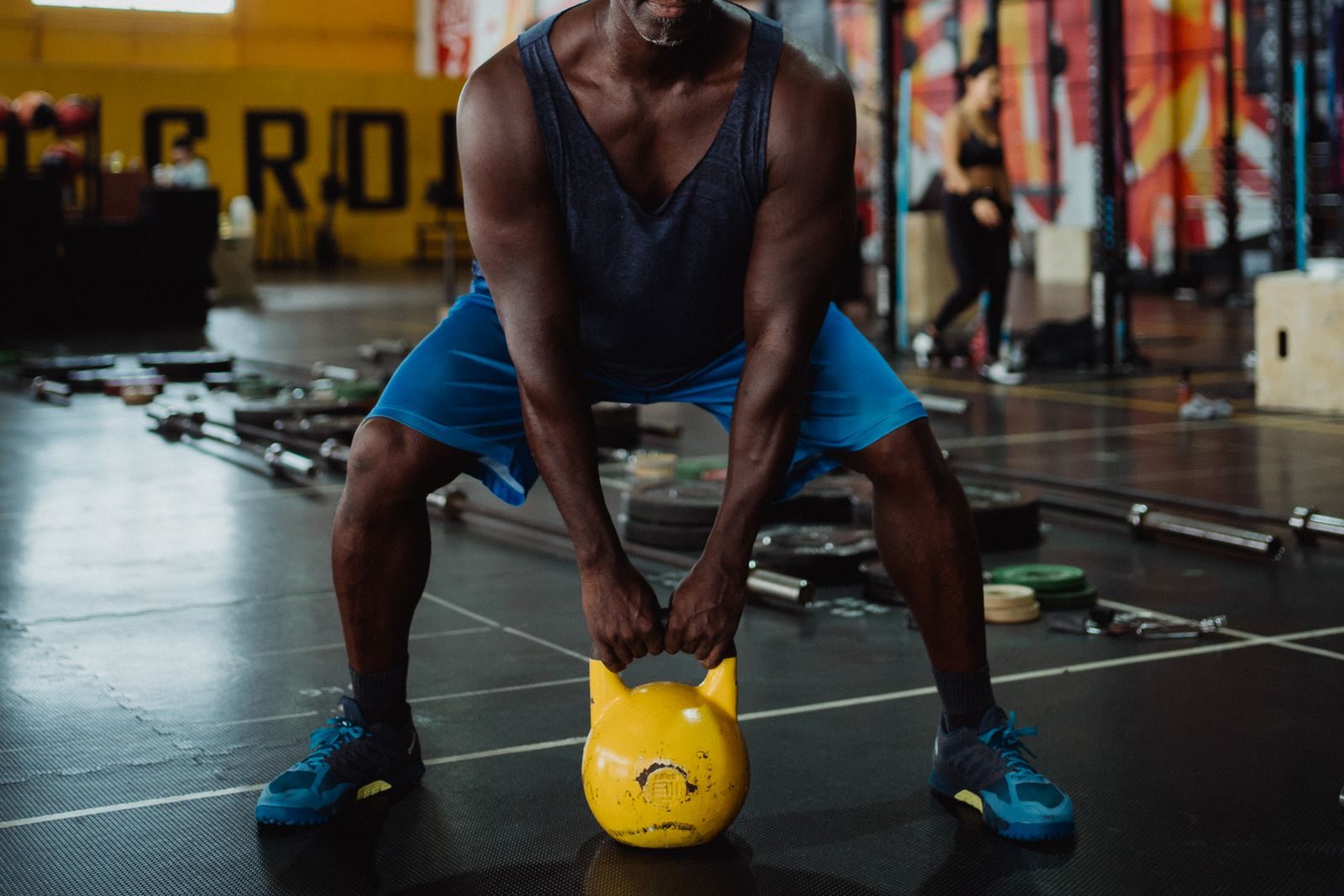
The best inner thigh exercises for men combine direct hip-adduction movements with squats, lunges, and deadlift variations that train the adductors under load.
Exercises such as cable hip adduction, side-lying leg raises, lateral lunges, sumo squats, and Copenhagen adduction can help build stronger, more complete legs.
This guide explains which exercises to use, how to perform them correctly, how many sets and reps to do, and how to include them in a practical workout.
What Muscles Make Up the Inner Thighs?
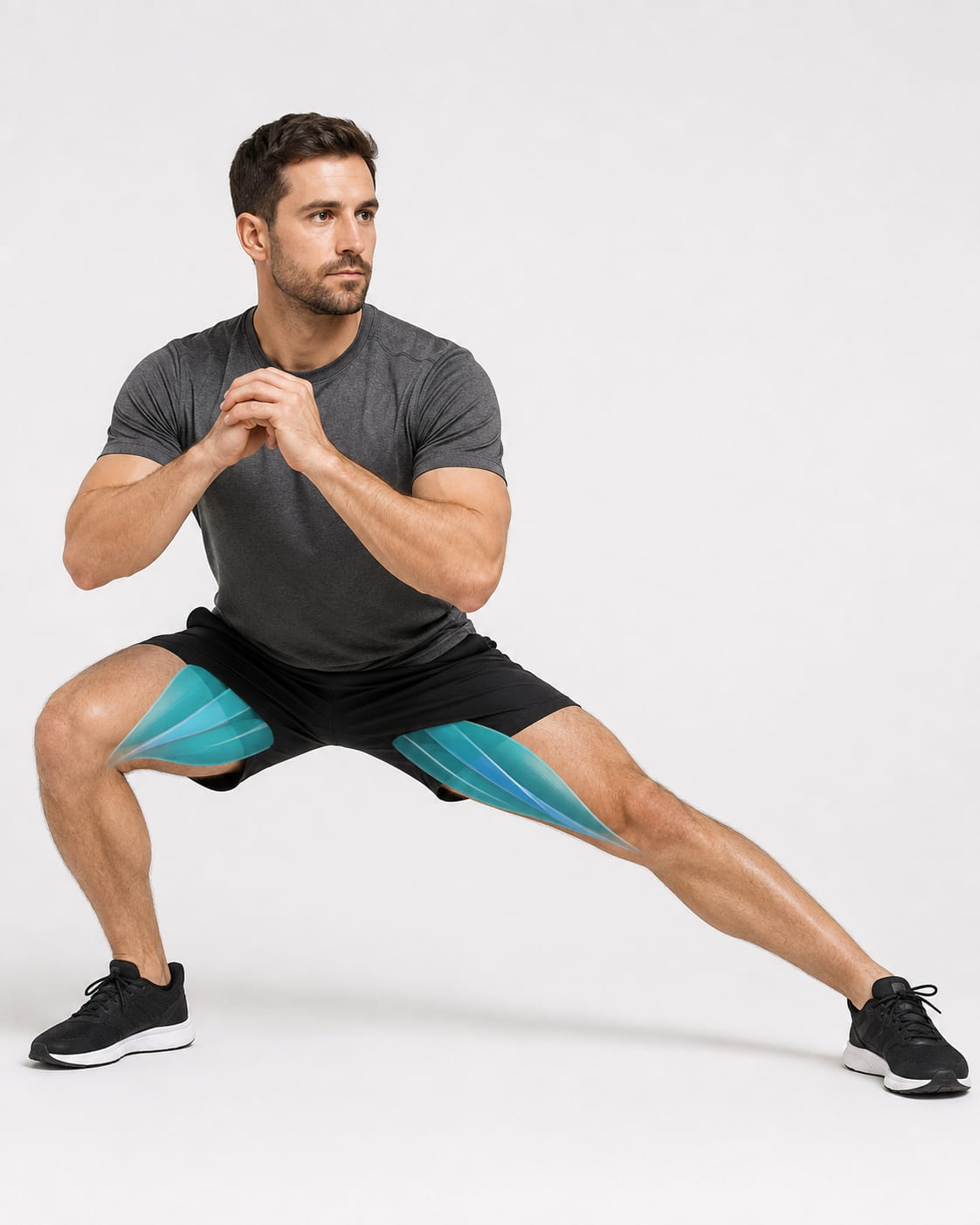
The muscles along the inside of your thighs are collectively known as the hip adductors. The main muscles include:
- Adductor longus
- Adductor brevis
- Adductor magnus
- Gracilis
- Pectineus
Their primary action is hip adduction, which means moving the thigh toward the center of the body. They also contribute to pelvic and lower-body control during walking, running, squatting, lunging, and changing direction.
The adductor magnus is particularly important during compound exercises because part of the muscle also assists with hip extension. That means it can work during squats and deadlifts as well as direct adduction exercises. The NCBI Bookshelf overview of the adductor muscles provides additional information about their anatomy and functions.
Benefits of Inner Thigh Exercises for Men
Regular adductor training may help you:
- Build stronger and more developed inner thighs
- Improve control when moving your legs inward
- Support squats, lunges, deadlifts, and step-ups
- Strengthen side-to-side movement
- Improve lower-body stability during running and sports
- Address a muscle group that may receive limited direct work in conventional leg routines
Adductor strengthening may be especially useful for men who participate in soccer, hockey, martial arts, basketball, or other sports involving kicking and rapid changes of direction.
One trial involving male soccer players found that a progressive Copenhagen-based program was associated with fewer reported groin problems. However, that result came from a specific athletic population and does not mean one exercise can prevent every groin injury.
Best Inner Thigh Exercises for Men at a Glance
| Exercise | Main Training Purpose | Difficulty | |
|---|---|---|---|
| 1 | Supine adductor squeeze | Beginner isometric strength | Beginner |
| 2 | Side-lying hip adduction | Direct bodyweight training | Beginner |
| 3 | Standing band or cable adduction | Loadable unilateral strength | Beginner–Intermediate |
| 4 | Seated hip adduction machine | Stable progressive overload | Beginner–Intermediate |
| 5 | Lateral lunge | Side-to-side compound strength | Beginner–Intermediate |
| 6 | Slider lateral lunge | Eccentric control and adductor strength | Intermediate |
| 7 | Wide-stance goblet squat | Compound thigh and hip strength | Beginner–Intermediate |
| 8 | Cossack squat | Strength through a wide lateral range | Intermediate |
| 9 | Sumo deadlift | Heavy hip and inner-thigh strength | Intermediate–Advanced |
| 10 | Copenhagen adduction | High-intensity adductor strength | Intermediate–Advanced |
10 Best Inner Thigh Exercises for Men
These 10 inner thigh exercises for men combine direct adductor work with squats, lunges, and deadlift variations to build stronger, more balanced legs. Choose exercises that match your fitness level and progress gradually with controlled form.
1. Supine Adductor Squeeze
Best for: Beginners, warm-ups, and learning how to contract the inner thighs.
Muscles worked: Hip adductors, with light assistance from the core.
Equipment needed: A small exercise ball, firm pillow, foam roller, or folded towel.
Sets, reps, and rest: Perform 2–3 sets of 8–12 squeezes, holding each squeeze for 3–5 seconds. Rest 30–45 seconds.
How to do it:
- Lie on your back with your knees bent and feet flat.
- Place a small ball or pillow between your knees.
- Brace your abdomen gently while keeping your lower back comfortable.
- Press both knees inward against the object.
- Hold briefly before slowly releasing the pressure.
Common mistakes: Avoid squeezing as hard as possible on the first repetition, holding your breath, or allowing your feet to lift from the floor.
Progression: Increase the hold to 15–30 seconds or use a firmer ball.
Coaching cue: Press inward evenly with both legs.
2. Side-Lying Hip Adduction
Best for: Directly strengthening the inner thigh without gym equipment.
Muscles worked: Adductor longus, adductor brevis, adductor magnus, gracilis, and pectineus.
Equipment needed: Exercise mat; an ankle weight is optional.
Sets, reps, and rest: Perform 2–3 sets of 10–15 repetitions per side. Rest 30–60 seconds.
How to do it:
- Lie on one side with your body in a straight line.
- Bend your top leg and place its foot on the floor in front of the bottom leg.
- Keep the bottom leg straight with its toes facing forward.
- Lift the bottom leg several inches from the floor.
- Pause briefly and lower it under control.
Common mistakes: Do not roll your hips backward, turn the bottom toes toward the ceiling, or swing the leg.
Progression or regression: Begin with a small lift. Add a light ankle weight once you can complete 15 controlled repetitions.
The AAOS hip-adduction instructions also recommend controlled side-lying leg raises and gradually increasing resistance as the exercise becomes easier.
3. Standing Band or Cable Hip Adduction
Best for: Direct, loadable adductor training while standing.
Muscles worked: Hip adductors, with assistance from the glutes and core of the supporting side.
Equipment needed: Low cable machine with an ankle cuff or a resistance band.
Sets, reps, and rest: Perform 2–3 sets of 10–15 repetitions per leg. Rest 45–75 seconds.
How to do it:
- Attach the cable or band to the ankle closest to the anchor.
- Stand side-on and hold a stable support if needed.
- Begin with the working leg slightly out to the side.
- Keep the knee mostly straight and move the leg inward across the front of your body.
- Pause briefly before returning slowly to the starting position.
Common mistakes: Avoid leaning away from the machine, rotating your pelvis, swinging the leg, or using so much resistance that the movement becomes jerky.
Progression or regression: Hold a support for balance and use a light band when beginning. Progress by adding resistance while keeping your torso still.
Coaching cue: Move your leg—not your entire body.
4. Seated Hip Adduction Machine
Best for: Stable, measurable progressive overload.
Muscles worked: Adductor longus, brevis, magnus, gracilis, and pectineus.
Equipment needed: Seated hip adduction machine.
Sets, reps, and rest: Perform 2–4 sets of 8–15 repetitions. Rest 60–90 seconds.
How to do it:
- Adjust the seat so your back is supported and your feet rest securely.
- Position the pads against the inside of your thighs or knees.
- Select a comfortable starting width.
- Press your legs inward until the pads nearly meet.
- Pause and allow your legs to reopen slowly.
Common mistakes: Do not let the weight stack slam, bounce out of the wide position, or force your hips into an uncomfortable stretch.
Progression: Add a small amount of weight once you can complete the top of your repetition range without shortening the movement.
Coaching cue: Control both the closing and opening phases.
5. Lateral Lunge
Best for: Building inner-thigh strength alongside the glutes and quadriceps.
Muscles worked: Adductors, gluteus maximus, gluteus medius, quadriceps, hamstrings, and calves.
Equipment needed: None; dumbbells are optional.
Sets, reps, and rest: Perform 2–3 sets of 8–12 repetitions per side. Rest 60–90 seconds.
How to do it:
- Stand tall with your feet approximately hip-width apart.
- Take a wide step to one side.
- Push your hips backward and bend the knee of the stepping leg.
- Keep the opposite leg straight and both feet planted.
- Push through the stepping foot to return to the starting position.
Common mistakes: Avoid allowing the working knee to collapse inward, lifting the heel, rounding your back, or stepping so far that you lose control.
Progression or regression: Hold a stable support or shorten the step to make it easier. Add dumbbells to increase the challenge.
Coaching cue: Sit your hips back over the working leg.
6. Slider Lateral Lunge
Best for: Training the adductors during both lengthening and shortening muscle actions.
Muscles worked: Hip adductors, glutes, quadriceps, hamstrings, and core.
Equipment needed: Exercise slider, furniture slider, or a folded towel on a smooth floor.
Sets, reps, and rest: Perform 2–3 sets of 6–10 repetitions per side. Rest 60–90 seconds.
How to do it:
- Stand with one foot on the floor and the other on a slider.
- Keep most of your weight over the planted leg.
- Push your hips backward as the sliding leg moves out to the side.
- Stop before you lose control or feel an excessive groin stretch.
- Press the planted foot down and pull the sliding leg inward to stand.
Common mistakes: Do not drop quickly into the bottom, place excessive weight on the sliding foot, twist the knee, or force a wider range than you can control.
Progression or regression: Begin with a shallow range while holding a support. Progress by increasing the distance or holding a dumbbell.
Coaching cue: Slide out slowly and pull back with control.
7. Wide-Stance Goblet Squat
Best for: Training the adductors as part of a complete lower-body exercise.
Muscles worked: Adductor magnus, quadriceps, gluteus maximus, hamstrings, calves, and core.
Equipment needed: Dumbbell or kettlebell.
Sets, reps, and rest: Perform 3–4 sets of 6–12 repetitions. Rest 90–120 seconds.
How to do it:
- Hold a weight close to your chest.
- Stand slightly wider than shoulder-width with your toes turned out comfortably.
- Brace your midsection and keep your chest naturally lifted.
- Bend your knees and hips to squat between your legs.
- Push the floor away to return to standing.
Common mistakes: Avoid using an excessively wide stance, letting the knees collapse inward, lifting the heels, or rounding the lower back.
Progression or regression: Perform a bodyweight squat to a box first. Add weight or use a deeper controlled range as your strength improves.
Coaching cue: Keep your knees moving in the same direction as your toes.
8. Cossack Squat
Best for: Building side-to-side strength through a larger range of motion.
Muscles worked: Adductors, quadriceps, glutes, hamstrings, calves, and core.
Equipment needed: None; a support or light counterweight may help.
Sets, reps, and rest: Perform 2–3 sets of 5–8 repetitions per side. Rest 60–90 seconds.
How to do it:
- Begin in a wide stance with both feet planted.
- Shift your hips toward one side while bending that knee.
- Keep the opposite leg straight.
- Descend only as far as you can while maintaining control.
- Push through the bent leg to return to the center and repeat on the other side.
The toes of the straight leg may turn upward if that feels more natural, but the heel should remain supported.
Common mistakes: Do not force a deep position, collapse the bent knee inward, round your back, or drop quickly into the bottom.
Progression or regression: Hold a squat rack or sturdy support. A small weight held in front of the chest can also act as a counterbalance.
Coaching cue: Move sideways rather than straight down.
9. Sumo Deadlift
Best for: Developing heavy hip-extension strength with substantial adductor involvement.
Muscles worked: Adductor magnus, gluteus maximus, hamstrings, quadriceps, spinal erectors, upper back, grip, and core.
Equipment needed: Barbell and weight plates.
Sets, reps, and rest: Perform 3–5 sets of 3–8 repetitions. Rest 2–3 minutes.
How to do it:
- Stand with your feet wider than shoulder-width and your toes turned out comfortably.
- Position the bar over the middle of your feet.
- Bend your knees and hips, then grip the bar with your hands inside your legs.
- Brace your trunk and keep the bar close to your body.
- Push through the floor and extend your hips and knees together.
- Stand tall without leaning backward, then lower the bar under control.
Common mistakes: Avoid choosing an excessively wide stance, allowing the knees to collapse inward, jerking the bar from the floor, or rounding your spine.
Progression or regression: Learn the movement with a raised kettlebell or trap bar before using a barbell from the floor.
Coaching cue: Push the floor apart as you stand.
10. Copenhagen Adduction Exercise
Best for: Advanced direct adductor strength and trunk stability.
Muscles worked: Hip adductors, obliques, deep core muscles, glute medius, and shoulder stabilizers.
Equipment needed: Bench, box, or padded chair.
Sets, reps, and rest: Begin with 2–3 sets of 10–20-second holds per side. Rest 60–90 seconds.
How to do it:
- Lie on your side with your top knee supported on a padded bench.
- Place your elbow beneath your shoulder.
- Lift your hips until your body forms a straight line from your head to your knees.
- Keep the lower leg relaxed or lift it toward the underside of the bench.
- Hold while breathing normally, then lower under control.
Common mistakes: Avoid beginning with the ankle-supported version, allowing the hips to sag, twisting the torso, or continuing when you cannot maintain alignment.
Progression or regression: Start with the top knee supported, known as the short-lever variation. Progress to supporting the ankle only after building sufficient strength.
Coaching cue: Lift your underside away from the floor.
Direct Adductor Exercises vs. Compound Exercises
Both types of exercises can be useful, but they serve different purposes.
Direct adductor exercises
These movements primarily involve bringing the leg toward the body’s midline:
- Adductor squeeze
- Side-lying hip adduction
- Cable or band adduction
- Hip adduction machine
- Copenhagen adduction
Use them when you want focused inner-thigh work or need to add adductor volume without heavily fatiguing the rest of your legs.
Compound exercises
These train the adductors together with larger lower-body muscle groups:
- Lateral lunges
- Slider lunges
- Wide-stance squats
- Cossack squats
- Sumo deadlifts
Use compound movements early in a workout when you are fresh. Direct exercises generally work better later as accessories.
How to Build an Inner Thigh Workout
Most men do not need a separate full workout for the inner thighs. Add one compound movement and one direct adductor exercise to a regular lower-body session.
The updated American College of Sports Medicine resistance-training guidance emphasizes consistency, training major muscle groups regularly, and adjusting load and volume to match the goal. It also notes that machines, free weights, resistance bands, and bodyweight exercises can all be effective.
A practical starting point is:
- Train the adductors 1–2 times per week.
- Perform 2–4 exercises per session, including your other leg training.
- Use 2–3 working sets for most movements.
- Stop most sets with approximately 1–3 good repetitions remaining.
- Increase resistance only when you can maintain a controlled range of motion.
Beginner Home Workout
Perform this routine once or twice per week.
| Exercise | Sets and Reps | Rest |
|---|---|---|
| Wide-stance bodyweight squat | 3 × 10–15 | 60 seconds |
| Lateral lunge | 2 × 8 per side | 60 seconds |
| Side-lying hip adduction | 2 × 12–15 per side | 45 seconds |
| Supine adductor squeeze | 2 × 20–30 seconds | 30 seconds |
Use an effort level of approximately 6–7 out of 10. You should finish each set knowing you could have completed a few more controlled repetitions.
Gym Strength Workout
Perform this as part of a lower-body workout once or twice per week.
| Exercise | Sets and Reps | Rest |
|---|---|---|
| Sumo deadlift | 3 × 4–6 | 2–3 minutes |
| Dumbbell lateral lunge | 3 × 8 per side | 90 seconds |
| Seated hip adduction machine | 3 × 10–15 | 60–90 seconds |
| Short-lever Copenhagen hold | 2 × 15–25 seconds per side | 60 seconds |
Use loads that allow you to maintain technique while finishing most sets with 1–3 repetitions in reserve.
How to Progress Safely
Do not increase load, range, volume, and exercise difficulty at the same time. Change one variable at a time.
For example:
- Increase repetitions within the recommended range.
- Add a small amount of resistance.
- Increase the range of motion if it remains comfortable.
- Progress to a more difficult variation.
- Add another set only when you are recovering well.
For the Copenhagen exercise, progress from a knee-supported hold to longer holds before attempting an ankle-supported version.
For lateral movements, increase depth only while your knee, foot, and hip remain aligned.
Common Inner Thigh Training Mistakes
Relying only on wide-stance squats
Wide-stance squats train the adductors, particularly the adductor magnus, but they do not replace every direct hip-adduction movement. Include at least one exercise that brings the leg inward.
Using too much weight on isolation exercises
Heavy resistance often causes swinging, shortened range, or pelvic rotation. Choose a load you can move smoothly.
Forcing a wide range too quickly
More range is not automatically better. Stop before you lose control or feel a sharp pulling sensation in the groin.
Training only one type of contraction
A balanced routine can include:
- Isometric work from squeezes and Copenhagen holds
- Shortening contractions from cable and machine adduction
- Controlled lengthening from lateral and slider lunges
- Heavy compound loading from squats and deadlifts
Doing too much adductor work in one session
The inner thighs already assist during many leg exercises. Beginners usually need only a few direct sets after their main lower-body training.
Using inner thigh exercises for spot reduction
These exercises can strengthen and develop the muscles, but they are not a reliable way to choose where body fat is lost. In a localized leg-training study, fat loss did not occur specifically in the trained leg.
Safety Tips
Warm up with five minutes of easy cardio followed by a few controlled bodyweight squats and lateral weight shifts.
Start with a comfortable range of motion and lighter resistance, particularly if lateral lunges or Copenhagen variations are new to you.
You may feel muscular effort along the inner thigh, but stop if you experience:
- Sharp or increasing groin pain
- A sudden pulling or tearing sensation
- Hip or knee pain
- Numbness or tingling
- Dizziness or chest pain
- Unusual weakness or other concerning symptoms
Men recovering from a groin injury, hip procedure, or lower-body surgery should follow guidance from a qualified healthcare professional rather than using a general workout.
Frequently Asked Questions
What is the best inner thigh exercise for men?
There is no single best option for every goal.
The cable or machine hip adduction is useful for direct, measurable resistance. The lateral lunge trains the inner thighs as part of a functional compound movement. Copenhagen adduction provides a more advanced direct challenge.
A combination of one compound exercise and one direct adduction exercise is usually most practical.
Are squats enough to strengthen the inner thighs?
Squats can strengthen the adductors, especially the adductor magnus, but they may not provide complete direct hip-adduction training.
Add side-lying, cable, machine, or Copenhagen adduction when inner-thigh strength is a priority.
How often should men train their inner thighs?
One or two sessions per week is enough for many beginners and intermediate lifters. Allow at least one day between demanding sessions, particularly when using Copenhagen exercises, deep lateral lunges, or heavy sumo deadlifts.
Should I use the hip adduction machine?
Yes, provided it feels comfortable and you use controlled form. The machine makes it easy to track resistance and add progressive overload.
Start with a moderate range rather than forcing your legs into the widest possible position.
Can inner thigh exercises reduce inner thigh fat?
They can build the muscles underneath the area, but they cannot reliably determine where fat is lost. Overall fat loss depends on factors such as total energy balance, physical activity, nutrition, genetics, and consistency.
Why are Copenhagen exercises so difficult?
They create a long lever and require the adductors to support much of your body weight while the trunk maintains a side-plank position.
Begin with your top knee supported rather than your ankle. Use short holds and progress gradually.
Should men train both the inner and outer thighs?
Yes. The adductors move the legs inward, while the hip abductors—particularly the gluteus medius and minimus—help move the legs outward and stabilize the pelvis.
A complete lower-body routine should include both muscle groups alongside the quadriceps, hamstrings, glutes, and calves.
Conclusion
The most effective inner thigh exercises for men include both direct adductor work and compound lower-body movements.
Start with controlled exercises such as adductor squeezes, side-lying raises, and lateral lunges. As your strength improves, progress to loaded cable adduction, sumo deadlifts, and Copenhagen variations.
Choose a few exercises that match your ability, perform them consistently, and increase resistance only when your form remains controlled.
References
- American College of Sports Medicine: 2026 Resistance Training Guidelines
- American Academy of Orthopaedic Surgeons: Hip Conditioning Program
- American Academy of Orthopaedic Surgeons: Hip Adduction Exercise
- NCBI Bookshelf: Thigh Adductor Magnus Anatomy and Function
- PubMed: Adductor Strengthening Program in Male Soccer Players
- PubMed: Regional Fat Changes From Localized Resistance Training
This content is for informational purposes only and is not a substitute for professional medical advice.