Standing ab exercises for women are beginner-friendly core moves performed from an upright position to strengthen the abs, obliques, deep core, hips, and postural muscles without getting down on the floor. They are useful if you want a no-crunch core workout, have limited space, prefer low-impact training, or simply want ab exercises that feel more practical for daily movement.
These exercises will not “spot reduce” belly fat, but they can help you build stronger core muscles, improve balance, move with better control, and add structure to a home workout routine. In this guide, you will learn the best standing ab exercises for beginners, how to do them with good form, common mistakes to avoid, and how to turn them into a simple workout.
What Are Standing Ab Exercises?
Standing ab exercises are core exercises performed while standing instead of lying on a mat. They include knee raises, side bends, controlled rotations, wood chops, marching patterns, and anti-rotation holds.
Instead of swinging fast, the goal is to keep your ribs, pelvis, and spine controlled while your arms or legs move. This helps train your core to stabilize your body during movement, balance, rotation, and weight shifts.
Benefits of Standing Ab Exercises for Women
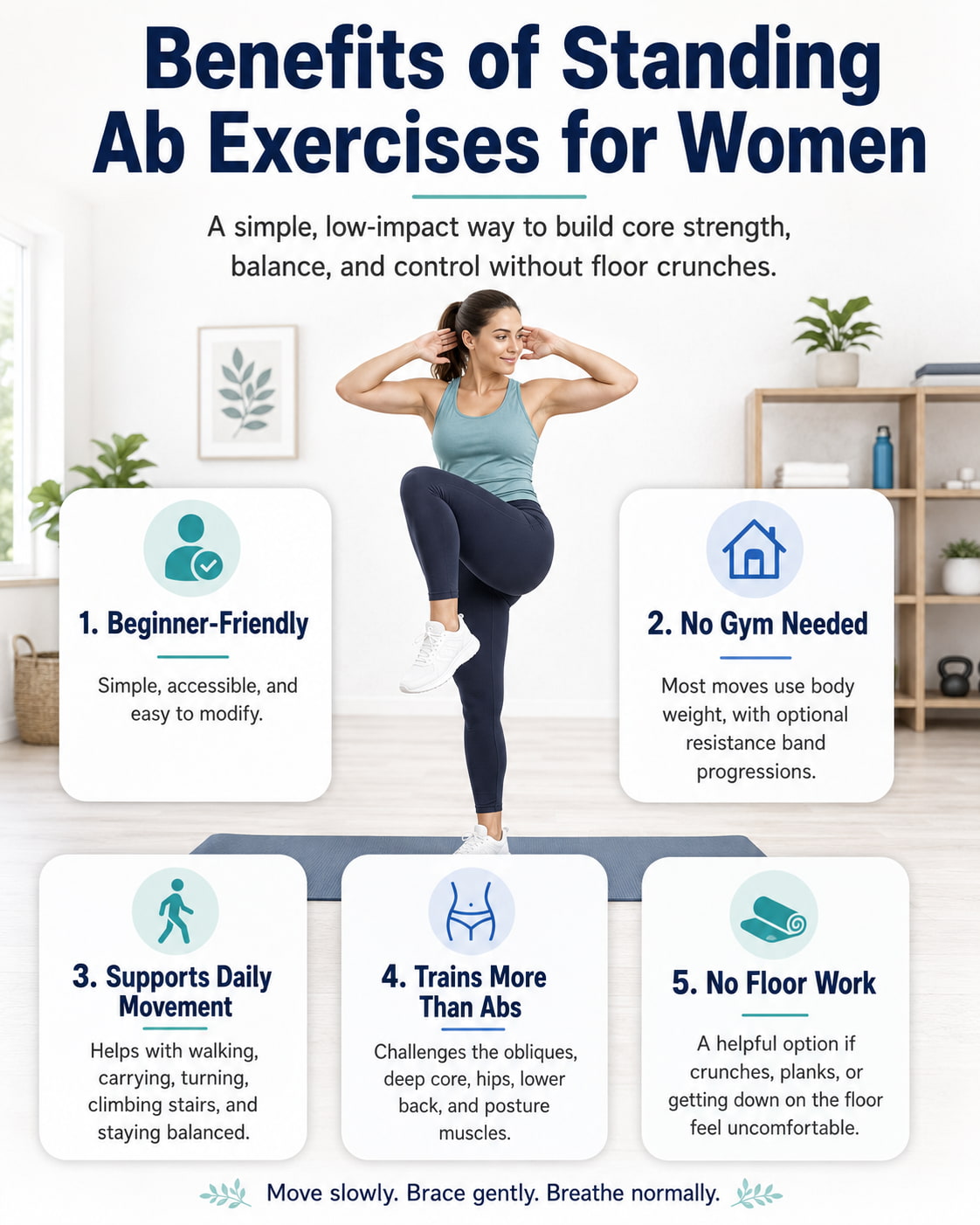
Standing ab exercises are useful because they are simple, beginner-friendly, and easy to do without getting on the floor.
Key benefits include:
- No advanced equipment needed: Most moves use body weight, with optional resistance bands.
- Beginner-friendly: The exercises are easy to modify by reducing speed, range of motion, or resistance.
- Supports daily movement: They help train core control for walking, carrying, turning, climbing stairs, and balance.
- Trains more than abs: They also work the obliques, deep core, hips, lower back, and posture muscles.
- No floor work required: A good option if crunches, planks, or getting down on a mat feels uncomfortable.
Muscles Worked During Standing Ab Exercises
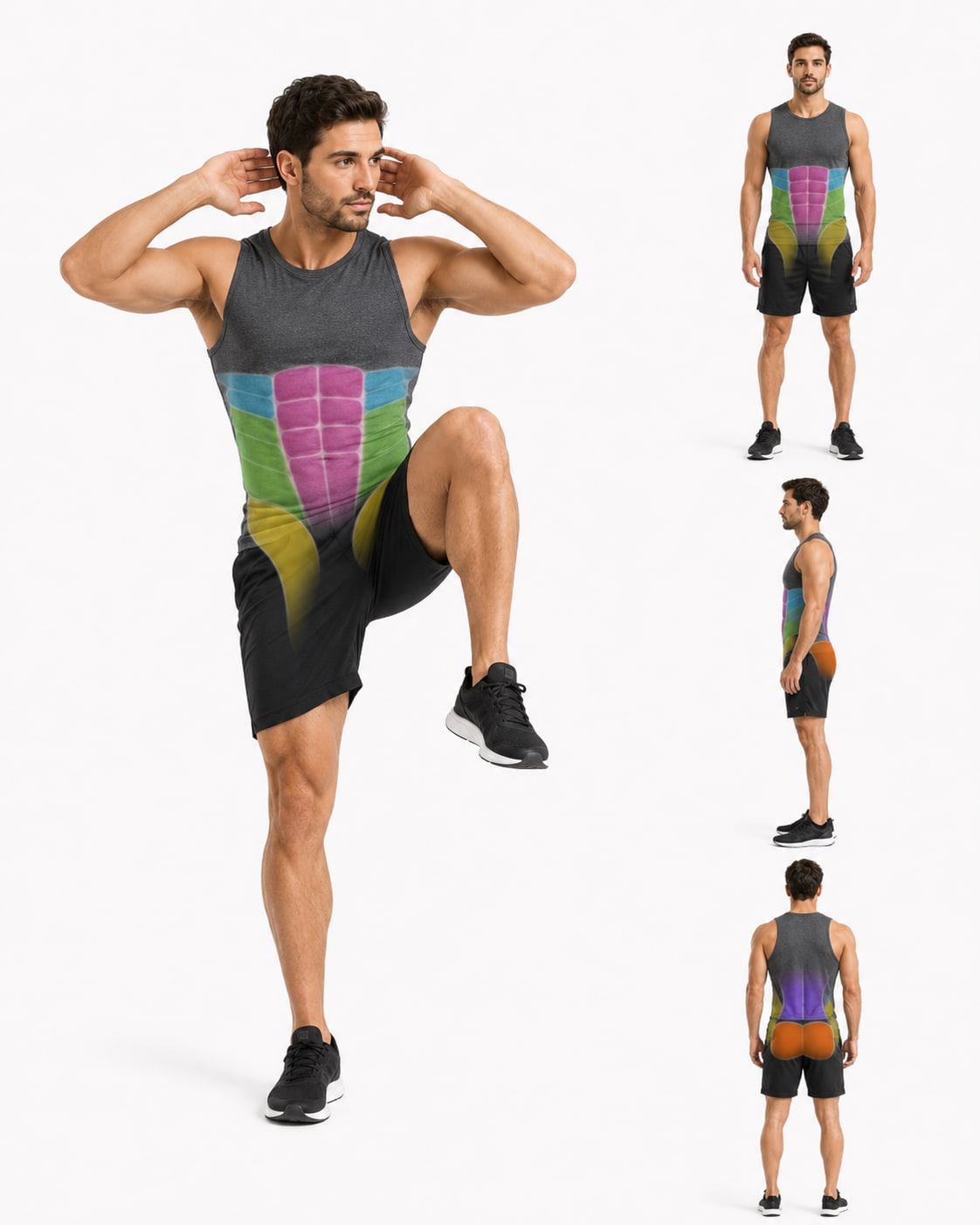
Standing ab exercises mainly train the rectus abdominis, transverse abdominis, internal and external obliques, hip flexors, glutes, lower back, and deep stabilizing muscles around the trunk and pelvis.
The abs and obliques help with bending, rotating, side bending, and resisting unwanted movement. The deep core, hips, and lower back help keep your spine and pelvis stable while you march, lift, twist, or reach.
Moves like wood chops, torso rotations, and Pallof presses may also involve the shoulders and upper back because they help control the arms while the core stays braced.
How to Brace Your Core Before You Start
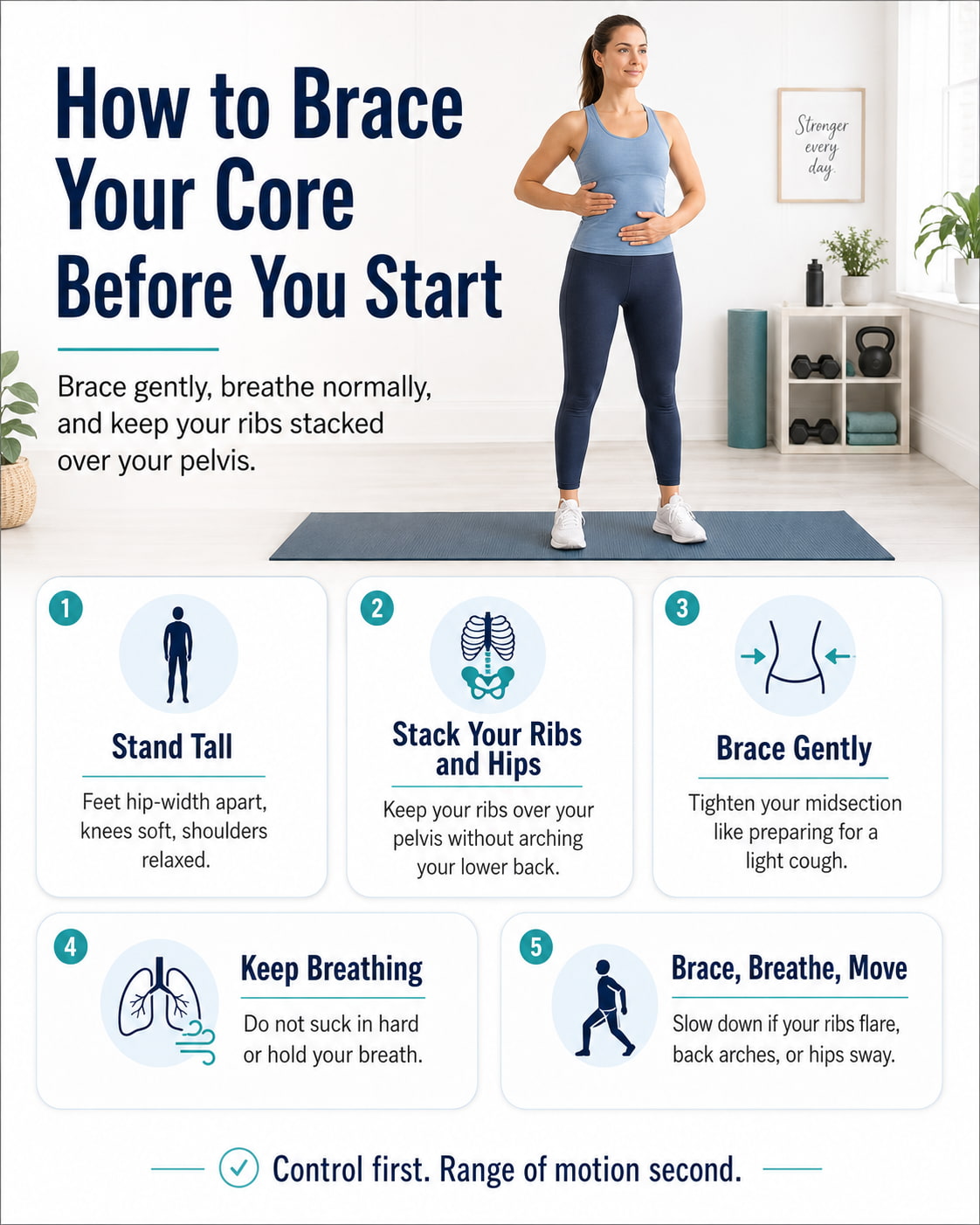
Before doing standing ab exercises, stand tall with your feet about hip-width apart. Keep your ribs stacked over your pelvis, soften your knees, and imagine gently tightening your midsection as if you were preparing for a light cough.
Do not suck in your stomach hard or hold your breath. Breathe normally while keeping your torso controlled. Mayo Clinic recommends breathing freely during core-strength exercises, which is important because holding your breath can make beginner core work feel harder than it needs to.
A good cue is: brace, breathe, then move. If your lower back arches, your ribs flare, or your hips sway too much, slow the exercise down and reduce the range of motion.
10 Best Standing Ab Exercises for Women Beginners Can Do
The best standing ab exercises for women beginners are simple enough to learn, but still effective when performed with control. Start with the easier versions first. Once you can move smoothly without losing posture, progress by adding reps, slowing the tempo, increasing rounds, or using light resistance.
1. Standing Core Brace March
Best for: Standing core brace marches are best for true beginners who need to learn posture, balance, breathing, and core bracing before trying harder ab exercises.
Muscles worked: This exercise works the transverse abdominis, rectus abdominis, hip flexors, glutes, lower back stabilizers, and deep pelvic stabilizers.
Suggested sets and reps: Do 2 to 3 sets of 30 to 45 seconds at a slow, controlled pace. Keep the effort around 5 to 6 out of 10.
Rest: Rest 30 to 45 seconds between sets.
How to do it:
- Stand tall with your feet hip-width apart and arms relaxed by your sides.
- Brace your core gently and keep your chest lifted.
- Lift one knee a few inches off the floor without leaning back.
- Lower the foot softly, then repeat on the other side.
- Continue alternating legs while keeping your torso quiet and steady.
Common mistakes: The most common mistakes are leaning backward, rushing the march, stomping the feet, and letting the ribs flare as the knee lifts.
Expert tip: Think about lifting the knee with control instead of bouncing from side to side.
Progression or regression: Make it easier by holding a wall or chair and lifting the knee lower. Make it harder by pausing for 2 seconds at the top of each rep.
2. Standing Knee Raise
Best for: Standing knee raises are best for beginners who want a simple lower-ab and hip-control exercise without lying on the floor.
Muscles worked: This move works the rectus abdominis, transverse abdominis, hip flexors, obliques, glutes, and balance muscles around the ankles and hips.
Suggested sets and reps: Do 2 to 3 sets of 8 to 12 reps per side. Use a slow tempo and avoid swinging.
Rest: Rest 30 to 60 seconds between sets.
How to do it:
- Stand tall with your feet hip-width apart.
- Place your hands on your hips or lightly behind your head.
- Brace your core and lift one knee toward the front of your body.
- Keep your torso tall and avoid leaning backward.
- Lower the foot with control and repeat before switching sides.
Common mistakes: Many beginners swing the leg, lean back, shrug the shoulders, or lift the knee higher than they can control.
Expert tip: Keep the movement smooth enough that you could pause at any point without losing balance.
Progression or regression: Make it easier by holding a wall and lifting the knee lower. Make it harder by pausing at the top of each rep.
3. Standing Cross-Body Crunch
Best for: Standing cross-body crunches are best for training the obliques, coordination, and beginner-friendly rotational control.
Muscles worked: This exercise works the obliques, rectus abdominis, transverse abdominis, hip flexors, glutes, and postural muscles.
Suggested sets and reps: Do 2 to 3 sets of 8 to 12 reps per side. Move slowly enough to feel your obliques working.
Rest: Rest 30 to 60 seconds between sets.
How to do it:
- Stand tall with your feet about hip-width apart.
- Place your fingertips lightly behind your head without pulling on your neck.
- Brace your core and lift your right knee toward your left elbow.
- Rotate through your upper torso slightly, then return to standing.
- Repeat on the other side and continue alternating.
Common mistakes: Avoid yanking the head forward, collapsing the chest, twisting too fast, or letting the standing knee cave inward.
Expert tip: Bring your rib cage toward your hip instead of forcing your elbow to touch your knee.
Progression or regression: Make it easier by keeping your hands on your hips. Make it harder by adding a short pause when your knee and elbow move toward each other.
4. Standing Side Crunch
Best for: Standing side crunches are best for targeting the side abs and improving lateral core control.
Muscles worked: This move works the internal and external obliques, rectus abdominis, transverse abdominis, hip flexors, glute medius, and lower back stabilizers.
Suggested sets and reps: Do 2 to 3 sets of 8 to 12 reps per side. Keep the movement controlled and avoid rushing.
Rest: Rest 30 to 60 seconds between sets.
How to do it:
- Stand with your feet hip-width apart and your right hand lightly behind your head.
- Shift your weight onto your left foot.
- Brace your core and lift your right knee out to the side.
- Bring your right elbow slightly toward your right hip.
- Lower with control, complete your reps, then switch sides.
Common mistakes: Common mistakes include pulling on the neck, leaning forward, hiking the hip aggressively, and turning the movement into a fast leg swing.
Expert tip: Move through a comfortable range and focus on a small side crunch, not a big bend.
Progression or regression: Make it easier by using wall support and lifting the knee lower. Make it harder by pausing at the top for 1 to 2 seconds.
5. Standing Wood Chop
Best for: Standing wood chops are best for training diagonal core control, obliques, shoulders, and hip-to-core coordination.
Muscles worked: This exercise works the obliques, rectus abdominis, transverse abdominis, shoulders, upper back, glutes, and hips.
Suggested sets and reps: Do 2 to 3 sets of 8 to 12 reps per side. Use body weight first, then progress to a light dumbbell or medicine ball.
Rest: Rest 45 to 60 seconds between sets.
How to do it:
- Stand with your feet slightly wider than hip-width apart.
- Hold your hands together near one hip.
- Brace your core and rotate your torso slightly as your hands move diagonally across your body.
- Finish with your hands near the opposite shoulder.
- Return slowly to the starting position and repeat before switching sides.
Common mistakes: Avoid twisting through the lower back, swinging the arms without core control, locking the knees, or using a weight that pulls you off balance.
Expert tip: Let your hips and upper back rotate together while keeping your abs braced.
Progression or regression: Make it easier by using no weight and a shorter range. Make it harder by holding a light dumbbell or resistance band.
6. Standing Torso Rotation
Best for: Standing torso rotations are best for learning controlled rotation without turning the movement into a fast twist.
Muscles worked: This exercise works the obliques, transverse abdominis, rectus abdominis, spinal stabilizers, glutes, shoulders, and upper back.
Suggested sets and reps: Do 2 to 3 sets of 8 to 12 reps per side. Use slow reps and a comfortable range.
Rest: Rest 30 to 60 seconds between sets.
How to do it:
- Stand with your feet hip-width apart and knees slightly soft.
- Hold your hands together in front of your chest.
- Brace your core and keep your ribs stacked over your pelvis.
- Rotate your chest slowly to one side without forcing the movement.
- Return to center, then rotate to the other side.
Common mistakes: Common mistakes include twisting too fast, arching the lower back, letting the knees collapse inward, and moving only the arms instead of the torso.
Expert tip: Keep your hips mostly steady and rotate from your upper torso with control.
Progression or regression: Make it easier by using a smaller range of motion. Make it harder by holding a light weight close to your chest.
7. Standing Side Bend
Best for: Standing side bends are best for training the obliques and improving side-body awareness.
Muscles worked: This exercise works the internal and external obliques, quadratus lumborum, transverse abdominis, rectus abdominis, and postural stabilizers.
Suggested sets and reps: Do 2 to 3 sets of 10 to 12 reps per side. Keep the movement slow and controlled.
Rest: Rest 30 to 60 seconds between sets.
How to do it:
- Stand tall with your feet hip-width apart.
- Place one hand behind your head or keep both hands on your hips.
- Brace your core and slowly bend to one side.
- Stop before your hips shift or your torso rotates.
- Return to the starting position and repeat before switching sides.
Common mistakes: Avoid bending forward, twisting the torso, using too much weight, or collapsing into the lower back.
Expert tip: Think about making a small side arc with your ribs rather than dropping your shoulder toward the floor.
Progression or regression: Make it easier by using a smaller range of motion. Make it harder by holding a light dumbbell on one side.
8. Standing Crossover Toe Touch
Best for: Standing crossover toe touches are best for obliques, coordination, hamstring mobility, and controlled trunk movement.
Muscles worked: This exercise works the obliques, rectus abdominis, hamstrings, glutes, lower back stabilizers, and hip muscles.
Suggested sets and reps: Do 2 to 3 sets of 8 to 10 reps per side. Keep the range comfortable and avoid forcing the stretch.
Rest: Rest 30 to 60 seconds between sets.
How to do it:
- Stand with your feet slightly wider than hip-width apart.
- Extend your arms out to the sides or keep them in front of your chest.
- Hinge slightly at your hips and reach one hand toward the opposite foot, shin, or knee.
- Keep your core braced and avoid rounding aggressively.
- Return to standing and repeat on the other side.
Common mistakes: The biggest mistakes are rounding the back too much, bouncing into the stretch, locking the knees hard, and twisting faster than you can control.
Expert tip: Reach only as low as you can while keeping your hips steady and your movement smooth.
Progression or regression: Make it easier by reaching only to the opposite knee. Make it harder by reaching lower and pausing briefly near the bottom.
9. Squat to Cross-Body Crunch
Best for: Squat to cross-body crunches are best for women who want a standing ab exercise that also trains the legs and glutes.
Muscles worked: This move works the obliques, rectus abdominis, transverse abdominis, quads, glutes, hamstrings, hip flexors, and postural stabilizers.
Suggested sets and reps: Do 2 to 3 sets of 6 to 10 reps per side. Focus on clean form instead of speed.
Rest: Rest 45 to 75 seconds between sets.
How to do it:
- Stand with your feet about shoulder-width apart.
- Lower into a comfortable squat while keeping your chest lifted.
- Stand up and lift your right knee toward your left elbow.
- Return the foot to the floor and squat again.
- Alternate sides with each rep.
Common mistakes: Avoid collapsing the knees inward, rounding the back in the squat, pulling on the neck, or rushing the crunch after each squat.
Expert tip: Treat it as a squat first and an ab exercise second. Strong lower-body position makes the core portion cleaner.
Progression or regression: Make it easier by using a shallow squat or chair squat. Make it harder by holding a light dumbbell at your chest.
10. Band Pallof Press
Best for: Band Pallof presses are best for deep core stability, anti-rotation strength, and learning how to resist twisting.
Muscles worked: This exercise works the transverse abdominis, internal and external obliques, rectus abdominis, glutes, shoulders, chest, and upper back.
Equipment needed: You need a resistance band and a sturdy anchor point at about chest height.
Suggested sets and reps: Do 2 to 3 sets of 8 to 12 reps per side. Use light to moderate band tension and stop before your form breaks.
Rest: Rest 45 to 60 seconds between sets.
How to do it:
- Anchor a resistance band at chest height.
- Stand sideways to the anchor and hold the band at the center of your chest.
- Brace your core and keep your feet about hip-width apart.
- Press your hands straight forward without letting your torso twist.
- Bring your hands back to your chest, repeat, then switch sides.
Common mistakes: Common mistakes include using too much band tension, leaning away from the anchor, shrugging the shoulders, and letting the torso rotate as the arms press forward.
Expert tip: Your goal is to look almost motionless through the torso while your arms move.
Progression or regression: Make it easier by standing closer to the anchor. Make it harder by stepping farther away or holding the press for 2 to 3 seconds.
Beginner Standing Ab Workout for Women
Use this routine 2 to 3 days per week. The CDC recommends muscle-strengthening activities at least 2 days per week, and standing ab training can fit well as part of a balanced strength routine.
Start with one round if you are new. Build to two or three rounds as your control improves. Rest as needed and keep every rep clean.
For a simple beginner workout, perform standing core brace march for 30 seconds, standing cross-body crunch for 8 to 10 reps per side, standing side crunch for 8 to 10 reps per side, standing wood chop for 8 to 10 reps per side, and band Pallof press for 8 to 12 reps per side.
Keep your effort around 6 to 7 out of 10. You should feel challenged, but you should still be able to breathe, control your posture, and finish without sharp pain or dizziness.
How Often Should Women Do Standing Ab Exercises?
Most beginners can do standing ab exercises 2 to 3 times per week. You can use them after walking, after a lower-body workout, after a full-body strength session, or as a short standalone core routine.
You do not need to train abs every day to make progress. Your core muscles still need recovery, especially if you are adding squats, resistance bands, dumbbells, or longer workout sessions. The American Heart Association recommends strength training at least 2 days per week and notes that 8 to 12 repetitions is a common general fitness range.
How to Make Standing Ab Exercises Easier
Make standing ab exercises easier by reducing the range of motion, slowing down, using wall support, lowering the knee height, removing weight, or doing fewer reps per side.
For example, a standing side crunch becomes easier if you lift the knee only a few inches. A crossover toe touch becomes easier if you reach toward the opposite knee instead of the foot. A Pallof press becomes easier if you stand closer to the band anchor.
The easiest version is not a failure. It is the right version if it lets you keep your ribs down, breathe normally, and move without pain.
How to Progress Standing Ab Exercises
Progress standing ab exercises gradually. First, add reps. Then add a second or third round. After that, slow the tempo, pause at the hardest point, or add light resistance.
A simple progression plan is to start with 8 reps per side, then build to 12 reps per side. Once that feels controlled, add another round. When you can complete 2 to 3 rounds with good posture, make one or two exercises slightly harder.
Avoid making every exercise harder at the same time. Better core training comes from clean control, not from rushing through harder movements.
Common Mistakes to Avoid
The first mistake is moving too fast. Standing ab exercises work best when you control the movement instead of swinging your arms and legs.
The second mistake is holding your breath. You should be able to brace your core and keep breathing. If you cannot breathe, reduce the intensity.
The third mistake is leaning backward during knee raises and cross-body crunches. This often happens when the knee lift is too high or the hip flexors are doing all the work.
The fourth mistake is twisting through the lower back. For rotation exercises, keep the core braced and rotate only through a comfortable range.
The fifth mistake is using standing ab exercises as a belly-fat shortcut. These movements can strengthen your core, but fat loss depends on your overall routine, nutrition, sleep, consistency, and genetics.
Safety Tips
Stop the exercise if you feel sharp pain, numbness, dizziness, chest pain, unusual pressure, or symptoms that do not feel normal. Modify the movement if you feel discomfort in your lower back, hips, knees, neck, or pelvic floor.
If you are pregnant, newly postpartum, recovering from surgery, managing pelvic floor symptoms, dealing with diastasis recti concerns, or unsure whether twisting exercises are appropriate for you, speak with a qualified healthcare professional before starting. ACOG notes that exercise during pregnancy can be beneficial for many women, but routines may need modification and warning signs should be taken seriously.
FAQs
Are standing ab exercises effective for beginners?
Yes. Standing ab exercises can be effective for beginners because they train core bracing, balance, posture, and coordination without requiring floor work. They are especially useful when done slowly with good control.
Can standing ab exercises reduce belly fat?
Standing ab exercises can strengthen your core muscles, but they do not directly burn fat from one specific area. For body composition changes, you need a consistent plan that includes strength training, cardio, nutrition habits, sleep, and recovery.
Are standing ab exercises better than crunches?
They are not automatically better, but they are a good alternative. Standing ab exercises may be more comfortable if crunches bother your neck, back, or hips. They also train your core in upright positions that carry over well to daily movement.
What is the best standing ab exercise for women beginners?
The standing core brace march is one of the best starting points because it teaches posture, breathing, balance, and core control. After that, standing knee raises, cross-body crunches, and side crunches are good beginner progressions.
Can I do standing ab exercises every day?
You can do a few gentle core drills often, but structured ab workouts are usually better 2 to 3 days per week. If your abs, hips, or lower back feel tired, take a rest day or do an easier version.
Do I need equipment for standing ab exercises?
No. Most standing ab exercises can be done with body weight. A resistance band is useful for Pallof presses and wood chops, but it is optional.
Are standing ab exercises safe during pregnancy or postpartum?
Some standing core exercises may be appropriate for some people during pregnancy or postpartum, but the right choice depends on your body, symptoms, stage, and medical guidance. Avoid forcing twisting, breath-holding, or exercises that create pressure, pain, or pelvic floor symptoms. Get professional guidance if you are unsure.
Conclusion
Standing ab exercises for women are a practical way to build core strength without crunches, sit-ups, or floor work. Start with controlled beginner moves like marches, knee raises, cross-body crunches, side crunches, and wood chops. Add the band Pallof press when you are ready to train deeper anti-rotation strength.
Keep the goal simple: brace well, breathe normally, move with control, and progress gradually. A few focused sessions each week can help you build a stronger, more stable core for workouts and daily life.
This content is for informational purposes only and is not a substitute for professional medical advice.
References
- Mayo Clinic: Exercises to improve your core strength
- Mayo Clinic: Why you should strengthen your core muscles
- CDC: Adult physical activity guidelines
- American Heart Association: Strength and resistance training exercise
- NASM: Progressive core training
- ACE Fitness: Standing trunk rotation
- ACSM: Updated resistance training guidelines
- ACOG: Physical activity and exercise during pregnancy and the postpartum period