A safe yoga mat alternative should stay flat, provide reliable traction, offer enough cushioning for your joints, and remain firm enough for standing balance. Suitable options include low-pile carpet, a secured rug, an exercise mat, rubber flooring, foam tiles, a folded blanket, or a chair-supported setup.
However, no single substitute works for every type of yoga. A soft blanket may feel comfortable during seated or restorative poses but can slide or bunch during standing transitions. A hard floor may feel stable under your feet but provide too little protection for your knees, hips, wrists, or spine.
This guide compares 11 practical alternatives, explains how to set them up safely, and shows you how to choose the right surface for your yoga style.
Can You Do Yoga Without a Yoga Mat?
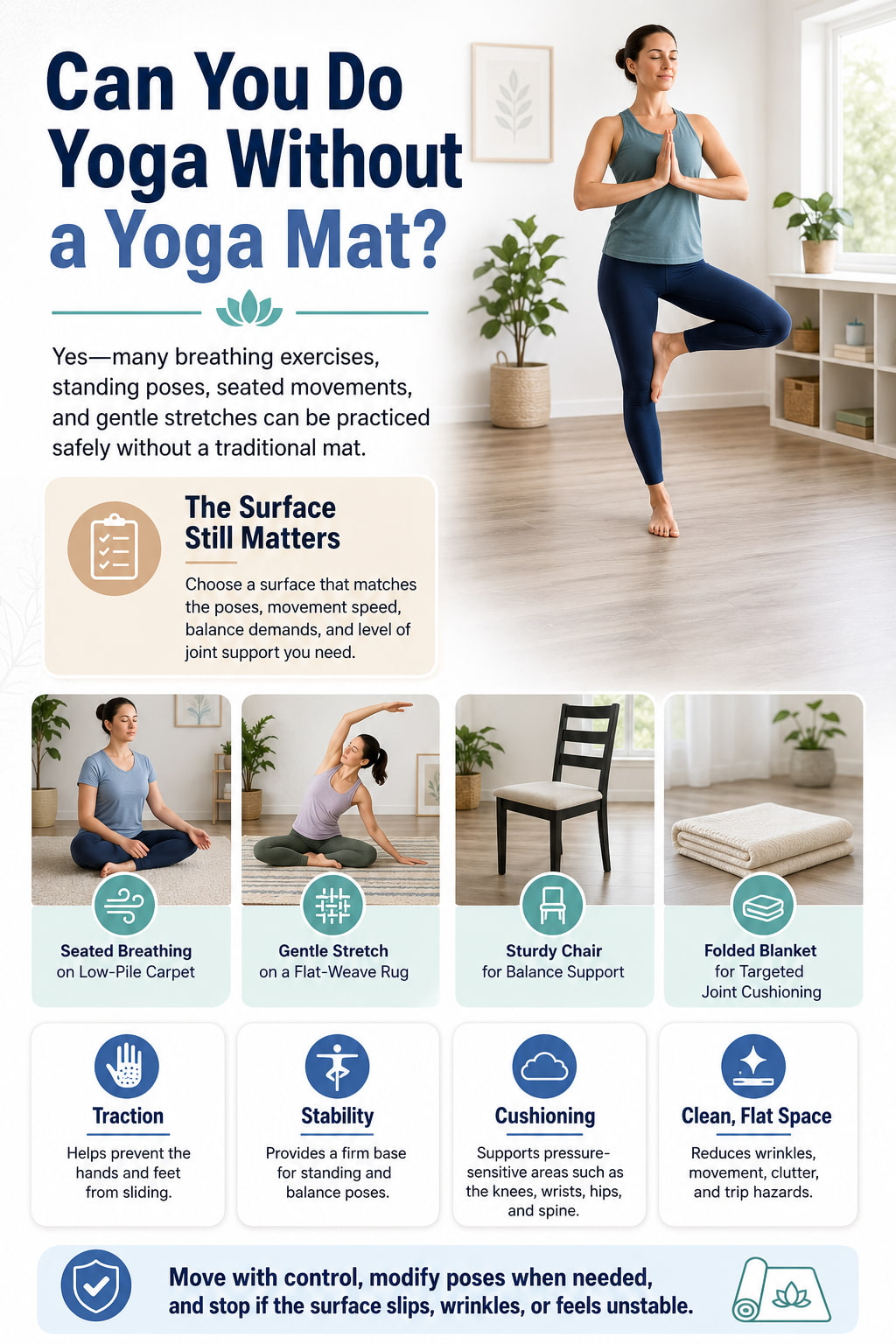
Yes, you can practice yoga without a traditional yoga mat. Yoga existed long before modern foam and rubber mats, and many breathing exercises, standing poses, seated movements, and gentle stretches can be performed on other surfaces.
The important question is not simply whether you can practice without a mat. It is whether your chosen surface is appropriate for the poses you plan to perform.
A yoga surface should provide four basic functions:
- Traction for your hands and feet
- Stability during standing and balance poses
- Cushioning for pressure-sensitive joints
- A clean, flat practice area without trip hazards
The National Center for Complementary and Integrative Health considers yoga generally safe for healthy people when it is performed properly. However, sprains and strains can occur, with the knees and lower legs among the commonly affected areas. That makes surface selection, controlled movement, and appropriate pose modifications important.
Best Yoga Mat Alternatives at a Glance
| Alternative | Best for | Cushioning | Standing stability | Main caution |
|---|---|---|---|---|
| Low-pile carpet | Gentle home yoga | Moderate | Moderate | Plush carpet can feel unstable |
| Secured flat-weave rug | Slow standing sequences | Low to moderate | Good | Must have nonslip backing |
| Cotton yoga rug | Travel and traditional practice | Low | Moderate | May slide on smooth flooring |
| Exercise or Pilates mat | Floor-based poses | High | Moderate | Thick foam may wobble |
| Interlocking foam tiles | Dedicated home area | Moderate to high | Moderate | Seams can separate |
| Rubber gym flooring | Standing and strength-focused yoga | Low to moderate | Very good | May need extra knee padding |
| Folded blanket | Restorative and seated yoga | High | Poor | Unsafe for active standing flows |
| Large towel over carpet | Gentle temporary practice | Low | Low to moderate | Can wrinkle or stretch |
| Grippy yoga towel | Travel or sweaty practice over a secure base | Low | Moderate | Often designed to cover a mat |
| Clean hard floor with padding | Static standing poses | Very low | Very good | Too hard for kneeling |
| Stable chair setup | Chair yoga and balance support | Not applicable | Very good | Chair must not move |
How to Choose a Safe Yoga Mat Alternative
Before practicing, evaluate the complete setup rather than judging the material by softness alone.
Check the Grip
Place both hands on the surface and gently push them away from each other. Then stand with your feet apart and lightly press outward through your feet.
The surface should not slide, stretch, wrinkle, or separate. Your hands and feet should also remain secure.
Avoid practicing on a wet, dusty, polished, or oily floor. The CDC identifies loose mats, rugs, and slippery surfaces as common contributors to slips, trips, and falls.
Check the Firmness
A surface can be comfortable but still be too soft for balance poses. Thick foam, deep carpet, and mattresses allow the feet and ankles to sink or wobble.
Research comparing foam with solid standing surfaces found greater body-movement variation on foam. This does not mean foam is always unsafe, but it supports using a firmer surface when balance and precise foot control are priorities.
Check the Cushioning
Kneel on the surface for several seconds. If you feel uncomfortable pressure in your kneecaps, ankles, hips, wrists, or spine, add targeted cushioning or choose a more supportive option.
Extra cushioning should be placed only where you need it. A folded towel under the knees is often more stable than covering the entire floor with a thick, loose blanket.
Check the Size
Your surface should be large enough to accommodate your full body and normal hand and foot positions. Avoid small bathmats or towels that require you to place one foot on the fabric and the other on a different surface.
Check for Trip Hazards
Remove furniture, shoes, cables, bags, and other objects from the practice area. Flatten curled edges and secure rugs with a proper nonslip pad or backing.
The CDC home fall-prevention checklist recommends removing unsecured throw rugs or using nonslip backing to prevent movement.
11 Safe Yoga Mat Alternative Options
These 11 yoga mat alternatives can make home practice more comfortable, stable, and accessible when a traditional mat is unavailable. Choose the option that best matches your floor, yoga style, joint comfort, and need for grip.
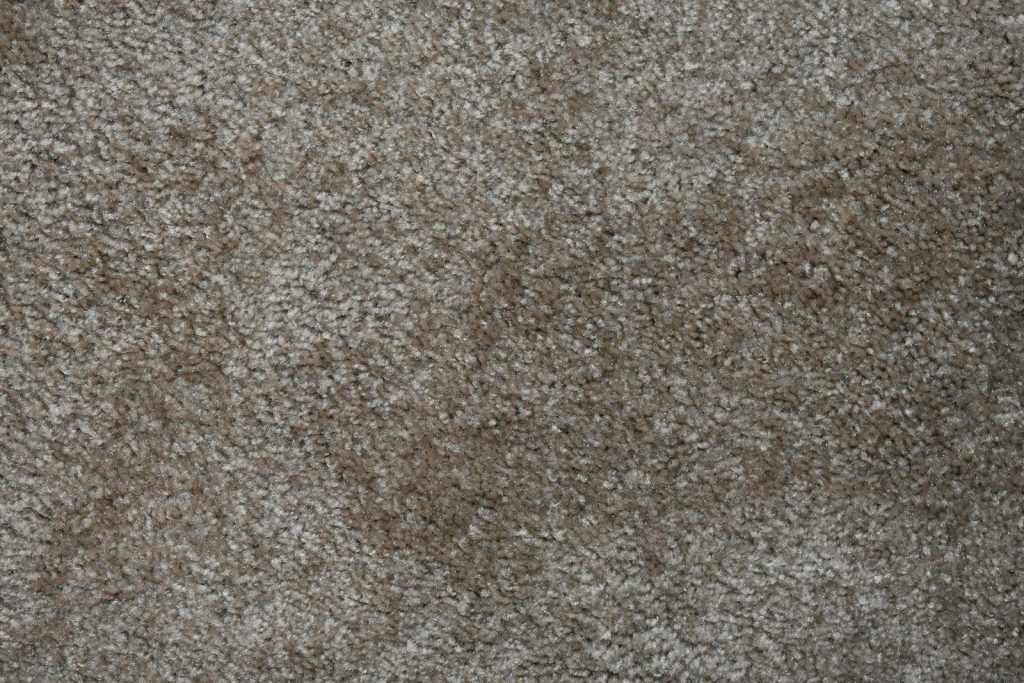
1. Firm, Low-Pile Carpet
Best for: Gentle Hatha yoga, beginner sessions, seated poses, kneeling positions, and restorative practice.
Firm wall-to-wall carpet is one of the most convenient yoga mat alternatives because it already covers a large area and is less likely to move than a loose towel or blanket.
Low-pile carpet provides some cushioning for the knees and spine while remaining relatively firm. It can work for poses such as Mountain Pose, Warrior I, Warrior II, seated twists, Child’s Pose, and gentle hip stretches.
Deep or plush carpet is less suitable for balance poses because the feet can sink unevenly. It may also make sliding movements, such as stepping from Downward-Facing Dog into a lunge, harder to control.
How to use it safely: Vacuum the area, check that the carpet is dry, and test your hand and foot grip before beginning. Practice barefoot unless you need medically appropriate footwear.
Common mistake: Assuming that all carpet is nonslip. Your hands may still slide forward even when the carpet itself remains stationary.
Best coaching cue: Keep transitions slow and place each hand or foot deliberately before shifting your weight.
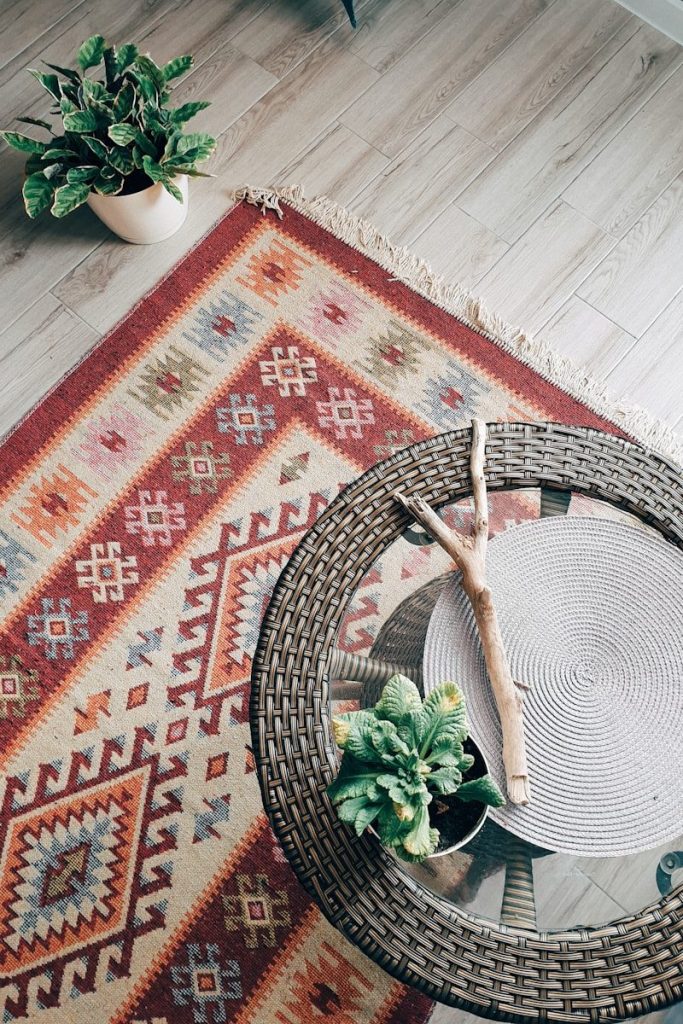
2. Secured Flat-Weave Area Rug
Best for: Slow standing sequences, mobility practice, gentle flows, and people who prefer a natural woven surface.
A flat-weave rug can provide a firmer base than plush carpet. It may be suitable for standing and seated poses when it is large enough, completely flat, and securely anchored.
The underside matters more than the appearance of the rug. A rug placed directly on smooth tile or hardwood may slide even when the top feels grippy.
Use a full-size nonslip rug pad that covers most of the underside. Do not rely on placing a heavy object on only one corner.
How to use it safely: Check for curled edges, raised seams, wrinkles, fringe, and movement between the rug and floor. Remove or secure any loose fringe before practicing.
Avoid for: Jumping transitions, sweaty hot yoga, fast vinyasa, or advanced arm balances unless the rug provides dependable traction and cannot move.
Common mistake: Practicing with one hand or foot near the edge. Stay within the center of the secured area.
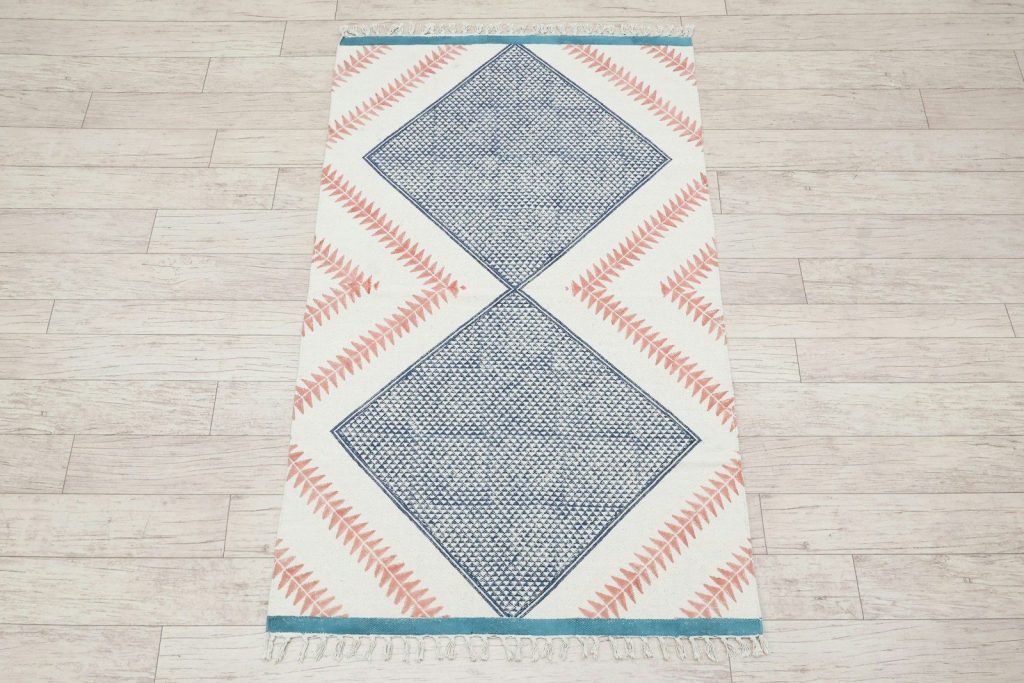
3. Cotton Yoga Rug or Tightly Woven Runner
Best for: Travel, traditional yoga practice, slow flows, seated yoga, and people who prefer a washable fabric surface.
A cotton yoga rug is usually thinner and firmer than an exercise mat. It offers a defined practice area without creating a thick layer between your feet and the floor.
Some cotton surfaces become more secure when slightly damp, while others feel slippery depending on the weave. Do not assume that every cotton rug provides the same grip.
A household runner may also work when it is wide enough for normal hand and foot placement. Narrow runners can force the body into an unnatural stance.
How to use it safely: Place it over low-pile carpet, rubber flooring, or a nonslip underlay. Smooth it out before every session and retest it after washing.
Avoid for: Fast transitions on polished flooring, jumping, or any movement that causes the fabric to stretch beneath you.
Practical tip: Choose a tightly woven design without raised decorative sections that could create uneven pressure under the hands.
4. Exercise or Pilates Mat
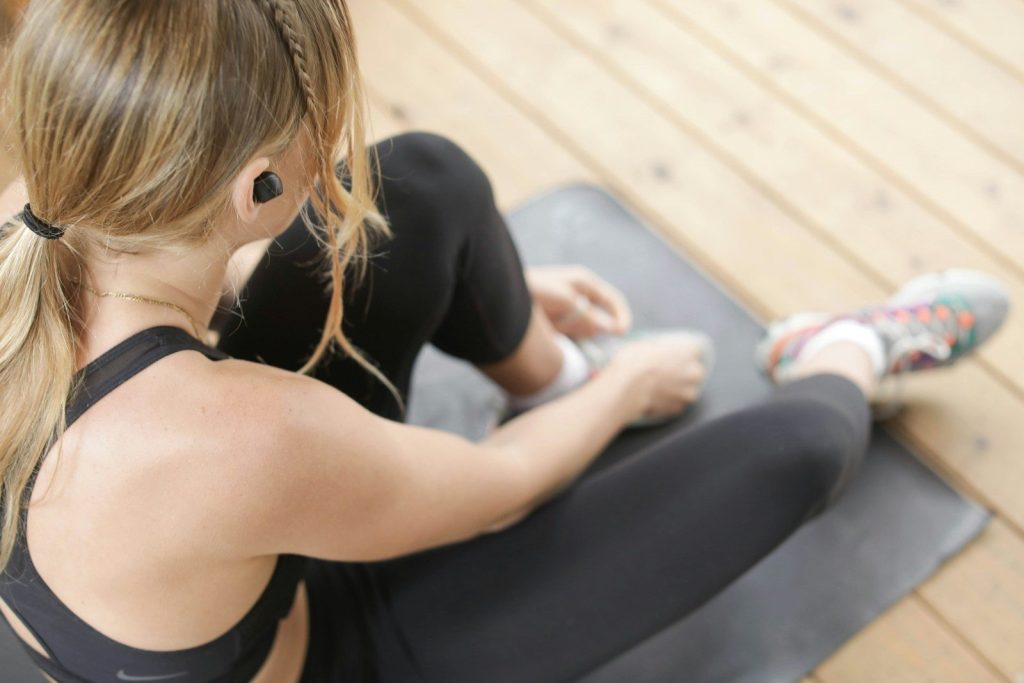
Best for: Floor-based yoga, restorative sessions, sensitive knees, stretching, and poses performed on the back or stomach.
An exercise or Pilates mat is usually thicker than a traditional yoga mat. That extra cushioning can make Supine Twist, Bridge Pose, Sphinx Pose, and kneeling positions more comfortable.
The disadvantage is reduced firmness. A very thick or soft mat may compress unevenly under the feet and make Tree Pose, Warrior III, or Half Moon Pose harder to stabilize.
How to use it safely: Choose a dense mat with a textured top and a bottom that stays anchored. Test whether your wrists sink excessively in tabletop or plank positions.
For mixed sessions, perform standing balance poses on a firm floor beside the mat, then return to the mat for kneeling and lying positions.
Common mistake: Buying the thickest available mat without considering balance. Thickness improves cushioning, but density and stability are equally important.
Best coaching cue: Spread the toes and maintain pressure through the heel, base of the big toe, and base of the little toe.
5. Interlocking Foam Floor Tiles
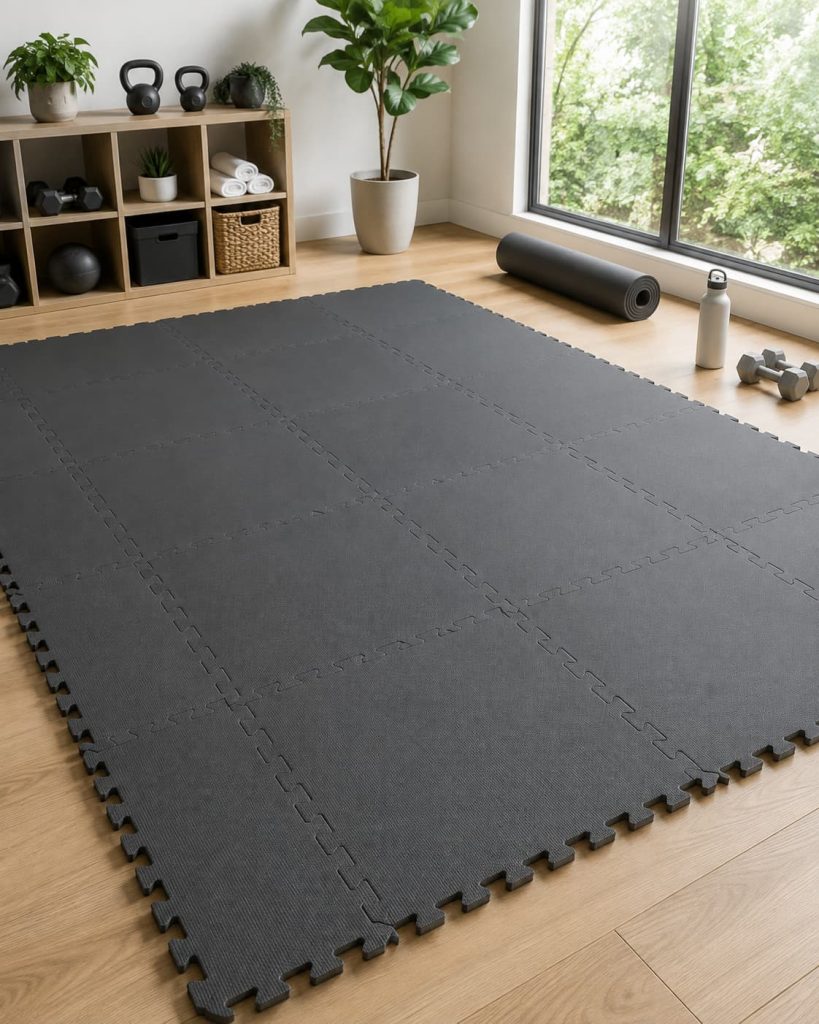
Best for: A semi-permanent home yoga area, floor-based mobility, gentle strength work, and shared workout spaces.
Interlocking foam tiles can cover more space than a standard yoga mat. They are useful when you want room to move sideways or perform longer sequences without stepping off the padded surface.
Choose tiles that connect tightly and do not separate under sideways pressure. Thin gaps can catch the toes, while raised corners can create trip hazards.
Because foam is compressible, softer tiles may make standing balance more challenging. Use a stable chair or wall for support until you understand how the surface responds.
How to use it safely: Install the tiles on a clean, level floor. Inspect every seam before practicing and replace damaged or permanently curled sections.
Avoid for: Fast pivoting, jumping, or advanced balance poses when the tiles shift, stretch, or feel spongy.
Practical tip: A larger continuous tile area is safer than a small square that ends directly beneath your normal foot placement.
6. Rubber Home-Gym Flooring
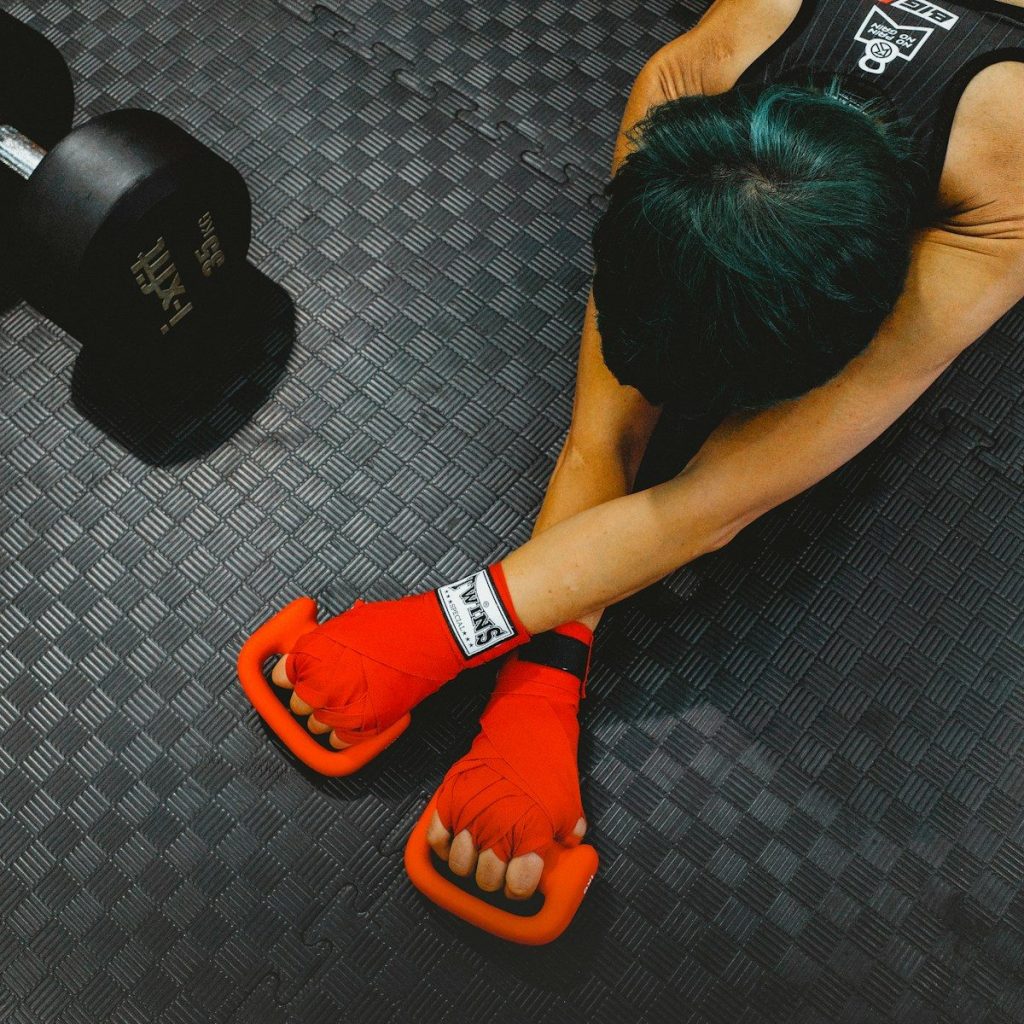
Best for: Standing yoga, strength-focused yoga, balance poses, active flows, and a dedicated workout room.
Dense rubber flooring provides a firm connection with the ground and usually offers better stability than thick carpet or soft foam. It can be a practical choice for yoga when the surface is clean, dry, level, and sufficiently grippy.
The main limitation is cushioning. Rubber gym flooring may protect the floor and provide some shock absorption, but it can still feel hard under the knees, elbows, hips, or spine.
How to use it safely: Add a folded towel or firm blanket under pressure-sensitive joints rather than adding a loose layer beneath the entire body.
Avoid for: Long kneeling or lying sequences without additional support.
Common mistake: Practicing on rubber flooring immediately after it has been cleaned. Wait until the surface is completely dry and confirm that no residue remains.
Best coaching cue: Maintain slow, controlled foot placement instead of twisting aggressively through a planted foot.
7. Folded Firm Cotton Blanket
Best for: Restorative yoga, Yin yoga, meditation, seated poses, kneeling support, and gentle floor stretching.
A firm cotton blanket is a useful yoga prop and temporary practice surface. It can support the knees in tabletop positions, raise the hips during seated poses, or cushion the spine during relaxation.
It is not a dependable all-purpose mat replacement for standing sequences. Loose blankets can wrinkle, slide, or bunch when you step across them.
How to use it safely: Fold the blanket into a compact rectangle and place it only beneath the body part that needs support. For example, put it beneath both knees during a low lunge or under the hips during Easy Pose.
If using the blanket for a fully seated practice, place it over carpet or another surface that prevents it from sliding.
Avoid for: Downward-Facing Dog, standing lunges, jumping transitions, and active flows on hardwood or tile.
Common mistake: Stacking so many folds that the knees or wrists become unstable.
8. Large Bath or Beach Towel Over Carpet
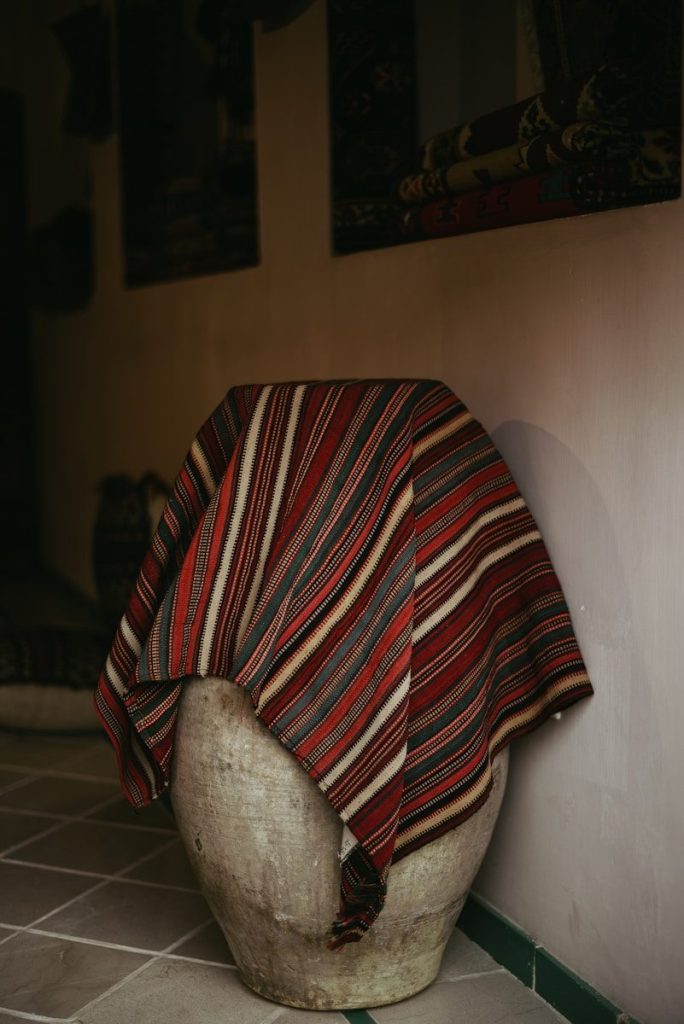
Best for: Travel, gentle stretching, seated movements, lying poses, and short temporary sessions.
A towel is easy to wash, store, and carry. It can also create a cleaner barrier between your body and a carpeted floor.
However, an ordinary bath or beach towel does not provide the same traction or structural support as a yoga mat. It may stretch under the feet, slide under the hands, or form wrinkles as you move.
The American Council on Exercise found that even purpose-made yoga towels can vary in grip and may move or bunch during transitions. Yoga towels are commonly designed to be placed over a mat rather than used loose on a smooth floor.
How to use it safely: Place a large towel over firm, low-pile carpet or a dependable nonslip underlay. Keep the routine slow and mostly seated or lying.
Avoid for: Fast Sun Salutations, plank transitions, arm balances, sweaty standing practice, or use directly on polished flooring.
Best coaching cue: Stop and flatten the towel as soon as a wrinkle appears.
9. Full-Length Grippy Yoga Towel
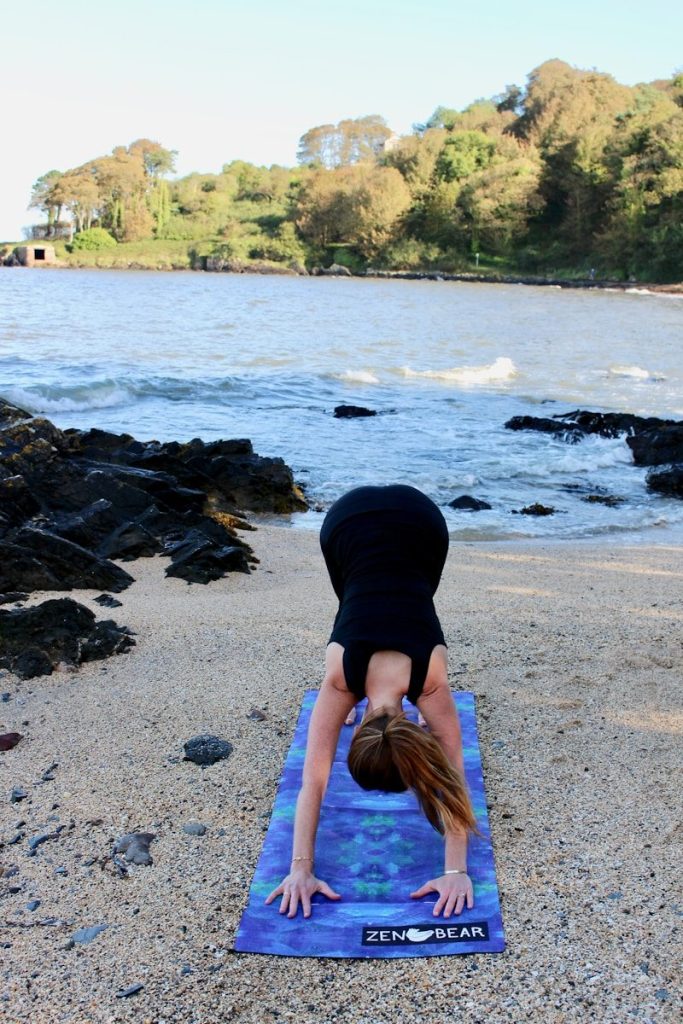
Best for: Travel, washable practice surfaces, perspiration management, and use over a secure base.
A purpose-made yoga towel differs from a regular bath towel because it may include silicone dots, textured fabric, corner pockets, or other grip features.
Even so, many yoga towels are intended to cover a traditional mat. A grippy top does not guarantee that the underside will remain secure on hardwood, laminate, or tile.
How to use it safely: Follow the manufacturer’s intended use and test both sides of the setup. If the towel is designed as a mat overlay, place it over a stable exercise mat, dense carpet, or another compatible base.
Some towels develop more surface grip after absorbing moisture, but intentionally wetting a towel should not be used as a solution for an unsecured underside.
Avoid for: Any movement that causes the towel to fold, stretch, or migrate across the floor.
Practical tip: Check the towel after every transition until you know how it behaves on your specific surface.
10. Clean, Dry Hard Floor With Targeted Padding
Best for: Mountain Pose, standing breathing exercises, supported balances, slow standing sequences, and short mobility sessions.
A clean hardwood, laminate, or tile floor can provide excellent firmness for balance. However, it offers almost no cushioning and may become slippery from dust, moisture, skin products, or sweat.
Hard flooring is not the best choice for repeated kneeling, rolling, falling, jumping, or long periods on the back.
How to use it safely: Clean and dry the floor, practice barefoot, and use a folded towel or firm pad beneath the knees when required. Keep transitions slow and avoid stepping onto loose fabric from the hard floor.
Use a wall or stable chair when learning balance poses. The NHS balance guidance recommends practicing near a wall or stable chair when additional support may be needed.
Avoid for: Sweaty practice, kneeling without padding, jumping, inversions, or poses with a meaningful risk of falling.
Common mistake: Wearing smooth socks, which can reduce traction on polished flooring.
11. Stable Chair-Yoga Setup
Best for: Beginners, older adults, small spaces, limited floor access, balance support, or anyone who finds kneeling uncomfortable.
Chair yoga allows you to practice breathing, spinal mobility, side bends, twists, hip movements, and supported standing poses without needing a floor mat.
Use a solid, stable chair without wheels. The NHS sitting-exercise guidance specifically recommends a stable, non-wheeled chair that allows the feet to remain flat on the floor.
How to use it safely: Place the chair on a level, nonslip surface. For standing support, position the back of the chair against a wall so it cannot slide away.
Avoid: Lightweight folding chairs that wobble, chairs with wheels, unstable stools, or chairs with thick cushions that make sitting balance difficult.
Common mistake: Pulling backward on the chair during a balance pose. Use it for light support rather than hanging your full body weight from it.
Best coaching cue: Keep one or both hands resting lightly on the chair until your balance feels steady.
Which Yoga Mat Alternative Is Best for You?
Best Overall Temporary Alternative
A dense exercise or Pilates mat is the closest general-purpose substitute. It provides a defined practice space, cushioning, and some traction.
Choose a model that is firm rather than excessively soft.
Best Budget Option
Firm, low-pile wall-to-wall carpet can work well for gentle home yoga without requiring additional equipment.
Best for Sensitive Knees
Use a dense exercise mat or rubber flooring with a folded towel placed directly beneath the knees. Targeted padding protects the joint without making the entire body unstable.
Best for Standing Balance
Dense rubber gym flooring or a clean, dry, nonslick hard floor provides a firm base. Use a wall or chair when practicing unfamiliar balance poses.
Best for Restorative Yoga
A firm folded blanket over carpet works well for seated, lying, and supported positions.
Best for Travel
A cotton yoga rug or grippy full-length towel is easy to pack. It still needs a secure base, so test the hotel carpet or flooring before beginning.
Best for People Who Cannot Use the Floor
A stable chair setup allows a complete gentle session without kneeling or lying down.
Choosing an Alternative for Different Yoga Styles
Restorative and Yin Yoga
Prioritize cushioning and comfort. A folded blanket, exercise mat, carpet, or secured rug can work well because these practices use slow transitions and longer supported holds.
Gentle Hatha Yoga
Use a surface that balances cushioning with stability. Low-pile carpet, a dense exercise mat, rubber flooring, or a secured flat-weave rug may be appropriate.
Vinyasa Yoga
Vinyasa includes repeated transitions between standing, plank, lunging, and floor positions. A purpose-built nonslip yoga mat is usually safer than a loose blanket or towel.
Modify the session by removing jumps and slowing each step if you are using a temporary substitute.
Hot or Sweaty Yoga
Sweat can reduce traction on skin, flooring, and fabric. A proper yoga mat combined with a compatible yoga towel is generally a more dependable setup than a household towel alone.
Standing Balance Practice
Choose a firm, level surface. Avoid deep carpet, thick foam, mattresses, or multiple blanket layers.
Chair Yoga
Use a stable non-wheeled chair on a level surface. A mat is not essential unless you need extra traction beneath the chair.
Surfaces to Avoid for Yoga
Some household surfaces may feel comfortable but create unnecessary movement or trip risks.
Avoid using:
- A bed or mattress
- Loose throw rugs
- Unsecured blankets on tile or hardwood
- Small bathmats
- Wet grass
- Sand or uneven outdoor ground
- Slick tile
- Damaged foam tiles
- Rugs with curled corners
- Towels that do not accommodate your whole body
- Any surface surrounded by sharp furniture or clutter
A mattress is especially unsuitable for standing yoga because it is soft, uneven, elevated, and surrounded by edges from which you could fall.
Five-Minute Safety Test Before Practicing
Complete this check before using any yoga mat alternative:
- Flatten the surface. Remove wrinkles, gaps, raised seams, and curled corners.
- Test the base. Push the material sideways with one foot. It should not move.
- Test hand traction. Place your hands down and gently press them forward and outward.
- Test foot traction. Stand with your feet apart and lightly push outward without allowing them to slide.
- Test cushioning. Kneel briefly and confirm that the pressure is comfortable.
- Test balance. Stand near a wall and lift one heel or foot for a few seconds.
- Check the area. Remove furniture, cords, pets, toys, and other obstacles.
Do not begin an active sequence if the surface fails any part of the test. Choose another setup or limit your practice to stable seated movements.
Beginner Mat-Free Home Yoga Routine
This routine uses a firm floor and a stable, non-wheeled chair. It avoids kneeling, jumping, and rapid transitions.
Frequency: Two to four times per week
Effort level: RPE 3–5 out of 10
Rest: Pause for 15–30 seconds whenever needed
Duration: Approximately 10–15 minutes
1. Seated Breathing
Sit tall with both feet flat on the floor. Rest your hands on your thighs and take five slow breaths. Keep your jaw, neck, and shoulders relaxed.
2. Seated Cat-Cow
Place your hands on your thighs. Gently round your upper and middle back as you exhale. Lift your chest slightly as you inhale without forcing your lower back.
Complete 6–8 controlled repetitions.
3. Seated Side Bend
Reach one arm overhead and gently lean away from it. Keep both sitting bones in contact with the chair.
Hold for 15–20 seconds per side.
4. Chair-Supported Half Sun Salutation
Stand behind the chair with your hands resting lightly on the backrest.
Inhale and stand tall. Exhale and hinge forward slightly while keeping your spine long. Inhale and return to standing.
Complete 5 slow repetitions.
5. Supported Split-Stance Stretch
Hold the chair and step one foot backward. Keep both feet facing forward and gently bend the front knee.
Hold for 15–20 seconds per side. Shorten the stance if you feel unstable.
6. Chair-Supported Warrior II
Stand beside the chair and take a comfortable wide stance. Turn one foot outward, bend that knee slightly, and extend the free arm to the opposite side.
Hold for 15–20 seconds per side.
7. Supported Tree Pose
Hold the chair with one hand. Place the opposite foot against the ankle or lower calf of the standing leg. Do not press the foot directly against the knee.
Hold for 10–20 seconds per side.
8. Seated Twist
Sit tall and rotate gently through your upper back. Keep both feet planted and avoid pulling yourself deeper with your arms.
Hold for 15–20 seconds per side.
9. Seated Relaxation
Sit comfortably, close your eyes if that feels safe, and take five slow breaths.
Progress the routine by adding a few seconds to the holds or reducing hand support. Do not progress by moving onto a less stable surface.
Common Yoga Mat Alternative Mistakes
Choosing Softness Over Stability
A very soft surface may feel good under the knees but make the ankles and wrists less stable. Add cushioning only where you need it.
Using a Loose Towel on Hard Flooring
A towel can slide, wrinkle, or stretch under load. Place it over carpet or a compatible nonslip base and use it mainly for gentle floor work.
Ignoring the Bottom Surface
The upper surface may feel grippy while the material itself slides across the floor. Test the connection between every layer.
Practicing Too Close to Furniture
Leave enough space to step forward, backward, and sideways without hitting a table, bedframe, shelf, or wall.
Using the Same Setup for Every Yoga Style
A blanket that works for restorative yoga may not be appropriate for vinyasa. Match the surface to the speed, poses, sweat level, and balance demands of the session.
Continuing After the Surface Moves
Stop immediately when a rug, towel, tile, or blanket shifts. Flatten or replace it before continuing.
When a Dedicated Yoga Mat Is the Safer Choice
A temporary alternative may be enough for occasional gentle practice. A purpose-built yoga mat becomes more useful when you practice frequently or perform movements that require dependable grip.
Consider using a proper mat for:
- Fast vinyasa sequences
- Hot or sweaty yoga
- Repeated plank and Downward-Facing Dog transitions
- Arm balances
- Inversions
- Jumping transitions
- Regular home practice
- Sessions that combine standing, kneeling, and lying poses
- Situations in which your household surface repeatedly slips or bunches
A proper mat does not guarantee safety, but it provides a more consistent surface than many loose household materials.
Safety Tips for Home Yoga
Begin with gentle movements and build up gradually. Do not force a pose or continue stretching simply to match an instructor or image.
Use a qualified yoga instructor when learning unfamiliar positions. People who are pregnant, older, recovering from an injury, or living with a health condition may need individualized pose modifications. The NCCIH advises discussing individual needs with a health professional and instructor when health concerns may affect practice.
Stop exercising if you experience sharp pain, numbness, dizziness, chest pain, loss of balance, unusual shortness of breath, or other concerning symptoms. Seek professional help when symptoms are severe, persistent, or unusual.
Frequently Asked Questions
Can I use a towel instead of a yoga mat?
A towel can work for gentle seated, lying, or restorative poses when placed over carpet or a dependable nonslip base. It is not a good standalone substitute for fast flows or standing poses on hardwood or tile because it may move or wrinkle.
Is it safe to practice yoga on carpet?
Firm, low-pile carpet can be suitable for gentle yoga. Deep carpet may reduce stability, and some carpet fibers provide limited hand traction. Test the surface before performing planks, lunges, or balance poses.
Can I do yoga directly on hardwood flooring?
A clean, dry hardwood floor may work for static standing poses and balance exercises. Add targeted padding for the knees and avoid fast transitions, sweaty sessions, jumping, or positions with a meaningful risk of falling.
Is a Pilates mat suitable for yoga?
Yes, especially for floor-based and restorative poses. Pilates mats are often thicker than yoga mats, so they may feel less stable during standing balance work. Choose a dense model and step onto a firmer surface for difficult balances when necessary.
What is the best yoga mat alternative for bad knees?
A dense exercise mat with a folded towel under the knees provides cushioning without making the entire surface excessively soft. Knee discomfort can have many causes, so persistent or worsening pain should be assessed by a qualified health professional.
Can I use a blanket for yoga?
A firm blanket is useful for seated poses, restorative positions, meditation, and targeted joint support. Do not use a loose blanket as the main surface for active standing sequences on a smooth floor.
Can I do vinyasa yoga without a mat?
It is possible, but vinyasa requires dependable traction during repeated transitions. A secured, nonslip surface is important. Avoid loose towels and blankets, eliminate jumping, slow the transitions, and use a proper yoga mat when the substitute moves or feels slippery.
Conclusion
The best yoga mat alternative is not necessarily the softest item in your home. It is the option that stays flat, supports your planned poses, provides enough joint comfort, and gives your hands and feet dependable traction.
Use firm carpet, a secured rug, dense exercise mat, rubber flooring, or a chair setup for most gentle home sessions. Reserve loose towels and blankets for seated, lying, or restorative work unless they are securely anchored.
Test your setup before every session, move slowly, and change surfaces immediately if anything slips, wrinkles, separates, or feels unstable.
This content is for informational purposes only and is not a substitute for professional medical advice.