
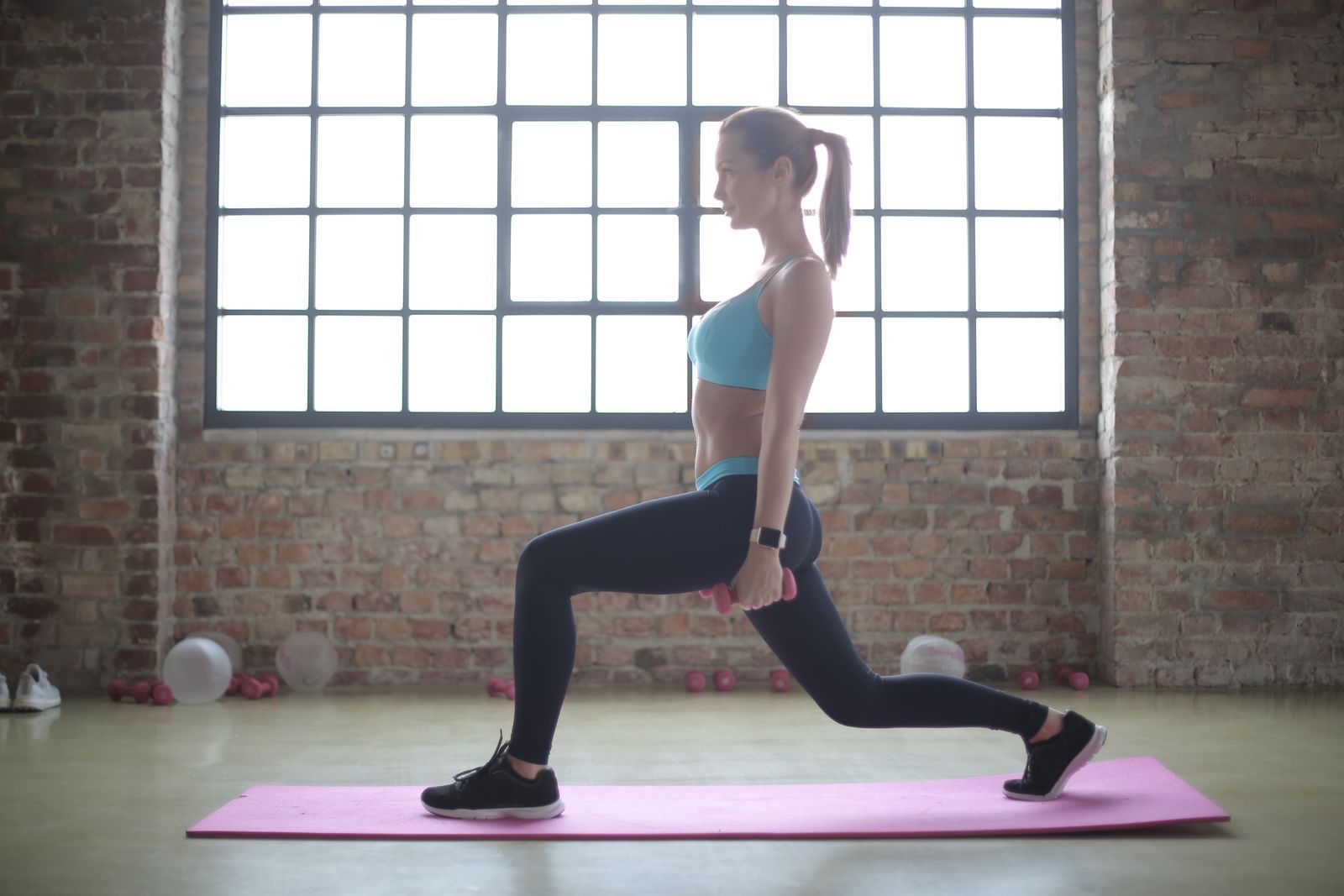
The best glute exercises for women include glute bridges, hip thrusts, Romanian deadlifts, squats, lunges, step-ups, and hip abduction movements. These exercises can help build stronger glutes, improve lower-body strength, and support hip stability.
You don’t need expensive equipment or a complicated routine to get started. Whether you train at home or in the gym, this guide covers 11 effective exercises, proper form, muscles worked, common mistakes, and simple workouts for different fitness levels.
11 Best Glute Exercises for Women
The following exercises target your glutes through different movement patterns. Some are ideal for beginners, while others allow you to increase resistance as you get stronger.
You don’t need to perform all 11 in one workout. Choosing four or five complementary exercises is usually more practical.
1. Glute Bridge
The glute bridge is one of the easiest ways to start strengthening your glutes without equipment. It teaches controlled hip extension and helps beginners learn to use their glutes without excessive lower-back movement.
Best for: Beginners, home workouts, and learning proper hip extension.
Muscles worked: Gluteus maximus, hamstrings, and core stabilizers.
Equipment: Exercise mat (optional).
Sets, reps, and rest: 2–3 sets of 12–15 repetitions, resting 45–60 seconds.
How to Do It:
- Lie on your back with your knees bent, feet flat on the floor, and arms resting beside your body.
- Position your feet hip-width apart and gently tighten your abdominal muscles.
- Press through your feet and squeeze your glutes to lift your hips.
- Raise your hips until your shoulders, hips, and knees form approximately a straight line.
- Pause briefly, then lower your hips slowly.
Common mistakes: Avoid pushing your hips excessively high, arching your lower back, or lifting through your toes. Keep your ribs controlled and focus on moving through your hips.
Progression: Once bodyweight bridges become easy, place a dumbbell securely across your hips or progress to a single-leg glute bridge.
2. Barbell Hip Thrust
The barbell hip thrust allows you to train hip extension with progressively heavier resistance. It is particularly useful for women whose main goal is increasing glute strength and muscle size.
Unlike the floor bridge, your upper back rests against a bench, allowing a different hip movement range and convenient loading.
Best for: Progressive glute strength and muscle development.
Muscles worked: Gluteus maximus, with assistance from the hamstrings and other hip and core stabilizers.
Equipment: Barbell, barbell pad, weight plates, and a stable bench.
Sets, reps, and rest: 3 sets of 8–12 repetitions, resting 90–150 seconds.
How to Do It:
- Sit on the floor with your upper back against a secure bench and a padded barbell across your hip crease.
- Bend your knees and plant both feet firmly on the floor, approximately hip-width apart.
- Brace your core and press through your feet to lift your hips, allowing your upper back to pivot against the bench.
- Raise your hips until your torso is approximately parallel to the floor, with your knees bent around 90 degrees.
- Squeeze your glutes without arching your lower back, then lower the bar under control.
Common mistakes: Avoid lifting the chin excessively, flaring the ribs, bouncing the bar, or using a weight that prevents full, controlled hip extension.
Beginner modification: Practice bodyweight hip thrusts against a secure bench before adding a barbell. At home, a weighted floor bridge is a practical alternative.
3. Dumbbell Romanian Deadlift
The dumbbell Romanian deadlift strengthens the glutes and hamstrings through a hip-hinge movement.
It is especially useful because the glutes must produce force as you extend your hips from a forward-leaning position. The dumbbells also make it easy to increase resistance gradually.
Best for: Developing the glutes, hamstrings, and hip-hinge strength.
Muscles worked: Hamstrings, gluteus maximus, adductor magnus, spinal stabilizers, and core.
Equipment: Two dumbbells.
Sets, reps, and rest: 2–3 sets of 8–12 repetitions, resting 90–120 seconds.
How to Do It:
- Stand with your feet hip-width apart, holding a dumbbell in each hand in front of your thighs.
- Keep your knees slightly bent and brace your abdominal muscles.
- Push your hips backward, allowing your torso to lean forward while maintaining a neutral spine.
- Lower the dumbbells close to your legs until you feel a comfortable stretch in your hamstrings.
- Press through your feet and extend your hips to return to standing.
Common mistakes: Avoid rounding your back, turning the movement into a squat, or lowering the dumbbells farther than your mobility allows.
Beginner modification: Practice the hip hinge without weights first. Add light dumbbells once you can maintain your back position throughout the movement.
4. Dumbbell Goblet Squat
The goblet squat strengthens several lower-body muscles while challenging your glutes during the upward phase.
Holding a dumbbell in front of your chest can also help you maintain balance and control when learning to squat.
Best for: Beginners learning weighted squats and women wanting a combined glute and leg exercise.
Muscles worked: Quadriceps, gluteus maximus, adductors, and core stabilizers.
Equipment: One dumbbell.
Sets, reps, and rest: 2–3 sets of 8–12 repetitions, resting 90 seconds.
How to Do It:
- Stand with your feet approximately shoulder-width apart, holding one dumbbell vertically near your chest.
- Brace your core and turn your toes slightly outward if comfortable.
- Bend your hips and knees together to lower into a squat.
- Keep your heels planted and your knees moving in the direction of your toes.
- Push through your feet to return to standing.
Common mistakes: Avoid allowing your heels to lift, collapsing your knees inward, or letting the dumbbell drift away from your chest.
Beginner modification: Start with a bodyweight squat or squat toward a stable chair before adding a dumbbell.
5. Reverse Lunge
Reverse lunges strengthen your glutes and thighs while challenging balance and single-leg control.
Stepping backward can feel more manageable than stepping forward for some beginners because the front foot remains planted.
Best for: Single-leg strength, coordination, and home workouts.
Muscles worked: Gluteus maximus, quadriceps, hamstrings, and hip stabilizers.
Equipment: None required.
Sets, reps, and rest: 2–3 sets of 8–10 repetitions per leg, resting 60–90 seconds.
How to Do It:
- Stand upright with your feet hip-width apart and your core gently braced.
- Step one foot backward, landing on the ball of your rear foot.
- Bend both knees to lower into a lunge while keeping your front foot planted.
- Lower within a comfortable range while maintaining control of your hips and torso.
- Push through your front foot to return to standing, then alternate legs.
Common mistakes: Avoid stepping directly behind your front foot as if walking on a tightrope, allowing your front knee to collapse inward, or pushing excessively with your rear leg.
Progression: Hold a dumbbell in each hand once you can perform controlled bodyweight repetitions.
6. Bulgarian Split Squat
The Bulgarian split squat is a challenging single-leg exercise that trains your glutes and quadriceps through a substantial range of motion.
Because most of the effort comes from your front leg, it can help develop unilateral strength without requiring extremely heavy weights.
Best for: Intermediate exercisers seeking greater glute and leg strength.
Muscles worked: Gluteus maximus, quadriceps, adductors, and hip stabilizers.
Equipment: Stable bench or platform; dumbbells optional.
Sets, reps, and rest: 2–3 sets of 8–10 repetitions per leg, resting 90–120 seconds.
How to Do It:
- Stand in front of a secure bench and place the top of one foot on the bench behind you.
- Position your front foot far enough forward to lower comfortably, keeping some side-to-side distance between your feet for balance.
- Brace your core and bend your front knee to lower your hips.
- Allow a slight forward torso lean while keeping your back controlled and front foot planted.
- Push through your front foot to return to standing, then complete the set before switching legs.
Common mistakes: Avoid placing your front foot too close to the bench, bouncing at the bottom, or forcing a range of motion that makes you lose balance.
Beginner modification: Start with a regular split squat with both feet on the floor. Use light support for balance if needed.
7. Step-Up
Step-ups strengthen your glutes while practicing a movement similar to climbing stairs.
They are particularly useful for improving single-leg control and everyday lower-body strength. A sturdy, appropriately sized step makes them accessible for home or gym workouts.
Best for: Functional glute strength, balance, and lower-body coordination.
Muscles worked: Gluteus maximus, quadriceps, hamstrings, and hip stabilizers.
Equipment: Sturdy step or exercise box.
Sets, reps, and rest: 2–3 sets of 8–12 repetitions per leg, resting 60–90 seconds.
How to Do It:
- Stand facing a stable, nonslip step or low exercise box.
- Place your entire right foot on the platform.
- Press through your right foot to lift your body upward, minimizing assistance from the trailing leg.
- Straighten your supporting leg and establish balance at the top.
- Step down slowly and repeat before switching legs.
Common mistakes: Avoid pushing off forcefully with the trailing foot, letting your front knee collapse inward, or using a platform too high to control safely.
Progression: Gradually add dumbbells or use a slightly higher step once you can complete every repetition with good balance.
8. Donkey Kick (Quadruped Hip Extension)
The donkey kick is a simple floor exercise that emphasizes hip extension without requiring weights.
It works well as a beginner exercise, warm-up movement, or light accessory exercise after squats and lunges.
Best for: Beginner glute isolation and no-equipment workouts.
Muscles worked: Primarily gluteus maximus, with assistance from core and hip stabilizers.
Equipment: Exercise mat (optional).
Sets, reps, and rest: 2 sets of 12–15 repetitions per leg, resting 30–60 seconds.
How to Do It:
- Begin on your hands and knees, with your hands beneath your shoulders and knees beneath your hips.
- Gently tighten your abdominal muscles and keep your spine neutral.
- Keep one knee bent approximately 90 degrees and lift that thigh backward and upward.
- Stop when your thigh reaches approximately torso level, without rotating your hips or arching your back.
- Lower your knee slowly and repeat before switching sides.
Common mistakes: Avoid swinging your leg, twisting your pelvis, or raising your foot so high that your lower back begins to arch.
Progression: Add a small amount of resistance with suitable equipment only after mastering the bodyweight movement.
9. Banded Lateral Walk
Banded lateral walks strengthen the muscles around the outer hips, particularly those involved in hip abduction and pelvic control.
They complement hip thrusts and squats because they challenge the glutes in a sideways movement rather than primarily extending the hips.
Best for: Outer-hip strength, hip stability, and accessory glute training.
Muscles worked: Gluteus medius, gluteus minimus, and other hip stabilizers.
Equipment: Mini-loop resistance band.
Sets, reps, and rest: 2 sets of 10–15 steps in each direction, resting 45–60 seconds.
How to Do It:
- Place a light mini-loop resistance band around your ankles.
- Stand with your feet hip-width apart and slightly bend your knees and hips.
- Keep your torso steady and take a small step sideways against the band’s resistance.
- Bring your trailing foot toward the leading foot without allowing the band to become completely slack.
- Continue stepping sideways, then reverse direction.
Common mistakes: Avoid dragging your feet, rocking your torso from side to side, or allowing your knees to collapse inward.
Beginner modification: Use a lighter band or position it above your knees to reduce the challenge.
10. Side-Lying Hip Abduction
Side-lying hip abduction is an accessible exercise for strengthening the outer hip muscles.
It requires little space or equipment and can be especially helpful for beginners who find standing balance exercises challenging.
Best for: Gluteus medius strengthening and simple home workouts.
Muscles worked: Gluteus medius, gluteus minimus, and assisting hip abductors.
Equipment: Exercise mat (optional).
Sets, reps, and rest: 2 sets of 12–20 repetitions per leg, resting 30–60 seconds.
How to Do It:
- Lie on your right side with your head supported and your bottom knee slightly bent.
- Keep your left leg straight and position your hips directly above each other.
- Point the toes of your upper foot forward and move your upper leg slightly behind your torso.
- Lift the upper leg in a controlled motion without rolling your pelvis backward.
- Lower slowly, complete your repetitions, and switch sides.
Common mistakes: Avoid turning your toes toward the ceiling, swinging your leg forward, or lifting so high that your pelvis rotates.
Progression: Add a light ankle weight or suitable resistance once bodyweight repetitions become easy.
11. Cable Glute Kickback
The cable glute kickback provides adjustable resistance for training hip extension.
It works well toward the end of a gym workout because you can focus on moving one leg at a time without having to support a heavy barbell.
Best for: Gym-based glute isolation and controlled resistance training.
Muscles worked: Gluteus maximus, with assistance from hamstrings and pelvic stabilizers.
Equipment: Cable machine with a low pulley and ankle cuff.
Sets, reps, and rest: 2–3 sets of 10–15 repetitions per leg, resting 45–75 seconds.
How to Do It:
- Attach an ankle cuff to a low cable pulley and secure it around one ankle.
- Face the machine, hold the frame for support, and step backward until the cable has light tension.
- Soften your supporting knee, lean forward slightly at the hips, and brace your core.
- Extend the working leg backward by squeezing your glute, keeping your pelvis stable.
- Return slowly without allowing the weight stack to pull your leg forward uncontrollably.
Common mistakes: Avoid swinging the leg, rotating the hips, using excessive weight, or arching the lower back to lift your foot higher.
Home alternative: A securely anchored resistance band can provide a similar hip-extension movement, although the setup and resistance will differ.
Which Glute Muscles Do These Exercises Work?
Your glutes consist of three main muscles, each contributing to hip movement and lower-body stability.
According to the Cleveland Clinic’s guide to gluteal muscles, these muscles work together during activities such as standing, walking, running, and climbing stairs.
| Glute muscle | Main function | Useful exercises |
|---|---|---|
| Gluteus maximus | Hip extension and powerful lower-body movements | Hip thrust, glute bridge, Romanian deadlift, squat |
| Gluteus medius | Hip abduction and pelvic stabilization | Banded lateral walk, side-lying hip abduction, step-up |
| Gluteus minimus | Assists hip abduction and hip stabilization | Side-lying hip abduction, lateral walks, single-leg exercises |
No single exercise perfectly isolates one glute muscle. The muscles cooperate during movement, so combining different exercise patterns is more useful than attempting to train each muscle completely separately.
How to Build a Glute Workout at Home or the Gym
You don’t need all 11 exercises in one session. Choose movements that cover hip extension, a squat or lunge pattern, and outer-hip strengthening.
Before starting, warm up for approximately 5–10 minutes with easy walking, marching, or another comfortable activity. Practice a few light repetitions of your first exercise before beginning the working sets.
Beginner Glute Workout at Home
This routine requires no weights and uses a sturdy step for one exercise.
| Exercise | Sets | Reps | Rest |
|---|---|---|---|
| Glute Bridge | 2 | 12–15 | 60 sec |
| Reverse Lunge | 2 | 8–10 per leg | 90 sec |
| Step-Up | 2 | 8–10 per leg | 90 sec |
| Side-Lying Hip Abduction | 2 | 12–15 per leg | 45 sec |
Frequency: Twice per week on nonconsecutive days.
Effort: Move slowly and choose a difficulty that allows you to finish each set with approximately 2–3 good repetitions still possible.
Progression: First improve your balance, repetition quality, and range of motion. Gradually add repetitions, then introduce resistance when appropriate.
If four exercises feel overwhelming, start with the glute bridge, reverse lunge, and side-lying hip abduction. Build up to the full routine over time.
Gym Glute Workout for Strength and Muscle Growth
This routine combines heavier exercises with targeted glute work.
| Exercise | Sets | Reps | Rest |
|---|---|---|---|
| Barbell Hip Thrust | 3 | 8–12 | 120 sec |
| Dumbbell Romanian Deadlift | 2 | 8–12 | 120 sec |
| Bulgarian Split Squat | 2 | 8–10 per leg | 90–120 sec |
| Cable Glute Kickback | 2 | 12–15 per leg | 60 sec |
| Banded Lateral Walk | 1–2 | 10–12 steps each way | 45–60 sec |
Frequency: Start with two sessions per week, allowing adequate recovery between sessions.
Effort: For your main strength exercises, use a challenging weight that lets you finish with approximately 1–3 repetitions in reserve while maintaining good form.
Progression: When you reach the upper end of the repetition range across all sets with consistent technique, increase the weight slightly at the next suitable session.
Beginners can initially perform fewer sets and use lighter resistance. More experienced exercisers can gradually increase workload according to their progress and recovery.
How Often Should Women Train Their Glutes?
For most beginners, two glute-focused training sessions per week are a practical starting point. More experienced exercisers may train their glutes two or three times weekly, depending on total workload and recovery.
The American College of Sports Medicine’s 2026 resistance-training guidelines emphasize consistent training, progressive resistance, and matching weekly volume to individual goals.
For muscle growth, approximately 10 challenging weekly sets per muscle group can be a useful reference point, but beginners do not need to reach that amount immediately.
A few practical rules can help:
- Train consistently: Start with two sessions separated by at least one recovery day.
- Increase resistance gradually: Add weight, band tension, or repetitions when your current sets become manageable.
- Allow recovery: Persistent excessive soreness, declining performance, or poor technique may indicate you need less workload.
- Train your whole body: Include other major muscle groups throughout the week rather than focusing only on glutes.
- Support training with nutrition: Eat enough to support your training and include adequate protein as part of a balanced diet.
You don’t need to train to complete muscular failure every set. Challenging, controlled repetitions performed consistently can support strength and muscle development.
Common Glute Exercise Mistakes to Avoid
Even effective exercises become less useful when technique and programming are neglected.
1. Relying only on squats. Squats are useful, but combining them with hip thrusts, hinges, and hip abduction exercises provides more varied glute training.
2. Using too much weight too soon. A heavy load is not helpful if it causes excessive back arching, swinging, or a loss of control.
3. Moving too quickly. Control both the lifting and lowering phases. You don’t need extremely slow repetitions, but avoid bouncing or relying on momentum.
4. Never increasing the challenge. If you can easily perform every repetition for weeks, gradually increase resistance or use a more challenging variation.
5. Performing too many similar exercises. Completing several variations of kickbacks and bridges in one session is not automatically better than a balanced selection of compound and isolation movements.
6. Ignoring recovery. Muscles need sufficient recovery between demanding sessions. More training is not always more productive.
Stop exercising and seek appropriate professional help if you experience sharp pain, numbness, dizziness, chest pain, or other unusual symptoms. Anyone managing an injury or health condition may need individualized exercise guidance.
Frequently Asked Questions
1. What are the best glute exercises for beginners?
Glute bridges, bodyweight reverse lunges, low step-ups, donkey kicks, and side-lying hip abductions are good starting options.
Begin with movements you can control comfortably. Once your technique improves, progress to dumbbells, resistance bands, and more demanding exercises.
2. Can women build glutes at home without weights?
Yes. Bodyweight training can improve glute strength and may help build muscle, particularly for beginners.
However, as your muscles adapt, bodyweight exercises can become less challenging. Resistance bands, dumbbells, and more difficult exercise variations can help maintain progressive overload.
3. Are squats or hip thrusts better for glute growth?
Both can build glute muscle.
A 2023 randomized study published in Frontiers in Physiology found similar gluteal muscle growth from squat and hip thrust training over nine weeks in previously untrained adults.
Hip thrusts emphasize hip extension, while squats also provide substantial training for the quadriceps and other lower-body muscles. Including both can be useful.
4. How long does it take to build stronger glutes?
Strength improvements may become noticeable within the first several weeks of consistent training. Visible muscle growth typically requires a longer period of progressive training.
Results depend on your starting fitness level, training quality, nutrition, recovery, and individual characteristics. Track improvements in repetitions, resistance, and movement control instead of relying only on appearance.
5. Do glute exercises need to make your muscles burn to work?
No. A burning sensation is not required for effective glute training.
A more useful indicator is whether you can perform the exercise with good technique while gradually increasing your strength or workload.
6. Do resistance bands work for glute training?
Yes. Resistance bands can provide a useful training stimulus, especially for lateral walks, bridges, and hip-extension exercises.
Choose a band that provides meaningful resistance without forcing you to shorten the movement or lose control. Check bands for damage and ensure any attachment point is secure before use.
The Bottom Line
The best glute exercises for women combine hip extension, squatting, lunging, and hip abduction movements.
If you’re beginning at home, start with glute bridges, reverse lunges, step-ups, and side-lying hip abductions. If you have access to a gym, hip thrusts, Romanian deadlifts, and Bulgarian split squats provide excellent opportunities to build strength with increasing resistance.
Choose a few exercises, practice proper form, train consistently, and make gradual progress. A manageable routine performed regularly is more valuable than an unnecessarily complicated workout.
References
- American College of Sports Medicine — 2026 Resistance Training Guidelines
- American Council on Exercise — Glute Goals: An Evidence-Based Glute Workout
- American Council on Exercise — Glute Bridge Exercise Guide
- Cleveland Clinic — Gluteal Muscles: Anatomy and Function
- PubMed — Hip Thrust and Back Squat Training for Gluteal Hypertrophy
- CDC — Adding Physical Activity as an Adult
This content is for informational purposes only and is not a substitute for medical advice.