
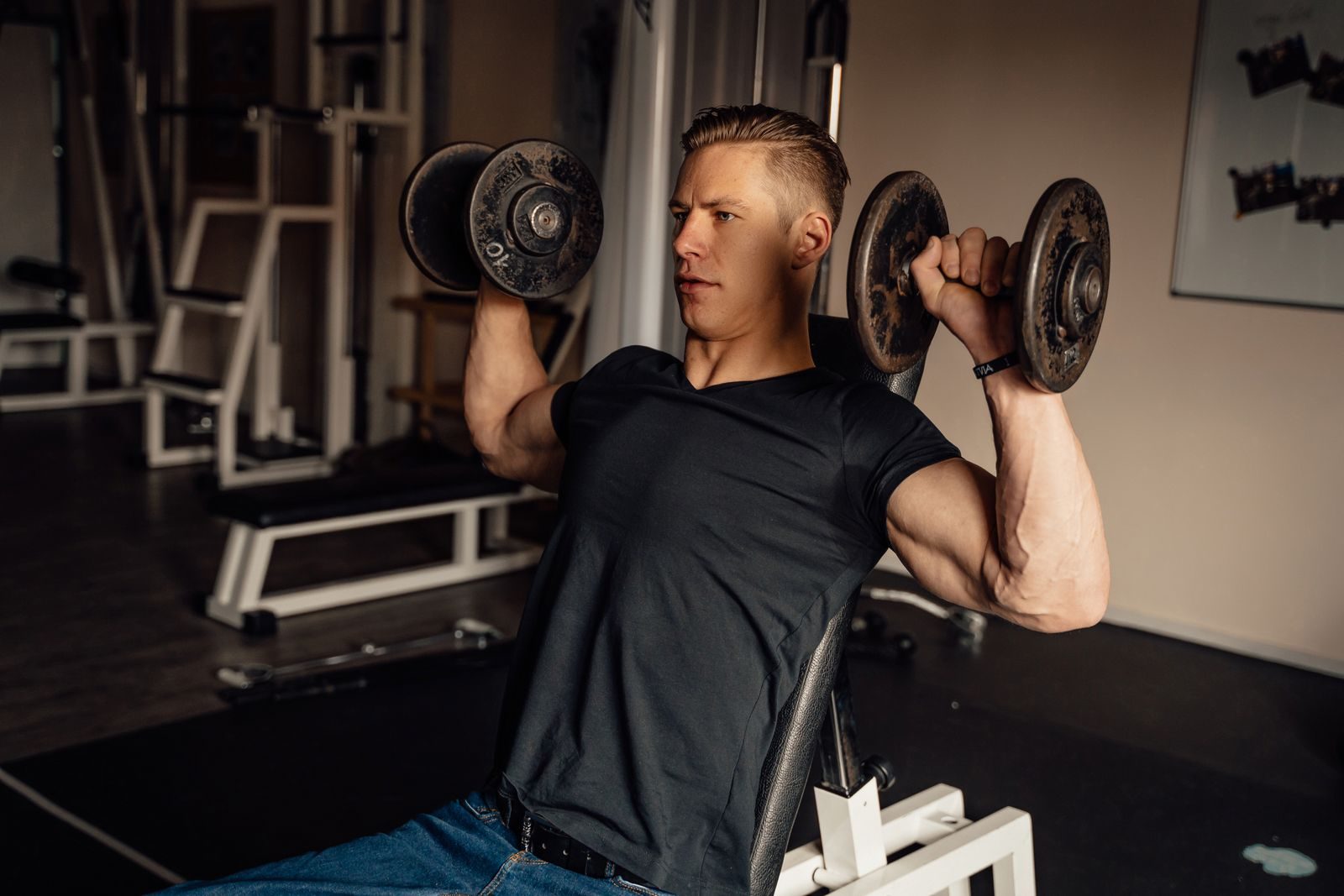
The best shoulder exercises combine pressing, lateral raises, rear-shoulder strengthening, rotator cuff training, and mobility movements. This approach helps build stronger shoulders while supporting stability and comfortable arm movement.
You don’t need to perform dozens of exercises or lift heavy weights to make progress. The 12 exercises below cover the major shoulder muscles, with step-by-step instructions, form tips, beginner modifications, and practical workouts for home or gym training.
12 Best Shoulder Exercises for Strength and Mobility
A balanced shoulder routine should train the front, side, and back of your shoulders while also strengthening the smaller muscles that help control the joint.
Your main shoulder muscles include:
- Anterior deltoids: Help raise your arms forward and press overhead.
- Lateral deltoids: Help lift your arms outward.
- Posterior deltoids: Assist with pulling and moving your arms backward.
- Rotator cuff: Four muscles that help rotate and stabilize the shoulder.
- Scapular stabilizers: Including the trapezius, rhomboids, and serratus anterior, which control shoulder blade movement.
Research reviewed by the American Council on Exercise (ACE) supports combining different exercises rather than relying on one movement to train every part of the deltoids.
The first eight exercises focus on strength and muscular control. The final four help develop shoulder and upper-back mobility.
1. Seated Dumbbell Shoulder Press
The seated dumbbell shoulder press is one of the most useful exercises for building overall shoulder pressing strength.
The supported sitting position helps reduce the need for balance, allowing you to concentrate on lifting the weights with controlled technique.
Best for: Front and side shoulder strength.
Muscles worked: Anterior and lateral deltoids, triceps, and supporting shoulder muscles.
Equipment: Two dumbbells and an adjustable bench with back support.
Suggested sets and reps: 2–3 sets of 8–12 repetitions. Rest 90–120 seconds.
How to Do It
- Adjust the bench to an upright or slightly reclined position.
- Sit with your back supported and both feet flat on the floor.
- Hold the dumbbells near shoulder height, with your elbows slightly forward and wrists straight.
- Brace your core and press the dumbbells overhead through a comfortable range.
- Allow your shoulder blades to rotate naturally as your arms rise.
- Slowly lower the weights toward shoulder height without excessively arching your back.
Common mistakes: Using weights that are too heavy, leaning backward, flaring the elbows excessively, and pushing the head forward. Keep your torso supported and avoid forcing the dumbbells into an uncomfortable overhead position.
Beginner modification: Start with light dumbbells and a comfortable pressing range. If overhead pressing causes pain, skip it and seek appropriate guidance rather than pushing through discomfort.
Progression: Gradually increase the weight once you can complete every repetition with controlled form.
2. Dumbbell Lateral Raise
The dumbbell lateral raise directly challenges the side deltoids, making it especially useful for building shoulder width and improving strength when raising your arms outward.
This movement works well with relatively light weights.
Best for: Lateral deltoid strength and shoulder development.
Muscles worked: Primarily the lateral deltoids, with assistance from the supraspinatus and other shoulder stabilizers.
Equipment: Two light dumbbells.
Suggested sets and reps: 2–3 sets of 10–15 repetitions. Rest 45–75 seconds.
How to Do It
- Stand with your feet hip-width apart and a dumbbell in each hand.
- Keep your arms beside your thighs, palms facing inward, and elbows slightly bent.
- Brace your core and raise both arms outward, slightly forward of your torso if comfortable.
- Stop around shoulder height without swinging your body.
- Lower the dumbbells slowly to the starting position.
Common mistakes: Swinging the weights, shrugging excessively, bending the elbows more as the weights rise, and using momentum. Avoid forcing your thumbs downward to increase the range of motion.
Beginner modification: Use very light dumbbells or perform one arm at a time.
Progression: Increase repetitions or slow the lowering phase before moving to heavier weights.
3. Incline Reverse Fly
The incline reverse fly trains the back of the shoulders and the muscles around the shoulder blades.
Unlike a standing reverse fly, the incline bench supports your torso, making it easier to avoid using momentum.
Best for: Rear-shoulder strength and controlled upper-back movement.
Muscles worked: Posterior deltoids, rhomboids, and middle trapezius.
Equipment: Adjustable incline bench and light dumbbells.
Suggested sets and reps: 2–3 sets of 10–15 repetitions. Rest 60–75 seconds.
How to Do It
- Set an adjustable bench to approximately 30–45 degrees.
- Lie face down with your chest supported and feet firmly positioned on the floor.
- Hold a light dumbbell in each hand, allowing your arms to hang below your shoulders.
- Keep a slight bend in your elbows and raise both arms outward in a wide arc.
- Stop around shoulder height, or earlier if needed.
- Slowly lower the dumbbells without lifting your chest away from the bench.
Common mistakes: Using heavy weights, turning the movement into a row, lifting the chest off the bench, or swinging the arms backward.
Beginner modification: Start with very light dumbbells. Focus on raising the arms smoothly rather than lifting them as high as possible.
Progression: Add a brief pause at the top or gradually increase resistance.
4. 45-Degree Incline Dumbbell Row
The chest-supported incline dumbbell row strengthens the upper back while allowing the rear shoulders to assist with pulling.
It complements shoulder presses and lateral raises by adding a controlled horizontal pulling movement.
The bench also reduces the need to hold a bent-over position throughout the exercise.
Best for: Upper-back strength and shoulder blade control.
Muscles worked: Rhomboids, middle trapezius, latissimus dorsi, posterior deltoids, and biceps.
Equipment: Adjustable incline bench and dumbbells.
Suggested sets and reps: 2–3 sets of 8–12 repetitions. Rest 75–90 seconds.
How to Do It
- Adjust the bench to approximately 45 degrees.
- Lie face down with your chest supported and feet securely planted.
- Hold a dumbbell in each hand with your palms facing inward.
- Allow your arms to hang toward the floor.
- Pull your elbows backward, bringing the dumbbells toward your lower ribs.
- Lower the weights slowly, allowing your shoulder blades to move naturally.
Common mistakes: Jerking the dumbbells upward, raising your chest off the bench, pulling excessively with the arms, and shortening the lowering phase.
Beginner modification: Choose lighter dumbbells and practice the full pulling movement without momentum.
Progression: Increase the dumbbell weight gradually while maintaining chest contact with the bench.
5. Resistance Band External Rotation
Resistance band external rotation strengthens two important rotator cuff muscles: the infraspinatus and teres minor.
Unlike larger shoulder exercises, this movement uses a small, controlled rotation rather than a heavy lifting motion.
Best for: Rotator cuff strength and shoulder rotation control.
Muscles worked: Infraspinatus and teres minor, with assistance from other shoulder stabilizers.
Equipment: Light resistance band and secure anchor.
Suggested sets and reps: 2–3 sets of 10–15 repetitions per arm. Rest 30–60 seconds.
How to Do It
- Attach a light resistance band to a stable anchor at approximately elbow height.
- Stand sideways to the anchor, holding the band with the hand farther from the attachment point.
- Bend your working elbow approximately 90 degrees and keep it close to your ribs.
- With your upper arm staying beside your body, slowly rotate your forearm outward.
- Stop before your torso begins to turn or your shoulder becomes uncomfortable.
- Return slowly and repeat before switching arms.
Common mistakes: Pulling with the entire arm, twisting the torso, moving the elbow away from the ribs, and using excessive band resistance.
Beginner modification: Use the lightest suitable band. A small rolled towel between the elbow and ribs can help maintain positioning.
Progression: Increase band resistance slightly once you can control the full movement without shifting your upper arm.
6. Thumbs-Up Dumbbell Scaption Raise
The scaption raise trains shoulder elevation with your arms moving slightly forward of your sides.
This position follows the general plane of the shoulder blades and can be a useful alternative to a traditional lateral raise.
Best for: Controlled shoulder elevation and lighter deltoid strengthening.
Muscles worked: Anterior and lateral deltoids, supraspinatus, and supporting scapular muscles.
Equipment: Very light dumbbells.
Suggested sets and reps: 2 sets of 10–15 repetitions. Rest 45–60 seconds.
How to Do It
- Stand upright with your feet hip-width apart and light dumbbells beside your thighs.
- Position your arms approximately 30–45 degrees forward from your sides.
- Keep your elbows slightly relaxed and your thumbs pointing upward.
- Raise both arms diagonally until they approach shoulder height.
- Lower the dumbbells slowly while keeping your torso still.
Common mistakes: Using heavy dumbbells, arching the lower back, turning the movement into a straight front raise, and excessively shrugging the shoulders.
Beginner modification: Perform the movement without weights until you can raise and lower both arms smoothly.
Progression: Add light resistance or a brief pause at shoulder height.
7. Wall Push-Up Plus
The wall push-up plus combines a simple pushing movement with controlled shoulder blade movement.
The extra reaching action at the end of each repetition emphasizes the serratus anterior, an important muscle for shoulder blade stability.
Best for: Scapular control and beginner-friendly upper-body strength.
Muscles worked: Serratus anterior, pectoralis major, triceps, and anterior deltoids.
Equipment: Stable wall.
Suggested sets and reps: 2–3 sets of 8–12 repetitions. Rest 45–60 seconds.
How to Do It
- Stand approximately one arm’s length from a wall.
- Place both palms against the wall at shoulder height, slightly wider than shoulder-width apart.
- Keep your body aligned and slowly bend your elbows to bring your chest toward the wall.
- Push through your palms until your elbows straighten.
- Continue pressing gently into the wall, allowing your shoulder blades to move forward around your rib cage.
- Relax the extra reach and repeat.
Common mistakes: Allowing the lower back to sag, shrugging the shoulders, rushing the push-up, or skipping the final shoulder blade movement.
Beginner modification: Stand closer to the wall to reduce the resistance.
Progression: Step farther away from the wall or advance to an incline push-up plus against a sturdy, stable surface.
8. Prone Y Raise
The prone Y raise is a simple bodyweight exercise that challenges the muscles responsible for controlling your shoulder blades.
It is especially useful as a light accessory exercise rather than a heavy strength movement.
Best for: Lower trapezius strengthening and scapular control.
Muscles worked: Primarily the lower trapezius, with assistance from other trapezius fibers, serratus anterior, and shoulder muscles.
Equipment: Exercise mat.
Suggested sets and reps: 2 sets of 8–12 repetitions. Rest 45–60 seconds.
How to Do It
- Lie face down on a comfortable exercise mat.
- Extend both arms diagonally overhead to create a wide Y shape.
- Turn your thumbs upward and keep your neck naturally aligned.
- Gently lift both arms a few inches off the floor without raising your chest.
- Pause briefly, then lower your arms with control.
Common mistakes: Lifting the head, arching the lower back, forcing the arms too high, and allowing the shoulders to tense excessively.
Beginner modification: Raise one arm at a time or use a smaller movement range.
Progression: Increase the pause at the top before considering very light resistance.
Shoulder Mobility Exercises to Improve Movement
Strength training challenges the muscles to produce and control force. Mobility exercises focus on moving the shoulders and upper back through comfortable ranges of motion.
The following four exercises can be used during warm-ups, after training, or as a short movement routine.
9. Wall Slide
Wall slides help you practice raising your arms while coordinating shoulder blade movement.
They are particularly useful before workouts involving overhead pressing.
Best for: Controlled overhead mobility and scapular movement.
Muscles involved: Serratus anterior, trapezius, deltoids, and rotator cuff stabilizers.
Equipment: Wall.
Suggested sets and reps: 1–2 sets of 8–12 controlled repetitions.
How to Do It
- Stand with your back comfortably against a wall and feet slightly forward.
- Bend your elbows and position your arms against the wall in a W shape.
- Keep your head neutral and your ribs aligned over your pelvis.
- Slowly slide your arms upward toward a Y position.
- Stop before you need to arch your back or force your arms against the wall.
- Lower your arms slowly to the starting position.
Common mistakes: Forcing the wrists or elbows against the wall, arching the lower back, pushing the head backward, and raising the arms beyond a comfortable range.
Beginner modification: Use a smaller movement range. Your hands and forearms do not need to remain fully pressed against the wall.
10. Quadruped Thoracic Rotation
Quadruped thoracic rotation improves controlled movement through the upper back.
Because shoulder movement also depends on the position and mobility of the thoracic spine, this exercise can complement overhead training.
Best for: Upper-back rotation and controlled torso mobility.
Muscles involved: Thoracic spinal muscles, obliques, and supporting shoulder muscles.
Equipment: Exercise mat.
Suggested sets and reps: 1–2 sets of 6–10 repetitions per side.
How to Do It
- Begin on your hands and knees, with hands beneath shoulders and knees beneath hips.
- Place your right hand lightly behind your head.
- Rotate your upper back downward, bringing your right elbow toward your left arm.
- Slowly reverse the movement and rotate your right elbow upward toward the ceiling.
- Keep your hips relatively still and avoid pulling on your neck.
- Return with control and repeat before switching sides.
Common mistakes: Twisting the hips, shifting excessive weight to one side, rotating through the lower back, or pulling the neck with the supporting hand.
Beginner modification: Use a smaller rotation and keep the supporting arm stable.
11. Cross-Body Shoulder Stretch
The cross-body shoulder stretch targets the back of the shoulder and requires no equipment.
It works well after upper-body training or during a separate flexibility session.
Best for: Posterior shoulder flexibility.
Muscles stretched: Posterior deltoid and other tissues at the back of the shoulder.
Equipment: None.
Suggested duration: 2 holds of 20–30 seconds per side.
How to Do It
- Stand upright with your shoulders relaxed.
- Bring your right arm across your chest at approximately shoulder height.
- Place your left hand on your right upper arm, just above the elbow.
- Gently draw your right arm closer to your chest.
- Hold a comfortable stretch while breathing normally.
- Release slowly and repeat on the opposite side.
Common mistakes: Pulling directly on the elbow, shrugging the shoulders, rotating the torso, and forcing the stretch.
Beginner modification: Reduce the amount of pressure from your supporting hand.
12. Doorway Chest Stretch
The doorway chest stretch helps improve flexibility in the muscles across the front of your chest.
It complements shoulder training by providing a gentle stretch after pressing and other upper-body exercises.
Best for: Chest flexibility and comfortable shoulder positioning.
Muscles stretched: Primarily the pectoralis major, with possible stretching through the anterior shoulder.
Equipment: Doorway.
Suggested duration: 2 holds of 20–30 seconds.
How to Do It
- Stand upright in an open doorway.
- Bend both elbows approximately 90 degrees.
- Position your forearms against the sides of the doorframe at a comfortable height.
- Step one foot forward and gently shift your body through the doorway.
- Stop when you feel a mild stretch across your chest.
- Hold while breathing normally, then step backward to release.
Common mistakes: Leaning too far forward, forcing the shoulders backward, shrugging, or arching the lower back.
Beginner modification: Place your elbows slightly below shoulder height or use a single-arm doorway stretch.
How to Build an Effective Shoulder Workout
You do not need to perform all 12 exercises in one session.
A practical shoulder workout can include one main pressing exercise, one lateral or scaption raise, one rear-shoulder or rowing exercise, and one or two lighter stabilization movements.
Add mobility exercises before or after the strength portion.
Beginner Shoulder Workout
This routine is suitable for adults who are new to shoulder strength training and can perform the movements comfortably.
| Exercise | Sets | Reps |
|---|---|---|
| Wall Slide | 1 | 8–10 |
| Seated Dumbbell Shoulder Press | 2 | 8–10 |
| Dumbbell Lateral Raise | 2 | 10–12 |
| Wall Push-Up Plus | 2 | 8–12 |
| Prone Y Raise | 2 | 8–10 |
| Cross-Body Shoulder Stretch | 2 | 20 seconds per side |
Rest: 60–90 seconds between strength sets.
Frequency: Twice weekly on nonconsecutive days.
Effort: Use light or moderate resistance and finish most sets feeling that you could complete approximately 3 more good repetitions.
Progression: Gradually work toward the upper end of each repetition range before increasing resistance.
If overhead pressing is not comfortable, omit it rather than forcing the movement. A light, pain-free scaption raise may be another training option.
Intermediate Shoulder Strength Workout
This routine includes more challenging resistance exercises and is suitable for exercisers who already have experience with dumbbell training.
| Exercise | Sets | Reps |
|---|---|---|
| Quadruped Thoracic Rotation | 1 | 8 per side |
| Wall Slide | 1 | 10 |
| Incline Reverse Fly | 3 | 10–12 |
| Seated Dumbbell Shoulder Press | 3 | 8–10 |
| 45-Degree Incline Dumbbell Row | 3 | 8–12 |
| Dumbbell Lateral Raise | 2 | 12–15 |
| Resistance Band External Rotation | 2 | 12–15 per arm |
| Doorway Chest Stretch | 2 | 20–30 seconds |
Rest: 90–120 seconds for presses and rows; 45–75 seconds for lighter accessory exercises.
Frequency: Twice weekly, allowing recovery between sessions.
Effort: Finish most challenging sets with approximately 2–3 repetitions in reserve.
Progression: Increase repetitions first, then add a small amount of resistance when the current weight becomes manageable.
You can occasionally replace the lateral raise with a thumbs-up scaption raise to vary the shoulder elevation pattern.
What If You Only Have 10 Minutes?
For a quick shoulder session, choose three exercises:
- Dumbbell Shoulder Press: 2 sets of 8–12 repetitions.
- Dumbbell Lateral Raise: 2 sets of 10–15 repetitions.
- Wall Push-Up Plus: 2 sets of 10–12 repetitions.
Rest briefly between sets and use controlled technique.
On another day, you can replace the lateral raise with an incline reverse fly to give the rear shoulders more attention.
This shorter routine can supplement a broader weekly strength-training program.
How Often Should You Train Your Shoulders?
For most beginners, two shoulder-strengthening sessions per week are a practical starting point.
The 2026 American College of Sports Medicine resistance-training position stand supports resistance training at least twice weekly for major muscle groups, with progression based on individual goals and experience.
Keep these programming principles in mind:
- Allow recovery: Start with at least one day between challenging sessions involving the same shoulder muscles.
- Account for other workouts: Bench presses, push-ups, rows, and pull-ups also involve shoulder muscles.
- Progress gradually: Increase weight, repetitions, or sets only when your current workload feels manageable.
- Use lighter resistance for smaller exercises: External rotations, scaption raises, and prone Y raises generally require less weight than overhead presses.
- Practice mobility regularly: Gentle wall slides and thoracic rotations can be used more frequently if comfortable.
For strength exercises, choose resistance that makes the final repetitions challenging without sacrificing technique.
For mobility exercises, focus on smooth movement rather than fatigue.
Common Shoulder Exercise Mistakes to Avoid
Even effective exercises can become less useful when technique and training volume are poorly managed.
1. Using Too Much Weight
Heavy dumbbells often encourage swinging, excessive back arching, and shortened movement ranges.
Better approach: Choose weights you can lift and lower without losing control.
2. Training Only the Front Shoulders
Overhead presses and chest exercises already challenge the anterior deltoids.
Relying entirely on pressing may leave less room for rear-shoulder and upper-back training.
Better approach: Include lateral raises, reverse flies, and rowing movements.
3. Forcing Every Exercise Through a Full Range
Your available shoulder movement may differ between exercises.
Trying to force the dumbbells higher or push through a restricted position can create unnecessary discomfort.
Better approach: Use a comfortable range you can control. Allow normal shoulder blade movement, especially when raising your arms overhead.
4. Ignoring the Rotator Cuff
Large compound exercises are useful, but lighter external rotation exercises provide a more direct way to strengthen specific rotator cuff muscles.
Better approach: Include controlled external rotations when appropriate for your training goals.
5. Doing Too Much Shoulder Work
Your shoulders also work during chest and back workouts.
Adding several demanding shoulder exercises on top of those sessions can create more fatigue than necessary.
Better approach: Consider your entire weekly upper-body routine before adding extra sets.
Shoulder Exercise Safety: What to Know Before Starting
Start each strength session with approximately 5–10 minutes of light activity, such as walking or cycling, followed by comfortable shoulder movements.
The American Academy of Orthopaedic Surgeons shoulder-conditioning program recommends warming up, using controlled movements, and avoiding exercises that cause pain.
Additional precautions include checking resistance bands for damage, attaching them to secure anchors, using manageable dumbbell weights, and maintaining stable body positions.
Avoid bouncing into stretches or forcing your arms through uncomfortable positions.
Stop exercising and seek appropriate medical assistance if you experience sharp pain, numbness, dizziness, chest pain, or other unusual symptoms. Chest pain, especially with breathing difficulty or faintness, requires urgent medical attention.
If you have an existing shoulder injury, significant pain, recent surgery, or medically restricted movement, follow guidance from a qualified healthcare professional rather than a general strength-training routine.
Frequently Asked Questions
1. What are the best exercises for stronger shoulders?
The seated dumbbell shoulder press, dumbbell lateral raise, and incline reverse fly are useful choices because they challenge different portions of the deltoids.
Adding rows, rotator cuff exercises, and shoulder blade strengthening movements provides a more balanced routine.
2. Can you strengthen your shoulders at home?
Yes. You can perform wall push-up plus exercises, prone Y raises, and wall slides without specialized gym equipment.
Adding dumbbells or resistance bands allows you to progressively challenge the shoulder muscles as your strength improves.
3. How often should beginners do shoulder exercises?
Beginners can start with two strength sessions per week on nonconsecutive days.
Two sets per selected exercise are often enough to begin practicing technique and building consistency. Increase training volume gradually according to recovery and progress.
4. Are dumbbell shoulder exercises good for beginners?
Yes, provided the weight and movement are appropriate.
Light dumbbell presses, lateral raises, and scaption raises are useful starting options.
Beginners should focus on controlled repetitions, stable body positioning, and comfortable ranges of motion rather than lifting heavy weights.
5. What exercises help improve shoulder mobility?
Wall slides, quadruped thoracic rotations, cross-body shoulder stretches, and doorway chest stretches can help improve different aspects of shoulder and upper-back movement.
Wall slides and thoracic rotations are useful before training, while gentle static stretches can be performed afterward.
6. Is it better to train shoulders with dumbbells or resistance bands?
Both can be effective.
Dumbbells make it straightforward to progressively load exercises such as shoulder presses, lateral raises, and reverse flies.
Resistance bands are convenient for lighter exercises, including external rotations.
The better choice depends on the exercise, your experience, available equipment, and training goals.
7. Should you do shoulder exercises if your shoulders feel stiff?
Mild stiffness without pain may respond well to comfortable movement, but stiffness can have different causes.
Start with gentle exercises such as wall slides or thoracic rotations rather than forcing heavy overhead lifts.
If stiffness is persistent, worsening, painful, or accompanied by weakness or loss of movement, seek professional assessment.
Conclusion
Strong shoulders require more than overhead pressing. A balanced routine should challenge the front, side, and rear deltoids while also strengthening the rotator cuff and muscles that control the shoulder blades.
Start with a few exercises that match your experience and equipment. Practice proper form, include comfortable mobility movements, and increase resistance gradually.
For a practical starting point, choose four strength exercises and two mobility movements, train consistently, and focus on controlled progress rather than heavier weights.
References
The following resources provide additional guidance on shoulder exercise selection, technique, strength training, and safety.
- American College of Sports Medicine — Resistance Training Prescription for Healthy Adults (2026)
- American Council on Exercise — Evidence-Based Shoulder Training (2026)
- American Academy of Orthopaedic Surgeons — Rotator Cuff and Shoulder Conditioning Program
- ACE Exercise Library — Incline Reverse Fly
- ACE — Shoulder Stabilization Exercises
- MSD Manual — Standing Shoulder Scaption
This content is for informational purposes only and is not a substitute for medical advice.