The best arm exercises strengthen your biceps, triceps, and forearms through a combination of curls, extensions, pressing movements, and grip training. Whether you’re a beginner working out at home or an experienced lifter training at the gym, choosing the right movements can help you build stronger, more muscular arms.
This guide covers 15 effective arm exercises, with step-by-step instructions, muscles worked, common mistakes, and practical form tips. You’ll also find beginner, intermediate, and advanced arm workouts to help you put the exercises into practice.
You don’t need to perform all 15 exercises in one session. A balanced routine with a few well-chosen movements is usually more productive.
15 Best Arm Exercises for Strength and Muscle Growth
A well-rounded arm workout trains more than just the biceps. The triceps make up a substantial portion of upper-arm muscle mass, while the forearms contribute to grip strength and wrist control.
Here’s how the exercises are organized:
| Muscle Group | Exercises | Main Training Focus |
|---|---|---|
| Biceps and elbow flexors | 1–6 | Curling strength, elbow flexion, and pulling assistance |
| Triceps | 7–12 | Elbow extension, pressing strength, and upper-arm development |
| Forearms and grip | 13–15 | Grip endurance, wrist strength, and forearm development |
Start with exercises suited to your experience, equipment, and current strength.
Biceps Exercises
These six movements train the muscles responsible for bending your elbows. Some also emphasize the brachialis and brachioradialis, while chin-ups provide additional back training.
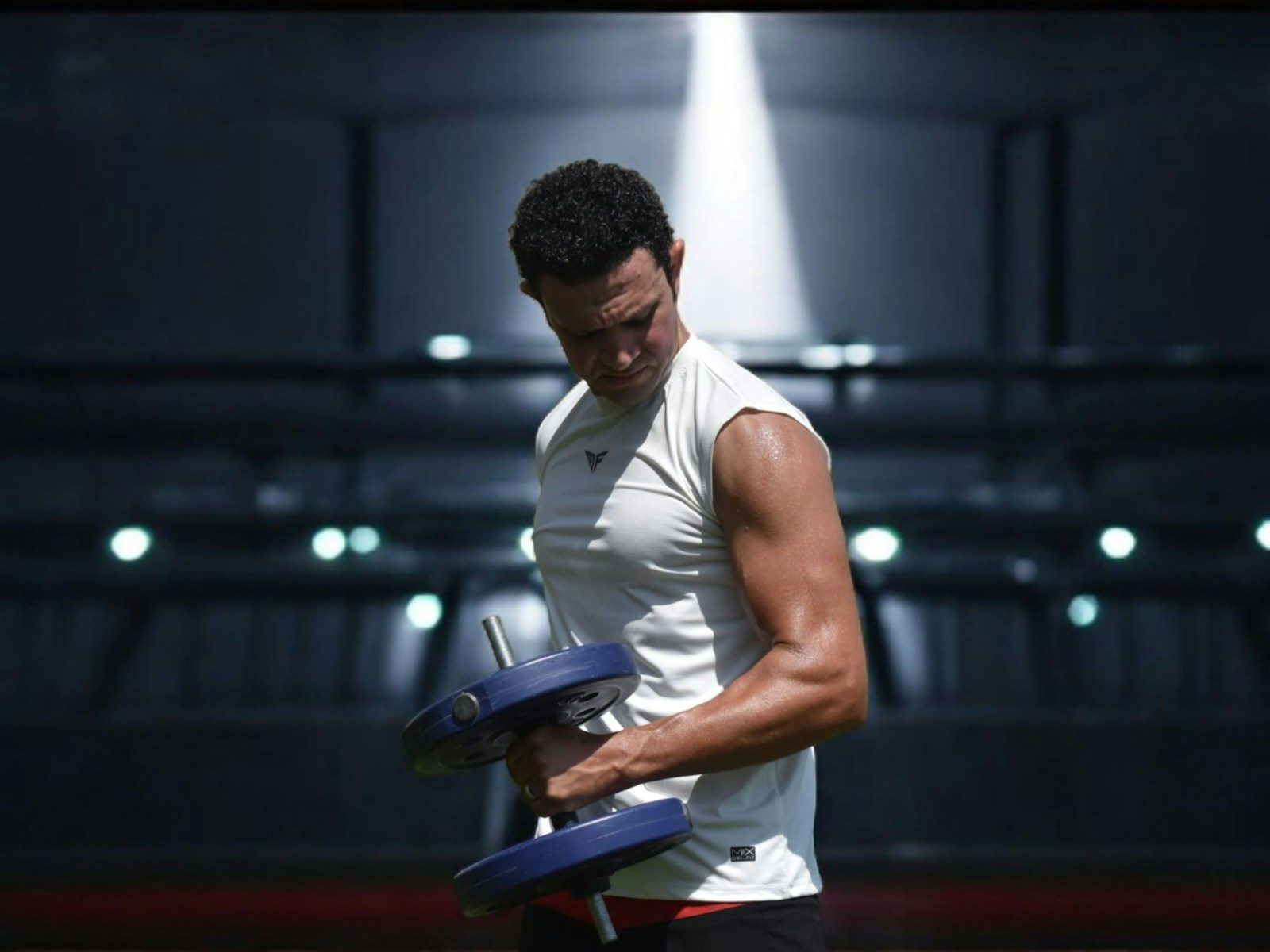
1. Standing Dumbbell Biceps Curl
The standing dumbbell curl is one of the simplest ways to build biceps strength. Each arm works independently, making it useful for developing control and identifying strength differences between sides.
Best for: Beginners and anyone building foundational biceps strength.
Muscles worked: Biceps brachii, brachialis, and brachioradialis.
Equipment needed: Two dumbbells.
Sets, reps, and rest: 2–3 sets of 8–12 reps; rest 60–90 seconds.
How to Do It:
- Stand upright with your feet hip-width apart, holding a dumbbell in each hand with your palms facing forward.
- Keep your elbows close to your sides and your abdominal muscles engaged.
- Bend your elbows to curl the dumbbells toward your shoulders without swinging your torso.
- Slowly lower the weights until your arms return to the starting position.
Common mistakes: Swinging the weights, leaning backward, bending the wrists, and allowing the elbows to travel excessively forward.
Progression: Begin with light dumbbells or perform seated curls for additional stability. Increase resistance when you can complete every repetition without using momentum.
2. Dumbbell Hammer Curl
Hammer curls use a neutral grip, meaning your palms face each other throughout the movement. This position trains the elbow flexors while placing substantial demand on the brachialis and brachioradialis.
Best for: Developing upper-arm and forearm strength with a comfortable neutral grip.
Muscles worked: Brachialis, brachioradialis, and biceps brachii.
Equipment needed: Dumbbells.
Sets, reps, and rest: 2–3 sets of 10–12 reps; rest 60–90 seconds.
How to Do It:
- Stand with a dumbbell in each hand, palms facing your thighs.
- Maintain a straight wrist and keep your elbows near your sides.
- Curl the dumbbells upward without rotating your palms.
- Lower both weights slowly while maintaining a steady torso.
Common mistakes: Rotating the wrists, shrugging the shoulders, or swinging heavy dumbbells to complete repetitions.
Progression: Start with alternating hammer curls if lifting both weights together feels difficult. Progress by increasing resistance while maintaining the neutral grip.
3. Resistance Band Biceps Curl
Resistance band curls are a convenient option for home workouts. They require little space, and you can adjust the difficulty by changing the band’s resistance or your stance.
Best for: Beginners, home workouts, and portable arm training.
Muscles worked: Biceps brachii, brachialis, and brachioradialis.
Equipment needed: Handled resistance band.
Sets, reps, and rest: 2–3 sets of 10–15 reps; rest 45–60 seconds.
How to Do It:
- Stand on the center of the resistance band with your feet slightly apart.
- Hold the handles at your sides with your palms facing forward.
- Keep your elbows stationary as you curl your hands toward your shoulders.
- Slowly return to the starting position without allowing the band to snap back.
Common mistakes: Using a band that is too strong, rocking backward, or allowing the band to pull the arms down too quickly.
Progression: Begin with a lighter band and increase resistance gradually. Check the band for damage and ensure it stays securely beneath your feet.
4. Seated Concentration Curl
The concentration curl trains one arm at a time while supporting the upper arm against the inner thigh. This setup limits body movement and makes controlled repetitions easier.
Best for: Focused biceps training and improving single-arm control.
Muscles worked: Biceps brachii and brachialis.
Equipment needed: Dumbbell and stable bench.
Sets, reps, and rest: 2–3 sets of 10–12 reps per arm; rest 60 seconds.
How to Do It:
- Sit on a bench with your feet flat and legs comfortably apart.
- Hold a dumbbell in one hand and support the back of your upper arm against your inner thigh.
- With your palm facing upward, curl the weight toward your shoulder.
- Slowly straighten your elbow to lower the dumbbell.
- Complete your repetitions before switching arms.
Common mistakes: Lifting the elbow away from the thigh, twisting the torso, or using momentum instead of controlled elbow flexion.
Progression: Start with a lighter weight and emphasize smooth repetitions before increasing resistance.
5. Incline Dumbbell Curl
Incline dumbbell curls place the upper arms slightly behind the torso, creating a different shoulder position from conventional standing curls.
The supported setup also makes it harder to swing your body during repetitions.
Best for: Intermediate lifters seeking additional biceps training variety.
Muscles worked: Biceps brachii, brachialis, and brachioradialis.
Equipment needed: Adjustable incline bench and dumbbells.
Sets, reps, and rest: 2–3 sets of 8–12 reps; rest 60–90 seconds.
How to Do It:
- Adjust a bench to approximately 45–60 degrees.
- Sit with your back supported and let the dumbbells hang beside your body, palms facing forward.
- Keep your upper arms relatively still as you curl the weights toward your shoulders.
- Slowly lower the dumbbells through a comfortable range of motion.
Common mistakes: Lifting the shoulders away from the bench, moving the elbows forward excessively, or forcing the arms into an uncomfortable stretched position.
Progression: Begin with lighter dumbbells than you use for standing curls. Increase resistance only when you can control the lowering phase.
6. Chin-Up
Chin-ups are compound pulling exercises that primarily train the back while challenging the biceps and other elbow flexors.
Unlike isolated curls, chin-ups require you to move your body weight, making them useful for developing coordinated upper-body strength.
Best for: Intermediate and advanced lifters building pulling and biceps strength.
Muscles worked: Latissimus dorsi, biceps brachii, brachialis, and upper-back muscles.
Equipment needed: Secure pull-up bar.
Sets, reps, and rest: 2–3 sets of 4–8 controlled reps; rest 90–180 seconds.
How to Do It:
- Grip the pull-up bar approximately shoulder-width apart with your palms facing you.
- Hang with your arms extended and your core engaged.
- Pull your elbows downward to raise your body until your chin clears the bar.
- Slowly lower yourself to the starting position without swinging.
Common mistakes: Kicking the legs, swinging the torso, extending the neck to reach the bar, or dropping too quickly.
Progression: Beginners can use an assisted chin-up machine or securely anchored assistance band. Advanced lifters may gradually add external resistance.
Triceps Exercises for Stronger, More Developed Arms
The triceps are located along the back of your upper arms. Their primary function is extending the elbow, making them important during push-ups, bench presses, and other pressing movements.
The following exercises combine direct triceps training with compound pressing options.
7. Cable Rope Triceps Pushdown
The rope pushdown provides adjustable cable resistance for training elbow extension. It’s a practical choice because the weight can be changed quickly between sets.
Best for: Direct triceps training at the gym.
Muscles worked: Triceps brachii.
Equipment needed: Cable machine with rope attachment.
Sets, reps, and rest: 2–3 sets of 10–15 reps; rest 60–90 seconds.
How to Do It:
- Attach a rope to the high pulley of a cable machine.
- Stand facing the machine and grip the rope with your palms facing each other.
- Keep your upper arms close to your sides and extend your elbows to push the rope downward.
- Gently separate the rope ends near the bottom.
- Slowly return to the starting position without allowing your elbows to rise excessively.
Common mistakes: Leaning heavily into the movement, swinging the torso, or allowing the shoulders to perform the work instead of the elbows.
Progression: Start with a manageable cable weight. Increase resistance when you can perform every repetition without shifting your upper arms.
8. Overhead Dumbbell Triceps Extension
The overhead dumbbell extension places the arms above the shoulders, providing a useful alternative to pushdowns and kickbacks.
This position trains the triceps while placing the long head of the muscle in a relatively lengthened position.
Best for: Training the triceps through an overhead elbow-extension movement.
Muscles worked: Triceps brachii, including the long head.
Equipment needed: One dumbbell.
Sets, reps, and rest: 2–3 sets of 10–12 reps; rest 60–90 seconds.
How to Do It:
- Stand upright and securely hold one dumbbell with both hands.
- Raise the weight overhead while keeping your core engaged.
- Bend your elbows to lower the dumbbell behind your head through a comfortable range.
- Extend your elbows to return the weight overhead without arching your lower back.
Common mistakes: Flaring the elbows excessively, bending the wrists, and leaning backward to move a heavy dumbbell.
Progression: Start with a light dumbbell. A seated version with back support may help if standing balance is difficult.
9. Dumbbell Triceps Kickback
Triceps kickbacks train elbow extension with the upper arm positioned alongside the torso. Because the resistance is relatively challenging near full elbow extension, lighter dumbbells often work well.
Best for: Controlled triceps isolation using light weights.
Muscles worked: Triceps brachii.
Equipment needed: Dumbbell and flat bench.
Sets, reps, and rest: 2–3 sets of 12–15 reps per arm; rest 45–60 seconds.
How to Do It:
- Place your left knee and left hand on a bench, keeping your right foot on the floor.
- Hold a dumbbell in your right hand and position your upper arm beside your torso.
- Keep your upper arm still as you straighten your elbow behind you.
- Slowly return to the bent-elbow position.
- Repeat on the opposite side.
Common mistakes: Swinging the dumbbell, moving the shoulder excessively, or rotating the torso during the extension.
Progression: Begin with a light weight and focus on keeping the upper arm stationary before increasing resistance.
10. Lying Dumbbell Triceps Extension
The lying dumbbell triceps extension allows you to train elbow extension while your torso is supported on a bench.
It can be a useful accessory exercise for building the strength needed in pressing movements.
Best for: Intermediate lifters developing triceps strength and control.
Muscles worked: Triceps brachii.
Equipment needed: Two dumbbells and a flat bench.
Sets, reps, and rest: 2–3 sets of 8–12 reps; rest 60–90 seconds.
How to Do It:
- Lie on a flat bench with your feet securely supported.
- Hold two dumbbells above your chest with your palms facing each other.
- Bend your elbows to lower the dumbbells toward the sides of your head.
- Keep your upper arms relatively steady and avoid letting the weights touch your head.
- Extend your elbows to return the dumbbells to the starting position.
Common mistakes: Using excessive weight, allowing the elbows to flare widely, or lowering the dumbbells without control.
Progression: Start with light dumbbells. A single-arm lying extension can help you focus on control, provided the weight remains manageable.
11. Close-Grip Push-Up
Close-grip push-ups train the triceps alongside the chest and shoulders. Bringing the hands closer together than in a conventional push-up generally increases the demand on elbow extension.
You don’t need to place your hands in a narrow diamond shape. A comfortable shoulder-width position can provide an effective challenge.
Best for: Bodyweight triceps training at home.
Muscles worked: Triceps, pectoralis major, anterior deltoids, and core stabilizers.
Equipment needed: None.
Sets, reps, and rest: 2–3 sets of 6–12 reps; rest 60–90 seconds.
How to Do It:
- Begin in a high plank with your hands approximately shoulder-width apart.
- Keep your body aligned from head to heels and engage your core.
- Bend your elbows backward, keeping them relatively close to your torso.
- Lower your chest toward the floor through a comfortable range.
- Push through your palms to return to the starting position.
Common mistakes: Allowing the hips to sag, flaring the elbows excessively, or placing the hands so close together that the wrists become uncomfortable.
Progression: Beginners can perform close-grip incline push-ups against a sturdy countertop or bench. Move toward floor push-ups as strength improves.
12. Close-Grip Bench Press
The close-grip bench press is a compound pressing exercise that emphasizes the triceps while also working the chest and front shoulders.
It is particularly useful for experienced lifters who want to develop upper-body pressing strength.
Best for: Intermediate and advanced strength training.
Muscles worked: Triceps brachii, pectoralis major, and anterior deltoids.
Equipment needed: Barbell, flat bench, and a suitable rack.
Sets, reps, and rest: 2–3 sets of 6–10 reps; rest 90–180 seconds.
How to Do It:
- Lie on a flat bench with your feet firmly planted.
- Grip the barbell approximately shoulder-width apart, keeping your wrists aligned with your forearms.
- Unrack the bar using a spotter or appropriately positioned safety equipment.
- Lower the bar toward your mid-to-lower chest while keeping your elbows relatively close to your torso.
- Press the bar upward with control until your arms are extended.
Common mistakes: Using an excessively narrow grip, bending the wrists backward, bouncing the bar off the chest, or lifting more weight than you can control.
Progression: Learn the movement with an empty bar or light resistance. Use a spotter or properly adjusted safety bars when training with challenging loads.
Forearm and Grip Exercises
Strong forearms help you grip dumbbells, hold barbells, and maintain wrist control during many upper-body exercises.
These three movements complement biceps and triceps training by emphasizing the muscles around the forearm and wrist.
13. Dumbbell Reverse Curl
Reverse curls use an overhand grip rather than the palms-up position of conventional biceps curls.
This grip changes the demands on the elbow flexors, making reverse curls particularly useful for training the brachioradialis alongside the brachialis and biceps.
Best for: Developing forearm and elbow-flexor strength.
Muscles worked: Brachioradialis, brachialis, and biceps brachii.
Equipment needed: Dumbbells.
Sets, reps, and rest: 2–3 sets of 10–15 reps; rest 60 seconds.
How to Do It:
- Stand holding a dumbbell in each hand with your palms facing toward your thighs.
- Maintain an overhand grip and keep your wrists straight.
- Bend your elbows to curl the dumbbells upward without swinging.
- Slowly lower the weights while maintaining the same grip.
Common mistakes: Bending the wrists, rotating the palms upward, or choosing weights that are too heavy for controlled repetitions.
Progression: Start lighter than you would for standard biceps curls. Increase resistance gradually as your wrist and elbow control improves.
14. Dumbbell Farmer’s Carry
The farmer’s carry challenges your grip while you walk with weights at your sides.
Unlike wrist curls, it also requires your shoulders, core, hips, and legs to work together to maintain balance and posture.
Best for: Grip endurance, carrying strength, and full-body stability.
Muscles worked: Forearm gripping muscles, trapezius, core stabilizers, and lower-body muscles.
Equipment needed: Two dumbbells and a clear walking area.
Sets, duration, and rest: 2–3 carries of 20–40 seconds; rest 60–90 seconds.
How to Do It:
- Place two dumbbells beside your feet.
- Bend your knees and hinge at your hips to grasp the weights securely.
- Stand upright with your core engaged and arms hanging naturally at your sides.
- Walk forward with controlled steps while maintaining an upright torso.
- Carefully lower the dumbbells to the floor when finished.
Common mistakes: Leaning forward, shrugging excessively, rushing the steps, or choosing weights that make your grip fail immediately.
Progression: Start with lighter dumbbells and shorter carries. Increase walking time or resistance as your grip endurance improves.
15. Dumbbell Wrist Extension
Wrist extensions directly train the muscles that extend your wrist. They provide a simple way to include targeted forearm work without requiring heavy resistance.
Best for: Strengthening the wrist extensors and improving forearm muscular control.
Muscles worked: Wrist extensors, including the extensor carpi radialis longus, extensor carpi radialis brevis, and extensor carpi ulnaris.
Equipment needed: Light dumbbells and a stable bench.
Sets, reps, and rest: 2 sets of 12–20 reps; rest 45–60 seconds.
How to Do It:
- Kneel beside a bench and hold a light dumbbell in each hand.
- Support your forearms on the bench with your palms facing downward.
- Allow your wrists to bend downward through a comfortable range.
- Lift the backs of your hands upward by extending your wrists.
- Slowly lower the dumbbells while keeping your forearms supported.
Common mistakes: Moving the entire forearm, lifting heavy weights, or forcing the wrists beyond a comfortable range.
Progression: Begin with very light resistance. Gradually increase repetitions before adding weight.
How to Build an Effective Arm Workout
You don’t need a long list of exercises to build stronger arms.
Most people can create a productive arm session by selecting one or two biceps exercises, one or two triceps exercises, and an optional forearm or grip movement.
The right combination depends on whether you’re training arms separately or already working them during chest and back workouts.
Choose Exercises That Complement Each Other
For example, standing dumbbell curls and hammer curls provide slightly different grips. Rope pushdowns and overhead extensions train the triceps in different arm positions.
Including both types can provide useful variety without requiring numerous similar exercises.
Train With Enough Effort
Choose resistance that makes the final repetitions challenging while allowing you to maintain proper form.
A practical starting point is to finish most sets feeling that you could perform approximately 1–3 additional controlled repetitions.
You do not need to train to complete muscular failure every set.
Increase Resistance Gradually
When you can consistently complete the upper end of your target repetition range, consider increasing the weight slightly.
For example, if your goal is 8–12 repetitions and you can complete all sets of 12 with good technique, increase the resistance by the smallest practical amount.
Then work back toward the upper repetition target.
Give Your Muscles Time to Recover
Training your arms approximately twice weekly is a reasonable starting point for most people.
Allow recovery between demanding sessions, particularly when your chest and back workouts also involve substantial biceps and triceps work.
The American College of Sports Medicine’s 2026 resistance training recommendations emphasize consistent training, progressive resistance, and appropriate weekly volume rather than complicated training methods.
For muscle growth, approximately 10 weekly sets per muscle group is a useful higher-volume target, but beginners can make progress with less. Individual needs vary.
Sample Arm Workouts for Every Fitness Level
Use these routines as starting points rather than performing all 15 exercises in a single workout.
Warm up with approximately 5 minutes of easy movement, followed by light practice repetitions of your first exercise.
Beginner Arm Workout at Home
This routine uses basic movements that are easy to learn and adjust.
| Exercise | Sets | Reps or Duration |
|---|---|---|
| Resistance Band Biceps Curl | 2 | 10–15 |
| Overhead Dumbbell Triceps Extension | 2 | 10–12 |
| Dumbbell Farmer’s Carry | 2 | 20–30 seconds |
Rest: 60–90 seconds between sets.
Frequency: Twice weekly on nonconsecutive days.
Effort: Finish most sets with approximately 2–3 repetitions left in reserve.
Progression: Begin with light resistance. Increase repetitions or carrying duration before adding more weight.
If you only have dumbbells, replace resistance band curls with standing dumbbell curls.
Intermediate Gym Arm Workout
This routine combines biceps, triceps, and forearm exercises for balanced development.
| Exercise | Sets | Reps |
|---|---|---|
| Incline Dumbbell Curl | 3 | 8–12 |
| Cable Rope Triceps Pushdown | 3 | 10–15 |
| Dumbbell Hammer Curl | 2 | 10–12 |
| Lying Dumbbell Triceps Extension | 2 | 8–12 |
| Dumbbell Reverse Curl | 2 | 10–15 |
Rest: 60–90 seconds between sets, extending the rest period if necessary to maintain performance.
Frequency: Once or twice weekly, depending on the rest of your strength-training routine.
Effort: Aim to finish most sets with approximately 1–3 repetitions left in reserve.
Progression: Increase resistance once you consistently reach the upper repetition target without compromising form.
Advanced Arm Workout for Strength and Muscle
This session begins with compound movements before moving to direct arm training.
| Exercise | Sets | Reps |
|---|---|---|
| Chin-Up | 3 | 4–8 |
| Close-Grip Bench Press | 3 | 6–10 |
| Incline Dumbbell Curl | 3 | 8–12 |
| Overhead Dumbbell Triceps Extension | 3 | 8–12 |
| Dumbbell Wrist Extension | 2 | 12–20 |
Rest: 90–180 seconds for compound movements and 60–90 seconds for isolation exercises.
Frequency: Once or twice weekly, adjusted for your total upper-body training volume.
Effort: Use challenging resistance while maintaining technical control.
Progression: Add repetitions before increasing weight. Track your performance and avoid increasing multiple training variables at once.
Important: These workouts are alternatives, not three sessions to combine into one week. Adjust direct arm work to account for the pressing and pulling exercises already included in your overall program.
Common Arm Training Mistakes That Limit Progress
Even effective exercises become less useful when technique or programming is poorly managed.
Using Momentum Instead of Muscle Control
Swinging heavy dumbbells during curls changes the movement and can make it harder to train the intended muscles consistently.
Reduce the weight and keep your torso stable.
Training Only the Biceps
Biceps curls are popular, but balanced arm development also requires triceps training.
Include elbow-extension exercises alongside curls, rather than focusing entirely on the front of your arms.
Ignoring Forearm Strength
Weak grip endurance may limit your ability to hold weights during pulling exercises.
Farmer’s carries, reverse curls, and wrist extensions provide useful additional forearm training.
Using Too Much Weight Too Soon
When resistance exceeds your current ability, technique often deteriorates.
Choose weights you can control throughout each repetition and progress gradually.
Repeating Too Many Similar Exercises
Performing multiple curl variations in one session isn’t automatically better.
Choose complementary movements and focus on improving their quality, resistance, or repetitions over time.
Neglecting Recovery
Your arms also work during rows, pull-ups, push-ups, and bench presses.
Count that workload when planning direct arm sessions to avoid adding more training than you can comfortably recover from.
Frequently Asked Questions About Arm Exercises
1. What are the best arm exercises for beginners?
Standing dumbbell curls, resistance band curls, hammer curls, overhead triceps extensions, and close-grip incline push-ups are practical starting options.
Begin with two or three movements and focus on learning proper technique before increasing resistance.
2. Can you build stronger arms at home?
Yes. Dumbbells, resistance bands, and bodyweight exercises can provide enough resistance to build strength and muscle when training effort and progression are appropriate.
You don’t need a full gym to begin.
3. How many arm exercises should you do per workout?
Most beginners can start with two or three arm exercises per session.
Intermediate and advanced lifters may use three to five exercises depending on training goals, weekly volume, and other upper-body workouts.
More exercises aren’t automatically better.
4. How often should you train your arms?
Training your arms approximately twice weekly is a reasonable starting point.
The CDC recommends muscle-strengthening activity on at least two days per week, including exercises for all major muscle groups.
If you already perform demanding chest and back workouts, you may need less additional arm training.
5. Do you need heavy weights to build arm muscles?
Not necessarily.
Moderate and lighter resistance can support muscle development when sets are sufficiently challenging. Heavier loads are particularly useful when maximizing strength is the main goal.
The key is choosing resistance that allows controlled movement and progressive improvement.
6. What is the best way to make arm exercises harder?
Increase resistance, complete more controlled repetitions, or gradually add an appropriate amount of training volume.
For bodyweight movements, you can progress from incline close-grip push-ups to floor push-ups or from assisted chin-ups to unassisted repetitions.
Avoid sacrificing technique simply to lift heavier weights.
Final Thoughts
The best arm workout doesn’t require every exercise on this list. It requires a balanced combination of movements that train your biceps, triceps, and forearms.
Start with three or four exercises that match your experience and equipment. Learn the correct form, train consistently, and increase resistance gradually as you become stronger.
Over time, those basic habits can help you develop stronger arms without making your workouts unnecessarily complicated.
References
- American College of Sports Medicine — 2026 Resistance Training Position Stand
- Centers for Disease Control and Prevention — Adult Physical Activity Guidelines
- American Council on Exercise — Arm Exercise Library
- American Council on Exercise — Hammer Curl Exercise Guide
- Mayo Clinic — Biceps Curl With Dumbbell
- American Council on Exercise — Overhead Triceps Extension
- National Academy of Sports Medicine — Close-Grip Bench Press
- Catalyst Athletics — Dumbbell Wrist Extension
This content is for informational purposes only and is not a substitute for medical advice.