The best dumbbell shoulder exercises combine an overhead press, a lateral-raise variation, and a rear-delt exercise to train the shoulders from several angles. You do not need to perform every exercise in this guide during one workout.
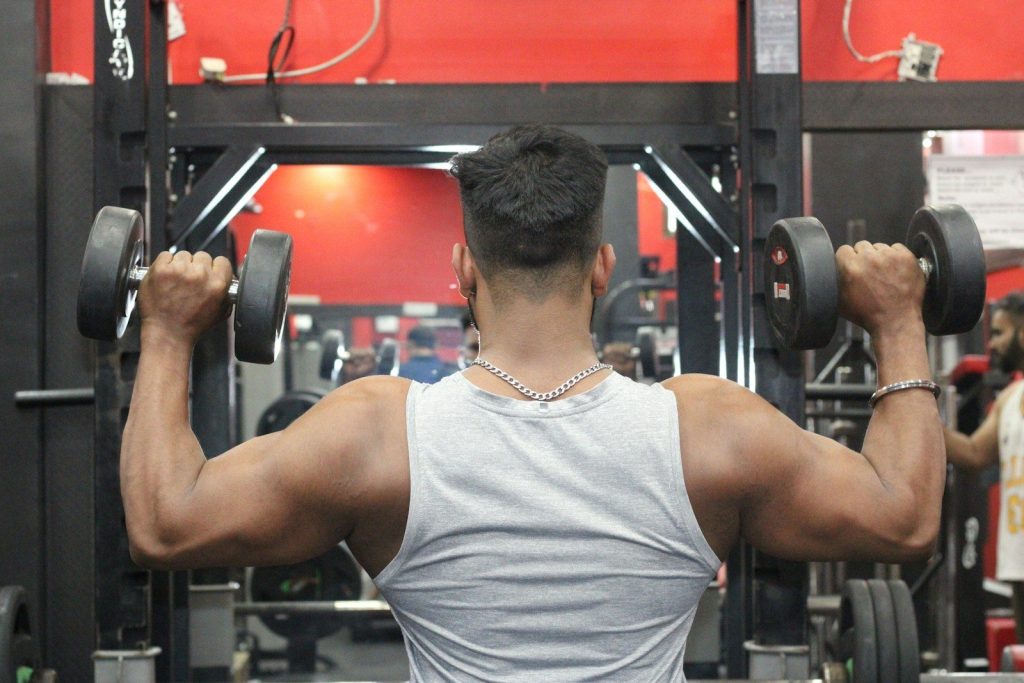
Instead, choose three or four movements that match your experience, equipment, and comfortable range of motion. This guide explains how to perform 10 effective options, avoid common mistakes, select an appropriate weight, and build a practical shoulder workout for strength and muscle growth.
Dumbbell Shoulder Exercises at a Glance
| Exercise | Best for | Main muscles emphasized | Suggested range | |
|---|---|---|---|---|
| 1 | Seated dumbbell shoulder press | Supported pressing strength | Anterior and lateral deltoids | 3–4 sets of 6–12 reps |
| 2 | Standing dumbbell shoulder press | Shoulder and trunk strength | Anterior and lateral deltoids | 3–4 sets of 6–12 reps |
| 3 | Arnold press | Controlled shoulder hypertrophy | Anterior and lateral deltoids | 2–4 sets of 8–12 reps |
| 4 | Single-arm dumbbell shoulder press | Unilateral strength and trunk control | Anterior and lateral deltoids | 2–3 sets of 8–12 reps per side |
| 5 | Dumbbell lateral raise | Direct side-delt work | Lateral deltoids | 2–4 sets of 10–20 reps |
| 6 | Lean-away dumbbell lateral raise | Challenging unilateral side-delt work | Lateral deltoids | 2–3 sets of 10–15 reps per side |
| 7 | Dumbbell front raise | Optional front-delt isolation | Anterior deltoids | 2–3 sets of 10–15 reps |
| 8 | Bent-over dumbbell reverse fly | Rear-delt work without a bench | Posterior deltoids and upper back | 2–4 sets of 10–20 reps |
| 9 | Chest-supported incline reverse fly | Strict rear-delt isolation | Posterior deltoids and upper back | 2–4 sets of 10–20 reps |
| 10 | 45-degree incline dumbbell row | Rear delts and upper-back strength | Posterior deltoids, rhomboids, and trapezius | 3–4 sets of 8–15 reps |
These ranges are starting points rather than fixed rules. Choose a weight that lets you complete each repetition with controlled technique and a comfortable range of motion.
What Muscles Do Dumbbell Shoulder Exercises Work?
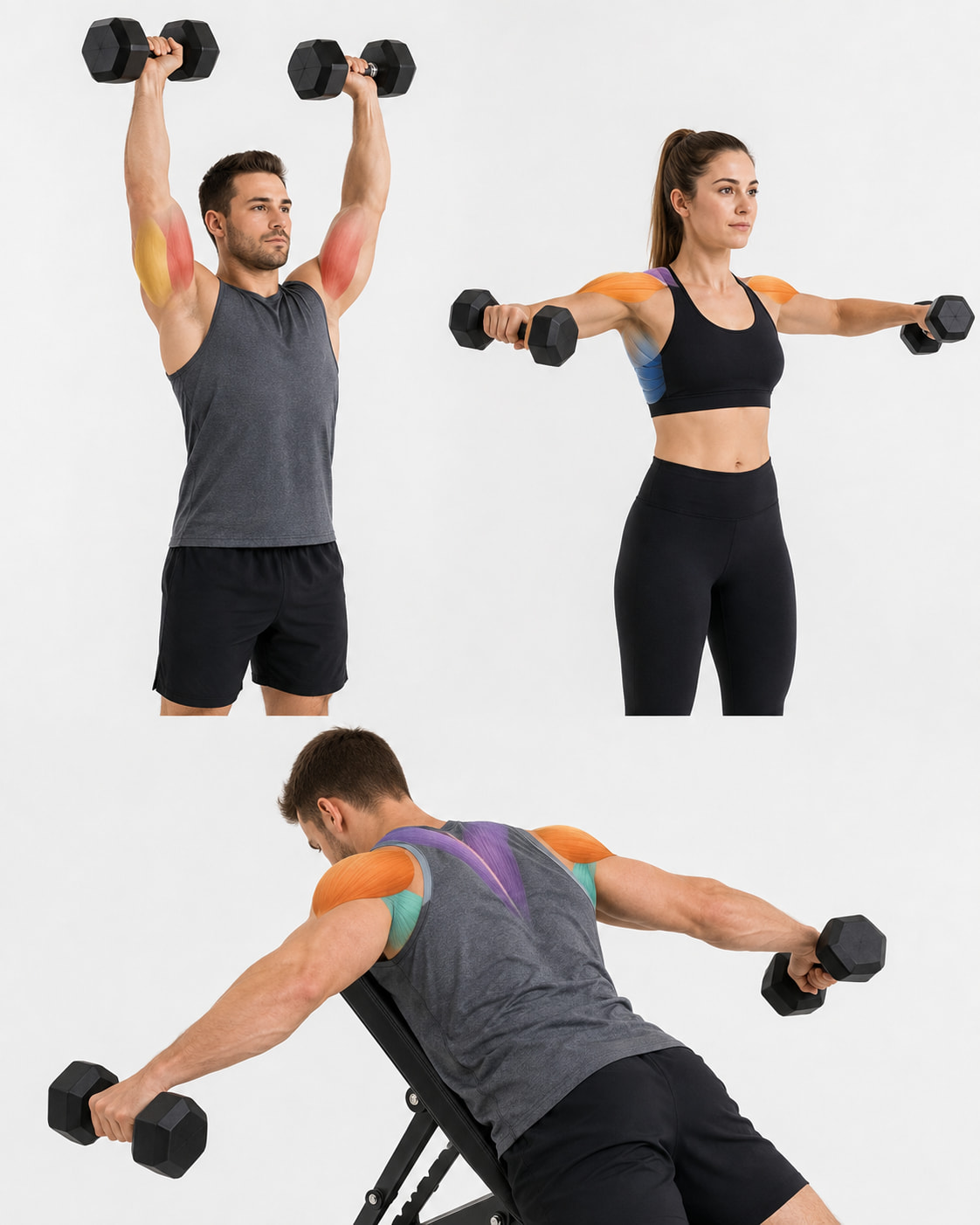
The deltoid is the main muscle trained by dumbbell shoulder exercises. It has three regions:
- Anterior deltoid: The front portion of the shoulder. It works heavily during shoulder presses and front raises.
- Lateral deltoid: The side portion of the shoulder. Lateral-raise variations train it more directly.
- Posterior deltoid: The rear portion of the shoulder. Reverse flies and rear-delt rows emphasize this region.
The triceps, trapezius, rhomboids, serratus anterior, rotator-cuff muscles, forearms, and core may also assist or stabilize depending on the exercise.
Research discussed by the American Council on Exercise found that different shoulder exercises emphasize different portions of the deltoid. This is why a balanced routine usually combines pressing, lateral-raise, and rear-delt movements instead of relying on one exercise.
How to Choose the Right Dumbbell Weight
Choose a weight that allows you to complete the planned repetition range without swinging, leaning, shrugging excessively, or losing control.
As a practical starting point:
- Presses: Use a moderately heavy weight for about 6–12 reps.
- Rows: Use a moderate weight for about 8–15 reps.
- Raises and reverse flies: Use lighter dumbbells for about 10–20 reps.
For most working sets, stop when you feel you could still perform about 1–3 good repetitions with proper form.
Do not judge lateral raises or reverse flies by how heavy the dumbbells are. These exercises are usually more effective when performed with lighter weights and controlled movement.
Beginners should start conservatively and increase the weight only after they can complete the top of the recommended repetition range with consistent technique.
Before You Start
Warm up with 5–10 minutes of easy activity and one or two lighter practice sets before your first pressing exercise. The American Academy of Orthopaedic Surgeons recommends 5–10 minutes of low-impact activity before shoulder exercise and advises against ignoring pain.
Your warm-up should prepare the shoulders without tiring them before the workout.
10 Best Dumbbell Shoulder Exercises
The following dumbbell shoulder exercises target the front, side, and rear deltoids to help build balanced strength and size. Choose three or four movements per workout based on your experience, equipment, and comfortable range of motion.
1. Seated Dumbbell Shoulder Press
Best for: Building pressing strength with added torso support.
Muscles worked: Anterior and lateral deltoids, triceps, upper trapezius, and supporting upper-back muscles.
Equipment needed: Two dumbbells and a stable bench with a backrest.
Sets, reps, and rest: Perform 3–4 sets of 6–12 repetitions. Rest for 90–150 seconds between sets.
How to Do It
- Set the backrest close to upright and sit with your head, upper back, and hips supported.
- Plant both feet firmly on the floor and brace your abdomen.
- Hold the dumbbells beside your shoulders with straight wrists and your elbows slightly forward of your torso.
- Press the dumbbells overhead without lifting your ribs or exaggerating the arch in your lower back.
- Finish with your arms extended but not aggressively locked.
- Lower the dumbbells toward your shoulders under control.
The seated overhead press guidance from ACE similarly emphasizes firm foot placement, abdominal bracing, neutral wrists, bench contact, and avoiding excessive lower-back arching.
Common mistakes: Using leg drive, bending the wrists backward, flaring the elbows directly sideways, losing contact with the bench, or lowering farther than your shoulders can comfortably control.
Progression or regression: Use a neutral grip and lighter dumbbells as a regression. Progress by adding repetitions, increasing the weight gradually, or using a slower lowering phase.
Coaching cue: Keep your ribs stacked as the dumbbells move overhead.
2. Standing Dumbbell Shoulder Press
Best for: Combining overhead pressing with greater trunk and lower-body stabilization.
Muscles worked: Anterior and lateral deltoids, triceps, trapezius, core, glutes, and spinal stabilizers.
Equipment needed: Two dumbbells.
Sets, reps, and rest: Perform 3–4 sets of 6–12 repetitions. Rest for 90–150 seconds.
How to Do It
- Stand with your feet approximately hip- to shoulder-width apart.
- Hold the dumbbells at shoulder level with your wrists stacked over your forearms.
- Brace your abdomen and keep your knees softly unlocked.
- Press the dumbbells overhead while keeping your torso still.
- Bring your head naturally between your arms near the top without pushing your chin forward.
- Lower the dumbbells slowly to the starting position.
Common mistakes: Bending the knees to launch the weight, leaning backward, pushing the ribs forward, shrugging before pressing, or turning the movement into a push press.
Progression or regression: Regress to the seated press when you need more torso support. Progress by adding weight gradually or performing the exercise one arm at a time.
Coaching cue: Squeeze your glutes and keep your belt buckle and ribs facing forward.
3. Arnold Press
Best for: Moderate-load shoulder training with a changing grip and arm position.
Muscles worked: Anterior and lateral deltoids, triceps, and upper-back stabilizers.
Equipment needed: Two dumbbells and an optional bench.
Sets, reps, and rest: Perform 2–4 sets of 8–12 repetitions. Rest for 90–120 seconds.
How to Do It
- Sit against a backrest or stand with your torso braced.
- Hold the dumbbells in front of your shoulders with your palms facing you.
- Begin pressing upward while gradually rotating your palms forward.
- Finish with the dumbbells above your shoulders and your wrists neutral.
- Reverse the movement slowly as you lower the dumbbells.
Use only as much rotation as you can control comfortably. The dumbbells do not need to touch at the top or bottom.
Common mistakes: Rotating too quickly, dropping the elbows excessively low, using weights that are too heavy for the longer movement, or leaning backward to finish the press.
Progression or regression: Regress to a neutral-grip seated shoulder press. Progress by adding a controlled pause near the bottom or slowing the lowering phase.
Coaching cue: Press and rotate as one smooth movement.
4. Single-Arm Dumbbell Shoulder Press
Best for: Developing unilateral pressing strength and resisting sideways torso movement.
Muscles worked: Anterior and lateral deltoids, triceps, obliques, abdominal muscles, and upper-back stabilizers.
Equipment needed: One dumbbell and an optional bench.
Sets, reps, and rest: Perform 2–3 sets of 8–12 repetitions per side. Rest for 60–90 seconds after both sides.
How to Do It
- Stand with your feet firmly planted and hold one dumbbell beside your shoulder.
- Keep your free hand relaxed at your side or lightly against your abdomen.
- Brace your torso and avoid leaning away from the working arm.
- Press the dumbbell upward until the arm is comfortably extended.
- Lower it slowly to shoulder level.
- Complete the set before switching sides.
Common mistakes: Leaning sideways, rotating the torso, shifting weight between the feet, bending the wrist, or using the legs to start the repetition.
Progression or regression: Perform the movement seated against a backrest for more support. Progress by using a standing position, adding repetitions, or pausing overhead while maintaining control.
Coaching cue: Stay tall as though you are pressing inside a narrow doorway.
5. Dumbbell Lateral Raise
Best for: Directly training the lateral deltoids.
Muscles worked: Lateral deltoids, with assistance from the supraspinatus, trapezius, serratus anterior, and other shoulder stabilizers.
Equipment needed: Two light dumbbells.
Sets, reps, and rest: Perform 2–4 sets of 10–20 repetitions. Rest for 45–90 seconds.
How to Do It
- Stand tall with one dumbbell in each hand and your palms facing your thighs.
- Keep a small, consistent bend in your elbows.
- Position your arms slightly forward of your sides rather than directly behind the shoulder line.
- Raise your upper arms outward until they reach approximately shoulder height or your comfortable limit.
- Keep your hands level with your elbows and your wrists straight.
- Lower the dumbbells slowly without letting them drop.
A peer-reviewed study available through PubMed Central found that neutral-arm lateral raises produced greater medial-deltoid activity than front raises and bent-elbow lateral raises in the trained participants tested. The study involved only 10 competitive male bodybuilders, so its findings should be treated as exercise-selection context rather than a universal prediction of muscle growth.
Common mistakes: Swinging the weights, shrugging aggressively, bending and straightening the elbows, turning the thumbs sharply downward, or lifting above a controllable range.
Progression or regression: Perform the exercise seated or one arm at a time with a lighter weight as a regression. Progress to the lean-away lateral raise or add a brief pause near the top.
Coaching cue: Lead with your elbows while keeping your shoulders relaxed.
6. Lean-Away Dumbbell Lateral Raise
Best for: Unilateral lateral-deltoid work with a different resistance challenge than a standard standing raise.
Muscles worked: Lateral deltoid, supraspinatus, trapezius, and shoulder stabilizers.
Equipment needed: One dumbbell and a stable upright support.
Sets, reps, and rest: Perform 2–3 sets of 10–15 repetitions per side. Rest for 45–75 seconds after both sides.
How to Do It
- Stand beside a securely fixed support and hold it with one hand.
- Keep your feet stable and lean your body slightly away while maintaining a straight line through your torso.
- Hold the dumbbell in the outside hand with your arm hanging naturally.
- Raise the dumbbell outward with a small bend in your elbow.
- Stop near shoulder height or at your comfortable limit.
- Lower the weight under control before repeating.
Use only a rack, post, or other structure that cannot slide or tip.
Common mistakes: Leaning too far, pulling on an unstable object, swinging the dumbbell, shrugging, twisting the torso, or using a heavier weight than you can control.
Progression or regression: Regress to a standard standing or seated lateral raise. Progress by adding a pause or using a slower lowering phase before increasing the weight.
Coaching cue: Keep your body still and let the shoulder move the dumbbell.
7. Dumbbell Front Raise
Best for: Optional isolation of the anterior deltoids.
Muscles worked: Anterior deltoids, with assistance from the upper chest, lateral deltoids, trapezius, and core.
Equipment needed: One or two light dumbbells.
Sets, reps, and rest: Perform 2–3 sets of 10–15 repetitions. Rest for 60–90 seconds.
How to Do It
- Stand tall with the dumbbells in front of your thighs.
- Use a neutral grip with your palms facing each other, or another comfortable grip.
- Keep your elbows softly bent and your torso still.
- Raise one or both dumbbells forward to approximately shoulder height.
- Pause briefly without shrugging.
- Lower the weights slowly.
Front raises are optional. Your anterior deltoids already receive substantial work from shoulder presses, chest presses, incline presses, and push-ups.
Common mistakes: Swinging the torso, lifting the weights too high, bending the wrists, using excessive weight, or adding front raises to an already press-heavy program without a clear reason.
Progression or regression: Raise one dumbbell at a time for an easier variation. Progress to raising both dumbbells together or adding a pause at shoulder height.
Coaching cue: Lift the weight without leaning backward.
8. Bent-Over Dumbbell Reverse Fly
Best for: Training the rear deltoids without needing a bench.
Muscles worked: Posterior deltoids, rhomboids, middle trapezius, and other upper-back stabilizers.
Equipment needed: Two light dumbbells.
Sets, reps, and rest: Perform 2–4 sets of 10–20 repetitions. Rest for 45–90 seconds.
How to Do It
- Stand with your feet about hip-width apart and hold a dumbbell in each hand.
- Push your hips backward and hinge forward while keeping your spine neutral.
- Let your arms hang beneath your shoulders with a small bend in the elbows.
- Raise your arms outward and slightly backward.
- Stop when your upper arms reach approximately torso level or your comfortable range.
- Lower the dumbbells slowly without losing the hip-hinge position.
Common mistakes: Rounding the lower back, standing up during each repetition, turning the exercise into a row, straightening and bending the elbows, or swinging the weights.
Progression or regression: Regress to the chest-supported incline reverse fly when holding the hip hinge is difficult. Progress by adding a pause near the top while keeping the dumbbells light.
Coaching cue: Move your upper arms outward while your torso stays frozen.
9. Chest-Supported Incline Reverse Fly
Best for: Strict rear-delt work with less demand on the lower back.
Muscles worked: Posterior deltoids, rhomboids, middle trapezius, and shoulder stabilizers.
Equipment needed: Two light dumbbells and an adjustable bench.
Sets, reps, and rest: Perform 2–4 sets of 10–20 repetitions. Rest for 45–90 seconds.
How to Do It
- Set an adjustable bench to a low or moderate incline.
- Lie face down with your chest supported and your feet firmly on the floor.
- Let the dumbbells hang beneath your shoulders with your palms facing inward.
- Keep a small bend in your elbows.
- Raise your arms outward until they are approximately level with your torso.
- Lower the dumbbells slowly to a full, controlled hanging position.
Common mistakes: Lifting the chest away from the bench, using momentum, bending the elbows until the exercise becomes a row, shrugging toward the ears, or forcing the arms too far behind the body.
Progression or regression: Reduce the weight or use a smaller range as a regression. Progress with a one-second pause at the top or a slower lowering phase.
Coaching cue: Keep your chest heavy against the bench.
10. 45-Degree Incline Dumbbell Row With Rear-Delt Emphasis
Best for: Combining posterior-deltoid and upper-back training.
Muscles worked: Posterior deltoids, rhomboids, middle trapezius, lateral deltoids, biceps, and other upper-back muscles.
Equipment needed: Two dumbbells and an adjustable bench.
Sets, reps, and rest: Perform 3–4 sets of 8–15 repetitions. Rest for 75–120 seconds.
How to Do It
- Set the bench to approximately a 45-degree incline.
- Lie face down with your chest supported and your feet firmly planted.
- Let the dumbbells hang with your palms facing each other.
- Move your elbows outward at a comfortable angle rather than keeping them tight against your ribs.
- Pull the dumbbells toward the sides of your upper chest.
- Pause briefly, then lower the weights until your arms are extended.
An outward elbow path places more emphasis on the rear delts and upper back. A tightly tucked elbow path turns the movement into more of a lat-focused row.
Common mistakes: Using weights that pull the elbows toward the hips, shrugging, lifting the chest from the bench, jerking the dumbbells, or pushing the head forward.
Progression or regression: Use lighter dumbbells and a smaller elbow angle as needed. Progress by adding weight while maintaining the outward elbow path or pausing at the top.
Coaching cue: Row wide rather than pulling toward your pockets.
Benefits of Dumbbell Shoulder Exercises
1. They Can Train All Three Deltoid Regions
Presses, lateral raises, and reverse-fly variations have different movement patterns. Combining them gives you a more complete routine than repeating several similar presses.
2. Each Arm Works Independently
With dumbbells, one arm cannot directly help the other move its weight. This can make side-to-side strength or control differences easier to notice.
Some difference between sides is normal. Use the same controlled technique on both sides rather than automatically giving the weaker side extra sets.
3. You Can Adjust Your Grip and Arm Path
Dumbbells allow more freedom than a fixed bar. You can use a palms-forward, slightly angled, or neutral grip depending on the exercise and what feels comfortable.
This freedom does not mean every possible position is appropriate. Keep your wrists controlled and avoid forcing your shoulders into a painful range.
4. They Work in Home and Gym Programs
Most exercises in this guide require only a pair of dumbbells. A stable adjustable bench adds more supported pressing, reverse-fly, and rowing options but is not essential for every movement.
5. They Are Easy to Progress
You can progress dumbbell shoulder exercises by adding repetitions, increasing weight, improving control, adding a pause, or completing an additional set. You do not need advanced techniques to make progress.
How to Build a Balanced Dumbbell Shoulder Workout
Most people need only three or four shoulder exercises in one session.
A balanced workout usually contains:
- One rear-delt movement
- One overhead press
- One lateral-raise variation
- One optional additional rear-delt or upper-back movement
A front raise may be added when direct anterior-deltoid work is a priority and the rest of your program contains little pressing. It is not essential for everyone.
The 2026 resistance-training update from the American College of Sports Medicine emphasizes individualizing load and volume. It lists heavier loading for strength and approximately 10 weekly sets per muscle group as a broad hypertrophy target while noting that training to complete failure and complicated programming are not consistently necessary for the average healthy adult.
Do not treat 10 sets as a mandatory target for each individual deltoid region. Chest presses, rows, pull-downs, and other upper-body exercises also contribute to shoulder training.
Beginner Dumbbell Shoulder Workout
Perform this workout once or twice per week, depending on the rest of your upper-body program.
| Exercise | Sets | Repetitions | Rest |
|---|---|---|---|
| Chest-supported incline reverse fly | 2 | 12–15 | 60 seconds |
| Seated dumbbell shoulder press | 3 | 8–12 | 90–120 seconds |
| Dumbbell lateral raise | 2 | 12–20 | 60 seconds |
Effort level: Finish most sets with approximately 2–3 controlled repetitions remaining.
Progression: Add repetitions until you reach the top of the range on every set. Then increase to the next manageable dumbbell weight and return to the lower end of the range.
Beginners should focus on repeating the same basic exercises consistently rather than changing the workout every week.
Dumbbell Shoulder Workout for Strength and Size
This routine is suitable for lifters with consistent resistance-training experience.
| Exercise | Sets | Repetitions | Rest |
|---|---|---|---|
| 45-degree incline dumbbell row | 3 | 8–12 | 90 seconds |
| Seated dumbbell shoulder press | 3–4 | 6–10 | 120–150 seconds |
| Dumbbell lateral raise | 3 | 12–20 | 60–75 seconds |
| Chest-supported incline reverse fly | 2 | 12–20 | 60 seconds |
Effort level: Keep approximately 1–3 good repetitions in reserve on most sets.
Frequency: Perform the workout once weekly when your chest and back sessions already include substantial pressing and rowing. It may be performed twice weekly with fewer sets per session when recovery, technique, and overall program volume remain manageable.
Progression: Add repetitions first. Increase the weight only when you can reach the top of the repetition range without changing your technique.
How to Progress Dumbbell Shoulder Exercises
Use Double Progression
Choose a repetition range, such as 10–15 repetitions.
Suppose you begin with:
- Set 1: 12 reps
- Set 2: 11 reps
- Set 3: 10 reps
Continue using the same weight until you can complete approximately 15 controlled repetitions on all three sets. Then move to the next manageable weight and begin near the lower end of the range again.
Use Smaller Progressions for Raises
The jump between two dumbbell sizes may be too large for lateral raises and reverse flies. Instead of forcing the heavier weight, progress by:
- Adding one or two repetitions
- Improving the lowering control
- Adding a brief pause
- Increasing the range slightly when comfortable
- Adding one set when recovery is good
Keep Technique Consistent
A heavier dumbbell is not meaningful progress when it requires more swinging, less range of motion, or a different exercise technique.
Track the weight, repetitions, and sets you complete. This makes gradual progress easier to measure.
Common Dumbbell Shoulder Training Mistakes
Performing All 10 Exercises in One Workout
This list provides options, not a single mandatory routine. Performing every movement would create unnecessary repetition and make it harder to recover.
Choose one press, one lateral raise, and one or two rear-delt exercises.
Focusing Only on the Front Deltoids
Shoulder presses and chest exercises already train the front deltoids. A routine containing several presses and front raises but no rear-delt work is not well balanced.
Include reverse flies or rear-delt rows regularly.
Using Too Much Weight on Raises
Lateral raises, front raises, and reverse flies use long lever positions that make light weights challenging. Reduce the weight when you cannot lift without swinging or shrugging.
Forcing a Textbook Range of Motion
Shoulder structure, mobility, training history, and comfort vary between people. Shoulder height is a practical reference for raises, not a requirement to move through discomfort.
Use a controlled, comfortable range.
Taking Every Set to Complete Failure
Occasionally completing a demanding set is different from forcing every set until technique breaks down. Most progress can be made while stopping with a small number of good repetitions remaining.
Ignoring Indirect Shoulder Work
Chest presses train the anterior deltoids, while many rows train the posterior deltoids and upper back. Consider this work when deciding how many direct shoulder sets to perform.
Training Through Pain
Muscle effort and temporary fatigue are different from sharp or unusual pain. Stop the exercise if it causes sharp pain, numbness, dizziness, chest pain, sudden weakness, or other unusual symptoms, and seek appropriate professional guidance.
Frequently Asked Questions
Can Dumbbells Build Stronger and Bigger Shoulders?
Yes. Dumbbells can provide enough resistance to build shoulder strength and muscle when exercises are performed consistently and progressed over time.
Your results also depend on overall training volume, effort, recovery, and nutrition. You do not need a barbell or shoulder-press machine to make progress.
What Dumbbell Exercise Works All Three Deltoid Heads?
No single dumbbell exercise emphasizes all three deltoid regions equally.
A shoulder press trains the anterior and lateral deltoids but provides limited direct posterior-deltoid work. Combine it with a lateral raise and a reverse fly or rear-delt row for a more complete routine.
How Many Dumbbell Shoulder Exercises Should I Do?
Most people can build an effective workout with three or four exercises:
- One press
- One lateral raise
- One rear-delt movement
- One optional additional exercise
Beginners may need only three.
How Often Should I Train My Shoulders?
Direct shoulder training once or twice per week works well for many people. Leave at least one recovery day between demanding direct shoulder sessions.
Your chest and back workouts may already train the shoulders, so frequency should be based on your complete program rather than direct shoulder exercises alone.
Are Front Raises Necessary?
Front raises are not necessary for everyone. Shoulder presses, chest presses, incline presses, and push-ups already train the anterior deltoids.
Front raises are most useful when you specifically want more front-delt work and can add them without interfering with recovery.
Is a Seated or Standing Dumbbell Shoulder Press Better?
Neither is automatically better.
The seated press provides more torso support and can make strict pressing technique easier. The standing press requires more trunk and lower-body stabilization. Choose the version you can perform comfortably and progress consistently.
Why Do I Feel Lateral Raises in My Upper Trapezius?
Some trapezius involvement is normal because the shoulder blades move as the arms rise. The exercise may become excessively trap-dominant when you shrug early, use momentum, or select a weight that is too heavy.
Try using lighter dumbbells, keeping your neck relaxed, and raising your arms under control.
Conclusion
The most effective dumbbell shoulder workout is not the one with the most exercises. It is the one that balances pressing, lateral-delt work, and posterior-delt training while allowing consistent technique and gradual progression.
Start with one overhead press, one lateral-raise variation, and one rear-delt movement. Use manageable weights, stop before your form breaks down, and increase repetitions or resistance gradually.
This content is for informational and educational purposes only and is not intended as a substitute for professional medical advice, diagnosis, or treatment.
References
- American College of Sports Medicine: Updated Resistance Training Guidelines
- ACE Research Identifies Effective Shoulder Exercises
- Different Shoulder Exercises Affect Deltoid Muscle Activation
- Electromyographic Analysis of Lateral Raises and Front Raises
- Resistance Training to Failure or Non-Failure: Systematic Review and Meta-Analysis
- American Academy of Orthopaedic Surgeons: Shoulder Conditioning Program
1 thought on “10 Best Dumbbell Shoulder Exercises for Strength and Size”