
The dumbbell tricep extension is a direct arm exercise that trains all three heads of the triceps by bending and straightening the elbows against resistance. It is commonly performed overhead with one dumbbell held in both hands, either while standing or sitting.
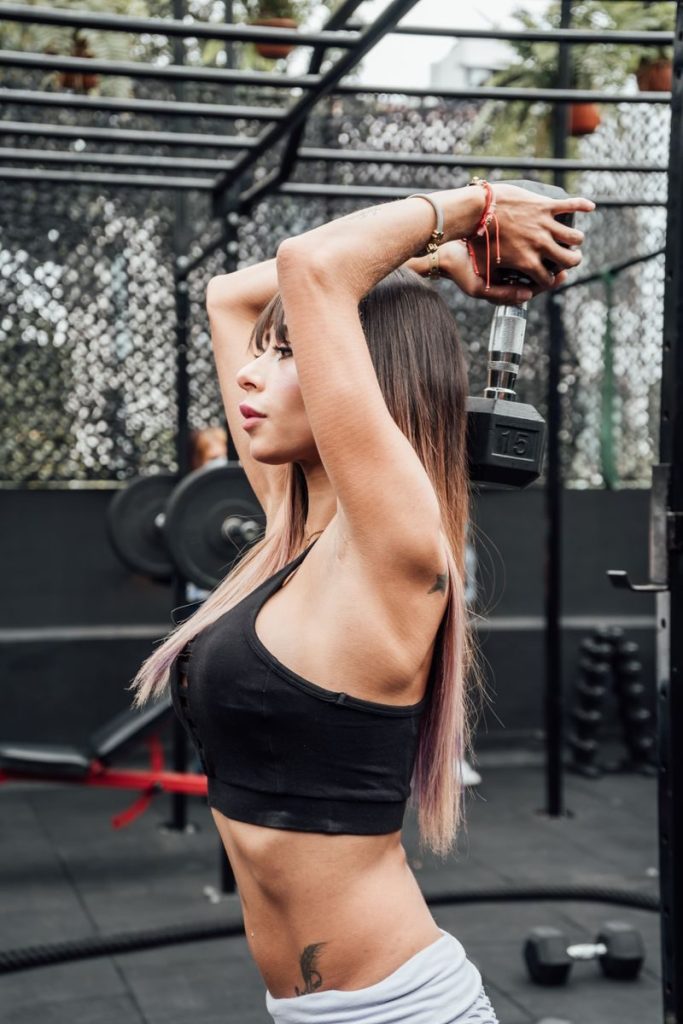
This guide focuses on the two-hand overhead dumbbell tricep extension. You will learn how to set it up correctly, which muscles it works, how many sets and repetitions to perform, which mistakes to avoid, and how to progress safely.
Dumbbell Tricep Extension at a Glance
| Category | Recommendation |
|---|---|
| Main purpose | Direct triceps strength and muscle training |
| Primary muscle | Triceps brachii |
| Equipment | One dumbbell |
| Main variation | Two-hand overhead extension |
| Experience level | Beginner to advanced |
| Beginner range | 2–3 sets of 10–15 repetitions |
| General range | 2–4 sets of 8–15 repetitions |
| Rest | 60–120 seconds |
| Workout placement | Usually after compound presses |
| Key technique | Keep the torso and upper arms controlled as the elbows bend and straighten |
What Is a Dumbbell Tricep Extension?
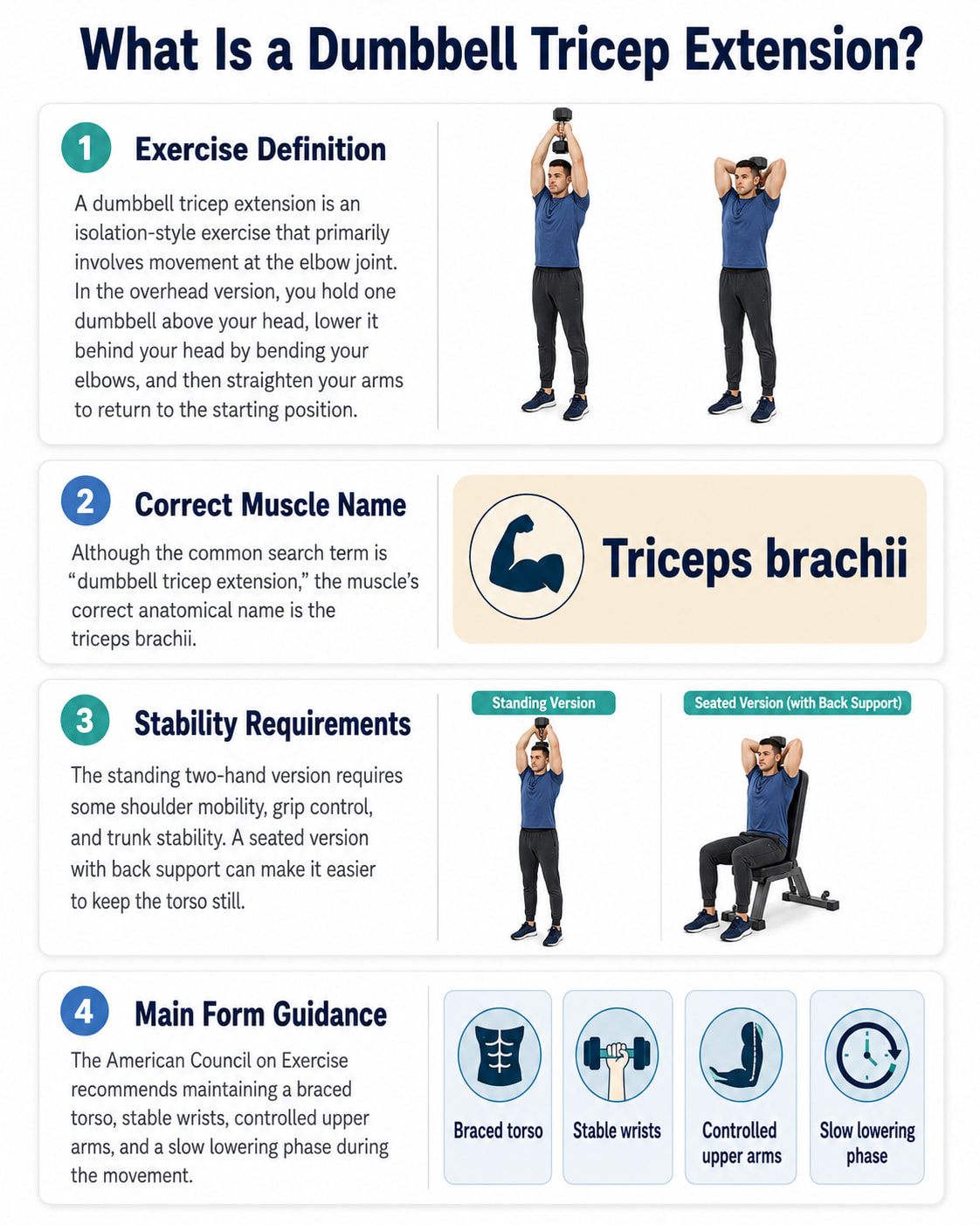
A dumbbell tricep extension is an isolation-style exercise that primarily involves movement at the elbow joint. In the overhead version, you hold one dumbbell above your head, lower it behind your head by bending your elbows, and then straighten your arms to return to the starting position.
Although the common search term is “dumbbell tricep extension,” the muscle’s correct anatomical name is the triceps brachii.
The standing two-hand version requires some shoulder mobility, grip control, and trunk stability. A seated version with back support can make it easier to keep the torso still.
The American Council on Exercise recommends maintaining a braced torso, stable wrists, controlled upper arms, and a slow lowering phase during the movement.
Muscles Worked by Dumbbell Tricep Extensions
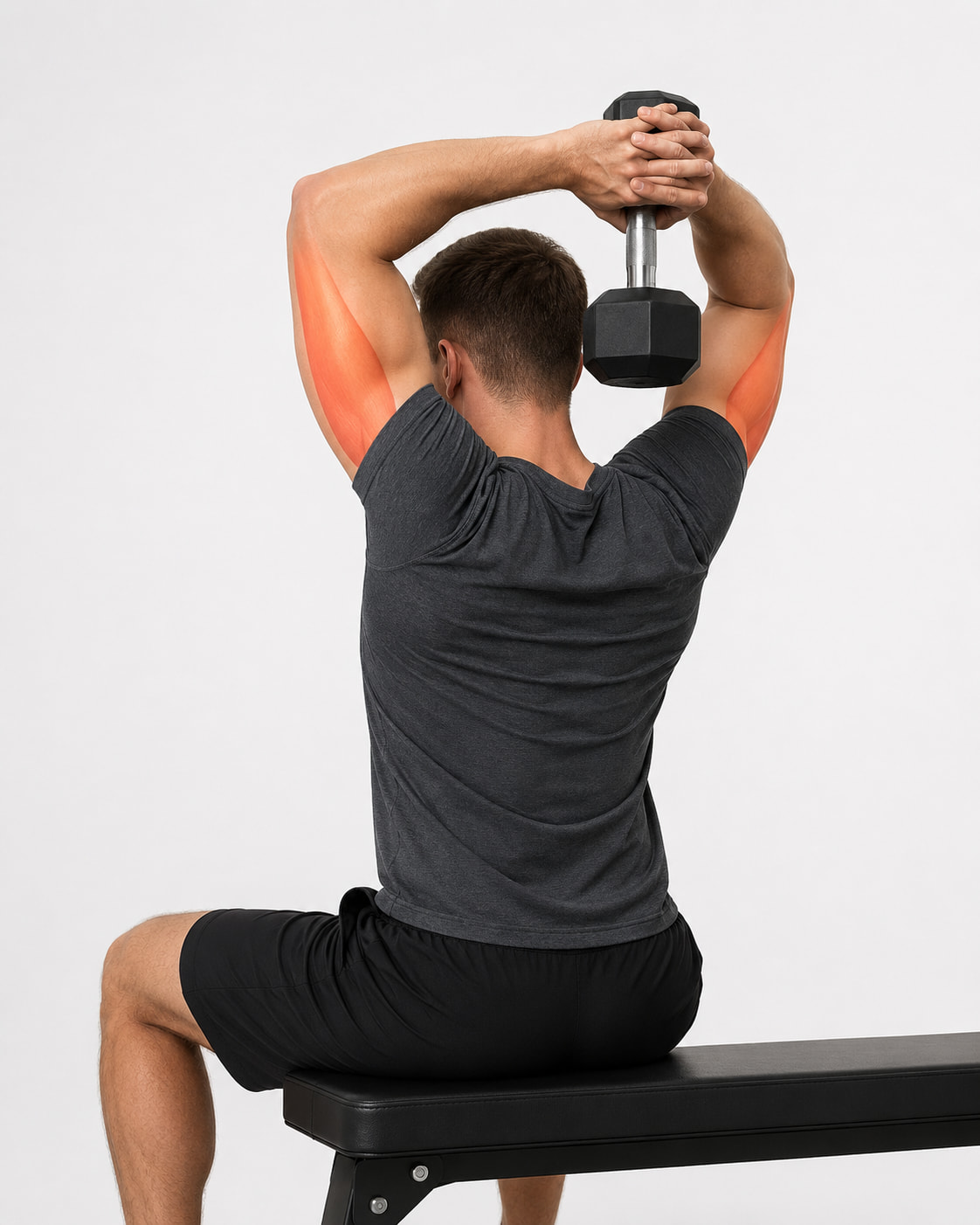
1. Triceps Brachii
The triceps brachii is the large muscle along the back of the upper arm. Its main function is elbow extension, meaning it straightens the forearm at the elbow.
The triceps has three heads:
- Long head
- Lateral head
- Medial head
All three heads contribute when you straighten your elbows during a dumbbell tricep extension. According to the NCBI Bookshelf anatomy review, the three heads begin at different points but join into a common tendon near the elbow.
2. Long Head
The long head begins on the shoulder blade and crosses both the shoulder and elbow joints. Holding your upper arms overhead places this portion of the triceps in a more lengthened position than exercises performed with the arms beside the torso.
A 12-week study indexed in PubMed found greater triceps growth from overhead cable extensions than from cable extensions performed with the arms in a neutral position. The difference was especially noticeable in the long head. However, the study used cables rather than dumbbells, so it does not prove that an overhead dumbbell extension is better than every other triceps exercise.
The practical takeaway is that overhead extensions can be a useful way to train the triceps in a lengthened position.
3. Lateral and Medial Heads
The lateral and medial heads also straighten the elbow during the exercise. The overhead extension does not isolate only the long head; all three portions of the triceps contribute to the movement.
4. Supporting Muscles
Several muscles help maintain the exercise position:
- Shoulder and upper-back muscles help control the upper arms.
- Abdominal and trunk muscles help limit excessive back arching.
- Forearm and hand muscles maintain a secure dumbbell grip.
These muscles mainly stabilize the body and weight rather than producing the primary movement.
How to Do a Standing Dumbbell Tricep Extension
Sets, reps, and rest: Start with 2–3 sets of 10–15 repetitions. Rest for 60–120 seconds between sets.
Step-by-Step Instructions
- Stand with your feet approximately hip- to shoulder-width apart. A small split stance is also acceptable if it improves your balance.
- Hold one dumbbell vertically with both hands supporting the upper end. Keep your fingers and thumbs securely wrapped around the dumbbell rather than balancing it on open palms.
- Carefully guide the dumbbell overhead until your arms are extended. Keep your head neutral and avoid swinging the weight into position.
- Brace your abdomen and keep your ribs controlled. Position your upper arms beside your head with your elbows pointing generally forward.
- Slowly bend your elbows and lower the dumbbell behind your head. Keep the upper arms reasonably steady.
- Stop when you reach a comfortable stretch or when your upper arms begin drifting backward.
- Straighten your elbows to raise the dumbbell. Finish with controlled arms rather than snapping the elbows into an aggressive lockout.
- Repeat without leaning, bouncing, or rushing the lowering phase.
Coaching cue: Keep your elbows aimed upward while your forearms fold behind your head.
How Far Should You Lower the Dumbbell?
Lower the dumbbell as far as you can while maintaining:
- A stable torso
- Neutral wrists
- Controlled shoulders
- Relatively steady upper arms
- No elbow or shoulder pain
For many people, this means bending the elbows to approximately 90 degrees or slightly beyond. You do not need to force the dumbbell as low as possible.
End the lowering phase if your ribs flare, lower back arches substantially, upper arms move backward, or shoulders feel uncomfortable. A smaller controlled range is more useful than a deeper range achieved through compensation.
Common Dumbbell Tricep Extension Mistakes
Using Too Much Weight
A heavy dumbbell often causes the torso to lean, elbows to flare excessively, or upper arms to move. Reduce the load until you can control both the lowering and lifting phases.
Excessively Arching the Lower Back
The overhead position may encourage the ribs to lift and the lower back to arch. Brace your abdomen and keep your rib cage stacked over your pelvis.
A seated version with back support may help, but avoid pushing your lower back into an exaggerated arch against the bench.
Moving the Upper Arms Back and Forth
Some small upper-arm movement is normal, but large movement turns the exercise into a combination of an extension and a pullover.
Keep your upper arms directed generally upward while most of the visible movement occurs at the elbows.
Forcing the Elbows Together
Your elbows do not need to touch or point perfectly straight ahead. Forcing them inward may create an uncomfortable shoulder or elbow position.
Use an elbow width that allows you to lower the dumbbell smoothly while keeping the wrists and upper arms controlled.
Allowing Excessive Elbow Flare
Some outward movement can be normal, especially depending on shoulder structure and mobility. However, the elbows should not continue spreading as the dumbbell becomes difficult to lift.
A lighter weight usually makes it easier to maintain a consistent elbow position.
Bending the Wrists
Keep the wrists aligned with the forearms. Letting the dumbbell pull the wrists backward can make the grip less stable and may increase discomfort.
Dropping the Weight Too Quickly
Lower the dumbbell under control. The weight travels behind your head, so bouncing or suddenly losing tension is unnecessary and potentially unsafe.
Shortening Every Repetition
Partial repetitions may be useful in specific programs, but most readers should begin with the largest comfortable range they can control consistently.
Seated vs. Standing Dumbbell Tricep Extensions
Neither version is automatically better. Choose the setup that allows you to train the triceps while maintaining a secure grip and controlled position.
| Feature | Seated version | Standing version |
|---|---|---|
| Balance requirement | Lower | Higher |
| Core involvement | Moderate | Higher |
| Torso support | Available with a backrest | No back support |
| Weight commonly used | May allow more stability | May require a lighter weight |
| Best for | Beginners or people who struggle to keep the torso still | People with good overhead and trunk control |
A seated bench does not automatically prevent poor form. You still need to control your ribs, wrists, elbows, and lowering speed.
Benefits of Dumbbell Tricep Extensions
1. Directly Trains the Triceps
Compound exercises such as chest presses and overhead presses involve the triceps, but they also rely heavily on the chest and shoulders. Dumbbell extensions allow you to add more direct elbow-extension work without performing another heavy press.
2. Requires Minimal Equipment
You only need one dumbbell and enough room to move it safely behind your head. The exercise can be used in a home workout or added to a gym program.
3. Trains the Triceps Overhead
The overhead arm position lengthens the long head of the triceps. This makes the exercise a useful complement to pressdowns, kickbacks, close-grip presses, and other movements performed with the arms closer to the torso.
4. Offers Several Setup Options
You can perform the exercise:
- Standing
- Seated
- Seated with back support
- One arm at a time
- With one dumbbell in each hand
- Lying on a bench or the floor
This flexibility makes it easier to find a version that fits your available equipment and ability to control the movement.
5. Is Easy to Progress
You can progress by adding repetitions, increasing the dumbbell gradually, improving control, or increasing your comfortable range of motion. You do not need advanced techniques to make the exercise effective.
Dumbbell Tricep Extension Variations
Seated Two-Hand Dumbbell Tricep Extension
Best for: Beginners and anyone who wants less balance demand.
Sit tall on a bench, preferably with a near-upright backrest. Hold one dumbbell overhead with both hands and perform the same elbow-bending motion used in the standing version.
Keep your feet flat and avoid using the backrest as a reason to overarch your lower back.
Single-Arm Dumbbell Tricep Extension
Best for: Training each arm independently.
Hold a light dumbbell in one hand overhead. Use the other hand for light support at the working upper arm only when needed. Lower the weight behind your head, then straighten the elbow.
Start lighter than you would with a two-hand extension because one arm must control the entire dumbbell.
Common mistake: Leaning sideways or allowing the working elbow to drift far away from the head.
Two-Dumbbell Overhead Tricep Extension
Best for: Independent control of both arms.
Hold one light dumbbell in each hand with your arms overhead. Bend both elbows and lower the dumbbells behind your head before extending your arms.
This variation requires more grip, wrist, and shoulder control. It is not automatically a progression if it causes an unstable or awkward movement path.
Lying Dumbbell Triceps Extension
Best for: People who prefer a different shoulder position.
Lie on a flat bench or the floor while holding one dumbbell in each hand above your chest or shoulders. Keep the upper arms controlled as you bend the elbows and lower the dumbbells beside the head, then straighten the arms.
The lying version, commonly called a dumbbell skull crusher, is an alternative rather than an identical exercise. Your upper arms are no longer held vertically overhead relative to the torso.
Sets, Reps, Rest, and Frequency
The following ranges are practical starting points:
| Goal or level | Sets | Repetitions | Rest |
|---|---|---|---|
| Beginner technique practice | 2–3 | 10–15 | 60–90 seconds |
| General muscle building | 3–4 | 8–15 | 60–120 seconds |
| Lighter accessory work | 2–3 | 12–20 | 45–90 seconds |
Choose a weight that allows you to finish most sets with approximately 1–3 repetitions in reserve. In other words, the set should feel challenging, but you should still be able to perform one to three more controlled repetitions.
The updated American College of Sports Medicine resistance-training guidance emphasizes progressive training and sufficient weekly volume for muscle growth. It also notes that reaching momentary muscle failure is not consistently necessary for the average healthy adult.
A separate systematic review and meta-analysis indexed in PubMed also found that training to failure was not required for improvements in strength or muscle size.
How Often Should You Perform It?
Most people can use dumbbell tricep extensions one to three times per week, depending on:
- How many chest and shoulder presses they perform
- Whether they use other direct triceps exercises
- The number of sets completed in each session
- Their recovery between workouts
Remember that pressing exercises also train the triceps. You do not need to perform all of your weekly triceps work through extensions.
How to Progress Dumbbell Tricep Extensions
A simple double-progression method works well:
- Choose a repetition range, such as 10–15.
- Begin with a weight that lets you complete the lower end of the range with stable form.
- Add one or more repetitions over subsequent workouts.
- Once you reach 15 repetitions on every set with approximately one or two repetitions still available, increase the dumbbell by the smallest practical amount.
- Return to around 10 repetitions and build upward again.
Increase the weight only when you can maintain:
- A secure grip
- Controlled wrists
- A stable torso
- Consistent elbow positioning
- A comfortable range of motion
- A slow, controlled lowering phase
When the next dumbbell is too large a jump, progress by adding repetitions, improving control, or adding one set rather than forcing the heavier weight.
How to Add Dumbbell Tricep Extensions to a Workout
Place the exercise after heavier compound movements when your main goal is direct triceps training. Performing it first may fatigue your triceps before chest or shoulder presses.
Sample Beginner Upper-Body Workout
| Exercise | Sets | Repetitions | Rest |
|---|---|---|---|
| Dumbbell chest press | 3 | 8–12 | 90–120 seconds |
| One-arm dumbbell row | 3 | 8–12 per side | 90 seconds |
| Seated dumbbell overhead press | 2 | 8–12 | 90 seconds |
| Dumbbell tricep extension | 2–3 | 10–15 | 60–90 seconds |
| Dumbbell bicep curl | 2 | 10–15 | 60 seconds |
Perform this type of upper-body workout once or twice per week, leaving at least one recovery day between sessions that heavily train the same muscles.
Keep approximately two or three repetitions in reserve while learning the exercises. Progress the dumbbell tricep extension only after you can complete all planned repetitions without losing your torso, wrist, or elbow position.
When to Choose a Different Triceps Exercise
Another exercise may be more appropriate when:
- You cannot comfortably position your arms overhead.
- Your lower back repeatedly arches despite reducing the weight.
- You cannot hold the dumbbell securely.
- The exercise consistently causes shoulder or elbow discomfort.
- Your training area does not provide enough space to lower the weight safely.
Possible alternatives include lying dumbbell extensions, cable pressdowns, close-grip push-ups, close-grip dumbbell presses, or light dumbbell kickbacks.
No single triceps exercise is required. Choose a movement you can perform comfortably, control consistently, and progress over time.
Dumbbell Tricep Extension Safety Tips
- Warm up with shoulder and elbow movements followed by one or two light practice sets.
- Learn the exercise with a lighter dumbbell than you think you need.
- Check that the dumbbell is secure and undamaged.
- Maintain a closed, firm grip throughout the set.
- Do not swing the dumbbell from the floor into the overhead position.
- Make sure there is enough space behind and above you.
- Avoid maximum-weight attempts with the dumbbell behind your head.
- Use a spotter or select a lighter variation if getting the weight into position is difficult.
- Stop the set when your grip or control begins to fail.
Stop exercising and seek appropriate professional help if you experience sharp pain, numbness, dizziness, chest pain, or other unusual symptoms.
Frequently Asked Questions
What muscles do dumbbell tricep extensions work?
They primarily train the long, lateral, and medial heads of the triceps brachii. The shoulders, upper back, forearms, and core help stabilize the weight and body position.
Is a seated or standing dumbbell tricep extension better?
The seated version is often easier to stabilize, especially when a backrest is available. The standing version requires more balance and trunk control. The better choice is the one you can perform with a stable torso, secure grip, and comfortable overhead position.
Should I use one dumbbell or two?
One dumbbell held with both hands is generally easier to control and is a practical starting option. Two separate dumbbells require more independent wrist and arm control. They are not necessary unless the setup feels comfortable and stable.
How heavy should a dumbbell tricep extension be?
Use a weight that allows at least 8–10 controlled repetitions without excessive back arching, elbow movement, wrist bending, or bouncing. This is usually lighter than the weight used for compound pressing exercises.
Why do my elbows hurt during dumbbell tricep extensions?
Elbow discomfort may be associated with excessive load, a forced elbow position, too much training volume, rapid lowering, or a range of motion you cannot control. Pain can have many causes, so do not attempt to diagnose it from exercise technique alone.
Reduce the weight or range and stop the exercise if discomfort continues. Seek guidance from a qualified healthcare professional when pain is sharp, persistent, worsening, or affects normal activity.
Are dumbbell tricep extensions the same as skull crushers?
Not exactly. The standard overhead extension is performed with the arms positioned overhead relative to the torso. Skull crushers are lying triceps extensions performed on a bench or floor. Both involve elbow extension, but the body and shoulder positions differ.
Should I perform dumbbell tricep extensions before or after presses?
Most people should perform them after chest presses, overhead presses, or other compound upper-body exercises. This prevents isolated triceps fatigue from reducing performance during the heavier movements.
Conclusion
The dumbbell tricep extension is a practical way to add direct triceps work using only one weight. Start light, maintain a secure grip, keep your torso and upper arms controlled, and lower the dumbbell only as far as your shoulders and elbows can manage comfortably.
Use 2–4 sets of 8–15 controlled repetitions, leave a few repetitions in reserve, and increase the weight only after reaching the top of your repetition range with consistent form.
This content is for informational and educational purposes only and is not intended as a substitute for professional medical advice, diagnosis, or treatment.
References
- American Council on Exercise: Triceps Extension
- NCBI Bookshelf: Anatomy, Shoulder and Upper Limb, Triceps Muscle
- PubMed: Triceps Brachii Hypertrophy After Overhead Versus Neutral-Arm Elbow Extension Training
- PubMed: Effect of Shoulder Position on Triceps Brachii Activity During Dumbbell Extensions
- PubMed: American College of Sports Medicine Position Stand on Resistance Training
- PubMed: Resistance Training to Failure Versus Non-Failure
- PubMed: Strength and Hypertrophy Adaptations Between Low- and High-Load Resistance Training
1 thought on “Dumbbell Tricep Extension: Form, Benefits, and Tips”