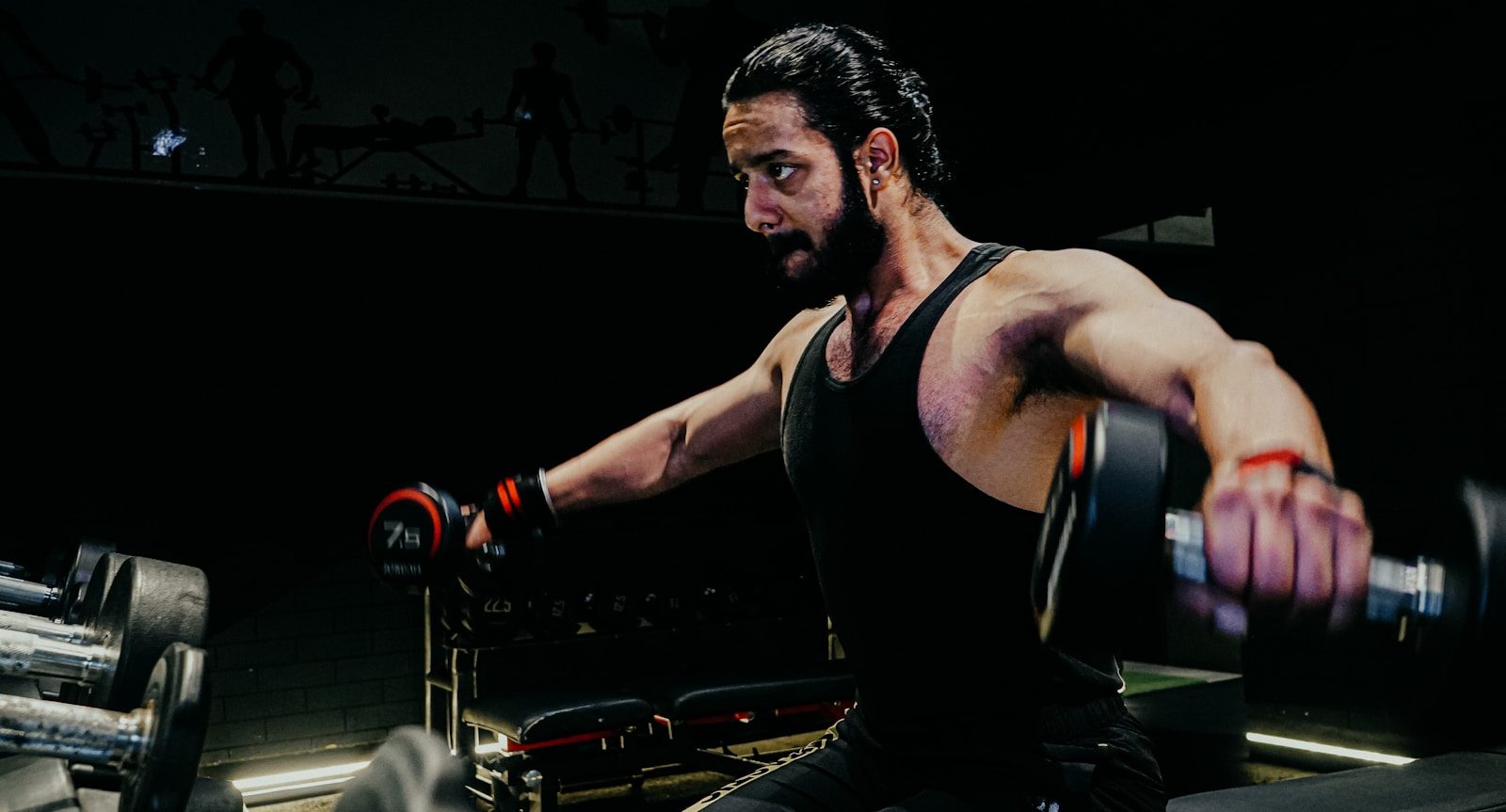
The dumbbell reverse fly is an upper-body accessory exercise that primarily trains the rear deltoids while also involving the rhomboids, middle trapezius, and other shoulder stabilizers. It is performed by hinging forward and raising two light dumbbells outward with a small, fixed bend in the elbows.
Proper form matters more than heavy weight. This guide explains how to perform the dumbbell reverse fly, which muscles it works, how to avoid common mistakes, and how to program it effectively.
Dumbbell Reverse Fly at a Glance
| Training detail | Recommendation |
|---|---|
| Best for | Direct rear-shoulder and upper-back accessory training |
| Primary muscle | Posterior deltoid |
| Assisting muscles | Rhomboids, middle trapezius, infraspinatus, and middle deltoid |
| Stabilizing muscles | Core, spinal erectors, glutes, and hamstrings |
| Equipment needed | Two dumbbells |
| Optional equipment | Adjustable bench for chest support |
| Difficulty | Beginner-friendly when performed with light weight |
| Suggested starting range | 2–3 sets of 10–15 repetitions |
| Rest between sets | 60–90 seconds |
| General frequency | 1–2 times per week |
| Effort | Finish with approximately 2–3 controlled repetitions remaining |
| Workout placement | After presses, rows, or pulldowns |
What Is a Dumbbell Reverse Fly?
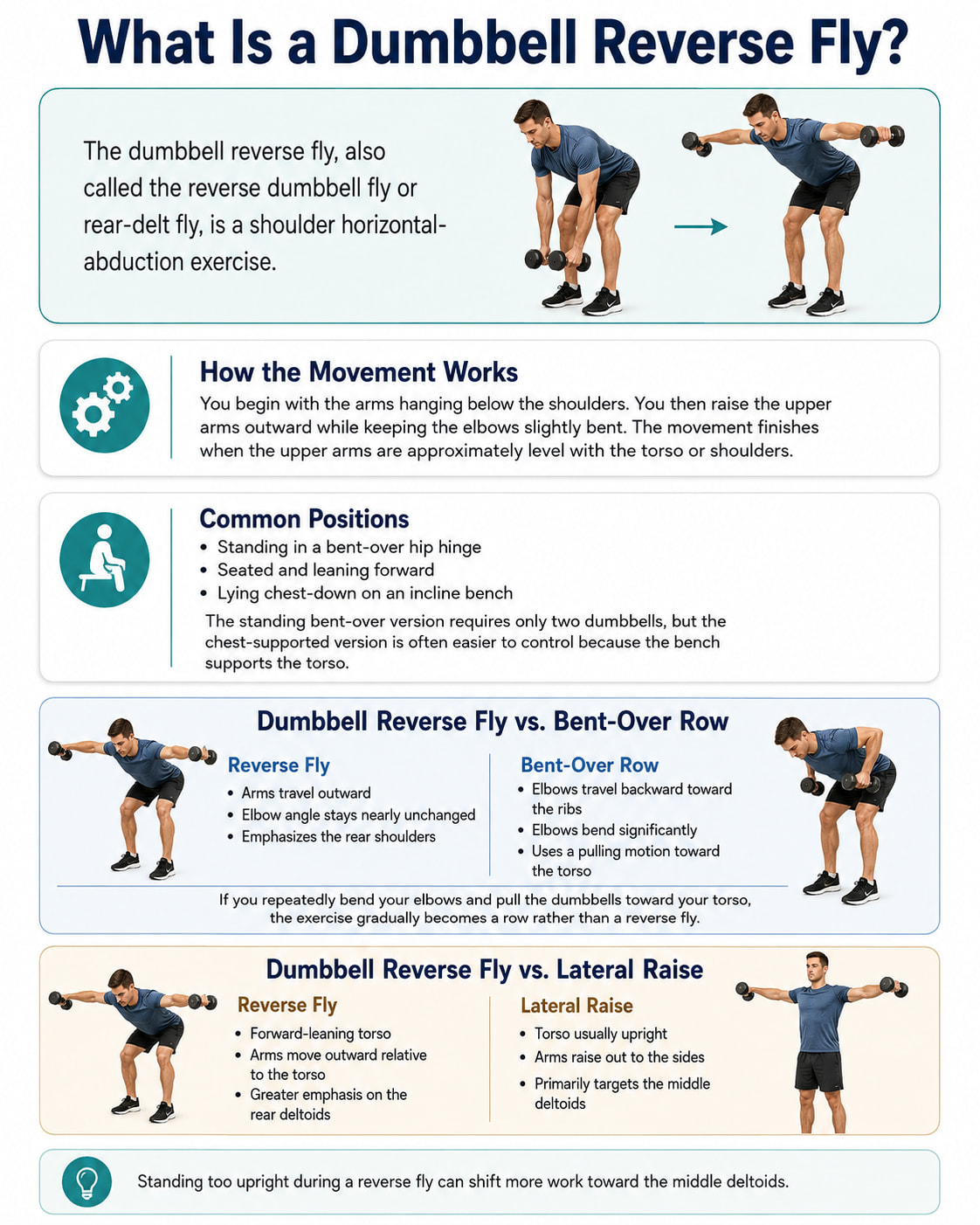
The dumbbell reverse fly, also called the reverse dumbbell fly or rear-delt fly, is a shoulder horizontal-abduction exercise.
You begin with the arms hanging below the shoulders. You then raise the upper arms outward while keeping the elbows slightly bent. The movement finishes when the upper arms are approximately level with the torso or shoulders.
The exercise can be performed in several positions:
- Standing in a bent-over hip hinge
- Seated and leaning forward
- Lying chest-down on an incline bench
The standing bent-over version requires only two dumbbells, but the chest-supported version is often easier to control because the bench supports the torso.
Dumbbell Reverse Fly vs. Bent-Over Row
A reverse fly is not the same as a bent-over row.
During a reverse fly, the arms travel outward and the elbow angle stays nearly unchanged. During a row, the elbows bend more significantly and travel backward toward the ribs.
If you repeatedly bend your elbows and pull the dumbbells toward your torso, the exercise gradually becomes a row rather than a reverse fly.
Dumbbell Reverse Fly vs. Lateral Raise
A lateral raise is normally performed with the torso upright and primarily targets the middle deltoids.
A reverse fly uses a forward-leaning torso so that raising the arms outward places greater demand on the rear deltoids. Standing too upright during a reverse fly can shift more work toward the middle deltoids.
How to Do a Dumbbell Reverse Fly
Best for: Training the posterior deltoids and upper back after compound upper-body exercises.
Muscles worked: Posterior deltoids, rhomboids, middle trapezius, infraspinatus, and other shoulder stabilizers.
Equipment needed: Two light dumbbells.
Sets, reps, and rest: Start with 2–3 sets of 10–15 repetitions. Rest 60–90 seconds between sets.
Step-by-Step Instructions
- Stand with your feet approximately hip- to shoulder-width apart and hold one dumbbell in each hand.
- Soften your knees and push your hips backward into a controlled hip hinge.
- Lean forward while maintaining a neutral spine, braced core, and relaxed neck.
- Allow the dumbbells to hang below your shoulders with your palms facing each other.
- Keep a small bend in your elbows and maintain approximately the same elbow angle throughout the repetition.
- Raise your upper arms outward in a wide arc. Lead with your elbows rather than your hands.
- Stop when your elbows are approximately level with your shoulders and your upper arms are near the level of your torso.
- Pause briefly without shrugging or forcing the dumbbells farther backward.
- Lower the dumbbells slowly until they return beneath your shoulders.
- Reset your balance and repeat without bouncing or swinging.
Mayo Clinic similarly recommends raising and lowering the weights slowly while avoiding arching, hunching, or swinging the torso.
Coaching Cue
Lead with your elbows and control the weights back down.
Thinking about moving the elbows can help prevent the exercise from becoming a wrist-dominant swing.
Breathing
Exhale as you raise the dumbbells and inhale as you lower them.
Do not hold your breath for the entire set. Maintain a gentle abdominal brace while continuing to breathe.
Range of Motion
Raise the arms only as far as you can without:
- Shrugging toward your ears
- Arching your lower back
- Bending the elbows into a row
- Rotating or twisting your torso
- Forcing the dumbbells behind your head
ACE advises finishing with the dumbbells approximately in line with or slightly in front of the ears during the incline version. Sweeping the arms too far behind the body can change the movement and shift emphasis away from the intended shoulder action.
Dumbbell Reverse Fly Muscles Worked
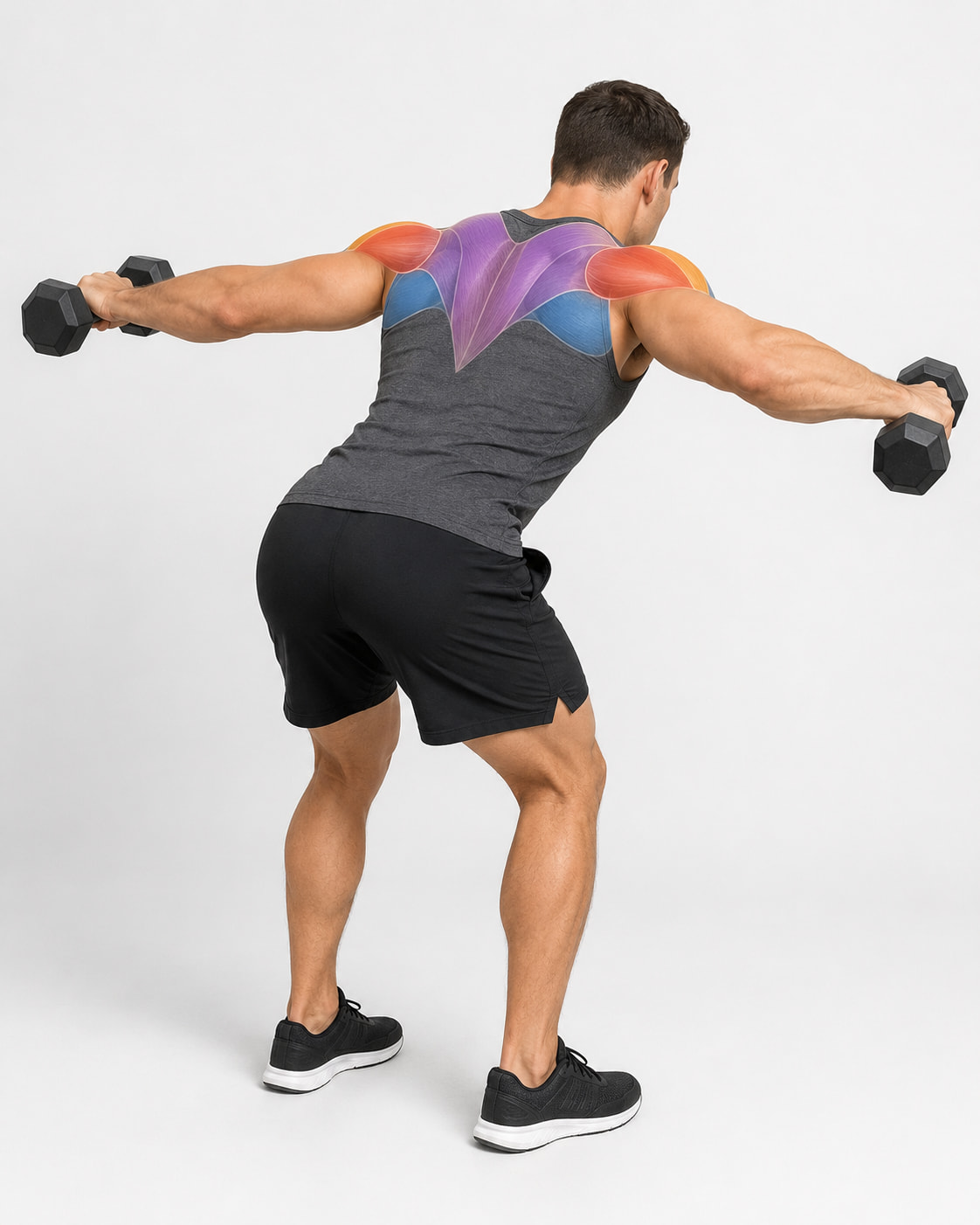
The dumbbell reverse fly trains the backs of the shoulders and several muscles that control the shoulder blades.
Posterior Deltoids
The posterior deltoids are the rear portions of the shoulder muscles. They are the primary target of the reverse fly.
Their main role during the exercise is moving the upper arms outward and backward relative to the torso. This action is known as shoulder horizontal abduction.
The rear deltoids also work during many rowing exercises. However, the reverse fly provides a more direct way to train them without making elbow flexion and the larger back muscles the main focus.
Rhomboids
The rhomboid major and minor sit between the shoulder blades and spine. They help retract and stabilize the shoulder blades as the arms move outward.
The Mayo Clinic identifies the rhomboids and muscles across the upper back as important contributors to the reverse fly.
You should feel the upper back working, but you do not need to forcefully pinch the shoulder blades together. Allow them to move naturally while keeping the neck relaxed.
Middle Trapezius
The middle portion of the trapezius helps retract the shoulder blades and control their position against the rib cage.
An anatomy reference from the NCBI Bookshelf explains that the middle fibers of the trapezius contribute to scapular retraction. This makes the middle trapezius an important assisting muscle during reverse flies.
Infraspinatus
The infraspinatus is one of the four rotator-cuff muscles. It assists with external rotation and helps stabilize the upper arm at the shoulder.
A small study indexed by PubMed found greater posterior-deltoid and infraspinatus activity when participants performed a reverse-fly machine exercise with a neutral hand position rather than a pronated position.
Because the study used a machine and measured short-term muscle activity, it does not prove that one grip produces more long-term muscle growth during the dumbbell version.
Middle Deltoids
The middle deltoids can assist as the upper arms move outward. Their contribution may increase when the torso remains more upright or when the exercise begins to resemble a lateral raise.
Core, Glutes, Hamstrings, and Spinal Erectors
During the standing version, these muscles hold the body in the bent-over position.
They are stabilizers rather than the primary targets. Excessive lower-back or hamstring fatigue may mean that chest support would allow you to train the rear deltoids more effectively.
Benefits of Dumbbell Reverse Flies
Provides Direct Rear-Deltoid Training
Rows, pulldowns, and other pulling exercises can involve the rear deltoids, but they also rely heavily on the lats, trapezius, rhomboids, and elbow flexors.
The reverse fly provides a more focused arm path for training the posterior deltoids.
Trains the Upper-Back Muscles
The rhomboids and middle trapezius help control the shoulder blades as the arms move outward. This makes the reverse fly useful for training both the rear shoulders and upper back in one exercise.
Complements Pressing Exercises
Bench presses, push-ups, and overhead presses involve the front and middle portions of the shoulders. Adding rear-deltoid work can help create a more complete shoulder-training program.
This does not mean reverse flies automatically correct posture or prevent shoulder problems. They simply strengthen several muscles on the backs of the shoulders and upper back.
Requires Minimal Equipment
The standing version requires only two dumbbells and enough space to hinge forward. It can be used in home workouts or commercial gyms.
Research available through the National Library of Medicine found that both dumbbells and elastic resistance produced meaningful muscle activity during reverse flies, although their muscle-activation patterns were not identical.
Resistance bands can therefore be a useful substitute when dumbbells are unavailable, but the two forms of resistance may not feel exactly the same.
Offers Several Beginner-Friendly Modifications
The exercise can be performed seated or chest-supported when maintaining a standing hip hinge is difficult.
The American Council on Exercise demonstrates an incline reverse fly using a bench angled approximately 45–60 degrees, allowing the torso to remain supported throughout the repetition.
Common Dumbbell Reverse Fly Mistakes
Using Too Much Weight
The reverse fly normally requires much lighter dumbbells than a bent-over row.
A weight is too heavy when you must swing the dumbbells, shorten the range, shrug, or repeatedly change your elbow angle. Reduce the load until you can control both the lifting and lowering phases.
Turning the Exercise Into a Row
Bending the elbows and pulling the dumbbells toward the ribs makes the movement more row-like.
Keep the elbows softly bent, but do not continue bending them as the weights rise.
Swinging the Dumbbells
Momentum allows the weights to move without requiring the target muscles to control the full repetition.
Pause briefly at the bottom, keep the torso still, and use a lighter load when necessary.
Raising the Torso During Each Repetition
Some lifters begin in a proper hinge but become more upright as the dumbbells rise.
Choose a torso position you can maintain for the entire set. Chest support is a useful option when the unsupported position is difficult to hold.
Rounding or Excessively Arching the Back
Maintain a long, controlled spine rather than collapsing the chest or overextending the lower back.
The torso does not need to be perfectly parallel to the floor. Hinge only as far as your mobility and control allow.
Shrugging the Shoulders
Pulling the shoulders toward the ears can create unnecessary neck tension and increase upper-trapezius involvement.
Keep your neck relaxed and think about moving the elbows outward rather than upward toward your head.
Forcing the Arms Too High
Higher is not always better. Stop when the upper arms reach a controllable position near the level of the torso.
Forcing extra range often causes shrugging, spinal extension, or excessive movement of the shoulder blades.
Dropping the Dumbbells
The lowering phase is part of the exercise. Take approximately two to three seconds to return the dumbbells to the starting position rather than allowing them to fall.
Bending the Wrists
Keep the wrists straight and aligned with the forearms. Curling the dumbbells upward does not improve rear-deltoid training and may make the exercise less comfortable.
What Grip Should You Use?
A neutral grip, with the palms facing each other, is a practical starting position for most people.
It usually allows the wrists and shoulders to remain in a comfortable position. It is also the grip used in ACE’s incline reverse fly instructions.
A 2013 reverse-fly machine study found greater mean posterior-deltoid and infraspinatus muscle activity with a neutral grip than with a palms-down grip. However, this does not establish that the neutral grip produces greater long-term strength or muscle growth during the dumbbell version.
A slightly overhand grip can also be used when it feels comfortable. Avoid deliberately forcing the thumbs downward or rotating the shoulders into an uncomfortable position.
Standing, Seated, or Chest-Supported Reverse Fly?
No single version is best for everyone. Choose the variation that allows the most controlled rear-deltoid work.
Standing Bent-Over Dumbbell Reverse Fly
Best for: Home workouts and lifters who can maintain a stable hip hinge.
The standing version requires no bench and trains the trunk, glutes, and hamstrings isometrically. However, it also provides more opportunity to swing the torso or use leg drive.
Seated Dumbbell Reverse Fly
Best for: Reducing leg movement while still using an unsupported torso.
Sit near the edge of a stable bench with your feet planted. Lean forward from the hips and allow the dumbbells to hang beside your lower legs. Raise the arms outward while keeping your torso still.
The seated position may reduce lower-body momentum, but it does not completely remove the need to control the spine.
Incline Chest-Supported Reverse Fly
Best for: Beginners, stricter rear-deltoid training, and people whose lower back becomes tired before their shoulders.
Set a bench to approximately 45–60 degrees. Lie chest-down against the backrest with your feet firmly supported. Let the dumbbells hang below your shoulders and raise them outward without lifting your chest from the bench.
Chest support reduces the need to hold an unsupported hinge and makes swinging more difficult. Mayo Clinic also recommends a prone bench variation when someone cannot perform the unsupported version with good form.
How to Choose the Right Weight
Choose dumbbells that allow you to complete the planned repetitions while maintaining:
- A stable torso
- A small, consistent elbow bend
- Neutral wrists
- No shrugging
- No swinging
- A controlled lowering phase
- Approximately two or three good repetitions still available
The final repetitions should feel challenging, but they should look similar to the first repetition.
Do not choose the weight based on what you use for rows or presses. The reverse fly uses a longer lever and smaller target muscles, so a much lighter load is normal.
How to Progress the Dumbbell Reverse Fly
Progress only after you can repeat the exercise with consistent control.
A simple progression method is:
- Select a repetition range, such as 10–15.
- Begin with a weight you can perform for approximately 10 controlled repetitions.
- Gradually add repetitions until you can complete all sets for 15 repetitions.
- Increase to the next available dumbbell weight.
- Return to the lower end of the repetition range and build up again.
Because dumbbell jumps can be large relative to the weight used for reverse flies, you can also progress by:
- Adding one repetition per set
- Slowing the lowering phase
- Adding a one-second pause near the top
- Improving range of motion without losing control
- Adding one set when additional volume is appropriate
- Using smaller adjustable-weight increases
Do not progress by swinging harder or forcing the arms beyond a comfortable range.
Sets, Reps, Rest, and Frequency
The following ranges provide practical starting points rather than rigid rules.
| Training goal | Sets and reps | Rest | Effort |
|---|---|---|---|
| Learning the exercise | 2 sets of 12–15 | 60–90 seconds | About 3 repetitions remaining |
| Rear-deltoid muscle training | 2–4 sets of 10–20 | 60–120 seconds | About 1–3 repetitions remaining |
| Light accessory finisher | 2 sets of 15–20 | 45–75 seconds | About 2–3 repetitions remaining |
Most people can perform direct rear-deltoid training one or two times per week. Account for rows and other exercises that already train the rear shoulders and upper back.
The 2026 resistance-training position stand from the American College of Sports Medicine emphasizes consistent training, individualized volume, and training major muscle groups regularly rather than relying on unnecessarily complicated programs. It also notes that reaching momentary muscular failure is not required for most healthy adults.
When to Do Reverse Flies in a Workout
Reverse flies usually work best after heavier compound exercises.
A practical upper-body exercise order is:
- Main pressing exercise
- Main rowing or pulling exercise
- Secondary press or pull
- Dumbbell reverse fly
- Arm or other isolation exercises
Performing reverse flies later allows you to prioritize heavier exercises while still training the rear deltoids with controlled accessory work.
You can perform very light reverse flies during a warm-up, but a demanding set may fatigue the rear shoulders before rows or presses.
Sample Upper-Body Workout
Perform this workout one or two times per week with at least one recovery day between sessions targeting the same muscles.
| Exercise | Sets and reps | Rest |
|---|---|---|
| Dumbbell bench press | 3 sets of 6–10 | 90–120 seconds |
| One-arm dumbbell row | 3 sets of 8–12 per side | 90–120 seconds |
| Dumbbell overhead press | 2–3 sets of 8–12 | 90 seconds |
| Dumbbell reverse fly | 2–3 sets of 12–15 | 60–90 seconds |
| Dumbbell biceps curl | 2 sets of 10–15 | 60 seconds |
Finish most sets with approximately two controlled repetitions remaining.
For the reverse fly, add repetitions before increasing weight. Once you can perform every set at the top of the range without swinging, shrugging, or bending the elbows into a row, increase the dumbbells by the smallest practical amount.
Dumbbell Reverse Fly Safety Tips
Warm up with several minutes of general movement and at least one light practice set before using your working weight.
Use chest support when maintaining the bent-over position causes excessive lower-back fatigue. Do not continue a set after your torso begins rising, rotating, or losing its stable position.
Stop the exercise and seek professional guidance if it causes sharp pain, numbness, dizziness, chest pain, or other unusual symptoms. General weight-training guidance from Mayo Clinic also recommends stopping exercises that cause pain rather than forcing additional repetitions.
Frequently Asked Questions
Are dumbbell reverse flies a shoulder or back exercise?
They train both regions, but the posterior deltoid is the primary target. The rhomboids and middle trapezius assist by moving and stabilizing the shoulder blades.
For programming purposes, reverse flies can be included in either a shoulder workout or a back and pulling workout.
How heavy should dumbbell reverse flies be?
Use a weight that allows at least 10 controlled repetitions without swinging, shrugging, or turning the movement into a row.
Many lifters need considerably lighter dumbbells for reverse flies than for rows, presses, or curls.
Should the elbows be straight or bent?
Keep a small bend in the elbows rather than locking them completely straight.
Maintain approximately the same elbow angle throughout the repetition. If the elbows continue bending as the dumbbells rise, the movement becomes more like a row.
Should I squeeze my shoulder blades together?
The shoulder blades should retract naturally as the arms move outward, but you do not need to force an aggressive squeeze.
Focus on moving the upper arms while keeping the neck relaxed and the torso still.
Why do I feel reverse flies in my upper traps?
Common causes include using too much weight, shrugging, raising the arms too high, or pulling the shoulders toward the ears.
Reduce the weight, keep the neck relaxed, and stop the repetition before shrugging begins.
Is the chest-supported reverse fly better than the standing version?
The chest-supported version is often easier to control and places less demand on the lower back. The standing version requires less equipment and adds more trunk and hip stabilization.
Choose the version that allows you to train the rear deltoids without momentum or unnecessary discomfort.
Can dumbbell reverse flies improve posture?
Reverse flies may strengthen several muscles involved in controlling the shoulders and shoulder blades. However, posture is influenced by many factors, including daily positions, mobility, strength, anatomy, fatigue, and movement habits.
The exercise should not be treated as a guaranteed posture correction.
Conclusion
The dumbbell reverse fly is a useful accessory exercise for training the posterior deltoids and upper-back muscles with minimal equipment.
Use light dumbbells, maintain a stable torso, keep a small fixed bend in your elbows, and control the lowering phase. Start with 2–3 sets of 10–15 repetitions, then progress by adding controlled repetitions before increasing weight.
This content is for informational purposes only and is not a substitute for medical advice.
References
- Mayo Clinic: Reverse Fly With Dumbbells
- American Council on Exercise: Incline Reverse Fly
- Schoenfeld et al.: Effect of Hand Position on Posterior-Shoulder Muscle Activity
- Bergquist et al.: Resistance Bands vs. Dumbbells During Reverse-Fly Exercises
- American College of Sports Medicine: Resistance-Training Guidelines for Healthy Adults
- NCBI Bookshelf: Anatomy and Function of the Rhomboid Muscles