The smith machine bench press is a chest-focused pressing exercise performed on a Smith machine, where the bar moves along fixed rails instead of freely through space. It trains the chest, shoulders, and triceps while giving you more bar-path stability than a traditional barbell bench press.
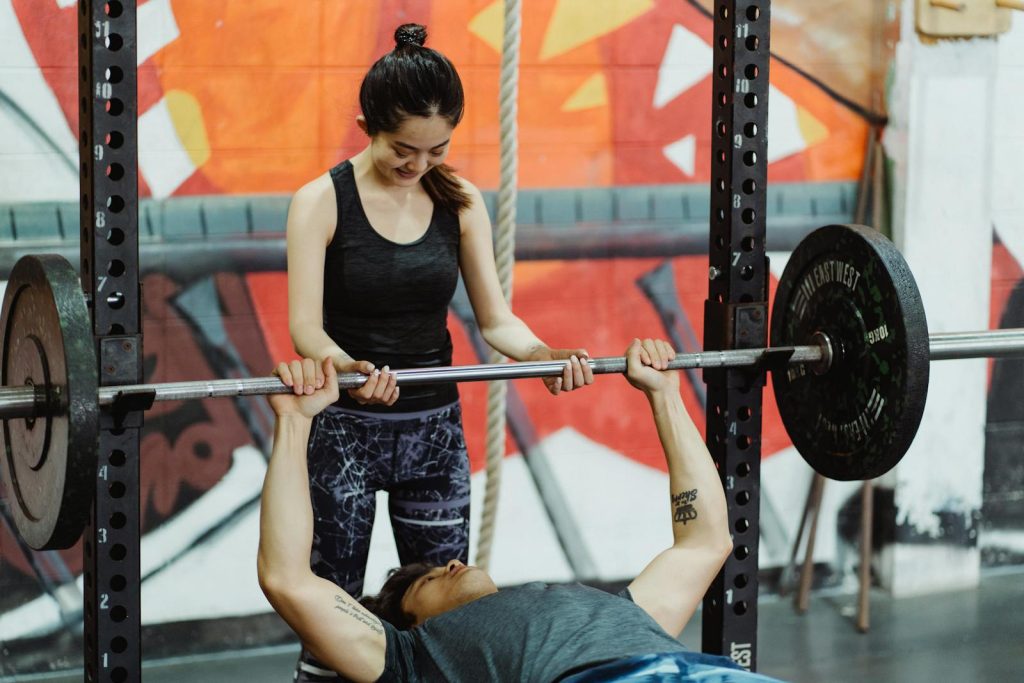
That makes it useful for beginners, bodybuilders, lifters training without a spotter, and anyone who wants controlled pressing volume for chest growth. It is not automatically safer or better than a free-weight bench press, but when set up correctly, it can be a strong tool in a chest or push-day workout.
What Is the Smith Machine Bench Press?
The Smith machine bench press is a machine-based version of the bench press. You lie on a flat bench under a guided bar, lower the bar toward your chest, then press it back up.
The biggest difference is the bar path. In a free-weight bench press, the bar can move slightly forward, backward, and side to side. In a Smith machine, the bar follows a fixed track. That fixed path reduces the need to stabilize the bar, which can help you focus more on pressing control and chest tension.
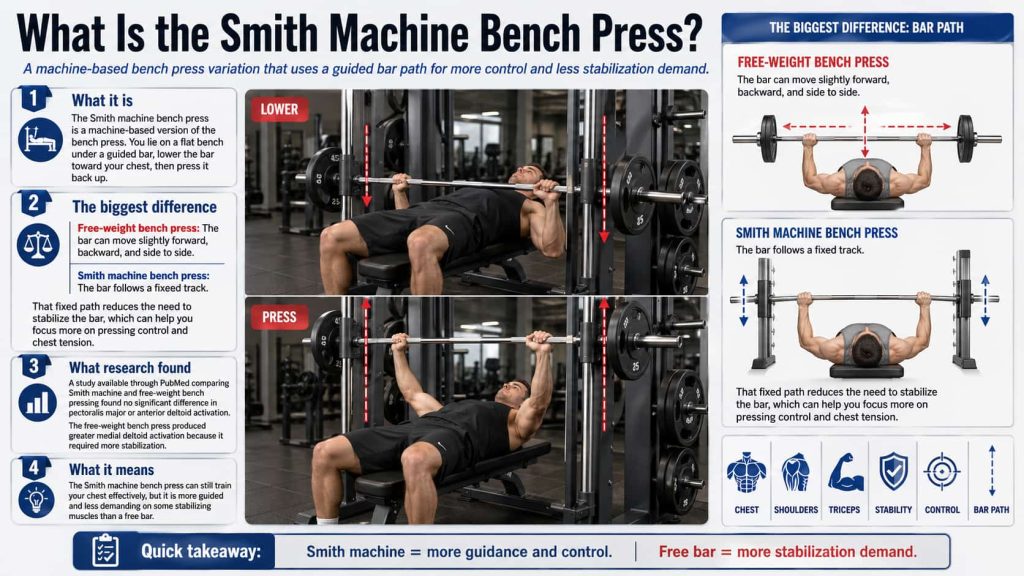
A study available through PubMed comparing Smith machine and free-weight bench pressing found no significant difference in pectoralis major or anterior deltoid activation, but the free-weight bench press produced greater medial deltoid activation because it required more stabilization.
In simple terms: the Smith machine bench press can still train your chest effectively, but it is more guided and less demanding on some stabilizing muscles than a free bar.
Smith Machine Bench Press Muscles Worked
The Smith machine bench press mainly works the upper-body pushing muscles.
Pectoralis Major
The pectoralis major is the main chest muscle trained during the movement. It helps bring your upper arms across your body and drives the pressing motion.
A flat Smith machine bench press usually emphasizes the middle portion of the chest. An incline setup shifts more work toward the upper chest.
Triceps Brachii
The triceps are located on the back of your upper arms. They help straighten your elbows as you press the bar upward.
A closer grip usually increases triceps involvement.
Anterior Deltoids
The anterior deltoids are the front shoulder muscles. They assist during the press, especially when the bar path or bench angle shifts more toward the upper chest.
Serratus Anterior and Upper-Back Stabilizers
Your serratus anterior, traps, rhomboids, and upper-back muscles help control shoulder blade position. They do not move the bar as much as the chest and triceps, but they help keep the shoulders stable.
Core and Lower Body
Your core, glutes, and legs help create a stable base. You should not turn the lift into a leg drive contest, but your feet should stay planted so your upper body can press from a strong position.
Benefits of the Smith Machine Bench Press
It Gives You a More Stable Pressing Path
The fixed rail system makes the bar easier to control. This can help beginners learn the basic press pattern before moving to more demanding free-weight variations.
It can also help experienced lifters keep the movement strict during higher-rep chest work.
It Can Help You Focus on Chest Tension
Because you do not have to balance the bar as much, you can focus on lowering under control, feeling the chest stretch, and pressing smoothly.
This makes the Smith machine bench press useful for hypertrophy training, especially when your goal is muscle tension instead of maximum athletic carryover.
It Works Well for Training Close to Failure
The Smith machine has hooks and safety stops, which can make it easier to train hard when you do not have a spotter. Still, you need to set the safety catches correctly before loading the bar.
Do not treat the machine as a replacement for good judgment. Use a weight you can control.
It Can Be Easier to Repeat Consistent Reps
A fixed path can help you repeat the same rep pattern from set to set. This is useful for tracking progress, especially if you are using moderate weights for 8–15 reps.
It Offers Useful Variations
You can use the Smith machine for flat bench press, incline bench press, close-grip bench press, paused reps, tempo reps, and high-rep finishers.
That makes it easy to build a complete chest-focused workout without changing stations often.
How to Do the Smith Machine Bench Press With Proper Form
Before you start, adjust the bench position carefully. Most Smith machines have either a straight vertical path or a slightly angled path. Your setup should allow the bar to lower toward your mid-chest or lower-chest area without forcing your shoulders into an uncomfortable position.
The American Council on Exercise emphasizes a stable bench position, firm foot placement, controlled lowering, neutral wrists, and avoiding bouncing during chest pressing.
Step-by-Step Instructions
- Place a flat bench inside the Smith machine.
- Lie down so the bar is positioned above your mid-chest.
- Plant your feet firmly on the floor.
- Grip the bar slightly wider than shoulder width.
- Pull your shoulder blades down and back against the bench.
- Rotate the bar to unlock it from the hooks.
- Lower the bar slowly toward your chest.
- Keep your elbows angled slightly away from your torso, not flared straight out.
- Lightly touch or come close to the chest without bouncing.
- Press the bar back up until your elbows are extended but not forcefully locked.
- Re-rack the bar by rotating it back onto the hooks.
Proper Form Checklist
- Keep your head, upper back, and hips on the bench.
- Keep your wrists stacked over your elbows.
- Keep your shoulder blades pulled back and down.
- Lower the bar with control.
- Press smoothly without jerking the weight.
- Keep your feet planted throughout the set.
Best Coaching Cue
Think: “Chest up, shoulders back, lower with control, press through the chest.”
This cue helps you avoid collapsing your shoulders forward at the bottom of the rep.
Common Smith Machine Bench Press Mistakes
Setting the Bench in the Wrong Position
Bench placement matters more than many lifters think. If the bench is too far forward or too far back, the bar may lower too high on your chest or drift into an awkward shoulder position.
Before loading heavy weight, test the movement with the empty bar.
Flaring the Elbows Too Wide
Letting the elbows flare straight out can place more stress on the shoulders. Your elbows should usually sit slightly below shoulder level, angled about 45–70 degrees from your torso depending on your structure and grip.
Bending the Wrists Back
Your wrists should stay stacked and strong. If they bend backward, the bar sits poorly in your hands and may increase wrist discomfort.
Grip the bar firmly and keep the knuckles pointed upward.
Bouncing the Bar Off the Chest
Bouncing reduces control and can irritate the shoulders or chest. Lower the bar smoothly and lightly touch the chest, or stop just above the chest if that feels better for your shoulders.
Using Too Much Weight
The Smith machine can make heavy weights feel more controlled, but that does not mean your form is solid. If your hips lift, shoulders roll forward, or reps become uneven, the weight is too heavy.
NASM explains that poor bench press form is often linked to technique problems, miscalculated load, excessive fatigue, and poor movement control.
Locking Out Too Aggressively
You can straighten your arms at the top, but do not slam into lockout. Keep tension in the chest and triceps instead of resting on the joints.
Ignoring Safety Stops
Set the safety catches before your working sets. The bar should stop above your chest if you cannot complete a rep.
Smith Machine Bench Press Variations
1. Flat Smith Machine Bench Press
Best for:
The flat Smith machine bench press is best for building general chest strength and size with a stable pressing path. It is the main variation most lifters should learn first.
Muscles worked:
This variation mainly works the pectoralis major, triceps, and anterior deltoids. The upper back and core help maintain stability.
Equipment needed:
You need a Smith machine, flat bench, and weight plates.
Why it stands out
The flat version gives you the most balanced chest emphasis. It is easier to control than a free bar and works well for moderate-to-high rep chest training.
Suggested sets and reps
Beginners can start with 2–3 sets of 8–12 reps. Intermediate lifters can use 3–4 sets of 6–12 reps. Advanced lifters can use 3–5 sets depending on whether the goal is strength, hypertrophy, or volume.
How to do it
- Set a flat bench under the Smith machine bar.
- Lie down with the bar over your mid-chest.
- Grip the bar slightly wider than shoulder width.
- Pull your shoulder blades down and back.
- Unlock the bar and lower it with control.
- Touch the chest lightly or stop just above it.
- Press the bar up smoothly.
- Re-rack the bar after the final rep.
Common mistakes:
The biggest mistakes are setting the bench too far forward, lowering the bar too high toward the neck, flaring the elbows, and bouncing the bar.
Coaching cue:
Lower the bar like you are trying to control every inch of the rep.
Exercise variations:
You can use paused reps, slow eccentrics, or a slightly closer grip.
How to use in a workout:
Use it as your main chest press early in the workout, before flys, push-ups, or isolation work.
2. Incline Smith Machine Bench Press
Best for:
The incline Smith machine bench press is best for lifters who want more upper-chest emphasis.
Muscles worked:
It targets the upper portion of the pectoralis major, anterior deltoids, and triceps.
Equipment needed:
You need a Smith machine, adjustable incline bench, and weight plates.
Why it stands out
The guided bar path can make incline pressing easier to control. This helps you focus on pressing through the upper chest without fighting as much side-to-side bar movement.
Suggested sets and reps
Use 2–4 sets of 8–12 reps for muscle growth. Beginners should start lighter because incline pressing often feels harder than flat pressing.
How to do it
- Set an adjustable bench to a low or moderate incline.
- Position the bench so the bar lowers toward the upper chest.
- Plant your feet firmly.
- Grip the bar slightly wider than shoulder width.
- Keep your shoulder blades pulled back.
- Lower the bar under control.
- Press up smoothly without shrugging.
- Re-rack the bar carefully.
Common mistakes:
Avoid setting the incline too steep. A very high incline can turn the movement into more of a shoulder press. Also avoid letting the shoulders shrug at the top.
Coaching cue:
Press up and slightly back into the machine path while keeping the chest lifted.
Exercise variations:
Use paused incline reps, tempo reps, or a lighter high-rep finisher.
How to use in a workout:
Use it after a flat press or as your main press if upper chest is your priority.
3. Close-Grip Smith Machine Bench Press
Best for:
The close-grip Smith machine bench press is best for emphasizing the triceps while still training the chest.
Muscles worked:
This variation works the triceps, chest, and anterior deltoids. The closer grip increases elbow extension demand.
Equipment needed:
You need a Smith machine, flat bench, and weight plates.
Why it stands out
The Smith machine can make close-grip pressing easier to stabilize. This lets you focus on triceps tension and lockout strength.
Suggested sets and reps
Use 3–4 sets of 8–12 reps for triceps-focused hypertrophy. For strength, use 3–5 sets of 4–6 reps only if your elbows and shoulders tolerate the movement well.
How to do it
- Set up as you would for a flat Smith machine bench press.
- Grip the bar around shoulder width or slightly inside shoulder width.
- Keep your elbows closer to your sides.
- Lower the bar toward the lower chest.
- Pause briefly if needed for control.
- Press up by driving through the triceps and chest.
- Avoid letting the wrists bend backward.
Common mistakes:
Do not grip so narrow that your wrists and elbows feel jammed. Also avoid letting the elbows flare wide as fatigue builds.
Coaching cue:
Keep your elbows under your wrists from the bottom to the top of the rep.
Exercise variations:
Use a paused close-grip press or a slow-lowering close-grip press.
How to use in a workout:
Use it after your main chest press or on a push day as a triceps-focused compound lift.
4. Paused Smith Machine Bench Press
Best for:
The paused Smith machine bench press is best for improving control at the bottom of the movement and reducing bouncing.
Muscles worked:
It works the chest, triceps, and anterior deltoids while demanding more control from the upper back and shoulders.
Equipment needed:
You need a Smith machine, bench, and weight plates.
Why it stands out
The pause forces you to own the bottom position. This can improve pressing discipline and make lighter weights feel more challenging.
Suggested sets and reps
Use 3–4 sets of 5–8 reps for strength control or 2–3 sets of 8–10 reps with a lighter load for hypertrophy.
How to do it
- Set up in a strong bench press position.
- Unlock the bar and lower it slowly.
- Pause for 1–2 seconds at the chest or just above it.
- Keep your shoulder blades tight during the pause.
- Press up smoothly without bouncing.
- Reset your breath and repeat.
Common mistakes:
Do not relax at the bottom. A pause should be controlled, not a full rest on the chest.
Coaching cue:
Stay tight at the bottom before you press.
Exercise variations:
Use a one-second pause for beginners or a two-to-three-second pause for advanced lifters.
How to use in a workout:
Use it as a technique-focused main lift or as a second pressing exercise after heavier work.
5. Tempo Smith Machine Bench Press
Best for:
The tempo Smith machine bench press is best for building control, increasing time under tension, and improving chest awareness.
Muscles worked:
It trains the chest, triceps, shoulders, and upper-back stabilizers.
Equipment needed:
You need a Smith machine, bench, and weight plates.
Why it stands out
Tempo reps make lighter weights more effective. Slowing down the lowering phase can help you feel the chest working instead of rushing through reps.
Suggested sets and reps
Use 2–4 sets of 8–12 reps with a 3-second lowering phase. Keep the weight moderate.
How to do it
- Set up with your normal Smith machine bench press position.
- Unlock the bar.
- Lower the bar for about 3 seconds.
- Pause briefly near the chest.
- Press up with control.
- Keep the same tempo on every rep.
Common mistakes:
Do not slow the first few reps and then rush the rest. Also avoid using a weight that forces your shoulders to roll forward.
Coaching cue:
Make every rep look the same from start to finish.
Exercise variations:
Use a 3-second eccentric, 4-second eccentric, or 3-1-1 tempo.
How to use in a workout:
Use it as a chest-building accessory after your heavier press or as a finisher with lighter weight.
Smith Machine Bench Press vs Barbell Bench Press
- The Smith machine bench press and barbell bench press are both chest presses, but they are not identical.
- The Smith machine gives you more stability because the bar moves on fixed rails. This can be useful for controlled reps, machine-based hypertrophy work, and training without a spotter.
- The barbell bench press requires more stabilization because the bar is free to move. That usually makes it better for building free-weight pressing skill and coordination.
- Neither exercise is automatically superior. Choose based on your goal.
- Use the Smith machine bench press if you want more control, easier setup, and chest-focused volume.
- Use the barbell bench press if you want more free-weight strength, stabilizer demand, and competition-style carryover.
How to Program the Smith Machine Bench Press
The Smith machine bench press can work as a main lift or an accessory lift. The best setup depends on your goal.
The CDC recommends adults include muscle-strengthening activities at least 2 days per week. For resistance training goals, the American College of Sports Medicine notes that strength training typically uses heavier loads, while hypertrophy training benefits from higher weekly volume.
For Beginners
Start with 2–3 sets of 8–12 reps.
Use a light-to-moderate weight and stop each set with 2–3 good reps left in reserve. Your goal is to learn the setup, bar path, and shoulder position.
For Muscle Growth
Use 3–4 sets of 8–15 reps.
Control the lowering phase and train close to failure while keeping form clean. The last few reps should feel challenging, but your shoulders should not roll forward.
For Strength
Use 3–5 sets of 3–6 reps.
This works best for intermediate or advanced lifters who already know how to brace, set the shoulders, and use safety catches correctly.
For a Chest Finisher
Use 2–3 sets of 12–20 reps.
Keep the weight lighter and focus on smooth, controlled reps. This works well at the end of a chest workout after heavier pressing.
Sample Smith Machine Bench Press Workouts
Beginner Chest Workout
| Exercise | Sets | Reps |
|---|---|---|
| Smith Machine Bench Press | 3 | 8–12 |
| Dumbbell Chest Fly | 2 | 10–12 |
| Incline Push-Up | 2 | 8–15 |
| Cable or Machine Row | 3 | 10–12 |
This routine gives beginners enough pressing practice without too much volume.
Intermediate Push Workout
| Exercise | Sets | Reps |
|---|---|---|
| Smith Machine Bench Press | 4 | 6–10 |
| Incline Dumbbell Press | 3 | 8–12 |
| Seated Shoulder Press | 3 | 8–10 |
| Cable Triceps Pressdown | 3 | 10–15 |
| Lateral Raise | 2–3 | 12–15 |
This works well for lifters training chest, shoulders, and triceps on the same day.
Chest-Focused Hypertrophy Workout
| Exercise | Sets | Reps |
|---|---|---|
| Incline Smith Machine Bench Press | 3 | 8–10 |
| Flat Smith Machine Bench Press | 3 | 10–12 |
| Cable Fly | 3 | 12–15 |
| Push-Up | 2 | Near failure |
This routine uses the Smith machine as the main pressing tool while adding flys and push-ups for extra chest volume.
Progressions and Regressions
Beginner Regressions
- Use the empty Smith machine bar first.
- Reduce the range of motion slightly if lowering all the way to the chest causes shoulder discomfort.
- Use a lighter load and slower tempo.
- Start with a machine chest press if lying under the bar feels uncomfortable.
Progressions
- Add 5–10 pounds when you can complete all sets and reps with clean form.
- Add a pause at the bottom.
- Slow the lowering phase to 3 seconds.
- Increase from 2 sets to 3 or 4 sets.
Move from flat to incline if you want more upper-chest focus.
Advanced Progressions
- Use rest-pause sets with caution.
- Use tempo work after heavier sets.
- Use the Smith machine bench press as a second press after barbell or dumbbell pressing.
Try mechanical drop sets, such as incline Smith press followed by flat Smith press, using safe loads and good control.
Who Should Use the Smith Machine Bench Press?
- The Smith machine bench press can be useful for:
- Beginners learning basic pressing mechanics.
- Bodybuilders focused on chest growth.
- Lifters training without a reliable spotter.
- People who want a stable pressing variation after free-weight work.
- Intermediate lifters who want more controlled chest volume.
It may not be the best main press for powerlifters, athletes who need free-weight coordination, or anyone whose shoulders feel forced into an uncomfortable path on the machine.
Safety Tips Before You Start
- Set the safety catches before your working sets.
- Start with the empty bar to test the bar path.
- Keep your shoulder blades pulled down and back.
- Do not use a grip that causes wrist or shoulder pain.
- Avoid bouncing the bar.
- Do not max out alone.
- Stop the exercise if you feel sharp pain, numbness, dizziness, or unusual shoulder discomfort.
If you have a current shoulder, chest, elbow, wrist, or back issue, get individual guidance from a qualified professional before using heavy pressing exercises.
FAQ
Is the Smith machine bench press good for building chest?
Yes, the Smith machine bench press can be good for building chest muscle when you use proper form, controlled reps, enough effort, and progressive overload. It is especially useful for stable, chest-focused pressing volume.
Is the Smith machine bench press easier than a barbell bench press?
For many lifters, yes. The fixed bar path reduces balance demands, so the movement can feel easier to control. However, it can also feel awkward if the machine path does not match your body structure.
Where should the bar touch during the Smith machine bench press?
The bar should usually lower toward the mid-chest or lower-chest area. Avoid lowering the bar too high toward the neck because that can place more stress on the shoulders.
Is the Smith machine bench press safe without a spotter?
It can be more manageable than a free bar when the safety stops are set correctly, but it is not risk-free. Always set the safety catches, use a controlled weight, and avoid max attempts alone.
Should I use the Smith machine bench press or dumbbell bench press?
Use the Smith machine bench press when you want a guided, stable pressing path. Use dumbbells when you want more freedom of movement, more stabilizer involvement, and a greater need to control each side independently.
Can beginners do the Smith machine bench press?
Yes. Beginners can use it to learn pressing mechanics, but they should start light, focus on setup, and avoid relying on the machine to “fix” poor form.
How many sets and reps should I do?
For general chest training, start with 2–4 sets of 8–12 reps. Use lower reps for strength only after your technique is consistent. Use higher reps for controlled hypertrophy work or finishers.
Conclusion
The Smith machine bench press is a useful chest exercise when you set up the bench correctly, control the bar, and use a weight that matches your form. It works the chest, triceps, and front shoulders while giving you a more stable pressing path than a free bar.
Use it as a main chest press, an incline press, a triceps-focused close-grip press, or a controlled finisher. Start with clean reps, progress gradually, and choose the variation that fits your goal.
For your next chest workout, choose one Smith machine bench press variation, perform 3–4 controlled sets, and track your reps so you can progress over time.
References
- PubMed — A Comparison of Muscle Activation Between a Smith Machine and Free Weight Bench Press
- American Council on Exercise — Chest Press Exercise
- NASM — Barbell Bench Press Exercise Library
- NASM — Maximize Bench Press Form by Addressing These Issues
- PMC — Muscle Activation and Intermuscular Coupling During Bench Press Variations
- Applied Sciences — Effects of Grip Width, Bench Inclination, and Stability on Bench Press Performance
1 thought on “Smith Machine Bench Press: Muscles Worked, Benefits & Form”