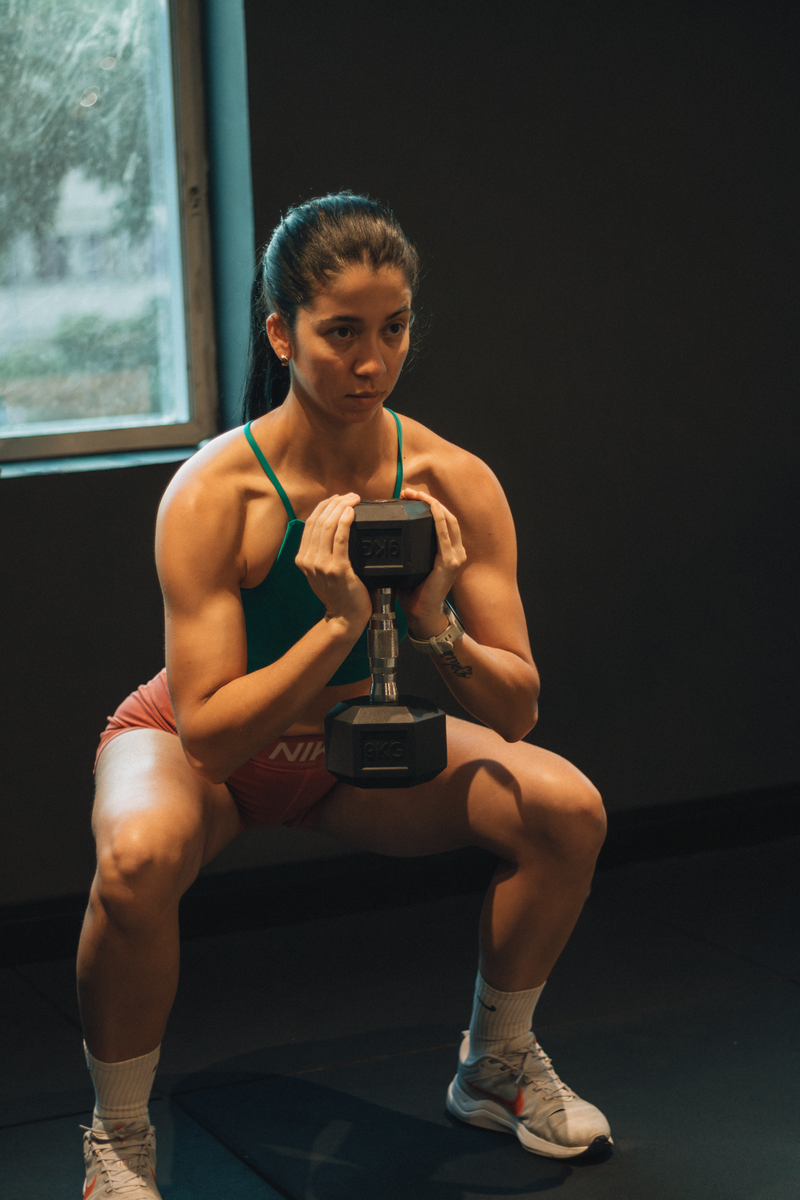
The best leg strengthening exercises combine squats, hip hinges, single-leg movements, hamstring work, and calf raises to train the entire lower body. The exercises below target the quadriceps, glutes, hamstrings, inner thighs, and calves while offering practical options for different experience levels.
You do not need to perform all 10 exercises in one session. Most readers will get more from choosing four to six movements, training them consistently, and gradually increasing the challenge.
The American College of Sports Medicine (ACSM) emphasizes in its 2026 resistance-training guidance that regular participation and progressive training are more important for most people than complicated programming. The Centers for Disease Control and Prevention (CDC) recommends muscle-strengthening activity for all major muscle groups on at least two days each week.
Leg Strengthening Exercises at a Glance
| Exercise | Main muscles worked | Equipment | Starting level |
|---|---|---|---|
| Goblet squat | Quadriceps, glutes, adductors | Dumbbell or kettlebell | Beginner to intermediate |
| Reverse lunge | Quadriceps, glutes, hamstrings | Bodyweight or dumbbells | Beginner to intermediate |
| Step-up | Quadriceps, glutes, hamstrings | Stable step or box | Beginner |
| Bulgarian split squat | Quadriceps, glutes, adductors | Bench and optional dumbbells | Intermediate |
| Romanian deadlift | Hamstrings, glutes, spinal erectors | Dumbbells or barbell | Beginner to intermediate |
| Hip thrust | Glutes, hamstrings, adductors | Bench and optional weight | Beginner to intermediate |
| Seated leg press | Quadriceps, glutes, hamstrings | Leg press machine | Beginner |
| Hamstring curl | Hamstrings | Machine, band, or stability ball | Beginner |
| Lateral lunge | Glutes, quadriceps, adductors | Bodyweight or dumbbell | Beginner to intermediate |
| Standing calf raise | Gastrocnemius and soleus | Bodyweight or dumbbells | Beginner |
10 Best Leg Strengthening Exercises
These exercises were selected because they cover the major lower-body movement patterns rather than repeating several nearly identical squat or lunge variations.
1. Goblet Squat
Best for: Learning squat technique and building general thigh and glute strength.
Muscles worked: Quadriceps, gluteus maximus, adductors, hamstrings, and core.
Equipment needed: One dumbbell or kettlebell.
Sets, reps, and rest: Perform 2–3 sets of 8–12 repetitions. Rest for 60–120 seconds.
How to Do It
- Hold a dumbbell vertically against your chest with both hands.
- Stand with your feet approximately shoulder-width apart and turn your toes slightly outward if that feels natural.
- Brace your midsection and keep the weight close to your body.
- Bend your hips and knees together, lowering as far as you can while keeping your heels and the balls of your feet supported.
- Push the floor away and straighten your hips and knees to stand.
Common mistakes: Avoid letting the dumbbell move away from your chest, allowing your knees to collapse inward, lifting your heels, or forcing a depth that causes your lower back to round. Your knees may travel forward naturally as long as your feet remain stable and you maintain control.
Regression: Perform a bodyweight box squat, briefly touching a chair or bench before standing.
Progression: Use a heavier dumbbell or advance to a double-dumbbell front squat.
The American Council on Exercise (ACE) also emphasizes holding the weight close, maintaining a controlled torso position, and pressing both feet into the floor.
2. Reverse Lunge
Best for: Developing single-leg strength with less forward stepping than a traditional forward lunge.
Muscles worked: Quadriceps, gluteus maximus, hamstrings, adductors, and calf muscles.
Equipment needed: None. Dumbbells can be added later.
Sets, reps, and rest: Perform 2–3 sets of 6–10 repetitions per leg. Rest for 60–120 seconds.
How to Do It
- Stand tall with your feet approximately hip-width apart.
- Step one foot backward, keeping enough width between your feet to remain balanced.
- Bend both knees and lower the rear knee toward the floor.
- Keep most of your pressure through the front foot while maintaining a stable torso.
- Push through the front foot and bring the rear leg forward to return to standing.
- Complete your repetitions before changing sides, or alternate legs.
Common mistakes: Avoid placing your feet in one narrow line, taking such a short step that the front heel lifts, slamming the rear knee into the floor, or pushing mainly from the back foot.
Regression: Hold a rack, wall, or sturdy chair and use a shorter range of motion.
Progression: Hold dumbbells at your sides or perform the movement from a small platform for additional range.
The ACE reverse-lunge guidance demonstrates how the movement can train the legs individually and be progressed from bodyweight to additional resistance after the movement is controlled.
3. Step-Up
Best for: Building single-leg strength for movements such as climbing stairs.
Muscles worked: Quadriceps and glutes, assisted by the hamstrings and calves.
Equipment needed: A stable step, box, or low bench.
Sets, reps, and rest: Perform 2–3 sets of 8–12 repetitions per leg. Rest for 60–90 seconds.
How to Do It
- Stand close to a stable platform.
- Place your entire working foot on top, not just your toes or heel.
- Brace your trunk and lean forward only slightly.
- Push through the elevated foot to raise your body onto the platform.
- Stand tall without forcefully snapping the knee straight.
- Lower under control, keeping the working foot on the platform until the other foot reaches the floor.
Common mistakes: Using a platform that is too high can cause excessive pushing from the trailing leg, loss of balance, or the working knee moving inward. Begin with a low step and increase the height only when you can control both the upward and downward phases.
Regression: Use a lower platform and hold a stable support.
Progression: Add dumbbells or pause briefly at the top without placing the trailing foot on the platform.
The American Council on Exercise recommends placing the foot firmly on the platform, controlling knee alignment, and lowering slowly during a step-up.
4. Bulgarian Split Squat
Best for: Challenging each leg independently and increasing the difficulty of split-squat training.
Muscles worked: Quadriceps, gluteus maximus, adductors, and hamstrings.
Equipment needed: A stable bench or box. Dumbbells are optional.
Sets, reps, and rest: Perform 2–3 sets of 6–10 repetitions per leg. Rest for 90–150 seconds.
How to Do It
- Stand a comfortable distance in front of a stable bench.
- Place the top of one foot lightly on the bench behind you.
- Keep most of your weight through the front leg.
- Bend the front knee and lower the rear knee toward the floor.
- Descend only as far as you can while keeping the front foot planted and your pelvis controlled.
- Push through the front foot to return to the starting position.
Common mistakes: Avoid standing too close to the bench, pushing forcefully through the rear leg, losing balance to either side, or using a bench that is unnecessarily high. The rear leg should provide support, but the front leg performs most of the work.
Regression: Keep both feet on the floor and perform a regular split squat. Holding a rack can also reduce the balance requirement.
Progression: Hold dumbbells at your sides or use a longer controlled range of motion.
The American Council on Exercise categorizes the Bulgarian split squat as an advanced movement, so beginners should generally master a supported split squat first.
5. Romanian Deadlift
Best for: Strengthening the hamstrings and glutes through a hip-hinge movement.
Muscles worked: Hamstrings, gluteus maximus, adductor magnus, spinal erectors, and core.
Equipment needed: Dumbbells, a barbell, or a kettlebell.
Sets, reps, and rest: Perform 2–3 sets of 8–12 repetitions. Rest for 90–150 seconds.
How to Do It
- Stand tall while holding the weights in front of your thighs.
- Keep your knees slightly bent without turning the movement into a squat.
- Brace your midsection and push your hips backward.
- Lower the weights close to your legs while maintaining a long, controlled spine.
- Stop when you feel a manageable stretch through the backs of your thighs or before your back position changes.
- Press your feet into the floor and extend your hips to stand.
Common mistakes: Avoid reaching the weights toward the floor by rounding your back, bending the knees excessively, allowing the weights to drift away from your legs, or leaning backward at the top. The depth depends on your hip mobility and control, not on whether the weights touch the floor.
Regression: Practice the hip hinge with a dowel or use very light dumbbells.
Progression: Increase the load gradually or perform a staggered-stance Romanian deadlift.
The American Council on Exercise emphasizes pushing the hips backward, keeping the load close, and stopping when tension is felt along the backs of the legs.
6. Hip Thrust
Best for: Directly loading hip extension and strengthening the glutes.
Muscles worked: Gluteus maximus, hamstrings, adductor magnus, and core.
Equipment needed: A stable bench and optional dumbbell, barbell, or resistance band.
Sets, reps, and rest: Perform 2–3 sets of 8–15 repetitions. Rest for 60–120 seconds.
How to Do It
- Sit on the floor with your upper back resting against the edge of a secured bench.
- Place your feet flat and approximately hip-width apart.
- Position the weight across the crease of your hips, using a pad when necessary.
- Brace your abdomen and keep your ribs controlled.
- Push through your feet and lift your hips.
- Finish by extending your hips without arching your lower back.
- Pause briefly and lower under control.
Common mistakes: Avoid placing the bench where it can slide, positioning your feet so far away that you mainly feel the hamstrings, pushing your head backward, or lifting higher by overextending the lower back.
Regression: Perform a floor glute bridge without added weight.
Progression: Add resistance, use a longer pause at the top, or progress to a controlled single-leg version.
The American Council on Exercise uses a similar bench-supported hip-extension pattern in its elevated glute bridge guidance and recommends pressing the feet into the floor while raising and lowering the hips under control.
7. Seated Leg Press
Best for: Loading the quadriceps and glutes without the balance demands of a free-weight squat.
Muscles worked: Quadriceps and glutes, assisted by the hamstrings and adductors.
Equipment needed: Seated leg press machine.
Sets, reps, and rest: Perform 2–4 sets of 8–15 repetitions. Rest for 90–150 seconds.
How to Do It
- Adjust the seat so your back and pelvis remain supported against the pad.
- Place both feet securely on the platform, approximately hip- to shoulder-width apart.
- Brace your trunk and release the machine’s safety mechanism.
- Press the platform away by extending your hips and knees.
- Stop before forcefully locking your knees.
- Bend your knees and lower the platform under control.
- End the descent before your pelvis or lower back begins lifting from the pad.
Common mistakes: Avoid lowering farther than your controlled range, allowing your heels to lift, bouncing out of the bottom, pushing your knees inward, or using your hands to press against your thighs.
Regression: Reduce the resistance and shorten the range slightly while maintaining control.
Progression: Add resistance gradually or use a single-leg press after developing adequate control with both legs.
The American Council on Exercise recommends keeping the back and pelvis supported, the heels on the platform, and the movement controlled without forcefully locking the knees.
8. Seated or Lying Hamstring Curl
Best for: Directly strengthening the hamstrings through knee flexion.
Muscles worked: Biceps femoris, semitendinosus, and semimembranosus.
Equipment needed: Hamstring curl machine. A resistance band or stability ball can be used at home.
Sets, reps, and rest: Perform 2–3 sets of 10–15 repetitions. Rest for 60–90 seconds.
How to Do It
- Adjust the machine so your knee joints align with its pivot point.
- Position the resistance pad against the lower calves, slightly above the heels.
- Secure your torso and hips against the machine.
- Bend your knees and move your heels toward the backs of your thighs.
- Pause briefly without lifting your hips or arching your back.
- Straighten your legs slowly until you return to the starting position.
Common mistakes: Avoid jerking the weight, lifting the hips away from the pad, allowing the resistance stack to drop between repetitions, or choosing a load that prevents full control.
Regression: Use a lighter machine setting or perform a standing resistance-band curl while holding a stable support.
Progression: Add resistance or perform controlled single-leg repetitions.
The American Council on Exercise emphasizes aligning the knee with the machine’s axis and stabilizing the torso throughout a lying hamstring curl. The hamstrings collectively contribute to both knee flexion and hip extension, which is why curls complement Romanian deadlifts rather than replace them.
9. Lateral Lunge
Best for: Building side-to-side strength and training the inner thighs.
Muscles worked: Glutes, quadriceps, adductors, and hamstrings.
Equipment needed: None. A dumbbell can be added later.
Sets, reps, and rest: Perform 2–3 sets of 6–10 repetitions per side. Rest for 60–90 seconds.
How to Do It
- Stand with your feet approximately hip-width apart.
- Take a controlled step directly to one side.
- Keep both feet facing mostly forward.
- Push your hips backward and bend the knee of the stepping leg.
- Keep the other leg long while both feet remain firmly supported.
- Push through the working foot to return to standing.
- Complete your repetitions before changing sides.
Common mistakes: Avoid stepping so far that the working knee collapses inward, allowing the working heel to lift, turning the toes excessively outward, or bending the straight leg unnecessarily.
Regression: Use a shorter step, reduce the depth, and hold a sturdy support.
Progression: Hold one dumbbell at your chest or add a controlled pause at the bottom.
The American Council on Exercise notes that an excessively wide step can make it difficult to maintain proper foot, shin, and knee alignment.
10. Standing Calf Raise
Best for: Strengthening the lower legs and improving controlled ankle plantar flexion.
Muscles worked: Gastrocnemius and soleus.
Equipment needed: None. Dumbbells or a calf-raise machine can provide additional resistance.
Sets, reps, and rest: Perform 2–4 sets of 10–20 repetitions. Rest for 45–90 seconds.
How to Do It
- Stand tall with your feet approximately hip-width apart.
- Hold a wall, rack, or sturdy object lightly for balance.
- Keep pressure distributed across the bases of your toes.
- Lift both heels as high as you can without rolling your ankles outward.
- Pause briefly at the top.
- Lower your heels slowly until they return to the floor.
Common mistakes: Avoid bouncing, completing very short repetitions, allowing your ankles to roll outward, or using balance momentum instead of calf strength.
Regression: Use both legs and hold a wall for support.
Progression: Hold dumbbells, perform single-leg repetitions, or use a raised step when you can control the additional range.
The American Council on Exercise demonstrates the standing calf-raise pattern used to strengthen ankle plantar flexion. The gastrocnemius and soleus are major plantar flexors, while the gastrocnemius also crosses the knee.
Benefits of Leg Strengthening Exercises
A balanced lower-body program can:
- Increase muscular strength and support muscle development
- Make activities such as standing, climbing stairs, lifting, and carrying more manageable
- Develop single-leg control and coordination
- Strengthen both the front and back of the thighs
- Address movement in forward, backward, and sideways directions
- Be adapted to bodyweight, bands, dumbbells, barbells, or machines
ACSM’s 2026 position stand found that resistance training can improve strength, muscle growth, power, endurance, and physical function. It also found that meaningful results can come from traditional weights, machines, resistance bands, bodyweight movements, and home-based training.
Sample Two-Day Leg Strengthening Routine
Train on two nonconsecutive days, such as Monday and Thursday. Beginners can start with two sets of each exercise and add a third set after the routine becomes manageable.
Before lifting, complete 5–10 minutes of easy walking, cycling, or similar low-impact movement. Then perform one lighter practice set of your first one or two exercises. The American Academy of Orthopaedic Surgeons (AAOS) recommends 5–10 minutes of low-impact activity before lower-body conditioning.
Day 1
| Exercise | Sets and reps | Rest |
|---|---|---|
| Goblet squat | 2–3 × 8–12 | 90–120 seconds |
| Romanian deadlift | 2–3 × 8–12 | 90–120 seconds |
| Reverse lunge | 2 × 6–10 per leg | 60–90 seconds |
| Hamstring curl | 2–3 × 10–15 | 60–90 seconds |
| Standing calf raise | 2–3 × 12–20 | 45–75 seconds |
Day 2
| Exercise | Sets and reps | Rest |
|---|---|---|
| Seated leg press | 2–3 × 8–12 | 90–120 seconds |
| Hip thrust | 2–3 × 8–12 | 90–120 seconds |
| Step-up or Bulgarian split squat | 2 × 6–10 per leg | 60–120 seconds |
| Lateral lunge | 2 × 6–10 per side | 60–90 seconds |
| Standing calf raise | 2–3 × 12–20 | 45–75 seconds |
Use the step-up when you are still developing single-leg balance. Move to the Bulgarian split squat when regular split squats and step-ups feel stable.
Most sets should finish with approximately two or three good repetitions still possible. This is often described as two or three repetitions in reserve. You do not need to reach complete muscular failure on every set; ACSM reports that failure training is not consistently necessary for the average healthy adult.
How to Choose the Right Weight
Select a resistance that allows you to complete the minimum number of repetitions with controlled technique while still making the final few repetitions challenging.
The weight is probably too heavy when:
- You cannot reach the bottom of the repetition range.
- Your range of motion becomes noticeably shorter.
- You rely on bouncing, swinging, or pushing from the wrong leg.
- Your back, hips, knees, or feet lose their normal position.
- You cannot control the lowering phase.
The weight may be too light when you finish the full set and could comfortably perform many additional repetitions.
Beginners should prioritize repeatable technique rather than testing a one-repetition maximum. Heavier loading can be introduced gradually as experience and movement control improve.
How to Progress Your Leg Exercises
A simple double-progression method works well for most readers:
- Choose a repetition range, such as 8–12.
- Begin with a weight you can control for eight repetitions.
- Gradually add repetitions over future workouts.
- Once every set reaches 12 repetitions with stable form, increase the resistance by the smallest practical amount.
- Return to approximately eight repetitions and repeat the process.
You can also progress by:
- Adding one set
- Using a slightly greater controlled range of motion
- Reducing assistance from a chair or rack
- Moving from bilateral to single-leg work
- Slowing the lowering phase
- Adding a brief pause in the hardest position
Change one variable at a time. Adding weight, repetitions, sets, and a harder variation simultaneously makes it difficult to judge whether you are recovering and maintaining proper form.
Common Leg-Training Mistakes
Performing Every Exercise in One Workout
More exercises do not automatically produce better results. Four to six complementary movements are usually enough for one general leg session.
Training Only With Squats
Squats are useful, but they do not fully replace hip hinges, hamstring curls, side-to-side exercises, unilateral work, and calf raises.
Adding Weight Before Improving Control
Use a load you can lower and lift without bouncing, twisting, or shortening the movement. Increasing resistance before establishing control often shifts work away from the intended muscles.
Forcing the Same Range of Motion as Someone Else
Limb length, mobility, equipment design, and experience affect comfortable movement depth. Use the greatest range you can control without forcing your joints or losing position.
Neglecting the Lowering Phase
Dropping quickly into a squat, lunge, curl, or calf raise reduces control. Lower the weight deliberately and remain balanced throughout the repetition.
Ignoring Side-to-Side Differences
Begin unilateral exercises with the less coordinated side. Use the same load and number of repetitions for both legs rather than performing extra work with the stronger side.
Leg-Strengthening Safety Tips
Use equipment that is stable and correctly adjusted. Secure benches against a wall when necessary, check that boxes cannot tip, and keep the exercise area clear.
Start with bodyweight or light resistance when learning a movement. Holding a stable support during lunges, step-ups, split squats, and calf raises is a useful modification, not a failure.
Muscular effort and mild fatigue are expected, but exercise should not cause sharp or worsening pain. Hospital for Special Surgery (HSS) advises stopping a specific movement when it causes pain and seeking professional guidance when needed.
Stop exercising and seek appropriate help for chest pain, dizziness, faintness, numbness, extreme shortness of breath, or other unusual symptoms.
People with an injury, recent surgery, major balance limitations, or a health condition affecting exercise should obtain individualized guidance before beginning a new routine.
Frequently Asked Questions
What are the best exercises for strengthening weak legs?
For general deconditioning, useful starting movements include bodyweight box squats, supported reverse lunges, low step-ups, glute bridges, band hamstring curls, and supported calf raises.
New, sudden, severe, or unexplained weakness should be evaluated by an appropriate healthcare professional rather than treated with a general workout.
How often should you perform leg strengthening exercises?
Two lower-body sessions per week is a practical starting point for many people. Place at least one recovery day between demanding sessions and adjust the frequency based on your total training schedule and recovery.
Both ACSM and the CDC recommend training the major muscle groups at least twice weekly for general fitness.
Can you strengthen your legs without gym equipment?
Yes. Bodyweight squats, reverse lunges, split squats, step-ups, glute bridges, lateral lunges, and calf raises can all be performed without traditional gym machines.
As these movements become easier, increase the repetitions, use a harder variation, slow the lowering phase, or add resistance with dumbbells or bands.
Are squats enough to strengthen the entire leg?
Squats train several major lower-body muscles, especially the quadriceps and glutes, but they are not a complete program by themselves.
Adding a hip hinge, hamstring curl, single-leg movement, lateral movement, and calf exercise provides more balanced coverage.
How many leg exercises should you perform in one workout?
Most general strength workouts can use four to six exercises. A practical structure includes:
- One squat or leg press
- One hip hinge or hip thrust
- One unilateral exercise
- One hamstring exercise
- One calf exercise
A lateral movement can be added or alternated between sessions.
When should you increase the weight?
Increase resistance when you can reach the top of the prescribed repetition range on every set without shortening the movement, losing balance, or changing your technique.
Use the smallest available increase and expect your repetitions to fall toward the lower end of the range.
Is walking enough to strengthen the legs?
Walking is valuable physical activity, but it does not provide the same progressive resistance as squats, hinges, lunges, curls, and calf raises. This is why current CDC activity guidelines list aerobic activity and muscle-strengthening activity as separate recommendations.
Conclusion
The most effective leg strengthening exercises are the ones you can perform safely, progress gradually, and repeat consistently. Build your routine around a squat, hip hinge, single-leg movement, hamstring exercise, and calf raise rather than trying to complete every exercise at once.
Start with manageable resistance, record your repetitions, and increase the challenge only after your current technique is stable.
This content is for informational purposes only and is not a substitute for medical advice.
References
- American College of Sports Medicine — Resistance Training Prescription for Muscle Function, Hypertrophy, and Physical Performance
- Centers for Disease Control and Prevention — Physical Activity Guidelines for Adults
- American Council on Exercise — Goblet Squat Exercise Guide
- American Council on Exercise — Step-Up Exercise Guide
- NCBI Bookshelf — Hamstring Muscle Anatomy and Function
- NCBI Bookshelf — Gluteus Maximus Anatomy and Function
- Hospital for Special Surgery — Preventing Injuries While Working Out