
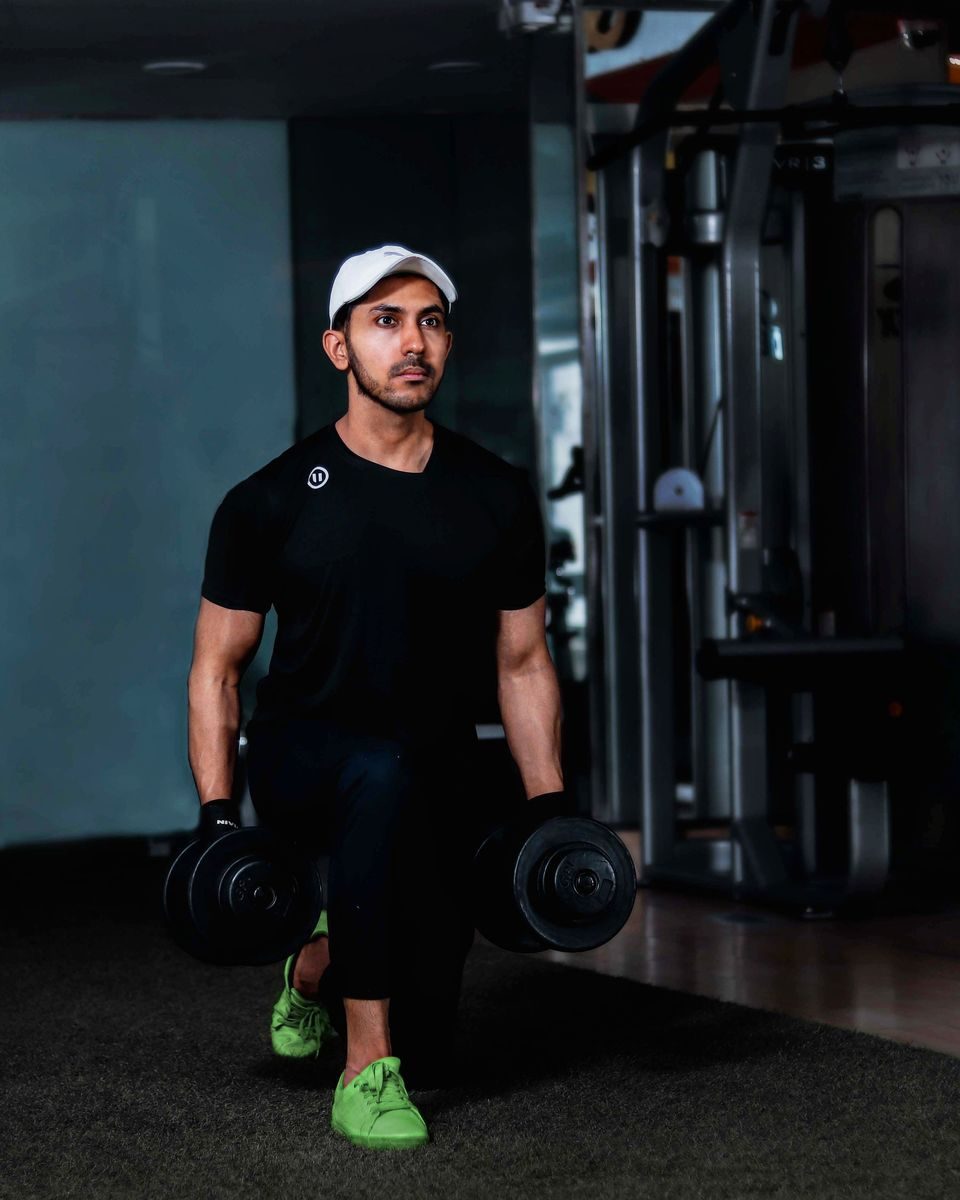
The best glute exercises for men include hip thrusts, squats, Romanian deadlifts, split squats, and hip abduction movements. Together, these exercises can help build stronger, more muscular glutes while improving lower-body strength and stability.
You don’t need to perform every exercise in one workout. The key is choosing movements that train your glutes in different ways, using proper form, and gradually increasing the challenge.
Below are 12 effective glute exercises for men, with step-by-step instructions, muscles worked, common mistakes, and a practical workout routine.
12 Best Glute Exercises for Men
These exercises combine heavy compound lifts, single-leg movements, and targeted glute training. Whether you’re a beginner or an experienced lifter, you can choose exercises that match your strength, equipment, and training goals.
1. Barbell Hip Thrust
The barbell hip thrust is one of the most useful exercises for directly training the gluteus maximus. It allows you to progressively increase resistance while emphasizing hip extension.
Best for: Building glute strength and muscle size.
Muscles worked: Gluteus maximus primarily, with assistance from the hamstrings and adductor magnus.
Equipment needed: Barbell, weight plates, barbell pad, and sturdy bench.
Sets, reps, and rest: 2–3 sets of 8–12 repetitions. Rest 90–150 seconds between sets.
How to Do It
- Sit on the floor with your upper back resting against a sturdy bench. Position a padded barbell across your hip crease.
- Bend your knees and plant your feet approximately hip-width to shoulder-width apart.
- Brace your core and press through your feet to raise your hips toward the ceiling.
- Continue until your shoulders, hips, and knees form approximately a straight line. Squeeze your glutes without arching your lower back.
- Slowly lower your hips and repeat.
Common mistakes: Avoid placing the bench too high against your back, lifting with your lower back, or bouncing at the bottom. Keep your ribs controlled and your feet stable throughout the movement.
Beginner modification: Start with bodyweight hip thrusts or floor glute bridges before adding a barbell.
2. Barbell Back Squat
The barbell back squat builds overall lower-body strength while challenging the glutes through hip extension, especially as you rise from a deep, controlled squat.
It also develops the quadriceps and adductors, making it an excellent foundation for lower-body training.
Best for: Overall leg strength, glute development, and progressive heavy lifting.
Muscles worked: Quadriceps, gluteus maximus, and adductor magnus. Core and spinal erector muscles assist with stabilization.
Equipment needed: Barbell, weight plates, and squat rack with safety bars.
Sets, reps, and rest: 2–3 sets of 6–10 repetitions. Rest 2–3 minutes between sets.
How to Do It
- Position the barbell securely across your upper back and grip it firmly.
- Unrack the bar, step backward, and position your feet approximately shoulder-width apart with your toes slightly turned outward.
- Brace your abdomen and bend your hips and knees together to lower into a squat.
- Descend as far as you can comfortably control while keeping your feet planted and your back stable.
- Push through your whole feet to return to standing.
Common mistakes: Avoid letting your knees collapse inward, lifting your heels, or rounding your lower back to reach a deeper position. Do not sacrifice control to lift more weight.
Beginner modification: Practice bodyweight squats or goblet squats before progressing to a barbell.
3. Dumbbell Romanian Deadlift
The dumbbell Romanian deadlift develops the glutes and hamstrings through a controlled hip-hinge movement.
Unlike a traditional deadlift, the movement begins from a standing position and keeps the knees slightly bent throughout each repetition.
Best for: Strengthening the glutes, hamstrings, and hip-hinge movement pattern.
Muscles worked: Hamstrings and gluteus maximus, with the spinal erectors and core providing stability.
Equipment needed: Two dumbbells.
Sets, reps, and rest: 2–3 sets of 8–12 repetitions. Rest 90–120 seconds between sets.
How to Do It
- Stand with your feet hip-width apart and hold a dumbbell in each hand in front of your thighs.
- Maintain a slight bend in your knees and brace your core.
- Push your hips backward while lowering the dumbbells close to your legs.
- Continue until you feel a comfortable stretch in your hamstrings, stopping before your lower back rounds.
- Drive your hips forward to stand upright and engage your glutes.
Common mistakes: Avoid turning the movement into a squat, rounding your back, or lowering the dumbbells farther than your mobility allows. The hips should travel backward while the dumbbells remain close to your legs.
Progression: Increase the dumbbell weight gradually while maintaining a controlled hip hinge.
4. Dumbbell Bulgarian Split Squat
The Bulgarian split squat challenges one leg at a time while training the glutes, quadriceps, and hip stabilizers.
A slight forward torso lean can increase the emphasis on the glutes, provided your back remains stable.
Best for: Single-leg glute strength, muscle development, and balance.
Muscles worked: Gluteus maximus and quadriceps, with assistance from the adductors and hip stabilizers.
Equipment needed: Two dumbbells and a sturdy bench.
Sets, reps, and rest: 2–3 sets of 8–10 repetitions per leg. Rest 90–120 seconds between sets.
How to Do It
- Stand approximately one stride in front of a bench while holding a dumbbell in each hand.
- Place the top of one foot on the bench behind you. Keep your front foot planted and positioned slightly wider than a straight-line stance.
- Brace your core and lean slightly forward from your hips without rounding your back.
- Bend your front knee and lower your hips toward the floor, allowing your rear knee to move downward.
- Press through your front foot to stand. Complete your repetitions before switching legs.
Common mistakes: Avoid placing your front foot too close to the bench, pushing excessively through your rear leg, or allowing your front knee to collapse inward.
Beginner modification: Perform a regular split squat with both feet on the floor. Add the rear-foot elevation once you can maintain balance and control.
5. Dumbbell Step-Up
Dumbbell step-ups train the glutes and quadriceps while challenging single-leg strength and balance.
The movement resembles climbing stairs, making it a useful addition to both strength and functional fitness routines.
Best for: Single-leg strength, glute development, and controlled stepping movements.
Muscles worked: Gluteus maximus and quadriceps, with assistance from the hamstrings, calves, and hip stabilizers.
Equipment needed: Two dumbbells and a sturdy step or platform.
Sets, reps, and rest: 2–3 sets of 8–10 repetitions per leg. Rest 60–90 seconds between sets.
How to Do It
- Stand facing a sturdy platform while holding a dumbbell at each side.
- Place your entire right foot on the platform.
- Press through your right foot to lift your body upward until you are standing tall on the platform.
- Bring your left foot onto the platform without jumping or pushing excessively from the trailing leg.
- Lower your left foot to the floor with control, then return to the starting position. Complete your repetitions before switching legs.
Common mistakes: Avoid using an excessively high platform, bouncing off your trailing foot, or allowing your working knee to collapse inward.
Beginner modification: Use a lower step without dumbbells. Increase the height or add weight only when you can control the movement.
6. Dumbbell Reverse Lunge
The dumbbell reverse lunge strengthens the glutes and thighs while requiring each leg to control the movement independently.
Stepping backward also allows you to adjust your stride length and find a comfortable position for your hips and knees.
Best for: Glute development, unilateral strength, and lower-body coordination.
Muscles worked: Gluteus maximus, quadriceps, and adductors, with the hamstrings and core assisting.
Equipment needed: Two dumbbells.
Sets, reps, and rest: 2–3 sets of 8–12 repetitions per leg. Rest 60–90 seconds between sets.
How to Do It
- Stand upright with your feet approximately hip-width apart and a dumbbell in each hand.
- Brace your core and take a controlled step backward with one leg.
- Bend both knees and lower your body toward the floor, maintaining a slight forward lean from the hips.
- Stop when your rear knee approaches the floor while keeping your front foot firmly planted.
- Push through your front foot to return to standing. Repeat on the opposite side.
Common mistakes: Avoid taking an excessively short step, allowing the front knee to collapse inward, or using momentum to return to standing.
Beginner modification: Practice bodyweight reverse lunges while lightly holding a stable support for balance.
7. Conventional Barbell Deadlift
The conventional barbell deadlift is a compound strength exercise that challenges the glutes alongside several other major muscle groups.
It builds the ability to produce force through the hips and legs while maintaining a stable torso under resistance.
Best for: Heavy lower-body strength and posterior-chain development.
Muscles worked: Gluteus maximus, quadriceps, hamstrings, adductors, and spinal erectors.
Equipment needed: Barbell and weight plates.
Sets, reps, and rest: 2–3 sets of 5–8 repetitions. Rest 2–3 minutes between sets.
How to Do It
- Stand with your feet approximately hip-width apart and the barbell positioned over your midfoot.
- Push your hips backward, bend your knees, and grip the bar just outside your legs.
- Brace your abdomen, maintain a neutral spine, and create tension through your upper back.
- Push through the floor while extending your knees and hips together. Keep the bar close to your legs.
- Stand tall without leaning backward, then lower the bar by hinging at your hips before bending your knees.
Common mistakes: Avoid rounding your lower back, pulling the bar away from your body, or jerking the weight from the floor. Heavy deadlifts require consistent technique and appropriate loading.
Beginner modification: Learn the hip-hinge movement with a light kettlebell or dumbbells before progressing to the barbell.
8. Glute-Focused 45-Degree Back Extension
The 45-degree back extension can be performed as a hip-extension exercise to emphasize the glutes and hamstrings.
Although the equipment is commonly called a back extension bench, the goal of this variation is to move primarily through the hips rather than repeatedly arching the lower back.
Best for: Strengthening the glutes and hamstrings through controlled hip extension.
Muscles worked: Gluteus maximus and hamstrings, with assistance from the adductors and spinal erectors.
Equipment needed: 45-degree back extension bench.
Sets, reps, and rest: 2–3 sets of 10–15 repetitions. Rest 60–90 seconds between sets.
How to Do It
- Adjust the bench so its upper pad supports your upper thighs without restricting hip movement.
- Secure your feet and cross your arms over your chest.
- Brace your abdomen and slowly hinge forward from your hips, keeping your torso controlled.
- Lower until you feel a comfortable stretch through your glutes and hamstrings.
- Extend your hips to raise your torso until it aligns with your legs. Stop without arching your lower back.
Common mistakes: Avoid swinging your torso, extending beyond a straight body position, or placing the bench pad too high against your abdomen.
Progression: Begin with bodyweight repetitions. Once you can control the movement, hold a light weight against your chest.
9. Cable Glute Kickback
Cable glute kickbacks provide targeted resistance during hip extension.
They are useful as an accessory exercise after heavier compound lifts because you can train each glute independently without needing heavy weights.
Best for: Targeted glute strengthening and accessory training.
Muscles worked: Gluteus maximus primarily, with assistance from the hamstrings and hip stabilizers.
Equipment needed: Cable machine and ankle cuff.
Sets, reps, and rest: 2–3 sets of 12–15 repetitions per leg. Rest 45–75 seconds between sets.
How to Do It
- Attach an ankle cuff to a low cable pulley and secure it around one ankle.
- Face the machine and hold its frame for support.
- Step backward until the cable has slight tension. Keep your supporting knee slightly bent and lean forward comfortably from the hips.
- Extend your working leg backward while keeping your pelvis stable and your core engaged.
- Slowly return your leg to the starting position. Complete your repetitions before switching sides.
Common mistakes: Avoid swinging your leg, rotating your pelvis, or arching your lower back to increase the range of motion.
Beginner modification: Use the lightest cable setting and focus on a controlled, comfortable range of motion.
10. Seated Hip Abduction Machine
The seated hip abduction machine trains the muscles responsible for moving your thighs outward.
This makes it particularly useful for strengthening the gluteus medius and minimus, which help stabilize the pelvis during walking and single-leg movements.
Best for: Outer-glute development and hip abductor strength.
Muscles worked: Gluteus medius, gluteus minimus, and tensor fasciae latae.
Equipment needed: Seated hip abduction machine.
Sets, reps, and rest: 2–3 sets of 12–20 repetitions. Rest 45–75 seconds between sets.
How to Do It
- Sit on the machine and adjust the seat, pads, and starting position for comfort.
- Place your outer thighs against the pads and position your feet securely on the supports.
- Hold the handles and brace your core.
- Push your knees outward against the resistance through a comfortable range of motion.
- Pause briefly, then return your knees inward slowly without letting the weights slam.
Common mistakes: Avoid rocking your torso, forcing your knees too far apart, or using more resistance than you can control.
Progression: Increase resistance gradually once you can complete the full repetition range without momentum.
11. Mini-Band Lateral Walk
The mini-band lateral walk provides resistance as you step sideways, challenging the hip abductors and muscles that help stabilize your pelvis.
It is particularly useful as a lighter accessory exercise or part of a lower-body warm-up.
Best for: Hip abductor strength, lateral movement control, and beginner-friendly glute training.
Muscles worked: Gluteus medius, gluteus minimus, and tensor fasciae latae.
Equipment needed: Mini-loop resistance band.
Sets, reps, and rest: 2 sets of 8–12 steps in each direction. Rest 30–60 seconds between sets.
How to Do It
- Place a light mini resistance band just above your knees.
- Stand with your feet approximately shoulder-width apart and bend your knees and hips slightly.
- Keep your core engaged and your toes pointing mostly forward.
- Step sideways with one foot, stretching the band while maintaining knee alignment.
- Bring your other foot toward the first without completely removing band tension. Repeat several steps, then change direction.
Common mistakes: Avoid standing completely upright, dragging your feet, or allowing your knees to collapse inward as you step.
Progression: Increase band resistance or gradually move the band toward your ankles once you can maintain proper control.
12. Single-Leg Glute Bridge
The single-leg glute bridge is a bodyweight exercise that challenges your glutes while requiring your pelvis to remain stable.
It is especially useful for home workouts or as an accessory movement when you do not have access to gym equipment.
Best for: Bodyweight glute strength, single-leg control, and home training.
Muscles worked: Gluteus maximus, with assistance from the gluteus medius, gluteus minimus, hamstrings, and core muscles.
Equipment needed: Exercise mat.
Sets, reps, and rest: 2–3 sets of 8–12 repetitions per leg. Rest 45–60 seconds between sets.
How to Do It
- Lie on your back with your knees bent and feet flat on the floor.
- Lift one foot off the floor while keeping that knee bent approximately 90 degrees.
- Brace your abdominal muscles and press your supporting foot firmly into the floor.
- Raise your hips until your shoulders, hips, and supporting knee form approximately a straight line.
- Lower your hips slowly while keeping your pelvis level. Complete your repetitions before switching legs.
Common mistakes: Avoid rotating your hips, arching your lower back, or lifting your hips higher than you can control.
Beginner modification: Start with a standard two-leg glute bridge. Progress to the single-leg version once you can raise and lower your hips without losing stability.
Why Glute Strength Matters for Men
Strong glutes contribute to more than muscle size. They help generate and control force during many everyday and athletic movements.
Your glutes are made up of three main muscles:
| Glute Muscle | Main Function | Useful Exercises |
|---|---|---|
| Gluteus maximus | Extends the hip and contributes to external rotation | Hip thrusts, squats, Romanian deadlifts |
| Gluteus medius | Moves the thigh outward and stabilizes the pelvis | Hip abduction, lateral band walks |
| Gluteus minimus | Assists hip abduction and pelvic stabilization | Hip abduction, single-leg movements |
According to the National Library of Medicine’s gluteus medius anatomy reference, the gluteus medius and minimus play important roles in maintaining pelvic stability when standing or moving on one leg.
Training these muscles may help support:
- Lower-body strength: Stronger hip extensors contribute to squatting, lifting, and climbing stairs.
- Muscle development: Progressive resistance training can increase glute muscle size.
- Athletic performance: Hip strength is important for running, jumping, accelerating, and changing direction.
- Single-leg stability: Strong hip abductors help control pelvic position during walking and unilateral exercises.
- Balanced lower-body training: Glute-focused movements complement exercises that primarily challenge the quadriceps and hamstrings.
You do not need a completely different glute-training method because you are male. The same fundamental exercise and progression principles apply to men and women, although individual strength, mobility, experience, and goals will influence exercise selection.
How to Build a Glute Workout for Men
A productive glute workout does not need 10 or 12 exercises.
For most beginners and intermediate lifters, three or four well-chosen movements per session are enough to create a useful training stimulus.
A simple approach is to combine:
- One major compound lift, such as a squat or hip thrust.
- One hip-hinge exercise, such as a Romanian deadlift.
- One single-leg movement, such as a step-up or split squat.
- One accessory movement, such as a cable kickback or hip abduction.
The National Strength and Conditioning Association’s glute-training guidance supports using complementary movements when programming for glute strength and hypertrophy.
Two-Day Glute Workout for Men
This routine provides two different training sessions each week.
Allow approximately 48–72 hours between the sessions when possible, especially if you are new to lower-body strength training.
Workout A: Compound Strength and Hip Hinge
| Exercise | Sets | Reps | Rest |
|---|---|---|---|
| Barbell Back Squat | 2 | 6–10 | 2–3 minutes |
| Dumbbell Romanian Deadlift | 2 | 8–12 | 90–120 seconds |
| Dumbbell Step-Up | 2 | 8–10 per leg | 90 seconds |
| Mini-Band Lateral Walk | 1–2 | 10 steps each direction | 45–60 seconds |
Focus: Building lower-body strength through squatting, hinging, and controlled single-leg movement.
Workout B: Glute-Focused Strength and Accessories
| Exercise | Sets | Reps | Rest |
|---|---|---|---|
| Barbell Hip Thrust | 2 | 8–12 | 2 minutes |
| Dumbbell Bulgarian Split Squat | 2 | 8–10 per leg | 90–120 seconds |
| Cable Glute Kickback | 2 | 12–15 per leg | 60–75 seconds |
| Seated Hip Abduction Machine | 1–2 | 15–20 | 45–60 seconds |
Focus: Challenging the gluteus maximus through hip extension while adding targeted hip abductor work.
How Hard Should You Train?
Choose resistance that makes the final repetitions challenging without forcing you to lose proper technique.
For most working sets, aim to finish with approximately 2–3 good repetitions remaining.
If you are completely new to strength training, begin with two sets of the first three exercises in each workout. Add accessory sets gradually as your technique and recovery improve.
These two workouts also involve the quadriceps and hamstrings, so account for other leg training you perform during the week.
How Often Should Men Train Their Glutes?
Training your glutes twice per week is a practical starting point for building strength and muscle.
The American College of Sports Medicine’s 2026 resistance-training recommendations emphasize consistency and training major muscle groups at least twice weekly.
Training volume should reflect your goals, experience, and ability to recover.
For muscle growth, approximately 10 challenging weekly sets per muscle group can be a useful general target, but it is not a requirement for everyone. Beginners can make progress with less work, and compound exercises train multiple muscles simultaneously.
Start with a manageable routine before increasing your weekly sets.
How to Progress Your Glute Training
Performing the same exercises with the same resistance indefinitely can eventually limit your progress.
To keep improving, gradually increase the training challenge while maintaining good form.
1. Increase Repetitions First
Suppose your program includes three sets of barbell hip thrusts for 8–12 repetitions.
Begin with a weight you can control for eight repetitions.
Over subsequent sessions, work toward completing 12 repetitions in every set.
2. Add Resistance Gradually
Once you can consistently complete the upper end of your repetition range with good technique, increase the weight slightly.
For example, a small 2.5–5% increase may be appropriate for some barbell exercises, depending on available weight increments.
Return toward the lower end of the repetition range and build up again.
3. Improve Movement Control
Progress is not only about heavier weights.
You can also improve by:
- Maintaining better balance during single-leg exercises.
- Using a fuller comfortable range of motion.
- Reducing unnecessary momentum.
- Controlling the lowering phase.
- Performing more quality repetitions with the same resistance.
4. Add Sets Only When Needed
If your technique is consistent, recovery is good, and progress has slowed, adding a set to one or two exercises may provide additional training stimulus.
However, more volume is not always better.
Prioritize consistency and recoverable training before increasing workout length.
Common Glute Training Mistakes to Avoid
1. Only Performing Squats
Squats are excellent lower-body exercises, but they are not the only option for developing stronger glutes.
Including hip thrusts, hinges, and hip abduction exercises provides different training challenges.
2. Using Too Much Weight
Excessive loading often leads to shortened repetitions, uncontrolled movement, or poor positioning.
Choose weights that allow you to maintain stable technique throughout your working sets.
3. Arching the Lower Back
Excessive lower-back extension can occur during hip thrusts, kickbacks, and back extensions.
Focus on controlled movement from your hips and stop at a comfortable, aligned finishing position.
4. Ignoring Single-Leg Training
Using only bilateral exercises can leave you with less practice controlling each leg independently.
Step-ups, split squats, and reverse lunges are useful additions for unilateral strength and stability.
5. Training Hard Without Recovering
Your glutes need adequate recovery between demanding training sessions.
Avoid repeatedly performing heavy glute workouts when you are still experiencing substantial fatigue or soreness.
6. Not Tracking Progress
If you never record your weights or repetitions, it becomes harder to know whether your training is improving.
Track your main exercises and aim for small, sustainable improvements over time.
Safety Tips Before Starting
Warm up for 5–10 minutes with comfortable walking, cycling, or another easy activity. Follow this with a few lighter practice sets before heavy squats, hip thrusts, or deadlifts.
Additional precautions include:
- Learn unfamiliar exercises with bodyweight or light resistance first.
- Use a stable bench and secure equipment.
- Set squat rack safety bars correctly before lifting.
- Maintain controlled breathing rather than unnecessarily holding your breath.
- Avoid forcing uncomfortable ranges of motion.
- Ask a qualified trainer for guidance if you are uncertain about your technique.
Stop exercising and seek appropriate professional help if you experience sharp pain, numbness, dizziness, chest pain, or other unusual symptoms. Chest pain or severe symptoms may require immediate medical attention.
Frequently Asked Questions
1. What Are the Best Glute Exercises for Men?
Barbell hip thrusts, back squats, Romanian deadlifts, Bulgarian split squats, and hip abduction movements are useful choices.
For a balanced routine, combine exercises that train hip extension with movements that challenge single-leg control and hip abduction.
2. Can Men Build Bigger Glutes With Squats Alone?
Yes, squats can contribute to glute muscle growth when performed consistently with progressive resistance.
A 2023 study published in Frontiers in Physiology found that nine weeks of squat or hip thrust training produced similar gluteal muscle growth in previously untrained adults.
However, the findings do not mean these exercises are identical. Squats also provide substantial thigh training, while hip thrusts offer a more glute-focused movement.
Combining different exercises can be a practical way to train your lower body.
3. How Many Times a Week Should Men Train Glutes?
Two sessions per week are a good starting point.
More experienced lifters may distribute their glute exercises across three weekly sessions, provided their overall volume and recovery remain appropriate.
The quality and consistency of your training matter more than simply increasing frequency.
4. Are Hip Thrusts Better Than Squats for Glutes?
Neither exercise is universally better.
Hip thrusts provide a focused hip-extension movement, while squats challenge the glutes alongside the quadriceps and adductors.
Research indicates that both can produce meaningful glute development.
Choose according to your goals, comfort, equipment, and existing training program.
5. Can Men Build Strong Glutes at Home Without Weights?
Yes. Bodyweight exercises and resistance bands can strengthen the glutes, particularly for beginners.
Useful home exercises include:
- Single-leg glute bridges
- Bodyweight squats
- Reverse lunges
- Step-ups on a sturdy platform
- Mini-band lateral walks
As your strength improves, increase the difficulty through additional repetitions, more demanding variations, or external resistance.
6. How Long Does It Take to Build Stronger Glutes?
Strength improvements can begin within several weeks of consistent training, although the exact timeline varies.
Visible muscle growth generally requires more time and depends on training quality, nutrition, recovery, and individual factors.
Instead of expecting immediate changes, focus on progressing your exercises over several months.
The Bottom Line
The best glute exercises for men combine heavy compound lifts, controlled single-leg exercises, and targeted hip movements.
Barbell hip thrusts, squats, Romanian deadlifts, and Bulgarian split squats provide a strong foundation. Cable kickbacks, hip abduction exercises, and lateral band walks can complement them.
Start with three or four exercises, train consistently twice per week, and gradually increase the challenge while maintaining proper form. You do not need a complicated routine to build stronger, more developed glutes.
References
- American College of Sports Medicine — 2026 Resistance Training Guidelines
- National Strength and Conditioning Association — Program Design Considerations for Glute Strength and Hypertrophy
- National Strength and Conditioning Association — Romanian Deadlift Technique
- American Council on Exercise — Step-Up Exercise Guide
- National Library of Medicine — Gluteus Medius Muscle Anatomy
- Plotkin et al. (2023) — Hip Thrust and Back Squat Training Elicit Similar Gluteus Muscle Hypertrophy
This content is for informational purposes only and is not a substitute for medical advice.