Dumbbell workouts for arms can strengthen your biceps, triceps, and other elbow-supporting muscles using only a pair of weights. The most effective routine combines different curl and triceps-extension patterns, uses controlled repetitions, and gradually becomes more challenging.
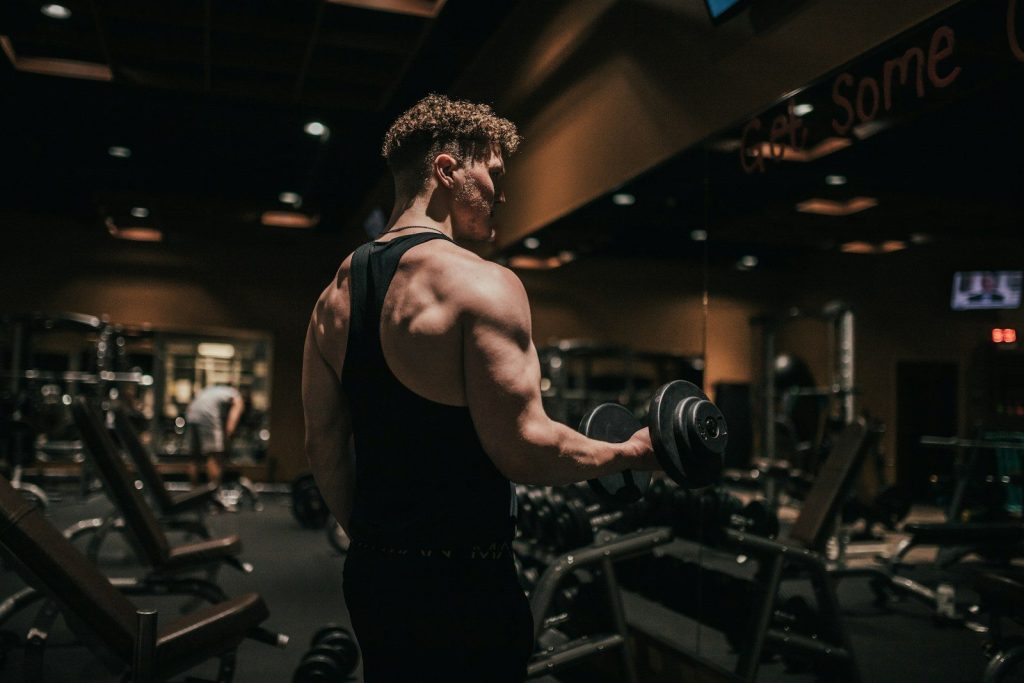
You do not need to perform all 13 exercises in one session. Choose two or three biceps exercises and two or three triceps exercises based on your experience, equipment, and available time.
Dumbbell Workouts for Arms at a Glance
| Exercise | Main muscles worked | Equipment | Level | |
|---|---|---|---|---|
| 1 | Standing dumbbell curl | Biceps, brachialis | Dumbbells | Beginner |
| 2 | Hammer curl | Brachialis, biceps, brachioradialis | Dumbbells | Beginner |
| 3 | Cross-body Hammer curl | Brachialis, brachioradialis, biceps | Dumbbells | Beginner |
| 4 | Incline dumbbell curl | Biceps, brachialis | Dumbbells, incline bench | Intermediate |
| 5 | Concentration curl | Biceps, brachialis | Dumbbell, bench or chair | Beginner |
| 6 | Dumbbell preacher curl | Biceps, brachialis | Dumbbell, incline bench | Intermediate |
| 7 | Zottman curl | Biceps, brachialis, forearms | Dumbbells | Intermediate |
| 8 | Close-grip dumbbell press | Triceps, chest, front shoulders | Dumbbells, bench | Beginner–intermediate |
| 9 | Neutral-grip dumbbell floor press | Triceps, chest, front shoulders | Dumbbells, floor | Beginner |
| 10 | Two-hand overhead triceps extension | Triceps | One dumbbell | Beginner–intermediate |
| 11 | Single-arm overhead triceps extension | Triceps | One dumbbell | Intermediate |
| 12 | Lying dumbbell triceps extension | Triceps | Dumbbells, bench or floor | Intermediate |
| 13 | Dumbbell triceps kickback | Triceps | Dumbbells, optional bench | Beginner |
What Muscles Do Dumbbell Arm Workouts Train?
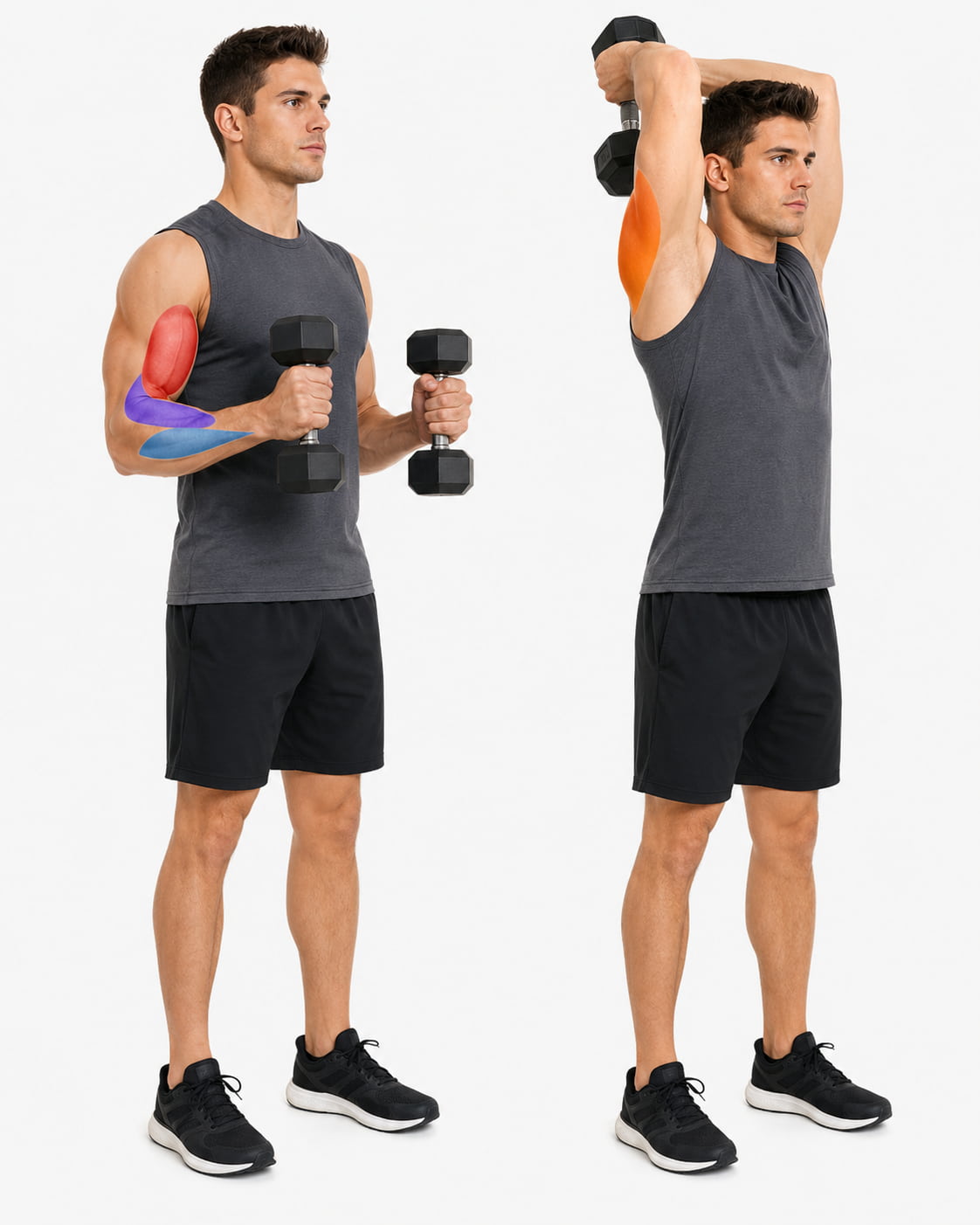
Dumbbell arm workouts mainly train the muscles that bend and straighten your elbows:
- Biceps brachii: Bends the elbow and helps turn the palm upward.
- Brachialis: Works during most curl variations and assists elbow flexion.
- Brachioradialis: Assists elbow bending, especially during hammer curls and neutral-grip exercises.
- Triceps brachii: Straightens the elbow and forms the back of the upper arm.
These functions are described in the NCBI overview of upper-arm muscles and related anatomical references for the brachialis and triceps.
How to Choose the Right Dumbbell Weight
Choose a weight that lets you complete the planned repetitions without swinging, leaning backward, bending your wrists, shortening the movement, or dropping the weight quickly.
A practical starting point is to finish most sets feeling that you could perform another two or three controlled repetitions. Increase the weight only after you can reach the top of your repetition range with consistent technique.
Use these general ranges:
- Heavier compound presses: 6–10 repetitions.
- Most curls and triceps extensions: 8–15 repetitions.
- Kickbacks and lighter finishing exercises: 12–20 repetitions.
- Rest after isolation exercises: 60–90 seconds.
- Rest after heavier presses: 90–150 seconds.
The 2026 ACSM resistance-training guidance emphasizes consistency, gradual progression, and adjusting training volume to the individual. It also notes that advanced methods and training every set to complete muscular failure are not required for most healthy adults.
13 Best Dumbbell Workouts for Arms
The following technique instructions use the same basic principles found throughout the ACE arm exercise library: keep your wrists aligned with your forearms, brace your torso, control the weight, and avoid using momentum.
1. Standing Dumbbell Curl
Best for: Building basic biceps strength and learning proper curling technique.
Muscles worked: Biceps brachii, brachialis, and forearm muscles.
Equipment needed: Two dumbbells.
Sets, reps, and rest: 2–4 sets of 8–12 repetitions. Rest 60–90 seconds.
How to do it:
- Stand with your feet approximately hip-width apart and hold the dumbbells at your sides.
- Turn your palms forward and keep your wrists straight.
- Brace your core and keep your elbows close to your torso.
- Bend your elbows and curl the dumbbells toward your shoulders.
- Pause briefly before lowering them under control.
Common mistakes: Leaning backward, swinging the dumbbells, moving the elbows far in front of the body, or letting the wrists bend.
Regression: Perform the exercise seated with your back supported.
Progression: Curl both dumbbells simultaneously or use a slower three-second lowering phase.
2. Hammer Curl
Best for: Strengthening the elbow flexors with a wrist-friendly neutral grip.
Muscles worked: Brachialis, brachioradialis, biceps, and forearm muscles.
Equipment needed: Two dumbbells.
Sets, reps, and rest: 2–3 sets of 8–12 repetitions. Rest 60–90 seconds.
How to do it:
- Hold the dumbbells at your sides with your palms facing your thighs.
- Stand tall with your core braced and shoulders relaxed.
- Keep your elbows close to your sides.
- Curl the weights toward the fronts of your shoulders without rotating your hands.
- Lower the dumbbells slowly until your arms are extended.
Common mistakes: Shrugging the shoulders, bending the wrists, leaning backward, or turning the movement into a standard palm-up curl.
Regression: Alternate arms instead of lifting both dumbbells together.
Progression: Use a controlled pause halfway through the lowering phase.
The ACE hammer-curl guide similarly recommends a neutral wrist, stable torso, and minimal forward elbow movement.
3. Cross-Body Hammer Curl
Best for: Unilateral training and emphasizing the brachialis and brachioradialis.
Muscles worked: Brachialis, brachioradialis, biceps, and grip muscles.
Equipment needed: Two dumbbells.
Sets, reps, and rest: 2–3 sets of 10–15 repetitions per arm. Rest 60–90 seconds.
How to do it:
- Stand holding the dumbbells with your palms facing inward.
- Curl one dumbbell diagonally toward the opposite side of your upper chest.
- Keep the elbow close to your torso instead of lifting it outward.
- Lower the dumbbell slowly.
- Repeat with the opposite arm.
Common mistakes: Rotating the torso, lifting the shoulder, or pulling the dumbbell across the body with momentum.
Regression: Use one dumbbell and complete all repetitions on one side before switching.
Progression: Add a one-second pause near the top of each repetition.
4. Incline Dumbbell Curl
Best for: Strict curling with less opportunity to swing the torso.
Muscles worked: Biceps and brachialis.
Equipment needed: Two dumbbells and an adjustable bench.
Sets, reps, and rest: 2–3 sets of 8–12 repetitions. Rest 60–90 seconds.
How to do it:
- Set the bench to an incline of approximately 45–60 degrees.
- Sit with your back supported and let your arms hang naturally.
- Begin with your palms facing inward or slightly forward.
- Curl the dumbbells while gradually turning your palms upward.
- Lower the weights until your elbows are comfortably extended.
Common mistakes: Pulling the shoulders forward, lifting the elbows, using more weight than you can control, or forcing an uncomfortable stretch at the bottom.
Regression: Raise the bench angle or perform seated curls on an upright bench.
Progression: Lower each repetition for three seconds.
5. Concentration Curl
Best for: Learning to curl without using the shoulders or torso.
Muscles worked: Biceps and brachialis.
Equipment needed: One dumbbell and a bench or stable chair.
Sets, reps, and rest: 2–3 sets of 10–15 repetitions per arm. Rest 45–75 seconds.
How to do it:
- Sit with your feet wider than hip-width apart.
- Hold one dumbbell and lightly brace the back of your upper arm against the inside of your thigh.
- Begin with your arm extended and palm facing forward.
- Curl the dumbbell toward your shoulder.
- Squeeze briefly before lowering it under control.
Common mistakes: Lifting the elbow away from the thigh, rounding the back excessively, or dropping the weight quickly.
Regression: Use your free hand to provide light assistance during the final few repetitions.
Progression: Pause for one or two seconds at the top.
6. Dumbbell Preacher Curl
Best for: Supported biceps training with limited body movement.
Muscles worked: Biceps and brachialis.
Equipment needed: One dumbbell and a preacher bench or adjustable incline bench.
Sets, reps, and rest: 2–3 sets of 8–12 repetitions per arm. Rest 60–90 seconds.
How to do it:
- Position your upper arm against the padded surface of a preacher bench.
- Hold the dumbbell with your palm facing upward.
- Begin with the elbow comfortably extended but not forcefully locked.
- Curl the dumbbell toward your shoulder while keeping the upper arm supported.
- Lower the weight slowly without relaxing at the bottom.
Common mistakes: Hyperextending the elbow, lifting the upper arm off the pad, bouncing out of the bottom, or using a weight that cannot be controlled.
Regression: Use a concentration curl, which provides a similar supported position.
Progression: Use a slower lowering phase while maintaining a comfortable elbow position.
7. Zottman Curl
Best for: Combining biceps training with additional forearm work.
Muscles worked: Biceps, brachialis, brachioradialis, and forearm extensors.
Equipment needed: Two dumbbells.
Sets, reps, and rest: 2–3 sets of 10–15 repetitions. Rest 60–90 seconds.
How to do it:
- Hold the dumbbells at your sides with your palms facing forward.
- Curl the dumbbells toward your shoulders.
- At the top, rotate your palms so they face downward.
- Lower the dumbbells slowly with the palms-down grip.
- Rotate your hands back to the starting position before the next repetition.
Common mistakes: Using too much weight, rotating the wrists suddenly, swinging the torso, or rushing the lowering phase.
Regression: Use lighter dumbbells or perform the rotation without weight to practice the sequence.
Progression: Extend the lowering phase to three or four seconds.
8. Close-Grip Dumbbell Press
Best for: Training the triceps with heavier weight than most isolation exercises allow.
Muscles worked: Triceps, pectoralis major, and front deltoids.
Equipment needed: Two dumbbells and a flat bench.
Sets, reps, and rest: 3–4 sets of 6–10 repetitions. Rest 90–150 seconds.
How to do it:
- Lie on a flat bench with your feet firmly on the floor.
- Hold the dumbbells above your chest with your palms facing each other.
- Keep the dumbbells close together without forcefully crushing them.
- Lower them toward your lower chest while keeping your elbows approximately 30–45 degrees from your torso.
- Press upward until your arms are extended without aggressively locking the elbows.
Common mistakes: Letting the wrists bend backward, flaring the elbows widely, bouncing the weights, or lifting the hips off the bench.
Regression: Perform the neutral-grip dumbbell floor press.
Progression: Gradually increase the weight while maintaining control and stable shoulder positioning.
ACE notes that keeping the elbows closer to the torso during a dumbbell chest press places more emphasis on the triceps.
9. Neutral-Grip Dumbbell Floor Press
Best for: Beginner-friendly triceps pressing without requiring a bench.
Muscles worked: Triceps, chest, and front deltoids.
Equipment needed: Two dumbbells and a clear floor area.
Sets, reps, and rest: 2–4 sets of 8–12 repetitions. Rest 90–120 seconds.
How to do it:
- Sit on the floor with the dumbbells resting on your thighs.
- Carefully lie back and position the dumbbells above your chest with your palms facing each other.
- Bend your knees and place your feet flat.
- Lower the weights until the backs of your upper arms gently contact the floor.
- Pause briefly and press the dumbbells upward.
Common mistakes: Dropping the elbows into the floor, bending the wrists, allowing the dumbbells to drift toward the face, or using leg movement to lift the weights.
Regression: Use one dumbbell at a time or reduce the load.
Progression: Add weight or use a slow pause when the upper arms reach the floor.
10. Two-Hand Overhead Dumbbell Triceps Extension
Best for: Training the triceps with the arms positioned overhead.
Muscles worked: All three triceps heads, with particular involvement from the long head.
Equipment needed: One dumbbell.
Sets, reps, and rest: 2–4 sets of 8–15 repetitions. Rest 60–90 seconds.
How to do it:
- Stand or sit tall and hold one dumbbell securely with both hands.
- Press the dumbbell overhead and brace your core.
- Keep your upper arms near your head without forcing the elbows together.
- Bend your elbows and lower the dumbbell behind your head.
- Extend your elbows to raise the weight overhead.
Common mistakes: Excessively arching the lower back, allowing the elbows to move widely, bending the wrists, or lowering the dumbbell onto the neck.
Regression: Perform the movement seated with back support or use a lighter dumbbell.
Progression: Increase the range gradually or add weight once you can keep your torso and upper arms stable.
The ACE triceps-extension instructions emphasize bracing the torso and controlling the dumbbell without changing the position of the upper arms. Research using cable extensions also found that overhead positioning can provide a strong muscle-building stimulus for the triceps, although the findings should not be treated as proof that one dumbbell exercise is always superior.
11. Single-Arm Overhead Dumbbell Triceps Extension
Best for: Training each arm separately and identifying side-to-side differences.
Muscles worked: Triceps.
Equipment needed: One dumbbell.
Sets, reps, and rest: 2–3 sets of 10–15 repetitions per arm. Rest 45–75 seconds.
How to do it:
- Sit or stand while holding one dumbbell overhead.
- Brace your core and keep the working upper arm close to your head.
- Bend the elbow and lower the dumbbell behind your shoulder.
- Stop at a depth you can control comfortably.
- Straighten the elbow without moving the upper arm excessively.
Common mistakes: Leaning sideways, arching the back, allowing the elbow to flare uncontrollably, or using the opposite hand to push the weight.
Regression: Support the working elbow lightly with your free hand or use a seated position.
Progression: Add a brief pause in the lowered position before extending the elbow.
12. Lying Dumbbell Triceps Extension
Best for: Direct triceps training with the torso supported.
Muscles worked: Triceps.
Equipment needed: Two dumbbells and a bench or floor.
Sets, reps, and rest: 2–3 sets of 8–12 repetitions. Rest 60–90 seconds.
How to do it:
- Lie on a bench and hold the dumbbells above your shoulders with your palms facing inward.
- Keep your wrists straight and angle your upper arms slightly behind vertical.
- Bend your elbows and lower the dumbbells toward the sides of your head.
- Keep the upper arms mostly stationary.
- Extend your elbows to return to the starting position.
Common mistakes: Turning the exercise into a chest press, moving the upper arms excessively, lowering the dumbbells toward the face, or using weights that are difficult to control.
Regression: Perform one arm at a time or complete the exercise on the floor.
Progression: Gradually increase the load while preserving a smooth, controlled path.
13. Dumbbell Triceps Kickback
Best for: Light, controlled triceps isolation near the end of a workout.
Muscles worked: Triceps.
Equipment needed: One or two dumbbells and an optional bench.
Sets, reps, and rest: 2–3 sets of 12–20 repetitions. Rest 45–75 seconds.
How to do it:
- Hold a dumbbell and support your opposite hand on a bench or stable surface.
- Hinge forward with a neutral spine and braced core.
- Position your upper arm close to your torso and bend the elbow to approximately 90 degrees.
- Straighten your elbow until the arm is extended behind you.
- Lower the dumbbell without allowing the upper arm to drop.
Common mistakes: Swinging the weight, lifting the shoulder, rotating the torso, or moving the entire arm instead of extending the elbow.
Regression: Use a very light dumbbell and perform one arm at a time.
Progression: Pause briefly with the elbow extended instead of simply increasing the weight.
The ACE kickback guide recommends keeping the upper arm stationary and the torso stable throughout the repetition.
Benefits of Dumbbell Workouts for Arms
Regular arm training may help you:
- Strengthen elbow flexion and extension.
- Improve performance in rows, presses, pull-ups, push-ups, and loaded carries.
- Train your right and left arms independently.
- Notice and address side-to-side strength differences.
- Adjust your grip to find a comfortable wrist and elbow position.
- Train at home with limited equipment.
- Build muscular strength and size when the workload increases gradually.
Arm exercises should still be part of a balanced program that trains your back, chest, shoulders, legs, glutes, and core. Federal activity guidelines recommend muscle-strengthening work for all major muscle groups on at least two days each week.
How to Build a Balanced Dumbbell Arm Workout
You do not need seven curl variations and six triceps exercises in the same session. Too many similar exercises can add fatigue without adding useful training quality.
For most workouts, choose:
- One heavier press for the triceps.
- One palm-up biceps curl.
- One overhead or lying triceps extension.
- One neutral-grip curl.
- One optional finishing exercise.
Train the larger or more demanding movements first. Perform close-grip presses and strict curls before lighter kickbacks or high-repetition finishing exercises.
Weekly training volume
The 2026 ACSM guidance suggests that approximately 10 weekly sets per muscle group may be useful when maximizing muscle growth is the main goal. However, rows, pulldowns, presses, and push-ups also train the arms indirectly.
A practical starting point is:
- Beginners: 4–8 direct weekly sets each for the biceps and triceps.
- Intermediate lifters: 6–12 direct weekly sets each, depending on other upper-body training.
- Frequency: One or two direct arm sessions per week.
Increase training only when your elbows feel comfortable, your repetitions remain controlled, and your performance is recovering between sessions.
Beginner Dumbbell Arm Workout
Perform this workout once or twice per week with at least one recovery day between sessions.
| Exercise | Sets | Repetitions |
|---|---|---|
| Neutral-grip dumbbell floor press | 2 | 8–12 |
| Standing dumbbell curl | 2 | 8–12 |
| Two-hand overhead triceps extension | 2 | 10–15 |
| Hammer curl | 2 | 10–12 |
Rest: 60–90 seconds between sets.
Effort: Finish each set with approximately two or three good repetitions still possible.
Progression: Begin with two sets. Add repetitions until you reach the top of the range, then increase the dumbbell weight slightly.
Intermediate Dumbbell Arm Workout
Perform this workout once per week or divide the exercises between two upper-body sessions.
| Exercise | Sets | Repetitions |
|---|---|---|
| Close-grip dumbbell press | 3 | 6–10 |
| Incline dumbbell curl | 3 | 8–12 |
| Lying dumbbell triceps extension | 3 | 8–12 |
| Dumbbell preacher curl | 3 | 8–12 |
| Dumbbell triceps kickback | 2 | 12–15 |
| Zottman curl | 2 | 10–12 |
Rest: 90–150 seconds after the press and 60–90 seconds after the remaining exercises.
Effort: Finish most sets with one to three repetitions in reserve. Complete muscular failure is not necessary.
Progression: Add one repetition at a time until every set reaches the top of its range. Increase the weight only when you can maintain the same range of motion and control.
Common Dumbbell Arm-Workout Mistakes
Using momentum
Swinging the torso may help move a heavier dumbbell, but it reduces control and makes progress harder to measure. Reduce the weight and keep your hips and shoulders steady.
Bending the wrists
Keep your knuckles, wrist, and forearm approximately aligned. Allowing the wrist to collapse can make curls and extensions uncomfortable.
Moving the upper arms excessively
The shoulders will assist slightly during some movements, but curls and triceps extensions should occur mainly at the elbows.
Training only the biceps
The triceps make up a substantial portion of the upper arm and contribute to pressing strength. Include both elbow-flexion and elbow-extension exercises.
Performing every exercise in one session
More exercises do not automatically produce better results. Four to six well-performed movements are enough for most dedicated arm workouts.
Progressing too quickly
Do not increase the weight if it causes swinging, shortened repetitions, unstable wrists, or uncomfortable elbows. Build repetitions and control before adding load.
Safety Tips
Warm up with several minutes of general movement followed by one or two light sets of the first curl and press in your workout.
Use a full grip around each dumbbell, keep the training area clear, and avoid placing a weight directly above your face unless you can control it securely. Use a spotter when handling heavy dumbbells on a bench.
Stop exercising and seek appropriate professional help if you experience sharp pain, numbness, dizziness, chest pain, sudden weakness, or other unusual symptoms. Muscle fatigue is expected, but joint pain should not be ignored.
Frequently Asked Questions
Can dumbbells build strong arms?
Yes. Dumbbells provide resistance that can strengthen and develop the arm muscles when your sets are challenging, your technique remains consistent, and the workload increases gradually.
How often should I train my arms with dumbbells?
One or two direct arm sessions per week is enough for many people. Remember that rows and pulldowns also train the biceps, while presses and push-ups train the triceps.
How many arm exercises should I perform in one workout?
Most readers need approximately four to six exercises: two or three for the biceps and two or three for the triceps. Beginners can make progress with only four movements.
Should I train the biceps and triceps on the same day?
Yes. Training them together creates a balanced arm session and can make scheduling easier. They can also be divided between pull and push workouts.
What dumbbell weight should a beginner use?
There is no universal starting weight. Choose a dumbbell that lets you complete approximately 8–15 controlled repetitions while keeping two or three good repetitions in reserve.
Can dumbbell arm workouts reduce arm fat?
Arm exercises can strengthen the muscles underneath the area, but they cannot control where body fat is lost. Changes in body composition depend on overall activity, nutrition, recovery, and individual factors rather than training one body part alone.
Conclusion
Dumbbell workouts for arms do not need to be complicated. Choose a balanced combination of curls, presses, and triceps extensions, train through a comfortable range of motion, and prioritize controlled repetitions over heavier weights.
Start with the beginner routine, record your repetitions, and increase the workload gradually as your strength and technique improve.
This content is for informational purposes only and is not a substitute for professional medical advice.
References
- American College of Sports Medicine: 2026 resistance-training guidelines
- Office of Disease Prevention and Health Promotion: Current Physical Activity Guidelines
- American Council on Exercise: Arm Exercise Library
- NCBI Bookshelf: Anatomy of the Upper-Arm Muscles
- NCBI Bookshelf: Anatomy of the Triceps Muscle
- PubMed: Triceps Training in Overhead and Neutral Arm Positions