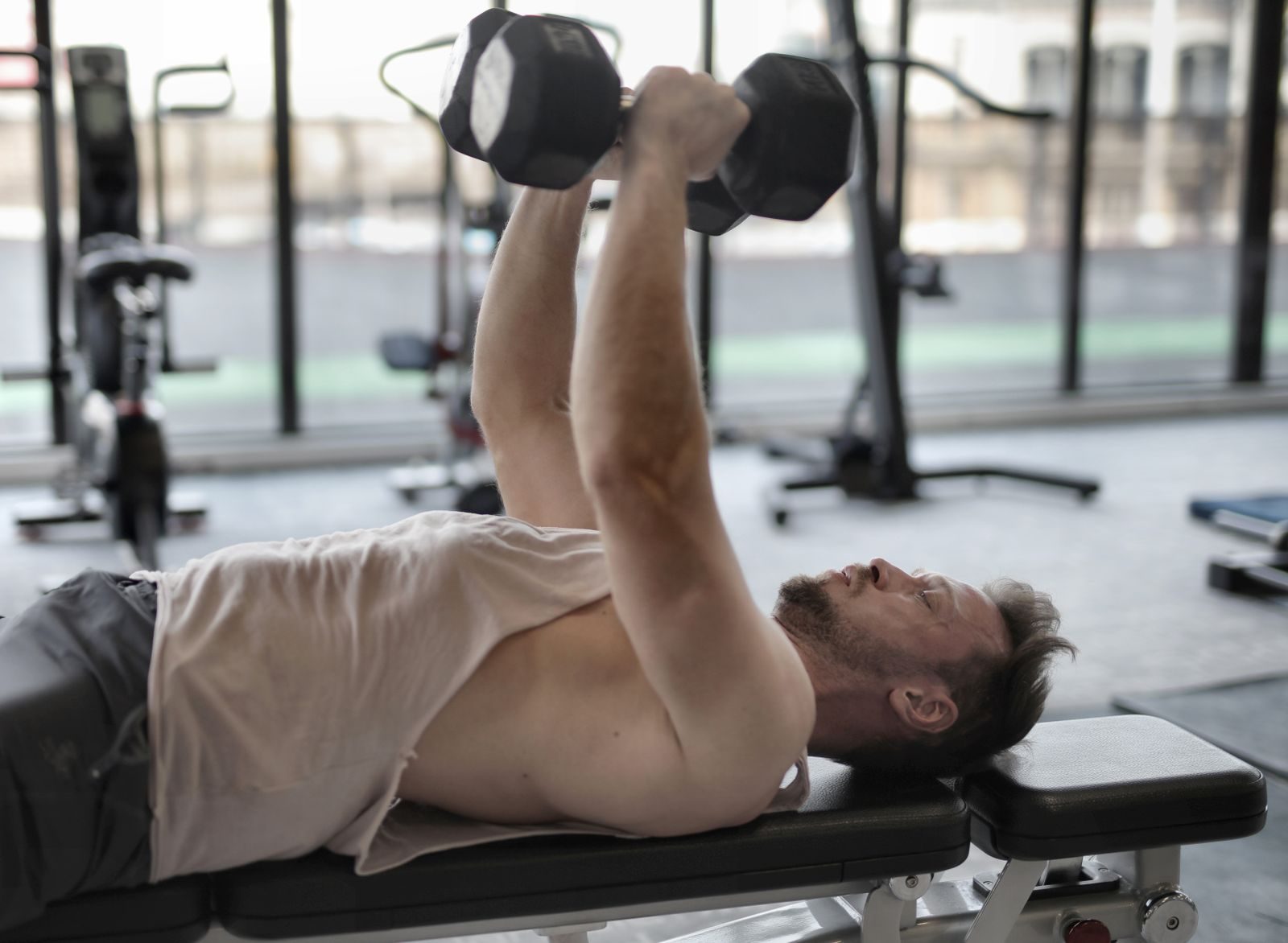
The dumbbell squeeze press is a chest exercise performed by pressing two dumbbells together while pushing them above your chest. The inward pressure is what makes the exercise different from a standard neutral-grip dumbbell press.
The exercise can be a useful accessory for training the chest, triceps, and front shoulders, but only when the dumbbells remain stable and connected. Common mistakes—such as using excessive weight, bending the wrists, losing the squeeze, or rushing the lowering phase—can quickly change the movement and reduce its value.
This guide explains proper dumbbell squeeze press form, the muscles worked, the most important mistakes to avoid, beginner modifications, progressions, and practical programming.
Dumbbell Squeeze Press at a Glance
| Category | Details |
|---|---|
| Also called | Hex press or dumbbell crush press |
| Best for | Chest accessory work and practicing continuous chest tension |
| Primary muscle | Pectoralis major |
| Assisting muscles | Triceps brachii and anterior deltoids |
| Equipment | Two matching dumbbells and a flat bench |
| Preferred dumbbell shape | Hexagonal |
| Grip | Neutral, with palms facing each other |
| Suggested sets | 2–4 |
| Suggested reps | 8–15 |
| Rest | 60–90 seconds |
| Difficulty | Beginner to intermediate |
| Main coaching cue | Press the dumbbells together throughout the entire repetition |
What Is a Dumbbell Squeeze Press?
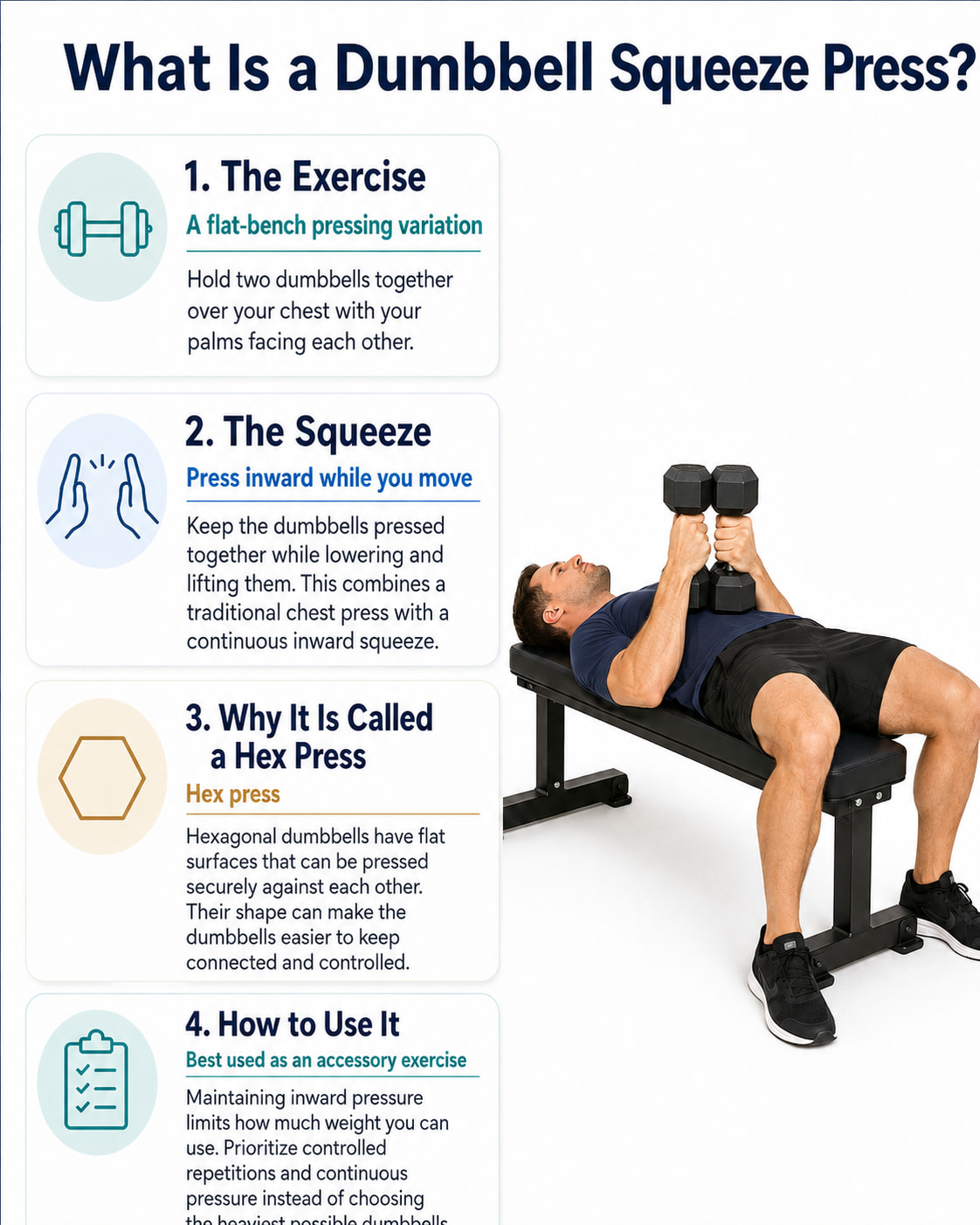
The dumbbell squeeze press is a flat-bench pressing variation in which you hold two dumbbells together over your chest with your palms facing each other.
You press the dumbbells inward while lowering and lifting them. This combines a traditional pressing action with a voluntary inward squeeze.
The exercise is commonly called a hex press because hexagonal dumbbells provide flat surfaces that can be pressed securely against one another. The Catalyst Athletics hex press guide recommends keeping the dumbbells forcefully connected throughout the bench press movement and notes that hex-shaped dumbbells make the setup easier to control.
The squeeze press is usually most effective as an accessory exercise rather than a maximum-strength movement. Maintaining inward pressure limits how much weight you can handle, so good repetitions are more important than using the heaviest possible dumbbells.
Dumbbell Squeeze Press Muscles Worked
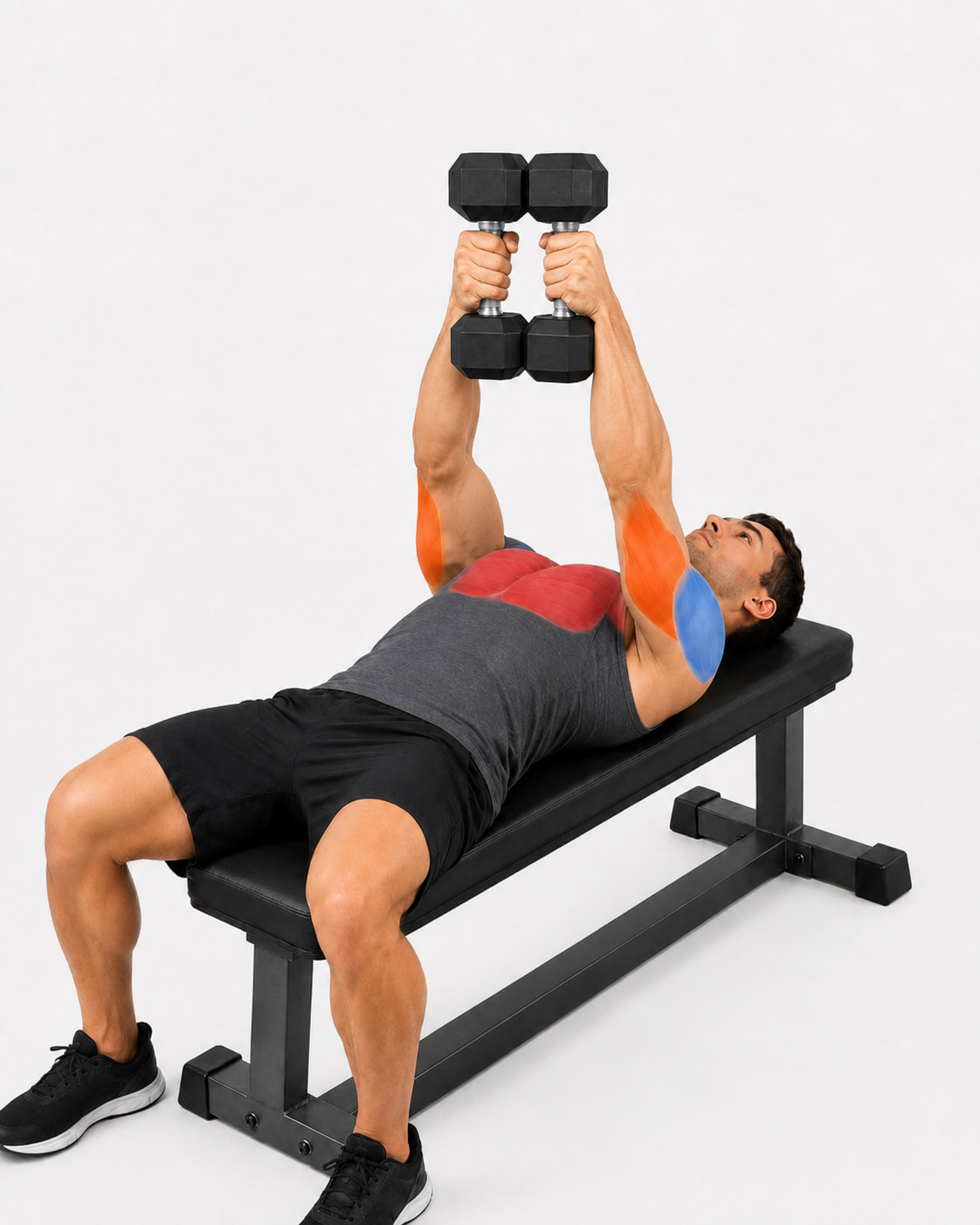
Pectoralis Major
The pectoralis major is the large muscle covering the front of the chest. It is the primary muscle trained during the dumbbell squeeze press.
The NCBI Bookshelf overview of the pectoral muscles describes the pectoralis major as contributing to movements that include arm flexion, adduction, and internal rotation. Pressing the dumbbells inward adds a voluntary adduction effort while the chest also helps press the weights upward.
The chest works dynamically as you lift and lower the dumbbells. It also works isometrically to maintain pressure between them.
Triceps Brachii
The triceps straighten the elbows during the pressing phase.
According to the NCBI Bookshelf review of triceps anatomy, elbow extension is the triceps brachii’s primary function. The close hand position used in the squeeze press can make the triceps an important contributor, especially as the elbows approach extension.
Anterior Deltoids
The anterior deltoids at the front of the shoulders assist with moving the upper arms during the press.
Research comparing bench-press and chest-press variations has found involvement from the pectoralis major, anterior deltoid, and triceps across different grips. However, those studies did not test the exact dumbbell squeeze press, so they should not be used to claim that this variation produces superior activation or muscle growth.
Supporting Muscles
Your forearms help keep the wrists and dumbbells aligned. The upper-back and shoulder-stabilizing muscles help maintain a steady pressing base, while the abdominal muscles help control the ribs and lower back.
These muscles support the movement, but the exercise should primarily feel like controlled chest and triceps work.
Does the Dumbbell Squeeze Press Target the Inner Chest?
The dumbbell squeeze press trains the pectoralis major, but it does not isolate a separate “inner chest” muscle.
The pectoralis major is commonly described by anatomical regions such as the clavicular and sternocostal portions. There is not a separate muscular head located only beside the sternum that can be independently isolated.
You may feel a strong contraction near the center of your chest because you are actively pressing the dumbbells toward the midline. That sensation does not prove that the exercise selectively builds the inner portion of the chest.
Research on bench-press grip width has also shown that a narrower grip does not automatically increase chest activity. One study found increased triceps activity and reduced sternoclavicular pectoralis activity when moving from wider to narrower grips. The study did not include the squeeze press, but it shows why close hand placement alone should not be described as superior for the chest.
A more accurate description is:
The dumbbell squeeze press trains the entire pectoralis major and may make the shortened chest contraction easier to feel, but it does not isolate a separate inner-chest muscle.
How to Do the Dumbbell Squeeze Press
Equipment needed: Two matching dumbbells and a stable flat bench.
Sets, reps, and rest: Start with 2–3 sets of 8–15 repetitions and rest for 60–90 seconds.
Step-by-Step Instructions
- Sit near the end of a flat bench with one dumbbell resting upright on each thigh.
- Lie back carefully while guiding the dumbbells toward your chest.
- Turn your palms toward each other and press the flat ends of the dumbbells together.
- Position the connected dumbbells over the middle of your chest.
- Plant your feet firmly, keep your head and hips on the bench, and set your shoulder blades gently down and back.
- Keep your wrists straight and apply even inward pressure with both hands.
- Inhale as you lower the connected dumbbells toward the middle of your chest.
- Keep your elbows close to your torso without forcing them tightly against your ribs.
- Stop at the deepest position you can control without the dumbbells shifting or your shoulders rolling forward.
- Exhale as you press the dumbbells upward while continuing to squeeze them together.
- Straighten your elbows under control without aggressively snapping them into lockout.
- After the final repetition, bring the dumbbells toward your chest and sit up carefully. Use a spotter when the weights are difficult to handle safely.
The American Council on Exercise chest press instructions support maintaining planted feet, stable contact with the bench, neutral wrists, controlled lowering, and a stable shoulder-blade position during dumbbell pressing. The squeeze press uses the same basic foundation with the added requirement of keeping the dumbbells connected.
Coaching cue: Imagine trying to leave a single line of contact between the dumbbells from the beginning of the set to the end.
10 Dumbbell Squeeze Press Mistakes to Avoid
1. Using Too Much Weight
The dumbbell squeeze press is not designed for maximum loading.
When the dumbbells are too heavy, you may lose inward pressure, bend your wrists, shorten the range of motion, or start moving one arm faster than the other. The exercise then becomes an unstable close-grip press rather than a controlled squeeze press.
How to fix it: Reduce the weight until you can maintain contact between the dumbbells during every repetition. Finish most sets while you can still perform one to three controlled repetitions.
The correct load is the heaviest one you can use without losing the squeeze—not simply the heaviest pair you can press.
2. Letting the Dumbbells Separate
Allowing the weights to separate is the clearest sign that the load or technique needs adjustment.
The inward pressure is what distinguishes this movement from a standard neutral-grip dumbbell press. When the dumbbells repeatedly separate, you lose the defining feature of the exercise.
How to fix it: Begin applying pressure before the first repetition. Continue squeezing during the lowering phase, at the bottom, and as you press upward.
Do not wait until the dumbbells reach the top before pressing them together.
3. Applying Uneven Pressure
Pressing harder with one arm can cause one dumbbell to roll, rotate, or slide ahead of the other.
Uneven pressure is especially noticeable with round dumbbells because they have less stable contact surfaces. It may also cause one wrist or elbow to move into a different position.
How to fix it: Align both dumbbells before beginning the set. Press inward evenly through both hands and check that the weights rise and fall together.
Start with hexagonal dumbbells whenever possible. Their flat ends provide a more secure contact surface than rounded heads.
4. Bending the Wrists
The wrists may bend backward or sideways when the load is excessive, the dumbbells are poorly aligned, or you try to squeeze harder than you can control.
A bent wrist creates an unstable connection between the hand and forearm. It also makes it more difficult to press the dumbbells evenly.
How to fix it: Keep your knuckles facing upward and align each wrist with its forearm. Think about stacking your hands directly over your elbows rather than allowing the dumbbells to fold your wrists backward.
Neutral wrist positioning is also part of the standard dumbbell chest-press technique recommended by ACE.
5. Forcing the Elbows Into an Extreme Position
There are two common elbow mistakes:
- Flaring the elbows too widely
- Pinning them tightly against the torso
Excessive flare may make the dumbbells harder to keep together and can cause the shoulders to roll forward. Over-tucking can crowd the movement, angle the forearms inward, and shift more of the work toward the triceps.
How to fix it: Let your elbows travel close to your body at a comfortable angle. They should not scrape your ribs, but they also should not point directly sideways.
Your forearms should remain reasonably aligned beneath the dumbbells throughout the repetition.
6. Lowering the Dumbbells Toward the Neck or Stomach
Drifting too high toward the neck can make the shoulders and wrists harder to control. Lowering too far toward the stomach can turn the movement into an awkward diagonal press.
How to fix it: Lower the connected dumbbells toward the middle of your chest. The exact position may vary slightly with your arm length and dumbbell size, but the path should remain smooth and repeatable.
Watch the first few repetitions from the side or ask a training partner to check whether the dumbbells remain over your mid-chest.
7. Shrugging or Letting the Shoulders Roll Forward
The shoulders may rise toward the ears or roll away from the bench as fatigue builds.
This makes the pressing base less stable and often causes the dumbbells to move toward the face.
How to fix it: Set your shoulder blades gently down and back before beginning. Keep your upper back in contact with the bench without forcing an exaggerated position.
Your chest can remain comfortably lifted, but your neck and shoulders should not tense excessively.
8. Lifting the Hips or Excessively Arching the Lower Back
A small natural space beneath the lower back is normal. The mistake is creating an excessive arch, flaring the ribs, or lifting the hips to help press the weight.
These compensations usually indicate that the load is too heavy or that you are losing trunk control.
How to fix it: Keep your feet planted, hips on the bench, abdominal muscles lightly braced, and ribs controlled. Reduce the dumbbell weight if you cannot maintain those positions.
ACE’s dumbbell press guidance similarly recommends keeping stable contact with the bench and avoiding unnecessary lower-back arching.
9. Rushing or Bouncing Through the Bottom
Dropping the dumbbells quickly makes it easier for them to shift, roll, or separate. Bouncing them against the chest also removes control from the transition between lowering and pressing.
How to fix it: Lower the dumbbells for approximately two seconds. Pause briefly near the bottom when necessary, then press upward without bouncing.
Use a range of motion that allows you to maintain the squeeze, neutral wrists, and a stable shoulder position. You do not need to force the dumbbells lower after your form begins to change.
10. Starting or Finishing the Set Unsafely
Getting two connected dumbbells into position can be awkward, especially when the weights are heavy.
Common errors include twisting onto the bench, dropping the dumbbells sideways after the final repetition, or relaxing the grip before the weights are secure.
How to fix it: Begin with the dumbbells supported on your thighs. Lie back as one controlled movement and keep a closed grip around each handle.
At the end, bring the dumbbells toward your chest, guide them back to your thighs, and sit up under control. Use a spotter for challenging sets and maintain your grip until the dumbbells are safely supported. ACE also recommends spotter assistance when demanding dumbbell presses cannot be handled securely.
Benefits of the Dumbbell Squeeze Press
Adds Inward Pressure to a Chest Press
The exercise combines elbow extension and pressing with continuous inward force.
This may make it easier to focus on keeping the chest contracted throughout the repetition. The additional squeeze also encourages you to use a controlled load rather than relying only on momentum.
Trains the Chest, Triceps, and Front Shoulders
Like other chest presses, the dumbbell squeeze press involves the pectoralis major, triceps, and anterior deltoids.
The close hand position often makes the triceps noticeable, particularly near the top of the repetition as the elbows straighten.
Requires Minimal Equipment
You need only two matching dumbbells and a stable bench.
The floor variation requires even less equipment, making the movement practical for a basic home gym.
Works Well With Moderate Loads
The squeeze press does not require extremely heavy dumbbells to feel challenging. Maintaining steady inward pressure can make light-to-moderate weights useful.
This makes the exercise suitable for accessory work after heavier pressing, when the chest and triceps are already partially fatigued.
Uses a Neutral Grip
The palms face each other instead of facing forward.
Some people find this grip comfortable because it allows the arms to follow a relatively close path. However, the exercise should not be described as universally shoulder-safe or used as a treatment for shoulder pain.
Limitations of the Squeeze Press
The dumbbell squeeze press is useful, but it has several limitations.
It Limits the Weight You Can Use
Pressing the dumbbells together reduces the load you can control. A standard dumbbell or barbell press is usually more suitable when the main goal is developing maximum pressing strength.
It May Use a Shorter Range of Motion
The dumbbells remain between your arms, and the elbows generally stay closer to the torso. Larger dumbbells may reach your chest before your upper arms achieve the same depth used during a regular dumbbell bench press.
Do not force extra depth by bending the wrists or allowing the shoulders to roll forward.
It Is Not Proven Superior to Other Chest Presses
There is limited research on the exact dumbbell squeeze press. Current bench-press research examines factors such as grip width, equipment, and pressing angle, but those findings do not prove that the squeeze press produces greater chest growth than standard pressing variations.
Use it as one useful option rather than treating it as a required or uniquely effective chest exercise.
Beginner Modifications and Regressions
Use Lighter Hexagonal Dumbbells
Begin with a weight that feels almost too light. This allows you to learn how to apply even pressure before fatigue affects your wrists and elbows.
Increase the weight only after the dumbbells remain stable for every repetition.
Floor Dumbbell Squeeze Press
Perform the exercise while lying on the floor instead of a bench.
The floor stops the upper arms when the elbows reach the ground, reducing the available depth. This can make the setup more stable and easier to control.
Pause gently when your upper arms contact the floor. Do not bounce your elbows.
Reduce the Range of Motion
Lower the dumbbells only as far as you can maintain neutral wrists, even pressure, and a stable upper back.
Gradually increase the depth as your control improves.
Use a Standard Neutral-Grip Dumbbell Press
When you cannot keep two dumbbells connected safely, practice a normal neutral-grip dumbbell press first.
The movement uses a similar hand position without requiring inward pressure between the weights.
Dumbbell Squeeze Press Progressions
Add Repetitions
Increase repetitions within your target range before selecting heavier dumbbells.
For example, begin with 3 sets of 8 repetitions and gradually work toward 3 sets of 15.
Increase the Dumbbell Weight
Once you can complete the top of your repetition range with consistent pressure and stable wrists, move to the next manageable dumbbell pair.
Return to the lower end of the repetition range after increasing the load.
Use a Slower Lowering Phase
Lower the dumbbells for three seconds before pressing them upward normally.
The slower tempo increases the time you must maintain control and inward pressure.
Add a Bottom Pause
Pause for one second near your lowest controlled position.
Do not relax the squeeze during the pause.
Perform an Incline Squeeze Press
Set an adjustable bench at a low incline and perform the same movement.
The incline changes the pressing angle and generally increases assistance from the front shoulders. Use lighter dumbbells until you understand the new path.
Sets, Reps, Rest, and Workout Placement
A practical starting point is:
- Sets: 2–4
- Repetitions: 8–15
- Rest: 60–90 seconds
- Effort: Stop with approximately 1–3 controlled repetitions remaining
- Frequency: One or two times per week
- Tempo: Lower for about two seconds and press upward under control
Catalyst Athletics recommends a general range of 6–15 repetitions for the hex press. For most people using it as a chest accessory, 8–15 repetitions provides enough room to prioritize control and continuous pressure.
The American College of Sports Medicine’s 2026 resistance-training update emphasizes consistent training, individualization, and matching training volume and load to the person’s goal. It also notes that advanced methods and training to momentary failure are not required for most healthy adults.
Best Workout Placement
The dumbbell squeeze press usually works best:
- After a standard dumbbell or barbell press
- As the second or third exercise in a push workout
- Near the end of a chest session
- As a controlled accessory exercise on a lighter upper-body day
It is generally less suitable as your first exercise when your main goal is maximum pressing strength.
How to Progress
Use a simple double-progression method:
- Choose a repetition range, such as 8–15.
- Start with a weight you can control for at least 8 repetitions.
- Add repetitions over several workouts.
- When you complete 15 repetitions in every set with stable form, increase the dumbbell weight.
- Return to approximately 8–10 repetitions and repeat the process.
Do not increase the weight when the dumbbells separate, your wrists bend, or your hips lift from the bench.
Sample Upper-Body Workout With the Dumbbell Squeeze Press
Warm up with 5–10 minutes of easy movement followed by one or two light practice sets of your first press. The American Academy of Orthopaedic Surgeons recommends warming up before more demanding exercise and gradually rehearsing the movements you plan to perform.
Beginner-to-Intermediate Upper-Body Workout
| Exercise | Sets | Reps | Rest |
|---|---|---|---|
| Dumbbell bench press | 3 | 6–10 | 90–150 seconds |
| One-arm dumbbell row | 3 | 8–12 per side | 90 seconds |
| Dumbbell squeeze press | 2–3 | 10–15 | 60–90 seconds |
| Dumbbell rear delt fly | 2 | 12–15 | 60 seconds |
Perform the workout once or twice weekly, depending on the rest of your training schedule.
Keep approximately two repetitions in reserve during most sets. When you reach the top of the repetition range with consistent form, increase the weight by the smallest practical amount.
Dumbbell Squeeze Press Safety Tips
- Check that the bench is stable before lying down.
- Use matching dumbbells of the same weight and shape.
- Make sure the dumbbell ends are dry and free from damage.
- Keep a closed grip with your thumbs wrapped around the handles.
- Do not use more weight than you can position safely.
- Ask for a spotter when setup or dismount becomes difficult.
- Do not drop the dumbbells beside your head or shoulders.
- Stop the set when you can no longer maintain even inward pressure.
Stop exercising and seek appropriate professional help if you experience sharp pain, numbness, dizziness, chest pain, or other unusual symptoms.
Frequently Asked Questions
Is the dumbbell squeeze press the same as the hex press?
Yes. The names are commonly used interchangeably.
“Hex press” usually refers to performing the exercise with hexagonal dumbbells. “Squeeze press” describes the action of pressing the dumbbells together throughout the repetition.
Do I need hexagonal dumbbells?
No, but hexagonal dumbbells are usually easier and more secure.
Round dumbbells can rotate or slide against each other. When using round dumbbells, choose a lighter weight and pay close attention to even pressure.
How hard should I squeeze the dumbbells?
Use firm, continuous pressure that keeps the dumbbells connected without changing your wrist position.
Squeezing harder is not automatically better. If maximum inward effort causes the weights to shift or your wrists to bend, reduce the pressure or use lighter dumbbells.
Should my elbows stay completely tucked?
No. Keep the elbows relatively close to your body, but do not force them tightly against your ribs.
Use a comfortable path that allows your wrists to stay aligned and the dumbbells to move over the middle of your chest.
Can I perform the dumbbell squeeze press without a bench?
Yes. The floor squeeze press is a useful alternative.
The floor limits the bottom range of motion and may provide a more stable setup. Lower the weights until your upper arms gently contact the floor, pause, and press back up.
Is the squeeze press better than the regular dumbbell press?
Neither exercise is automatically better.
The standard dumbbell press usually allows greater loading and a wider range of motion. The squeeze press adds continuous inward pressure and can be useful as moderate-load accessory work.
A practical chest program can include both at different points in the workout.
Is the dumbbell squeeze press suitable for beginners?
It can be, provided the beginner uses light, preferably hexagonal dumbbells and learns the setup carefully.
A floor squeeze press or standard neutral-grip dumbbell press may be easier when controlling two connected dumbbells feels unstable.
Conclusion
The dumbbell squeeze press is most effective when you treat the inward pressure as part of the exercise—not as an optional detail.
Use a manageable weight, keep the dumbbells evenly connected, maintain straight wrists, and lower the weights under control. Do not sacrifice those positions to lift heavier dumbbells.
Use the squeeze press after your main chest movement for 2–4 sets of 8–15 repetitions. Progress by adding controlled repetitions first and weight second.
References
- American College of Sports Medicine: 2026 Resistance Training Guidelines Update
- American Council on Exercise: Chest Press Exercise Instructions
- NCBI Bookshelf: Anatomy of the Pectoral Muscles
- NCBI Bookshelf: Anatomy of the Triceps Brachii
- PubMed: Influence of Grip Width and Forearm Position on Bench Press Muscle Activity
- PubMed: Muscle Activity During Bench Press and Chest Press Variations
- Catalyst Athletics: Hex Press Exercise Guide
- AAOS OrthoInfo: Safe Exercise Guidance
This content is for informational purposes only and is not a substitute for medical advice.